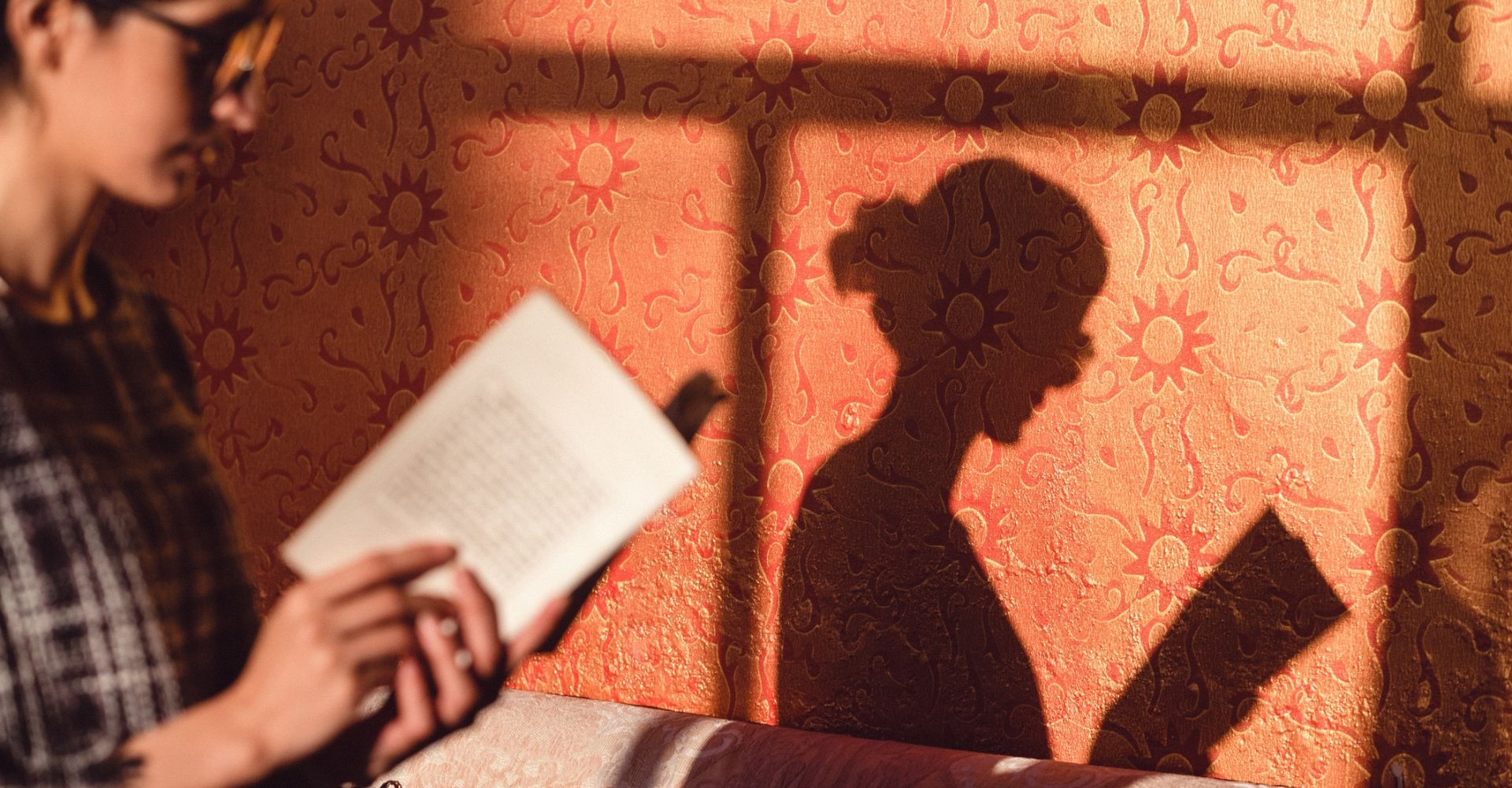
A laughing flame, a shadow that slips away, a chair that moves closer to the guest: all it takes is a slight transfiguration (or animation) of the order of things to grant us access to the perspective that, in 1925, the German critic Franz Roh (1890–1965) would first define as “magical realism.”
A mode that appears oxymoronic at first glance, an approach to observing and interpreting the world that begins with a careful description of what is present around us and then re-animates one element after another, so that we can unexpectedly reconnect with the mystery of things…
Index
-
- Characteristics of magical realism
- Magical realism in the visual arts
- Magical realism in literature
- Magical realism: not to be confused with…
- Magical realism: 10 books not to miss
Characteristics of magical realism
Two years after Roh, the same concept was taken up by the brilliant essayist and writer Massimo Bontempelli (1878-1960), who in his Realismo magico e altri scritti sull’arte (Abscondita) takes care to clarify:
Imagination, fantasy: but nothing like fairy-tale whimsy; nothing of a thousand and one nights. Rather than fairy tales, we hunger for adventure. The most everyday, ordinary life, we want to see as a daring miracle: constant risk, and a continuous effort of heroism or of tricks to escape it.
In other words, magical realism is an approach that allows everyday objects and situations to re-animate, yielding to the unpredictable mechanisms of fantasy by which the past may present itself, the exotic appear close at hand, and what was dead may come back to life, or vice versa.
The extraordinary can, meanwhile, join the mundane, leaving behind a trace that is sometimes melancholic, if not enigmatic, and evoke myths or legends that interrupt the linear flow of experience through a dense network of symbols, hybridizations, and, in some cases, sociopolitical critiques.
As Bontempelli also clarifies:
Imagination is not the bloom of arbitrariness, and far from the vague. Realistic precision of contours, solidity of matter firmly grounded on the ground and surrounding as an atmosphere of magic that makes us feel, through an intense restlessness, almost another dimension in which our life projects itself.
All this is expressed through a lyrical and dreamlike language that adds yet another substrate of wonder to the atmosphere.
Magical realism in the arts
One of the fields where magical realism found the greatest freedom and diversity of expression has been the realm of visual arts.
Not by chance, Roh himself coins the term after noting the aesthetic sensitivity of the movement of New Objectivity, which included artists such as Alexander Kanoldt (1881-1939), Georg Schrimpf (1889-1938), and Christian Schad (1894-1982).

In a broader sense, however, especially in Europe and around the world, it is a trend less unitary and systematized, which spread between the 1920s and 1940s in areas such as the Netherlands (with Carel Willink, Pyke Koch and Dick Ket) and the United States, where it also gained traction thanks to the MoMA exhibit in New York in 1943 dedicated to American realists and magicians, featuring Ivan Albright (1897-1983), Peter Blume (1906-1992) and George Tooker (1920-2011).
A special note is due to Italy, where among the inspirers of true magical realism were Carlo Carrà (1881-1966) and Giorgio de Chirico (1888-1978), famous for empty squares, elongated shadows, and enigmatic metaphysical architectures of his paintings.
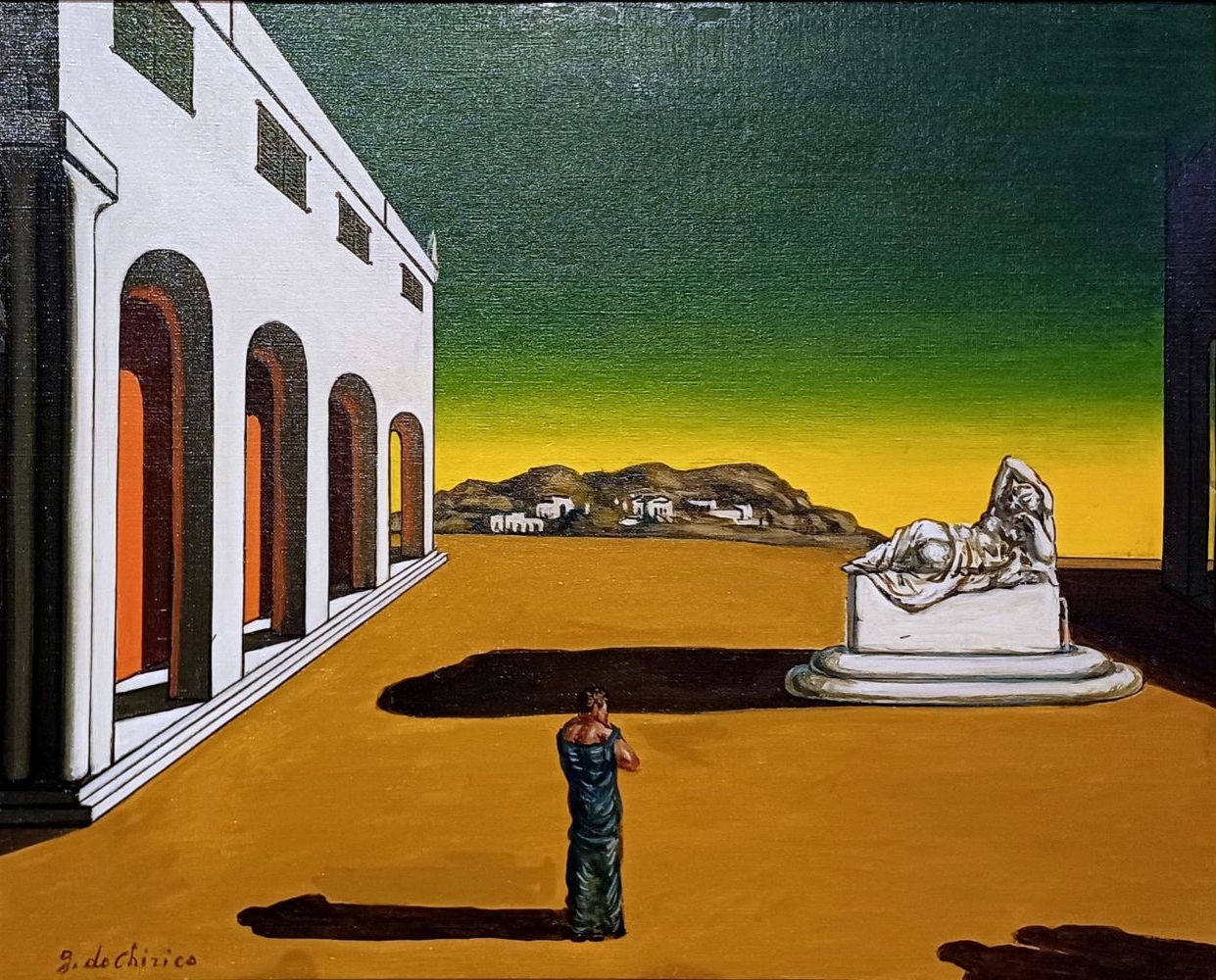
From the hints of their canvases, several artists arise, notably Felice Casorati (1883-1963), who loved portraying still figures, quiet interiors, and objects with an almost unreal precision.
Not to be forgotten are the classical monumentalism of Achille Funi (1890-1972), the people and everyday scenes of Antonio Donghi (1897-1963), and the meticulous and sometimes unsettling realism of Cagnaccio di San Pietro, the pseudonym of Natalino Bentivoglio Scarpa (1897-1946).
Then there is also Piero Marussig (1879-1937), Gino Severini (1883-1966), Ubaldo Oppi (1889-1942), Mario (1891-1948) and Edita Broglio (1886-1977) and Gregorio Sciltian (1900-1985): artists who, though with distinct styles, evoke a sense of suspension and a widespread sense of wonder.
Magical realism in literature
The ideas suggested by Bontempelli in the realm of non-fiction open magical realism to an increasing number of doors in the literary world.
Nevertheless, it is difficult to determine who could be the first “precursor” in this context—whether the Renaissance voyager and writer Antonio Pigafetta (1429-1531), who allowed himself an inspired account of his first voyage around the world with Magellan; or the Russian author and playwright Nikolaj Vasil’evič Gogol’ (1809-1852), who in the novelle The Nose (1836) imagined a college assessor’s nose wandering through the streets of Saint Petersburg on its own.
Then there are those who point to Miguel de Cervantes (1547-1616) and his Don Chisciotte, to the fairy tales of Jacob (1785-1863) and Wilhelm Grimm (1786-1859) or to the tales of E.T.A. Hoffmann (1776-1822), and to The Metamorphosis by Franz Kafka (1883-1924), Death in Venice by Thomas Mann (1875-1955), or The Man Without Qualities by Robert Musil (1880-1942).
But there would necessarily be far too many figures to consider—even among those ante litteram—since we could speak of magical realism every time an author decides to describe an ordinary episode with the utmost precision, even when the elements that compose it begin to cross the boundaries of what we deem plausible.
As we did for the visual arts, then, let us focus on the early decades of the 20th century and onward, starting from the moment when Bontempelli adopts this new creative approach and arriving at the establishment of the three main macro-lines of magical realism in literature, which develop in Europe, in Asia, and in South America.
The branches of magical realism
On the European continent, in particular, mention should be made of Johan Daisne (1912-1978) and Hubert Lampo (1920-2006) in Flemish Belgium, Ernst Jünger (1895-1998) in Germany, and Marcel Aymé (1902-1967) and Michel Tournier (1924-2016) in France, though the strongest impulse to magical realism came from Italy.
Consider Curzio Malaparte (1898-1957), who uses hallucinatory logic and baroque hyperbole to narrate the tragic horror of history, Tommaso Landolfi (1908-1979) who probes the abyss of the mind through grotesque, Ennio Flaiano (1910-1972) who resorts to estrangement to cynically mock reality, and Angelo Maria Ripellino (1923-1978), especially for his Praga magica, who uses poetic erudition to map the territories of European myth.
All are examples of writers who transcend the original notion of magical realism, treating it as a springboard that helps reveal the truth of the human condition alongside many other elements of the marvelous, the surreal, or the absurd.
A bit like in the East, with Mo Yan, Han Shaogong, and Yan Lianke in China, Hwang Sok-yong in Korea, Shamoil Ahmed in Pakistan, Eka Kurniawan in Indonesia, Nguyễn Bình Phương and Nguyễn Huy Thiệp in Vietnam, and Kōbō Abe in Japan.
Leading figures of the second half of the 20th century, most of them still active in the literary scene, who in their works graft myth, shamanism, and the ancestral element into the national history of their countries, transforming magical realism into a tool of civil inquiry, political satire, and a rediscovery of cultural roots, against every form of oppression or censorship.
The South American magical realism
The trend most famous to the general public, however, remains the one South American, closely associated by name with the Colombian writer, journalist, and essayist Gabriel García Márquez (1927-2014), Nobel Prize in Literature in 1982.
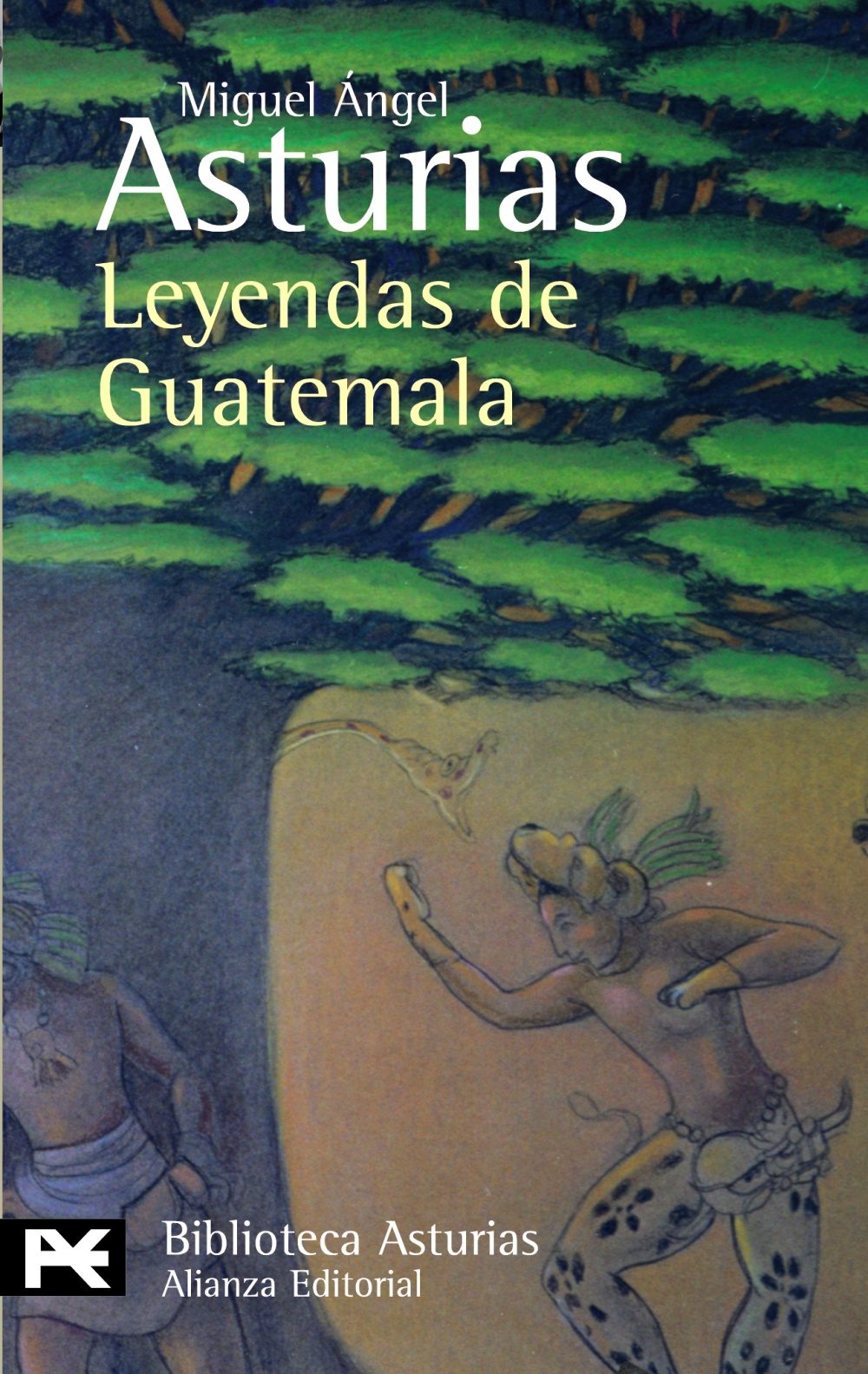
Yet it should be noted that the two figures historically considered pioneers of this literary current are the Venezuelan Arturo Uslar Pietri (1906-2001), father of the theoretical and linguistic framework of cross-ocean magical realism, and the Guatemalan Miguel Ángel Asturias (1899-1974), who in 1930 published in Madrid his Leyendas de Guatemala, a collection of stories where Maya cosmology blends with European surrealist techniques.
To this day, Márquez remains the most internationally recognized exponent, though he is accompanied by other prominent names who, over their careers, traversed the currents of magical realism.
Among the most authoritative, we should mention especially Jorge Luis Borges (1899-1986), who moves within the metaphysical fantastic and dissolves reality into mirrors and logical labyrinths; Julio Cortázar (1914-1984), who explores urban fantastic by forcing the bizarre into everyday life; Juan Rulfo (1917-1986), who brings the living and the dead together in a rural, ancestral world; and Alejandro Jodorowsky, who leans toward a psychedelic surrealism.
Magical realism: not to be confused with…
Here we must pause for a clarification.
On the one hand, when magical realism began to diffuse, some did not perceive it as a stand-alone expressive trend, placing it within the broader frame of modernism and postmodernism; on the other hand, there are those who still tend to connect it to (or confuse it with) surrealism, the marvelous, the fantasy, or the fantastic.
Despite the actual points of contact among these narrative categories, it is therefore helpful to clarify that the difference among them lies essentially in the how the exceptional element is treated at each turn.
While in fantasy magic follows its own rules and inhabits invented worlds created by the author, and in the fantastic the extraordinary intrudes into the mundane, generating doubt and fear in the characters, in magical realism every touch of the supernatural is integrated into the real world and is accepted as a normal fact, before which no one is shocked.
Compared with surrealism, which emerges from the unconscious, from dreams and psychologically driven provocation aimed at destabilizing the strict logic of reason, magical realism instead roots itself in collective myths and the history of peoples.
And it also differs from the real maravilloso because the latter aspires to astonish by drawing not on prodigious details, but on the exotic, baroque, and pristine reality of the South American continent.
Magical realism: 10 books not to miss
And now, after retracing origins and characteristics of magical realism, if you want to (re)discover some cornerstone works, we have prepared a curated selection of texts that spans the entire 20th century, ranging from classic titles to cult favorites presented below in order of original publication.
This is not, of course, a comprehensive list of magical realism books that pretends to be exhaustive—examples could be far more numerous—but it can help orient readers among the multiple manifestations of magical realism across five continents, offering a colorful and evocative overview of authors’ reinterpretations—and, we hope, serving as a starting point for further exploration of the topic.
From Italo Calvino to Arundhati Roy, passing through Michail Afanas’evič Bulgakov, Leonora Carrington, Toni Morrison, and Luis Sepúlveda, here are 10 books not to miss for those who already love magical realism, or for those who wish to get to know it better…
Gente nel tempo
Let’s begin with Massimo Bontempelli (1878-1960), about whom we recommend, among many possible works, the novel Gente nel tempo (1937, published by Utopia Editore). The Corriere della Sera described it as a “visionary family saga in which generations are marked by the intensifying curse.” After the death of the Grand Old Woman, a formidable matriarch who had manipulated both her son Silvano and her daughter-in-law Vittoria, people come to believe that every five years a new member of her family will die, with destabilizing consequences for each of them…
Il visconte dimezzato
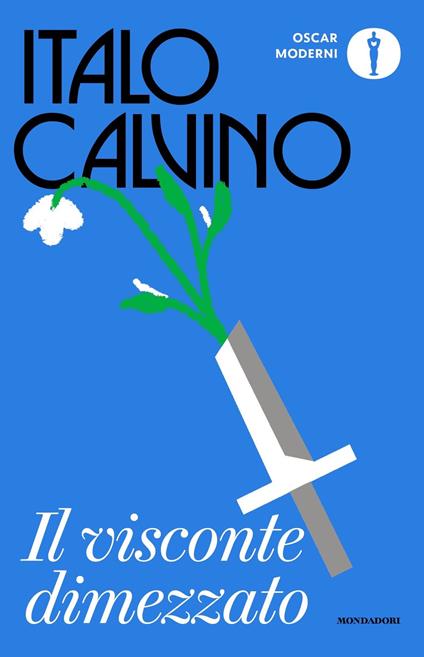
First novel of Calvino’s Trilogy of the Ancestors, Il visconte dimezzato—followed by Il barone rampante and Il cavaliere inesistente—is another illustrious example (along with those already mentioned in this article) of magical realism blended with fantastical and allegorical elements. It is set in 1716, and the viscount Medardo di Terralba returns from war between Austria and Turkey, halves of him left to wander, while a succession of even more “halved” subjects move around him.
L’iguana
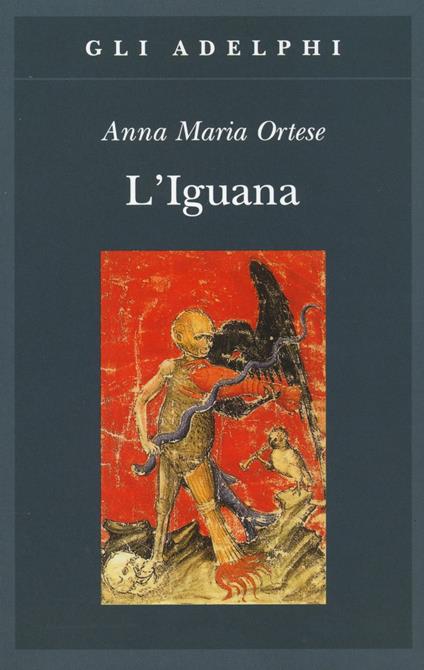
We now turn to L’iguana (Adelphi) by Anna Maria Ortese (1914-1998), a dark and visionary tale recounting the voyage of Milanese nobleman Carlo Ludovico Aleardo di Grees (nicknamed Daddo), a young aristocrat who sails a yacht in search of islands to buy. When he lands on the atoll of Ocaña, off Portugal, he abruptly meets a truly unusual creature: a gigantic iguana, almost human in appearance, dressed in old feminine clothes. And this encounter marks, needless to say, the beginning of a mysterious and destabilizing adventure.
Dona Flor e i suoi due mariti
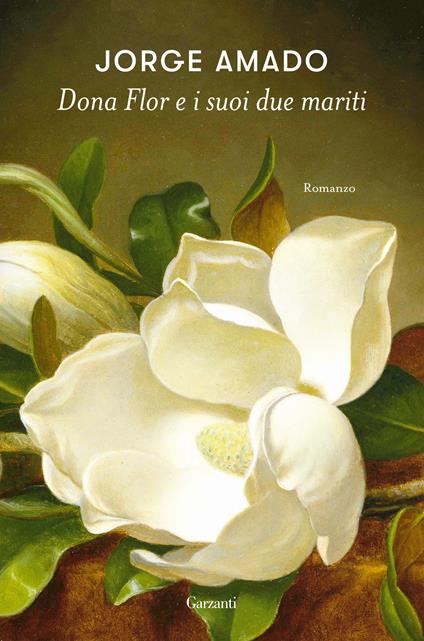
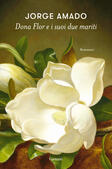
Among the South American magical realism figures is also the Brazilian Jorge Amado (1912-2001), author of innumerable novels, including Dona Flor e i suoi due mariti (Gerzani edition, Italian translation by Elena Grechi), which revolves around Dona Flor’s mourning for her husband Vadinho, “a rogue with a roguish air and libertine ways,” and her second marriage to Teodoro, a straight-laced man who is, however, far less ardent than his predecessor. The protagonist will resolve the problem when the spirit of Vadinho returns to pay her a visit, more passionate and coquettish than ever.
Il Maestro e Margherita
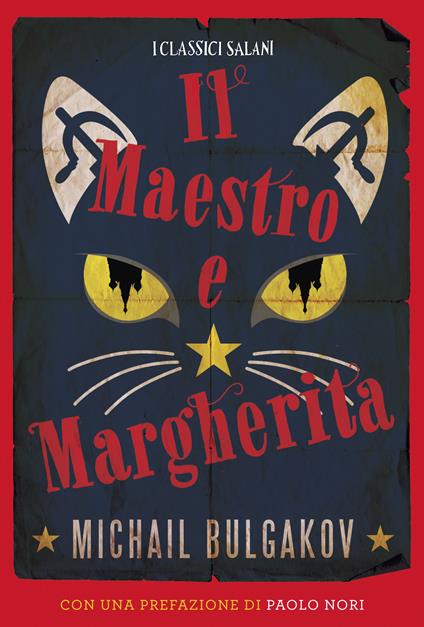
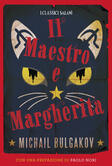
Russia, as noted, has its masters of magical realism, from Chingiz Abdulla Niyazov Ajtmatov (1928-2008) to more recent figures such as Viktor Pelevin, Vladimir Sorokin, and Dmitrij Bykov. Not to forget, of course, one of its towering novecentesque figures, Michail Afanas’evič Bulgakov (1891-1940), author of the unforgettable Il Maestro e Margherita (The Master and Margarita) (Salani, translated by Emanuela Guercetti). A novel that’s both original and complex, with satirical-grotesque charm, to which we have dedicated a more detailed guide for those who wish to explore its plot, meanings, and curiosities.
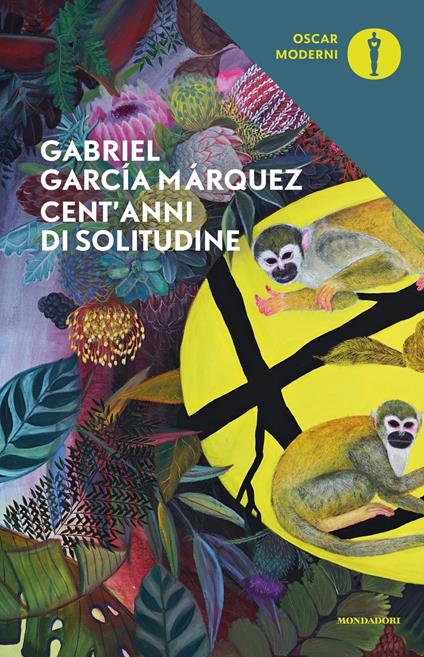
Centuries later, Gabriel García Márquez’s Cent’anni di solitudine (One Hundred Years of Solitude) stands as perhaps the most famous South American work within magical realism. The tale follows the Buendía family in Macondo, founded by Jose Arcadio Buendía, spanning six generations of characters who are decidedly extraordinary.
Cent’anni di solitudine
Today Márquez remains the most globally recognized figure, though he is joined by other notable names who, across their careers, have traversed magical realism’s aims.
Among the most distinguished, we recall especially Jorge Luis Borges (1899-1986), who moves within metaphysical fantasy and dissolves reality into mirrors and logical labyrinths, Julio Cortázar (1914-1984), who explores the urban fantastic by forcing the bizarre into everyday life, Juan Rulfo (1917-1986), who makes the living and the dead meet within a rural, ancestral world, and Alejandro Jodorowsky, who leans toward a psychedelic surrealism.
The magical realism: not to be confused with…
At this point, a clarification is in order.
On one hand, as magical realism began to spread, some did not perceive it as a standalone expressive trend, placing it within the broader framework of modernism and postmodernism; on the other hand, there are those who still tend to connect it to (or confuse it with) surrealism, the fantastic, the marvelous realism, or fantasy.
Despite the real points of contact one could indeed observe among these narrative categories, it is therefore useful to clarify that the difference among them lies essentially in the manner in which the extraordinary element is handled every time.
Where in fantasy magic follows its own rules and inhabits invented worlds crafted by the author, and in the fantastic the extraordinary intrudes into the ordinary, generating doubts and fears in the characters, in magical realism every supernatural touch is integrated into the real world and is accepted as a normal fact, before which no one is perturbed.
Compared with surrealism, which springs from the unconscious, from dream, and psychological provocation aimed at destabilizing the stern logic of reason, magical realism instead roots itself in the myths of the collective and in the history of peoples.
And it is finally distinct from real maravilloso because the latter aims to astonish by drawing on not prodigious details, but the exotic, baroque, and unspoiled reality of the South American continent.
Magical realism: 10 books not to miss
And now, after tracing origins and characteristics of magical realism, if you would like to (re)discover a few benchmarks, we have prepared a curated selection of works that spans the entire 20th century, mixing classic titles with cult picks presented here in order of first publication.
This is by no means a complete list of magical realism books, aiming to be exhaustive; the examples could be far more numerous. Still, it can help orient readers across the five continents, offering a vivid and polychrome panorama of authorial reinterpretations—and, we hope, a starting point for further study of the topic.
From Italo Calvino to Arundhati Roy, via Michail Afanas’evič Bulgakov, Leonora Carrington, Toni Morrison, and Luis Sepúlveda, here are 10 books not to miss for those who already love magical realism, or for those who want to learn more about it…
Gente nel tempo
We begin with Massimo Bontempelli (1878-1960), whose Gente nel tempo (1937) is recommended as a landmark. The Corriere della Sera called it a “visionary family saga in which generations are ruled by a curse.” After the death of the formidable Grand Dame, a woman who manipulated both her son Silvano and daughter-in-law Vittoria, the townsfolk come to believe that every five years another member of her clan will die, with destabilizing consequences for each in turn…
Il visconte dimezzato
The first novel of Calvino’s Trilogy of the Ancestors, Il visconte dimezzato, followed by Il barone rampante and Il cavaliere inesistente (all now published by Mondadori), is another illustrious example of magical realism blended with fantastical and allegorical elements. Set in 1716, the viscount Medardo di Terralba returns from war divided, with a series of subordinates even more “halved” than he is.
L’iguana
We now turn to L’iguana (Adelphi) by Anna Maria Ortese (1914-1998), a dark and visionary tale recounting the voyage of the Milanese count Carlo Ludovico Aleardo di Grees (called Daddo), a young aristocrat sailing in search of islands to purchase. When he arrives at the Ocaña atoll off Portugal, he suddenly encounters a most unusual creature: a gigantic iguana, almost human in appearance, who wears old feminine clothes. And this encounter marks, as one would expect, the beginning of a mysterious and disturbing adventure.
Dona Flor e i suoi due mariti
Among the South American magical realism figures, we should also include the Brazilian Jorge Amado (1912-2001), author of Dona Flor e i suoi due mariti (Garzanti, translated by Elena Grechi), which centers on the mourning of Dona Flor for the death of her husband Vadinho, “a rogue with a roguish air and libertine behavior,” and her second marriage to Teodoro, a man of solid character who, nonetheless, finds Vadinho’s spirit returning to visit, more ardent and truculent than before. A problem that the protagonist overcomes when Vadinho’s spirit returns to her in a way that becomes both passionate and charmingly seductive.
Il Maestro e Margherita
Russia, as noted, also has its masters of magical realism, from Čyngyz Ajtmatov (1928-2008) to more recent authors such as Viktor Pelevin, Vladimir Sorokin, and Dmitrij Bykov. Not to forget, of course, one of its greatest novecento figures, Michail Afanas’evič Bulgakov (1891-1940), author of the unforgettable Il Maestro e Margherita (The Master and Margarita) (Salani, translated by Emanuela Guercetti). A novel that is both original and complex, with a satirical-grotesque charm, to which we have devoted a more detailed guide for those who wish to explore its plot, meanings, and curiosities.
Cent’anni di solitudine
Here we reach Cent’anni di solitudine (Mondadori, translated by Ilide Carmignani), perhaps the most famous novel by Gabriel García Márquez (1927-2014) and, without a doubt, the work that tied his name indelibly to magical realism. The plot, adapted by Netflix in 2024 as a TV series directed by Alex García López and Laura Mora, traces the Buendía family across six generations in the imaginary town of Macondo, founded by Jose Arcadio Buendía, and their extraordinary lives that follow.
Il cornetto acustico

We end with Il cornetto acustico (Adelphi) by Leonora Carrington (1917-2011), a British-Mexican writer and painter who transforms a simple stay in a nursing home into a magical and cosmic adventure, populated by rebellious old women and fantastical figures. In this work, Marion and her companions participate in the recovery of the Sacred Grail…
Dona Flor e i suoi due mariti
Il Maestro e Margherita
Il vecchio che leggeva romanzi d’amore
Il dio delle piccole cose
Amatissima
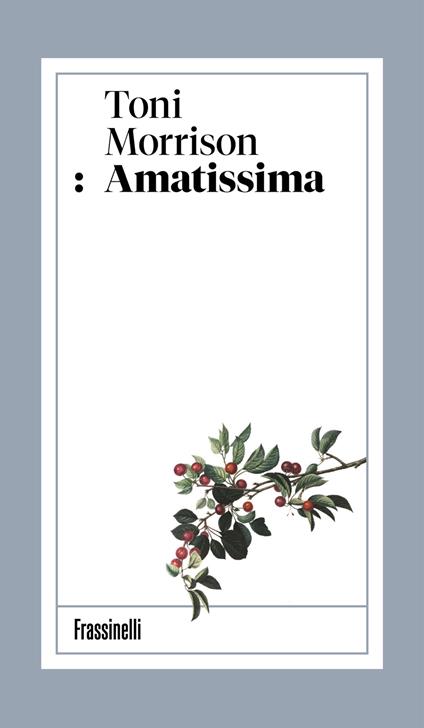
Inspiration for Amatissima (Frassinelli, translated by Franca Cavagnoli and Giuseppe Natale) by the world-renowned author Toni Morrison (1931-2019)—the first African American woman to win the Nobel Prize in Literature—this text blends magical realism with historical narration, detailing the trauma of slavery in the United States and its devastating effects on memory and family bonds. A journey through oppression, the strength of maternal love, and the weight of a repugnant secret.
Il vecchio che leggeva romanzi d’amore
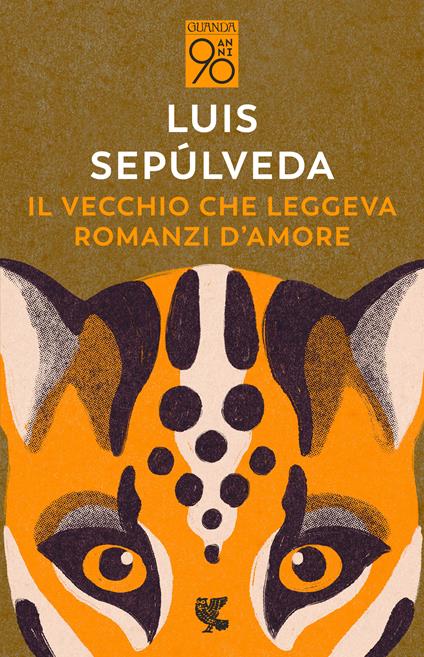
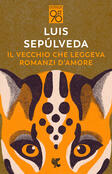
Another significant voice in South American magical realism is Luis Sepúlveda (1949-2020), a prolific Chilean-born writer and journalist who produced, among other notable adult novels, Il vecchio che leggeva romanzi d’amore (The Old Man Who Read Love Stories) (Guanda, translated by Ilide Carmignani). Here we meet Antonio José Bolívar Proaño, who lives at the edge of the Ecuadorian Amazon and is tasked with hunting down a tigrillo, a pursuit that leads to an unforeseen confrontation between man and nature…
Il dio delle piccole cose
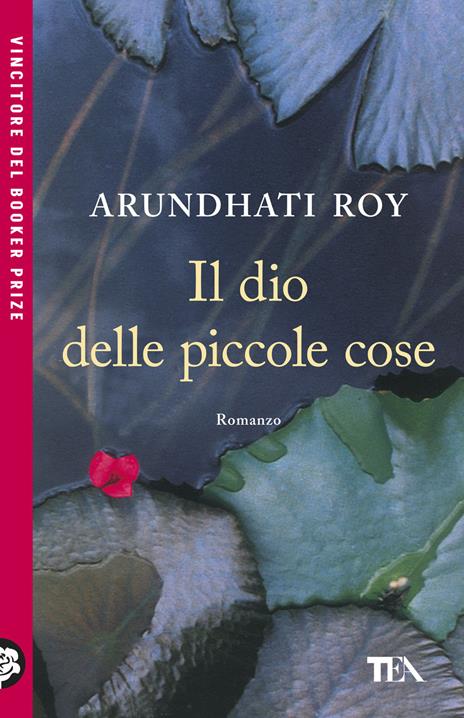
E concluding with Il dio delle piccole cose (Tea, translated by Chiara Gabutti), the celebrated debut novel by Indian author Arundhati Roy (born 1961), winner of the Booker Prize in 1997. A novel centered on a love story in conflict with social conventions, revealing a country torn between tradition and modernity—and inviting readers into a world of small events, ordinary things that seem to matter little but, in the classic magical realism tradition, are charged with a deeper meaning, where a universal truth seems to lie just beneath the surface.