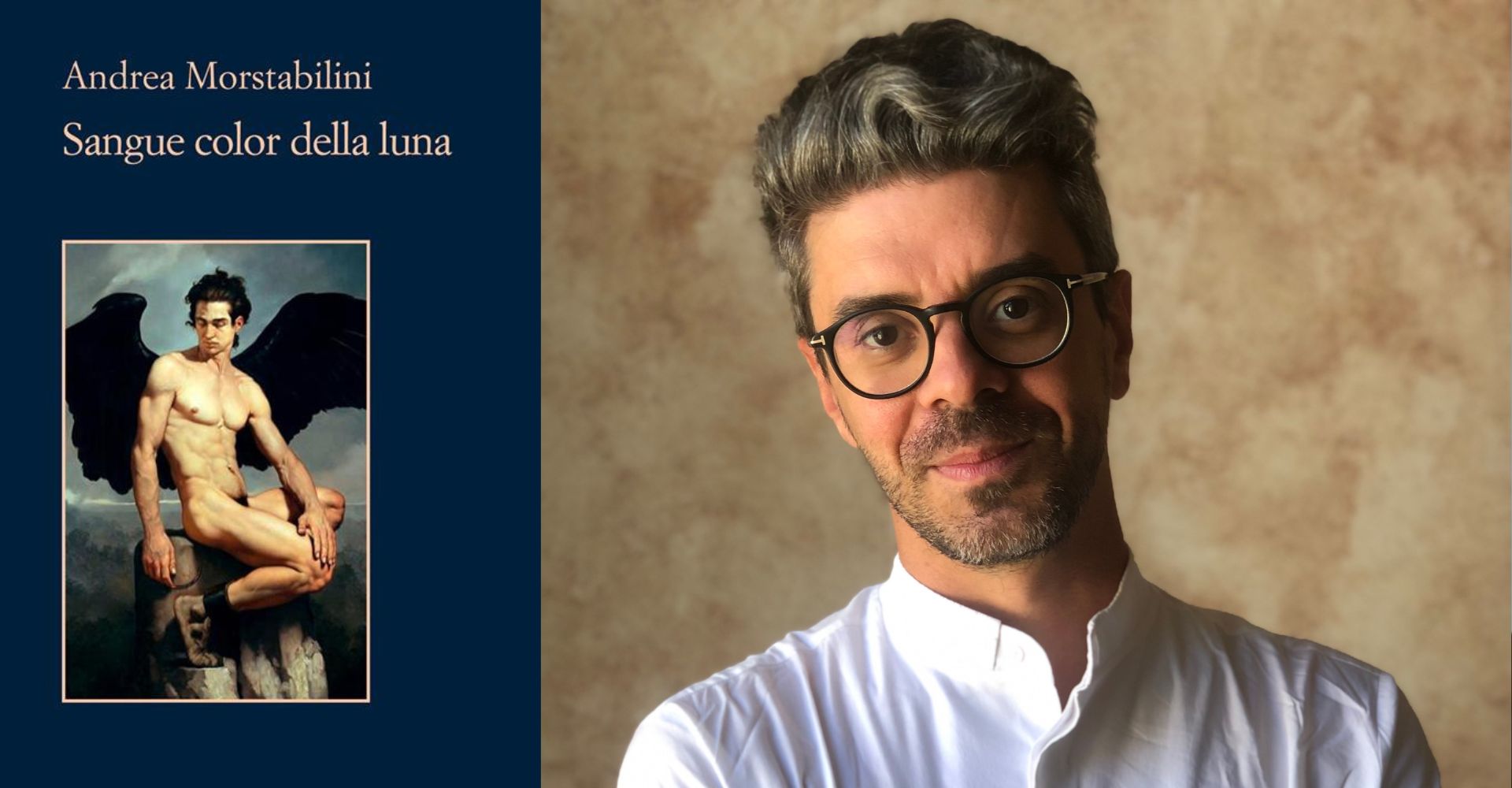
Several years ago, in the same magazine, I told the story of an epiphany. It happened like this: I was eleven when I read Intervista col vampiro for the first time, and that book changed my trajectory as a reader and as a writer. It isn’t too rhetorical to say it changed my life. What I didn’t tell a few years ago — for discretion? for timidity? — is that that book was not only an epiphany, but also a confirmation of something I already knew, albeit vaguely. I was reading about Louis, Lestat, and Armand, and I had to admit to myself what I had tried not to admit until then: I liked boys.
* * *
Horror and Homosexuality, Diversity, Queerness
Horror and homosexuality, diversity, queerness have always walked hand in hand: from the transformative impulses of werewolves to the heretical sexuality of witches at the sabbath, from the vampire’s kiss to the crazy laboratories where monsters are built piece by piece, from Irena Dubrovna in The Kiss of the Panther to Jesse Walsh in Nightmare 2 – Freddy’s Revenge, the monster has always been a metaphor, and among the many possible metaphors, it has stood as a metaphor for the different and the outcasts, the abandoned, the pushed to the margins, and so it became a mantle for those who truly lived on the margins, an icon (camp and not), a symbol reversed of pride and hope: we will dance the Time Warp, again and again.
In Nostalgia for Horror — one of the most intelligent essays written on the subject in recent years, both inside and outside Italy — Marco Malvestio writes:
The figures of alterity represented in horror and gothic, the marginal figures who […] patrol the boundaries of the possible, owe their monstrous and inhuman traits to the transgressions of the norm they enact, and it is precisely the fact of transgressing that makes them monstrous. At the same time these transgressions are challenges to the constituted order, which conceal an implicit desire […] to see it disintegrated.
I also owe Marco for introducing me to Carla Freccero and her theory of queer spectrality, which means having a mediatic experience, opening a channel of communication with those who have been swept aside by official historiography, “listening to voices that ‘could have’ spoken.”
I think then of these voices, of these specters. I think of whom we have lost, of the known epidemics and the silent ones. I think of the loves that do not dare to name themselves.
I think of the glances that are ashamed but still insist, of embraces lasting a few seconds too long, I think of all the words we have spoken to avoid saying others, of the invented tongues that were supposed to protect us, of the monsters we adopted because they made us feel less alone and perhaps stronger, perhaps dangerous: leave us alone, walk away, we have long teeth, we bite.
* * *
Enough Allegories, Enough Metaphors
Today, however, even if there are those who try to silence us, we know our voice and we have learned to use it. The monsters have stepped out of the closet, and what used to be insinuation, riddle, and cipher has become a declaration. The subtext has become text, and the most beautiful film of 2026 isn’t the banal Odyssey by Christopher Nolan but Camp Miasma – Adolescence, Sex and Death by Jane Schoenbrun, which speaks of desire and of the secret codes of horror to blow them up from within.
Today, in addition to Schoenbrun, we have Jennifer Kent and Tina Romero’s Queens of the Dead, we have Adrian Chiarella and his Leviticus (still not released in Italy, though), and we have the TV series Interview with the Vampire (AMC, here in Italy it’s on Netflix), which is not only one of the most intelligent adaptations ever seen, but also a dream imagined by my teenage self, who would never have hoped to see it realized: enough allegories, enough metaphors, we’re here, we’re queer, get used to it.
* * *
Blood Color of the Moon
It is this movement — from symbol to assertion, from hiding to prominence, from rejection to acceptance toward the construction of a new family, all to be invented — that I have tried to reproduce in Blood Color of the Moon.
Ambrose and Agata are vampires who don’t like being called vampires, fragments of a world that pushed them to the margins, debris after the floodwaters. At the beginning of the novel, Ambrose recounts a double discovery: still a child, he discovers the outlines of his sexuality and, at the same moment, the color of his blood, which is pink, not red, the objectified correlate of his difference:
Back then I understood that I was different, and soon I would discover that my mind worked differently as well: I liked cemeteries, not playgrounds. The rides made me sick, heroism had no flavor. I feared that my happiness would be poisonous to others, to those I loved. Balance was precarious, the world a book of signs I could read perfectly: everyone predicted misfortune.
If you’ve ever seen a spider trying to trap a hornet in its web, you know what it means to live inside my head. I am the hornet, and the spider that entwines it.
It is a creed, a manifesto for anyone who has ever preferred Edward Scissorhands to Die Hard, but also a plea for help.
Ambrose rejects his identity out of fear and for fear of pain, hoping for a paradise where happiness can exist, and when he understands that paradise does not exist, perhaps never did, he seeks comfort in a medical science that does not know what to do with him, with a body like his, if not to tear it apart to study it. In the end he will understand that the help he seeks comes from those who have pink blood like his, from his own community, but above all it comes from within.
Not Just a Process of Acceptance
It is a process of acceptance, yes, but also of healing, and perhaps there is no difference. For this reason the blood of my vampires is opposite in sign to that of tradition, from Dracula to Stephen King’s vampires: it does not infect, but heals; it does not kill, but gives life.
Because, now, we are the ones telling our story.
Our voice is strong and clear, and we are no longer afraid.
©Andrea Morstabilini

THE AUTHOR AND THE BOOK – Andrea Morstabilini, a writer, editor, and translator born in 1983, made his literary debut with the novel The Meridian Demon (2016), published by Il Saggiatore, for which he also curated and translated the Italian edition of The Mountains of Madness by H.P. Lovecraft. Still with the Milanese publisher, he published Aldilà (Beyond), his second book.
Blood Color of the Moon, published by Sellerio, is his latest work. Morstabilini brings to the German village of Frankenstein, where four creatures live, who cross Europe and the contemporary world “as if they were still living in a past century,” under the banner of a romance “that is at once a trap, a refuge, and a leap toward the future.” This small clan shares a peculiarity: they have pink blood, a blood capable of healing others. But, despite this ability, they are forced to live on the margins because they are considered different, inhuman.
The youngest among them, Ambrose, is drawn to a scholar who promises to save him from his condition, and to the threats that come with it: they are vampires, and must be exterminated. But a figure of exception enters the story to comfort them: it is Ludwig II of Bavaria, the “king of fairy tales and the Moon” and the inventor of visionary castles, who welcomes them into his abode that defies all plausibility.
Gothic literature, mythology, poetry, science, and satire “converge to give life to something new,” in a story that is “perturbing” whose protagonists, marginal beings, choose their own day of judgment and free themselves from the last bonds, building “a paradise on Earth.”