

For several years, the term feel good has spread in reference to a certain type of Japanese literature translated into Italy. Other ways to describe these books include “coffeehouse novels,” “pamper reads,” or “books that make you feel good.” These terms designate a form of mass-market literature that has given rise to nearly a separate narrative strand (here is a selection of the most significant releases).
These are books that, yes, have always occupied the shelves of our bookstores, but which rarely, until about five to six years ago, came from countries like those in the East.
The phenomenon did not go unnoticed: a lot has been written and spoken about it. But if we know what we are referring to, we asked where it all started? And how it managed to work so well? To enchant so many readers?
This article aims to do just that, trying to outline the context in which the trend was born, what it consists of, and which direction it seems to be heading.
To do so, we enlisted the help of a few
Contents
- The books that make you feel good
- A small step back: Japanese fiction in Italy
- The arrival of Japanese “feel good” in Italy: the Kawaguchi phenomenon
- New relationships between Italian and Japanese publishers
- A bridge between two cultures
- What will be the future of books that make you feel good?
- What to expect from Japanese literature?
The books that make you feel good
What do we mean when we refer to the “books that make you feel good”? These are novels that respond to the desire for lightness and escape on the part of readers. They are texts that reflect a wish to slow down, to dispel everyday concerns, and to rethink one’s time, all within a Japanese setting that feels distant.
Although the themes are universal, don’t think that the presence of Japan is secondary: what links these works to their place of origin is the presence of elements belonging to Nipponese culture, such as cuisine, national celebrations, and traditional popular customs.
For the iamatologist Giorgio Amitrano – lecturer at the University of Naples “L’Orientale” and translator, among others, of Banana Yoshimoto and Haruki Murakami – in an interview with Elle, “on one side there is a consoling component: (these books, ed.) gratify the reader by giving the impression that it is possible to heal sad emotions with ease. On the other, the Japanese lifestyle is becoming increasingly attractive: in the past it was just an exotic suggestion, but today Italians travel, get to know the country also through films […] and anime…”.
A small step back: Japanese fiction in Italy
But in what context did the Nipponese “feel good” novels make their appearance? How had Italian publishing performed, up to their release, in relation to Japanese literary fiction?
The first significant arrival of works in Italy occurred between the late 1950s and the early 1960s, when authors such as Kawabata Yasunari (the first Japanese Nobel laureate in 1968), Jun’ichirō Tanizaki (translated in Italy much earlier than in other countries) and Yukio Mishima (one of the most translated Japanese authors in Italy, with at least about forty books published over half a century) began to appear.
These writers sat alongside works already offered in the previous decades, starting with the great classic The Tale of Genji by Murasaki Shikibu, written in the 11th century and regarded by many as the first modern novel. The book, now published by Einaudi, was brought to Italy for the first time in 1935 by the Corbaccio publishing house, in a version that presented a selection of chapters of the work.

Another author who later enjoyed considerable success here (a fortune that continues to this day) is Dazai Osamu with The Setting Sun, included in Feltrinelli’s Le comete series, curated by Valerio Riva, who called it “the Gattopardo of Japan.”
But it is from the 1980s onward that interest in the country intensified, and in Italy works emerged that appealed to various media: cinema, manga, anime, and, of course, novels.
The 1990s then saw the arrival of names that would strongly influence the Italian publishing market, such as Banana Yoshimoto and Haruki Murakami.
Yoshimoto debuted in Italy in 1991 with Kitchen, published by Feltrinelli (which still handles her) as the first Japanese title to become a bestseller in our country. In 1993 it was Murakami’s turn with Tokyo Blues, also published by Feltrinelli (later acquired by Einaudi, which reissued it in 2006 under the title Norwegian Wood; since then the publisher from Turin has published the author).
The first decade of the 2000s confirms the continued interest in authors such as Yoshimoto and Murakami, but also Mishima and Kawabata. This period also saw genre fiction joining the literary scene, for example with crime novels, which had already started to appear in the previous decade (for instance, in the Gialli Mondadori in 1989 appeared Como arena tra le dita by Seichō Matsumoto, the “Japanese Simenon,” today published by Adelphi).
There were also horror novels, for example with Suzuki Kōji, and romance literature, with Shouting Love from the Center of the World by Kyōichi Katayama, published by Salani in 2001 and inspiring a film, a TV series, and a manga.
From the 2010s the contemporary Japanese narrative published in Italy becomes increasingly abundant and develops a more direct relationship with the original works: indeed, works that have won recognitions such as the Akutagawa Prize appear not long after their homeland publication. This is the case of the author Sayaka Murata, winner in 2016, published in 2018 by e/o with The Girl at the Convenience Store, a book about societal and family expectations.
Distopias and books dealing with issues of gender also gain space (for the latter, one can cite Breasts and Eggs by Mieko Kawakami, published by e/o in 2020).
In these years new series spring up as well, such as Asiasphere from the publisher Atmosphere, Kimochi from Rizzoli, and Asia from add editore.
The numbers speak clearly: as La Lettura reported on July 13, 2025, in the publishing world Japan “continues to exert a remarkable charm on the West, and Italy in particular. If between 2000 and 2017 the annual average was fifteen volumes by Japanese authors, in 2022 the titles stood at sixty-three. In 2024, counting reissues, old glories, and new releases, they approached the hundred mark.”
The arrival of the Nipponese “feel good” in Italy: the Kawaguchi phenomenon
Once the context is outlined, we can now try to draw a watershed, a starting point that opened the doors to the spread of the “feel good” (Japanese) genre in Italy. To do this, we must return to March 2020, when Garzanti published a novel of just under 200 pages that managed to kick off the phenomenon we are discussing.
It is Until the Café Is Warm (translated by Claudia Marseguerra) by the Japanese Toshikazu Kawaguchi (whom we interviewed in 2021), a worldwide publishing phenomenon, capable of climbing charts and staying at the top even years after its publication.

What drew attention was the moment of the book’s release, precisely at the outbreak of the pandemic. But what could have been a disastrous start, in reality managed to surprise everyone. By July 2020, only a few months after publication, these were the terms with which La Lettura described it: “Small, precious lessons that have won over more than a million readers, showing a possible path to find peace, consolation. To mend one’s existence in a season dominated by anxiety and uncertainty like the one we are living in today….”
Was the Japanese coffeehouse the right thing at the right time to win the hearts of Italian readers? Could a publishing phenomenon of this scale be foreseen? We asked Elisabetta Migliavada, director of Garzanti’s fiction, who shared some backstage details: “One of the first elements that caught our attention was the coffee and the bond that Italian readers could form with this place. Soon after, we began evaluating Japanese fiction, which until then had reached Italy mainly through more literary texts, following authors like Banana Yoshimoto. So, the more popular form of a Japanese novel intrigued us, also because Italians have a great passion for Japan, for the culture and way of life.”
The book was acquired with these three factors in mind – interest in Japanese culture, the coffee element, and a publishing house that already had several titles in the genre behind it (to give just one example, twenty years earlier Garzanti had published Chocolat by French author Joanne Harris ) – and yet no one could have imagined what would happen next: the closure of all physical bookstores.
What to do, then? “From the release of Until the Café Is Warm, which happened on March 12, 2020, a week after bookstores closed due to the pandemic, the book seemed destined to have little chance,” reports the Garzanti fiction director, and continues: “What happened next was somewhat surprising: we nonetheless continued to work to promote the book online, the only channel open at that moment. And, in fact, Until the Café Is Warm began to sell on the major digital bookstores. There we saw it doing particularly well, perhaps also due to elements of the plot that made it suitable for that period: there is a lot of carpe diem philosophy, for instance. In some way it cocooned people at the moment they needed it most, capturing that mood. But it was thanks to independent bookstores that the book took off: booksellers understood that this was the novel readers needed at that moment.”
A true case of word-of-mouth, then, which opened the door to a genre that, more than six years later, continues to captivate. Trying to understand why these themes are so popular, Migliavada emphasizes: “Obviously the book sparked empathy in the public, which readers often expect from the author. Readers loved many aspects of the novel, not only the more reassuring ones, but also the way Kawaguchi tells about pain.”
New relationships between Italian and Japanese publishers
An interesting aspect that emerged from conversations with insiders is the communication between agents and editors between Italy and Japan. It should not be forgotten that we are dealing with two very different worlds, even at the publishing level. For this reason it was helpful to talk to Giulia Mignani, editorial consultant at Mondadori, who in the past has also worked as a literary agent and who, for the Milanese house, curated acquisitions and publications (among others) of The Moonlit Café by Mai Mochizuki.
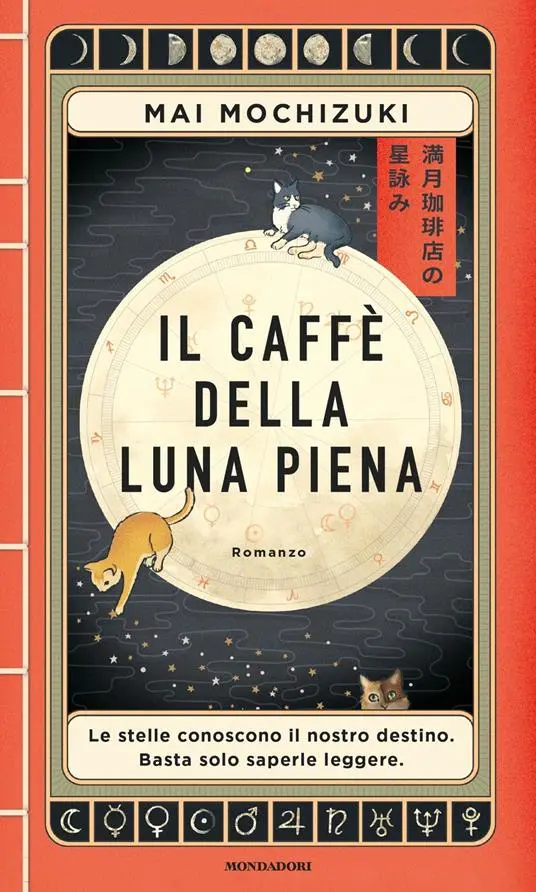
For Mignani, Italian publishers quickly realized the possibility of “offering reassuring fiction for a broad audience.” Books that comfort with everyday-life stories, set in evocative locations. The fact that the phenomenon began precisely during the Covid period is no accident: readers craved to escape, to discover new settings, and, above all, to find a little lightness.”
So it was necessary to adapt accordingly: agents began to recover titles from the Japanese catalog, becoming a key element for publishing houses to get in touch with a publishing reality that operates in a completely different way. For example, authors are represented by multiple publishing houses, so there is the difficulty of dealing with different editors, coupled with the fact that these authors are very prolific, which makes it hard for the Italian publisher to keep track and buy all the titles, the consultant explains.
European agencies, therefore, began to equip themselves by hiring more people who know the language, and even Japanese publishers moved to launch themselves in the Western market. Mechanisms, as Mignani always notes, “that were built quickly and dynamically.”
A bridge between two cultures
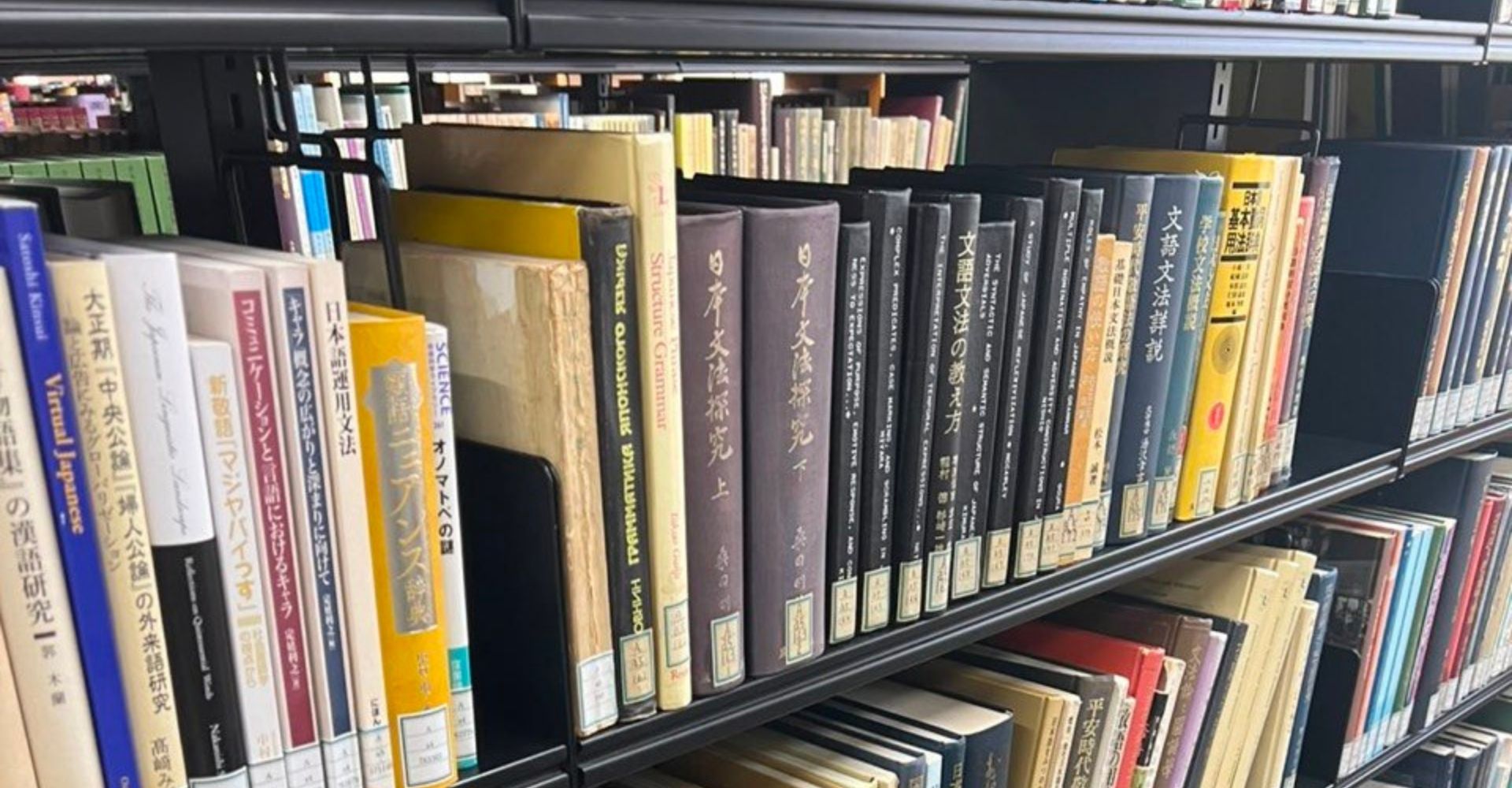
Speaking of exchanges between the two cultures, translators have played an important role. As revealed in the interviews, our country has somehow paved the way for the genre, which later spread to the rest of Europe.
Anna Specchio – professor of Japanese language and literature at the University of Turin and translator for several publishers, including Einaudi, e/o, Marsilio, Mondadori and others – notes: “In the field of translations, Italy is very responsive. In the case of the ‘feel good’ books there was a happy intuition, followed by an editorial operation that led to further, related publications; but if Italy is full of Japanese titles, it is also thanks to the tips from translators who collaborate with publishing houses. Another distinctive aspect of the Italian context is indeed the presence of translators who do scouting and propose titles, understanding which novel might fit a given imprint.”
Conversing with Gala Maria Follaco – professor and researcher at the University of Naples “L’Orientale” and translator for several publishers, including Adelphi, Neri Pozza and Feltrinelli, for whom she has translated, among others, Banana Yoshimoto and Satoshi Yagisawa – another interesting aspect emerged about the “bridge” that this literature can create, not only among industry professionals but also, more generally, between the Italian public and Japan.
The case of My Days at Morisaki Library
Professor Follaco translated My Days at the Morisaki Library by Satoshi Yagisawa (Feltrinelli), a novel filled with numerous references to Japanese titles, many of which are unknown or little known to Italian readers. The response, however, was very positive: “The references within the book had given me pause for thought, which I shared with the publisher: they mention novels and authors that are not translated in Italy, therefore largely unknown to our audience. And yet the book also found great success with us, a success I hope has generated interest in Japanese literature. I thus hope that, thanks to these books, a cultural bridge between the two countries may be created.”
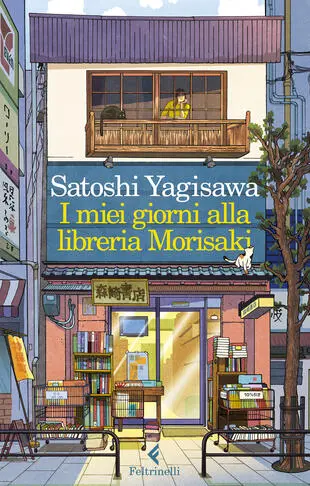
Moreover, professor Follaco highlights a true shift in perception of this literature: “Until, say, twenty years ago, Japanese fiction was often seen as something somber, melancholic, and bitter. Understandable, given that among the most popular authors were Murakami, Yoshimoto (initially darker), Mishima and Dazai. Then there was a complete shift in perception through the publication of the Iyashi novels (the Japanese term for the ‘feel good’ novels). Yes, there is always the risk that the average reader may conflate all Japanese literature with what is, in the end, a filter that is not fully representative, but that is a discussion you can have about any imported literature.”
What will be the future of books that make you feel good?
To sum up, we can say with a certain degree of confidence that the “feel good” genre has been quietly present in our libraries well before kittens, coffee, and pastry shops began coloring our shelves. But undoubtedly, the world of Japan has captured the Italian public’s attention.
Why? Why did people turn to the words of writers from the other side of the globe? Perhaps the explanation lies in the possibility of reading about very complex yet universal themes—such as grief, illness, loneliness, and pain—in a framework of strong estrangement, achieved thanks to the Japanese elements present in the plots. On one hand they fascinate; on the other, they return a sense of exoticness. Reading these themes with a certain detachment provides a sense of catharsis, a release from pain, without losing the “light” component that this form of storytelling also offers.
It should be remembered, however, that what is described in these novels is only one side of Japan, a country that, like all nations, is made up of a thousand facets.
One thing is certain: as highlighted by all the interviewees, through the boom in this literature new channels of dialogue between Italy and Japan have been created, which could be used to explore new themes and new narrative genres.
Regarding the future of the “feel good,” Elisabetta Migliavada remains optimistic: “Escapist literature, as demonstrated by the success of romance, continues to be highly valued. Readers, and not only Italians, want to disconnect from reality and daily life, especially because we are in a rather dark historical period, with wars and economic crises.”
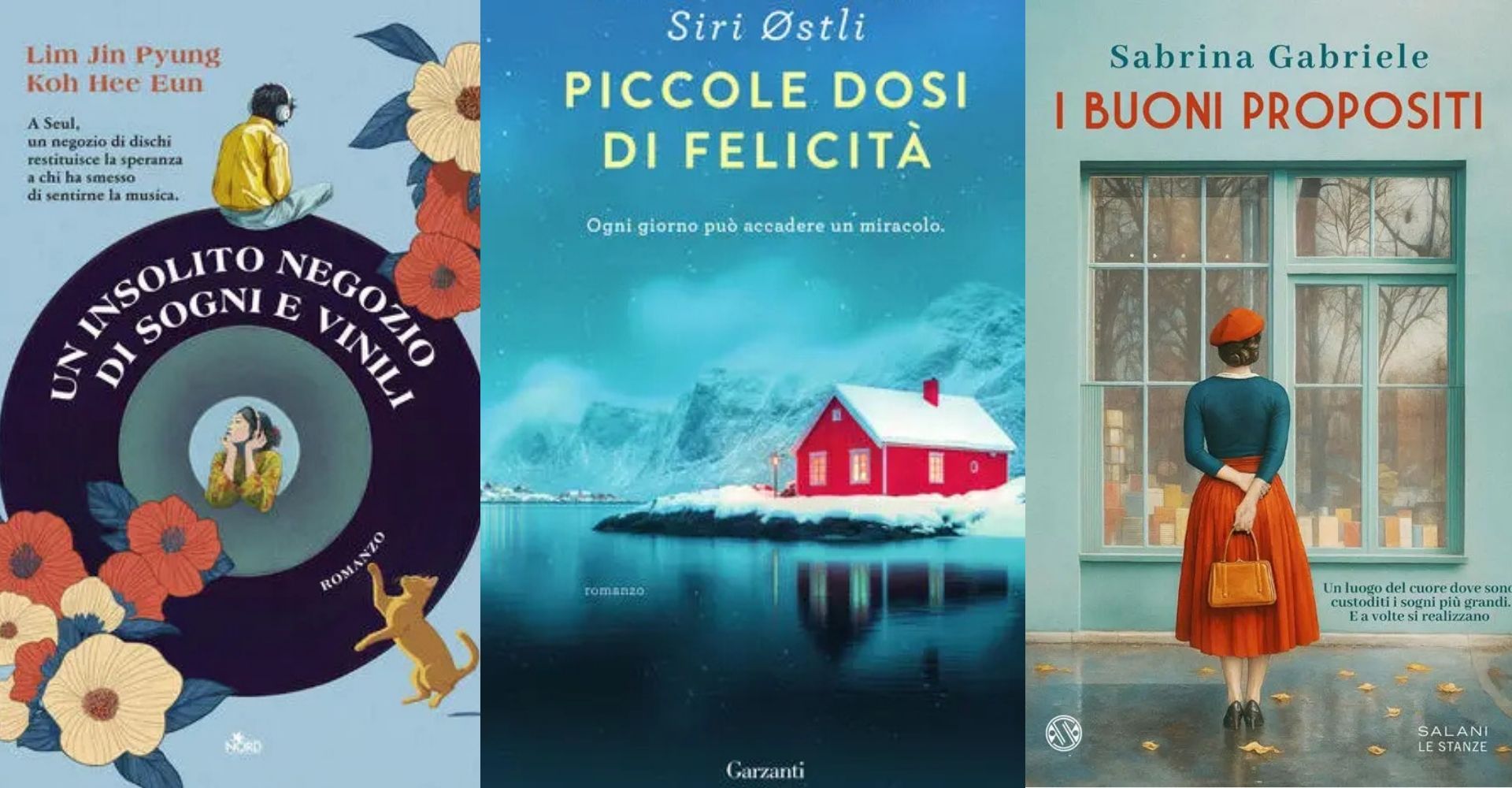
She confirms this also by the publication of several titles that fall into the category but come from different countries (from the Nordic countries to South Korea, without forgetting Italy itself).
What to expect from Japanese fiction?
As far as Japan is concerned, there is still a great deal – fortunately to explore. The translators interviewed here have, for example, highlighted a shift in interest among Japanese writers (and the agents who later pitch titles to our domestic publishers): alongside the evergreen mysteries, horror and dystopian themes are taking up more space in our bookstores, even appearing on the charts (an example being the case of Uketsu, which with Strange Drawings, published by Einaudi Stile Libero and translated by Stefano Lo Cigno, was a standout in the summer of 2025).

Specifically, Anna Specchio adds: “If until yesterday we looked for reassuring reads, why is horror now seeming to offer us more comfort than ‘feel good’? Perhaps what truly scares readers are novels anchored in reality, those that confront the instability of daily life, revealing its fragility and precariousness. In this sense, horror paradoxically feels more ‘manageable’.”
Is a counter-reaction to the “books that make you feel good” on the horizon? From readers (and enthusiasts or curious about Japanese literature) we can only wait to see what surprises the Land of the Rising Sun has in store.
note: this article stems from the author’s Master’s thesis in publishing and cultural journalism at Sapienza University of Rome.
