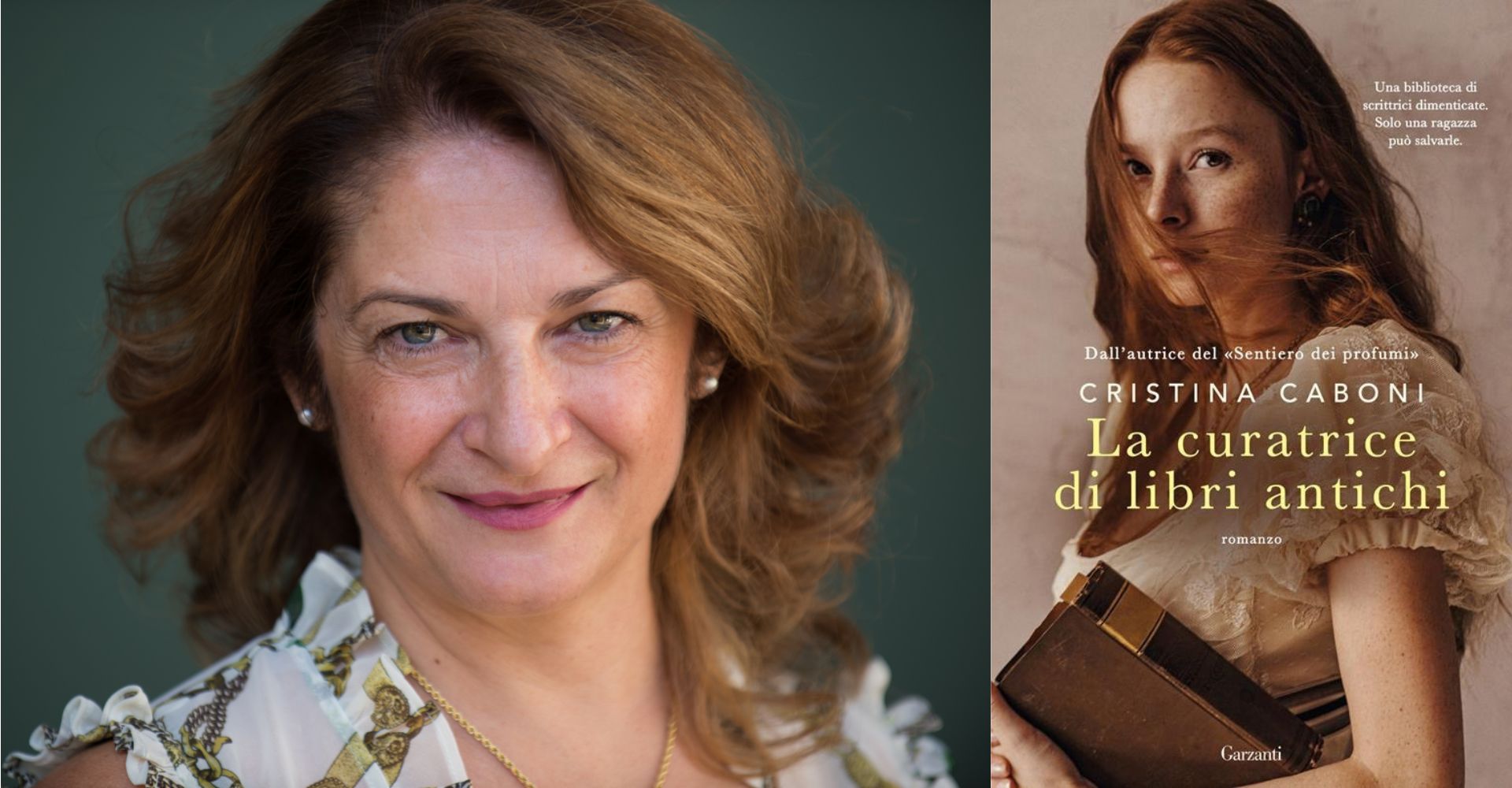
Among the successful authors returning to bookstores this autumn is Cristina Caboni, whose most recent titles include The Crystal Necklace, The Girl Without Roots, and The Route of the Stars, all published by Garzanti.
It is Garzanti, the Milan-based publishing house, that presents the new title, The Curator of Ancient Books, which centers on a young librarian tasked with cataloguing the volumes in the place where she works. In performing this, she realizes there is a red thread weaving them together: each was written by a female author.

Christine de Pizan, Isotta Nogarola, Rosvita of Gandersheim: writers who have long been forgotten, sidelined as strong and rebellious figures, in a reality where there was not enough room for women.
Reading, Manon realises that among those books there seems to be a link to her family history… while she investigates to truly uncover what lies behind, by her side is Rafael, a young librarian.
The Curator of Ancient Books
Il profumo sa chi sei
La rotta delle stelle
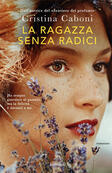
La ragazza senza radici
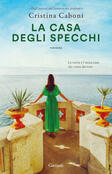
La casa degli specchi
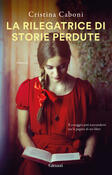
La rilegatrice di storie perdute

La collana di cristallo
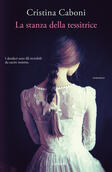
La stanza della tessitrice
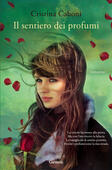
Il sentiero dei profumi
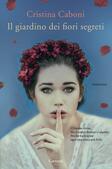
Il giardino dei fiori segreti
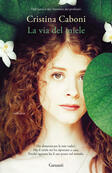
La via del miele
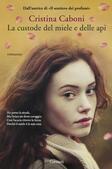
La custode del miele e delle api
La ragazza dei colori
Andrà tutto bene
Tu sei parte di me
“A book is a voice,” her father had always reminded her, who, in the few years he could know her, taught her everything she now knows about books. And it is precisely the voice that Manon tries to restore to each of those authors who seem to have lost it for too long.
Caboni, in this work, pays homage to novels (as many other books gathered in this list do) and, with her family, runs a beekeeping business near Cagliari, as the titles The Keeper of Honey and Bees and The Way of Honey hint.
Pensive, Manon returned the volume to its place, climbed the step stool, reached the highest shelf, and took another. When she opened it, her eyes widened. A handwritten copy of Christine de Pizan’s Cité des dames. “Oh, my God…” she whispered with ecstasy.
“Ma’am, what’s happening?”
Manon clung to the ladder, surprised. Then she looked at Luca. “Have you been here long?” She had been so immersed in the reading that she hadn’t noticed the young man.
“I came to help you. Do you want me to come up?”
She shook her head. “I’ll come down in a moment,” she replied, still immersed in the blue of the miniature she was admiring, in the details of Christine, the author, depicted at the moment she received a visit from Reason, Rectitude, and Justice. They had gone to her to convince her of the value of women and the need to build a city where all the ladies, at last, would be safe. As she read the archaic French she had learned at university, suddenly she tensed. Anxiety, anger, elation. The emotions overwhelmed her as if they were her own. And she saw the women as Pizan had imagined them: strong, serene, elegant.
Observe the past; women have made the world great.
Manon was there with them, but she was also in the library. She fixed the book, astonished, captivated. She opened it again carefully. Whose copy was it? She looked at the title page, but found nothing. “Impossible…” It was as if that copy had been bought and safeguarded for centuries. She wanted to look at it more closely. The initial letter was magnificent, rich in detail, she stared at it for a long time. “Christine de Pizan,” she said again in wonder.
When she stepped down from the ladder, Luca watched her closely. “It looks very old; did Christine really write this?”
“What do you mean?”
“It’s a woman, right? I hadn’t imagined they wrote so long ago.”
Manon raised her head and closed her eyes, while gathering what she knew about the oldest female literary history, the phrases flowing through her mind. “Enheduanna, a priestess of royal lineage in Mesopotamia in the second millennium BCE, wrote hymns to a goddess.” He nearly burst out laughing at the astonished look on the boy’s face. “Christine de Pizan,” she showed him the book, “was born many centuries later. She left Venice around the mid-fourteenth century and moved with her family to France, to the court of King Charles V, where her father was the physician. She was twenty-five when she became a widow, bearing great responsibilities. She could have found another husband, but instead opened a scriptorium. She is the earliest professional writer for whom we have reliable records.” From copy to the creation of the book, binding, illumination. She caressed the work. Finding it in those conditions was almost a miracle. “For girls, education was private, familial, and conventual,” she continued.
“And the children?”
“They could attend schools and universities.” The world was organized that way.
Luca had moved and was studying the books. “But I have always heard talk of men, poets, writers. Even ancient ones,” he clarified. “I don’t recall ever reading works by women.”
Manon narrowed her eyes. How could she explain what had happened? The topic was so vast, so complex and yet at the same time disarmingly simple. “Imagine a system that carefully selects which works to copy because it believes they deserve to be transmitted and endure through time. On one side, books written by women; on the other, institutional, recognized, celebrated works written by men. Now tell me, if copying required time, money, parchments, and precious paper beyond the long labor of the scribe, which do you think were chosen?”
“Um… those by men?”
Manon smiled, but there was no amusement on her face. “Exactly, continually, in every era. And so, which ones reached us?”
Luca shifted uncomfortably. “The works written by men.” He paused. “That’s rather discriminatory.” It goes much further. “And this is the basis of our entire classical culture.” Manon picked up another book. “Apart from a few exceptions, we can count on a single literary voice, monolithic. We have lost the variety, Luca. The different points of view. What a pity, right?” The boy had stopped in front of the Cité des dames, and he was staring at it. “But what about that one, then?” he asked, pointing to the volume. “Christine de Pizan took care to copy a large portion of her works.” The surviving codices showed three main hands, one of which, as some studies claimed, was Pizan’s. “She held a position of great prestige at the French king’s court; she offered her works to queens, dukes, and princes. She was supported by powerful people. Her books were extraordinary, luxurious, and beautiful. But those by other women? I assure you there were many.”
Luca did not answer; Manon was used to that silence.
“The presence of the manuscript in the library must be noted. It is a very important find.”
“I’ll do that immediately.”
Manon took another volume; it was a printed copy of Rosvita of Gandersheim. She checked the margins, the title page. Nürnberg 1501. There was a scribbled note, barely legible. But that wasn’t what drew her attention. It was another work written by a woman, she thought in astonishment. Quite unusual. Then she felt another touch, a caress, and finally a shiver ran through her, and this time it came to her like a chant. Moved and unsettled, she noted everything in her notebook. Luca remained there beside her, watching, opening his mouth, then closing it again. Manon showed him the book she held in her hand.
“This,” he said with a smile, “is an example of what I was telling you earlier; you see, it’s almost a miracle.”
“Why?”
“The author, a nun, lived in a convent, surrounded by other educated women. She wrote legends, poems, and dramas. She even imitated the playwright Terence.” A story Sebastian had told her came to mind. “She even corrected him.” Manon recalled the lessons in medieval philology. Accents, abbreviations, rather dull topics, and then she had arrived. While the professor spoke to her about Rosvita’s story, Manon had felt the enthusiasm. She had also understood the fragility tied to transmitting a work. It survived because someone copied it. Perhaps the nuns themselves. “The manuscript left the convent and slept in the library of Saint Emmeram Abbey in Regensburg for five centuries, you understand? A single copy. And then a man, a scholar who found it, realized its value and chose to disseminate it. That is why we know it now.” “I knew nothing about it. It’s very strange and also fascinating.”
Yes, it was. But she could only think that now, even though everything was different from the past, from how she used to enter into books, she could still perceive the voices of the women who wrote them.
“Do all these things appear in her books?”
“Like what?”
“The ones she wrote.”
Surprised, he shot her a glance. “There is something, yes. But more than anything it’s a broader discourse about the codes.”
“I want to read them all.”
She smiled at him, a little embarrassed. “Then tell me what you think?”
“Sure!”
Manon glanced at the library, wandering along the spines. She had pulled books from every corner. They were all works written by women. “How strange,” she whispered.
“What?”
She turned toward Luca. He was about to confide in her, then remembered Serra. “Nothing.” She forced a smile, then returned to her notes. Works written by women. All of those I’ve seen. She underlined the sentence. How was that possible? She raised her head, her gaze roaming the shelves. Her heart began to beat loudly.
© 2026, Garzanti S.r.l., Milano
(continua in libreria…)