There are books that do not invent stories, but enter into something that already exists. Books that, in some way, pursue and reconstruct what has happened. Returning it, then, to new readers.
Tracing Literature: a five-act journey
On one hand, in recent years several authors have written novels around imaginary titles created for the occasion (the so-called “pseudobiblia,” which have also brought fortune to Stephen King, H. P. Lovecraft, Roberto Bolaño and Mohamed Mbougar Sarr), but on the other hand it is interesting to discover how Contemporary Literature constantly feeds on its past and, as a consequence, writers have embraced that search among past works and lives to forge new books, new pages that excite readers anew.
In Search of a Forgotten Writer
Speaking of investigation, in recent months Guanda published The Invention of Tristan, the French writer Adrien Bosc’s work (translated by Laura Bosio). The book—combining a documentary and testimonial section with a clearly romanced narrative—recounts the lives of two men.
The first is Zachary Crane, an American journalist (a contributor to the New Yorker) who now lives in Paris and is in a crisis with his fiancée. The second is Tristan Egolf, also an American writer (born in 1971 and died at only 33 in 2005, by suicide) who had found success in France and then faded from memory.
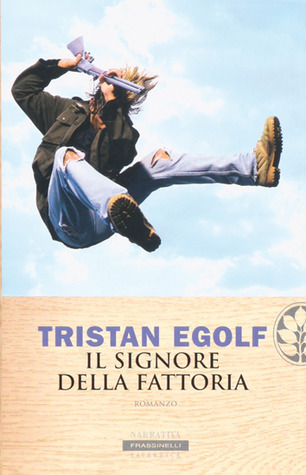
Bosc builds a narrative that shifts across times and styles. It alternates Crane’s chronicle and his entirely casual approach to Egolf, and the reconstruction of a life that, yes, had already been told, yet still has something to say… Because Egolf was a complex figure, with a troubled life, who only after a long time managed to publish his first novel, Le Seigneur des porcheries, and achieved great success.

But as often happens, after a long ascent, the descent is much quicker and the following novels do not find the same positive reception… Bosc enters gently, yet clearly, into the barriers to happiness of what at times seems to be just a boy with a need to tell what’s on his mind, speaking (through Crane’s character) with those who knew him and revealing to the already acquainted with Egolf and to future readers how a chance encounter led the American—who at the time played on Paris bridges—to the doorstep of Patrick Modiano, Nobel Prize in Literature, and into the offices of the Gallimard publishing house.
After a little less than two hundred pages, it almost feels like you know Egolf, indeed Tristan, and, with him, that tormented world. One would even want to read him, to pick up Le Seigneur des porcheries (published in Italy by Frassinelli) but, as if to amplify the legendary aura, the book has long been out of print…
When Love, Work, and Fiction Meet
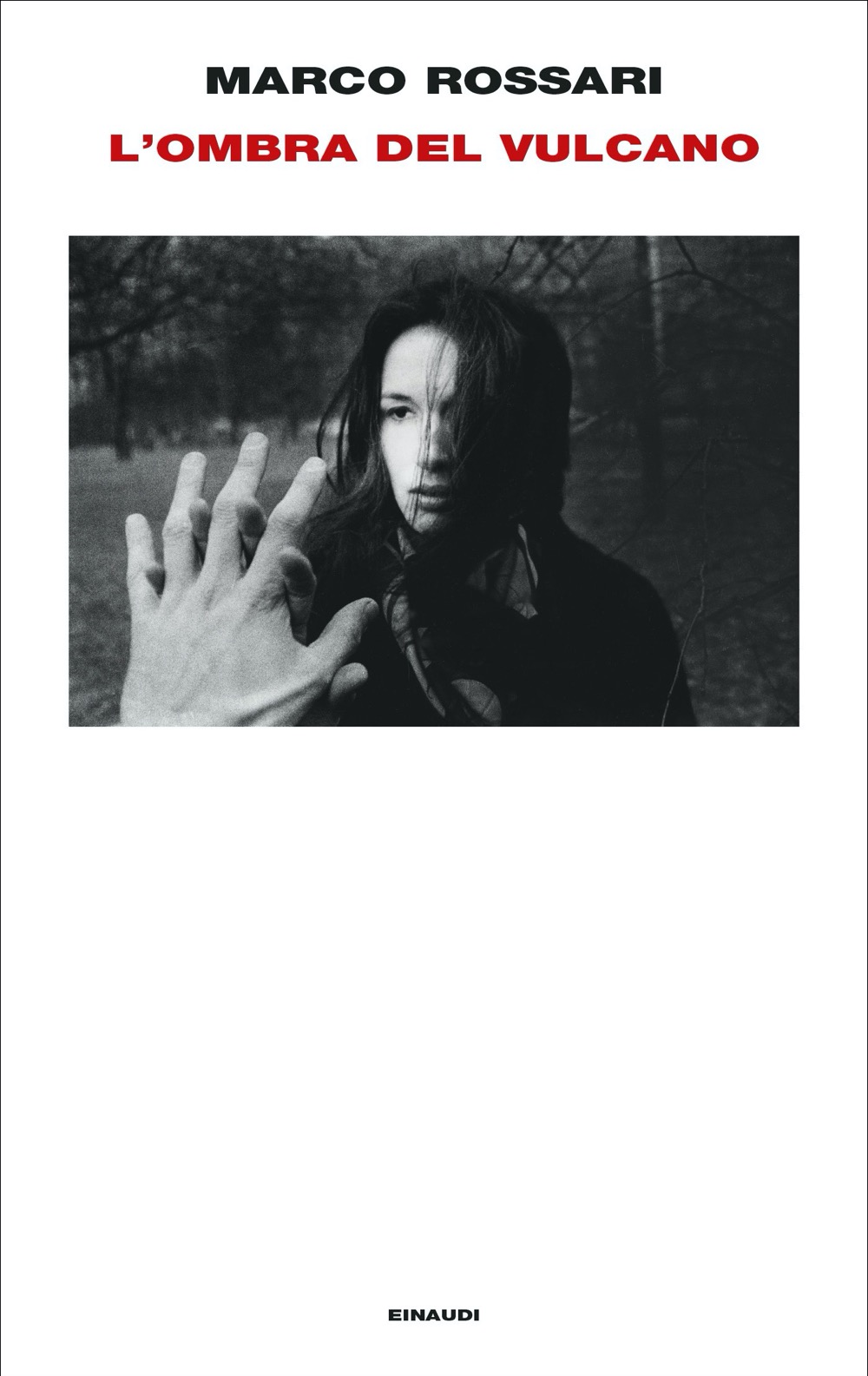
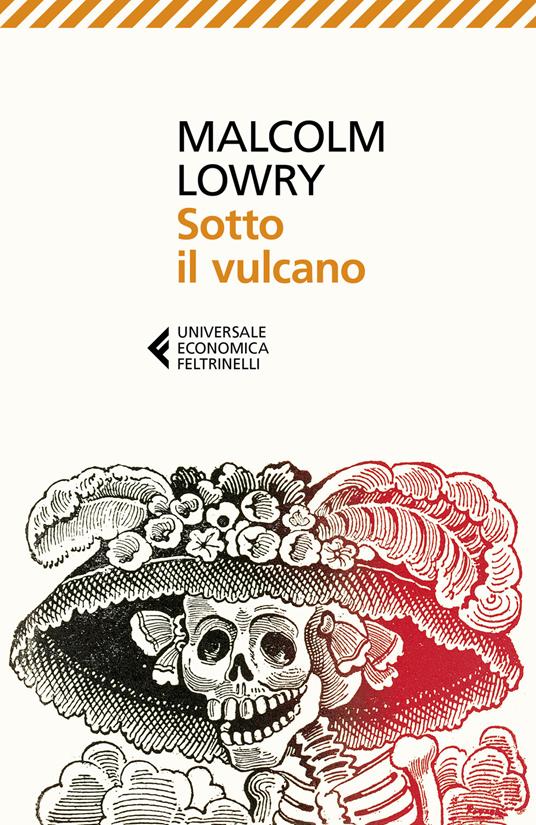
In Italian bookstores today is Sotto il vulcano, Malcolm Lowry’s “drunken Divine Comedy,” an alcoholic Bible, as it has been described, which Feltrinelli republished in 2018 with a translation by Marco Rossari… And it is precisely the Milanese writer and translator who drew from his own encounter with this complex, profound novel to craft, in turn, a story: The Shadow of the Volcano (Einaudi).
Reading a book always means, in some sense, entering into contact with the person who wrote it, with the person who—under certain circumstances—lived those events. And it also means entering into contact with something that resides inside the reader, resurfacing precisely because of this or that work. But to translate it? To dissect word by word a text, that text, what does it mean?
The answer, at least in part, is found exactly in the lines of Rossari’s novel (which was proposed by Claudia Durastanti for the Premio Strega) where this “labor” is paired with the amorous crisis that our protagonist experiences.
Literature as Formation and Dialogue
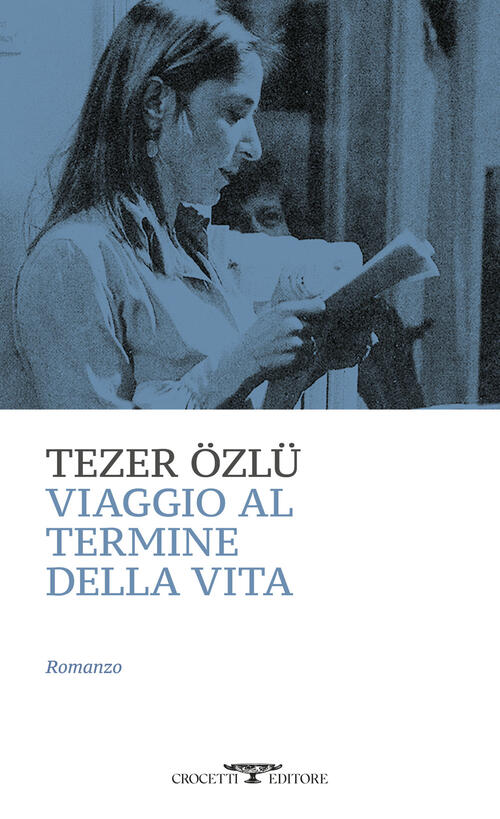
Certainly physical and corporeal, Journey to the End of Life (published by Crocetti in 2025, translated by Giulia Ansaldo) manages to be even more intimate. Because Turkish writer Tezer Özlü (1943 – 1986) not only tells of herself, but of three major literary figures—Cesare Pavese, Franz Kafka, and Italo Svevo—who, in her own words, “made me the person I am.”
And so, yes, this “journey tracing the tombs of my writers” isn’t strictly a book about real books, nor is it a journalistic inquiry. But it is the extremely poetic diary of a woman who lived a short and troubled life, moving through Berlin, Prague, Vienna, Trieste, Turin, and Santo Stefano Belbo.
Reading, then, this pair of books means to penetrate the weave of narration and translation, brushing against metaliterature: making real a character who is unique, that Console now at the end of his days, and, at the same time, feeling Literature as a physical experience.
In the Footsteps of a Distant Friend
We now come to discuss a book that centers on a single author, yet connects with the previous story through Cesare Pavese. In 2025, Atlantide (translated by Maria Sole Iommi) published “the human and literary inquiry” of Pierre Adrian through the streets of Turin and, in particular, around the Hotel Roma, which gives the title to the work and houses the final hours of the thinker born in the Langhe.
Writer on the trail of another writer – that one of my thirties, certainly, because I was no longer seeking a master but only a friend to keep me company – Adrian describes a journey that is initially mental and then physical. Within it he pays homage to and pursues the figure, the ghost, of the Italian poet.
Hotel Roma, indeed, sits midway between memoir and reportage, and with its chapters and stops it becomes a melancholic atlas of Pavese’s brief life: Torino is both the destination and the starting point, a place suspended in time, partly tangible and visited, partly imagined and “dreamed.”
And in all this Pavese himself assumes a double role: he is as much a guide as a friend: “Pavese becomes like that friend with unforgiving judgments whom you should not spend too long with, lest his mood contaminate you. You respect him but hesitate to answer when he calls. If I had known him, – writes Pierre Adrian – certain days I would have changed sidewalks, glimpsing his figure in a Turin street.” He is the friend who makes us brave and cowardly, beautiful and ugly. Everything except a master. A lucid companion to whom we will one day regret not having answered.”
One cannot help but be struck by this impossible relationship between the two men, made of distance, identification, and imagined dialogue: a bond that says a lot about how certain writers end up accompanying us through an entire life.
A Ghost Named Truman Capote
More recently, in September 2026, Sur published a short book that is already explicit in its title: Tracing Truman Capote (translated by Maria Nicola). It is written by Argentine author and journalist Leila Guerriero, winner of the European Strega Prize 2026, determined to locate the great American writer among the streets and houses of the Costa Brava.
For it is precisely in that place—a landscape of “precipitous cliffs above the sea” and “trees clinging like claws to the mountain’s chest”—in a two-story villa, that in 1962 Capote completes A Blood-Soaked Score.
And even if that book transcends the definition of a novel and that of a journalistic inquiry, opening to the so-called non-fiction genre, Guerriero’s work, whose original title (evocative) is The Difficulty of the Ghost, surpasses the notion of literature that talks about literature.
Between voices and legends, traces increasingly faint with time and others altered by public attention, Guerriero seems truly to chase a ghost, with its lights and shadows, that fascinates the author and those who read. At the same time, an interesting reflection emerges on the role of those who have made the telling of reality a profession…
“I like and I am terrified by what I am doing: I like it because it reminds me of the beginnings of my work (…), when it was important for me to gather testimonies on the street (…); and I am terrified because approaching a stranger to ask questions exposes me to the possibility of rejection or aggression.”