
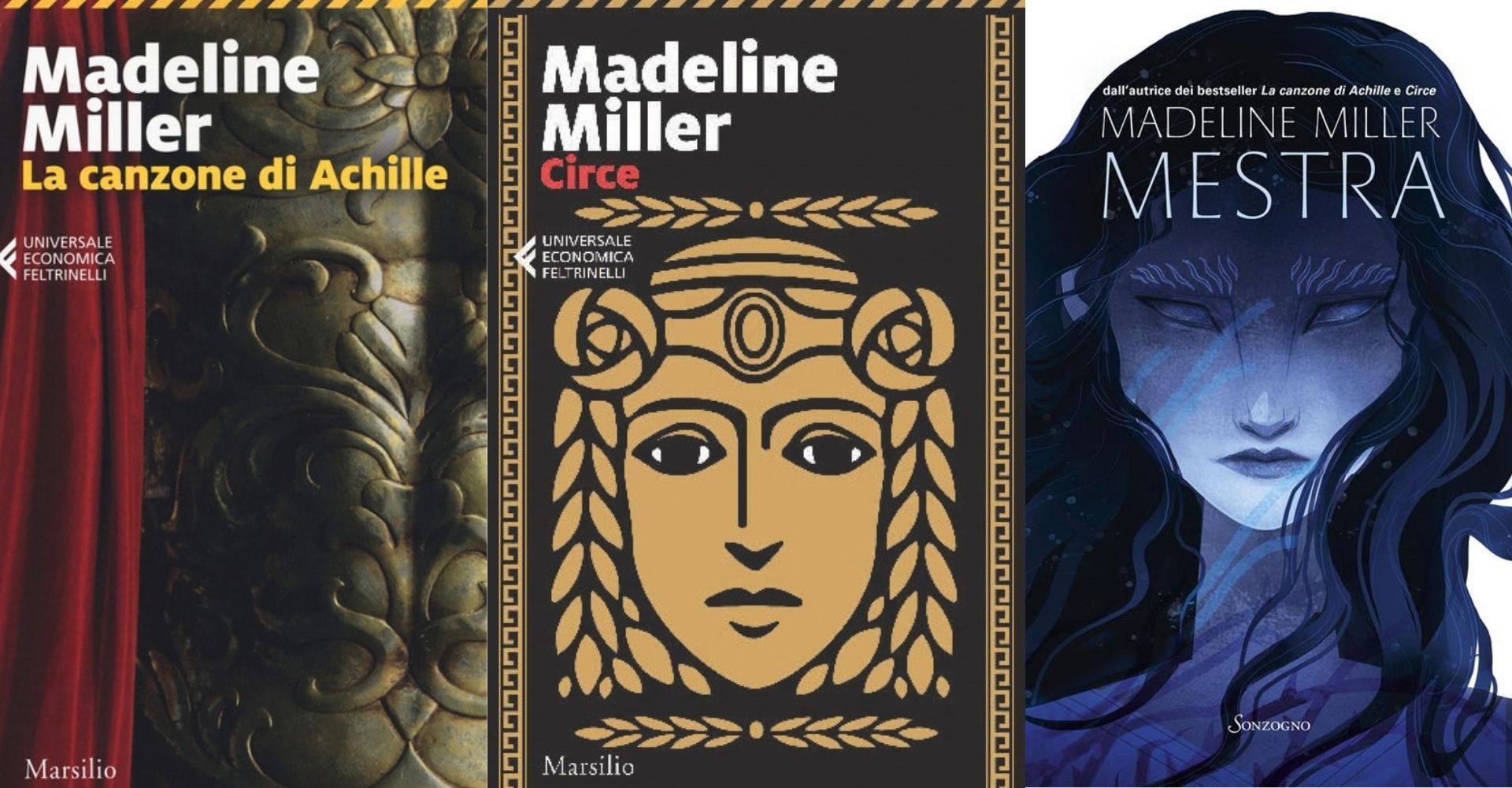
It is in the Greek mythology and classical culture that Madeline Miller, a Greek and Latin teacher born in 1978, identified the starting point for telling ancient stories from a contemporary perspective.
Her books have become a genuine publishing phenomenon, climbing the charts from the United States to Italy. The fact is even more notable when one considers that these are not novelties: The Song of Achilles was published in 2011, while Circe in 2018.
And then what happened? As is well known, the reason for this revival is largely tied to TikTok: in August 2020, a booktoker posted a video recommending some books to cry over, including The Song of Achilles. From that moment the book went viral, and sales surged in the US (and beyond). It didn’t take long, and the love story between Achilles and Patroclus (this is the plot at the heart of the novel) conquered readers (especially teenagers) in Italy.
The case of The Song of Achilles also cascaded onto Circe, launching a peculiar phenomenon, a trend that moved from social networks into bookstores: “books to cry over” soon became among the most requested titles by youngsters, who recommend them, buy them, read them and review them on their profiles, a signal more evident than ever of how much there is a need for gripping stories to captivate the attention of new generations. And what texts could be more overwhelming than the great Greek classics?
The Song of Achilles

Written over ten years, The Song of Achilles (Marsilio, translated by Matteo Curtoni and Maura Parolini) marked Madeline Miller’s debut, and the author won the Orange Prize in 2012.
The novel is a reinterpretation of the Trojan War, but it excludes all the bloody and bellicose elements, the massacres, cruelty and horror. The focus is instead on the bond between Achilles and Patroclus, initially friends, then lovers and finally comrades in arms. Their union is an absolute one, capable of withstanding any test and any obstacle, even death: after losing their lives on the Trojan plain, the two youths remain united forever with their ashes mingled in a single, precious urn.
Madeline Miller goes beyond the tale of the relationship between Helen and Paris, shifting the spotlight to a relationship not deeply explored, but perfectly woven into the fabric of Greek myth (there have been many insinuations that Achilles and Patroclus were lovers; Aeschylus, in one of his works, mentions their frequent kisses).
Madeline Miller and the Passion for Classical Literature
The author’s passion for classical literature began in childhood, when her mother read her the tales of Homer before bedtime. The description of Achilles, the half-man, half-god figure, and the depiction of his pain, his pride, and his wrath, became a fixed thought, so much so that they represented for her the real turning point of the Iliad.
“I was deeply struck by the terrible, sorrowful and devastating reaction of Achilles to the loss of Patroclus. That was the passage I kept returning to, because I wanted to deepen it. Patroclus is a elusive figure within the poem. He is a mystery. That’s why I wanted to understand: who is this man? Why does he mean so much to Achilles?” she explained in an interview with the Guardian. It was thus this question that guided her through the long drafting of the novel and during her studies (Miller studied classics at Brown University). But it was certainly not the only one.
Circe
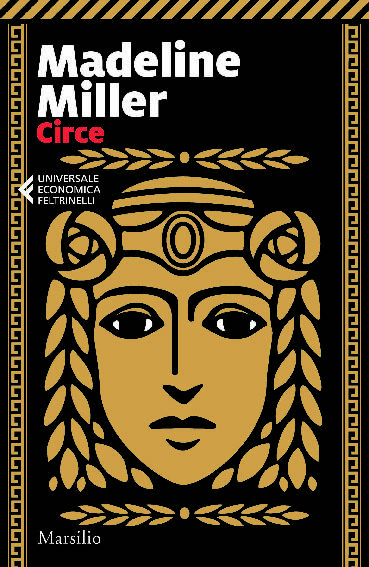
Another figure that fascinated Madeline Miller for a long time is Circe, the character who indeed lends her name to the title of her second novel, published in 2018 and released in Italy by Marsilio, translated by Marinella Magrì.
From the Iliad we thus moved to the Odyssey, and in particular to the sorceress who loves Odysseus, a famous enchantress and temptress, feared for her habit of turning her companions into swine.
Yet there is a before and after in the life of this mesmerizing creature. Circe is the daughter of Helios, the sun god, and the nymph Perse, but she is profoundly different from her parents and divine siblings: she has a somber appearance, a difficult character, an independent temperament; she is even sensitive to the pain of the world and prefers the company of mortals to that of the gods. “She is a figure so vividly drawn in the Odyssey,” Miller explains in another interview, again to the Guardian, “a terrifying and beautiful witch-goddess who keeps lions and wolves tamed and turns men into swine. But it’s only a cameo: as soon as she appears, Odysseus is already setting sail. Homer tells us nothing about her inner torments, or how she came to be what she is.”
A figure trapped between two worlds
Here then is a new challenge for the author, who decided to pick up and rework the story of the sorceress, placing her at the center of her novel. “I was intrigued by a passage that describes her as a goddess ‘speaking like a mortal’. I wondered: what does it mean to be a goddess who speaks like a human? That detail made her a figure trapped between two worlds, but belonging to neither. A kind of outsider.”
She also represents the first witch in Western literature, a woman who escapes her condition and fights for her independence. Thus Miller reveals another version of her story, recounting Circe’s arrival on the island of Aeaea and focusing on her feelings, as well as the encounters fate has in store for her — with the ingenious Daedalus, with the monstrous Minotaur, with the fierce Scylla, with the tragic Medea, with the crafty Odysseus, and even with the mysterious Penelope. But fate spares no one, not even a woman like her: in the end Circe will have to choose who to be, once and for all: whether to belong to the world of the gods, where she was born, or to that of mortals, whom she has learned to love. Her story, like that of Achilles, is a parable that speaks to multiple themes, universal conflicts, which belong to all times and all generations: a motive that, even in its simplicity, remains the primary source of the author’s success.
Galatea
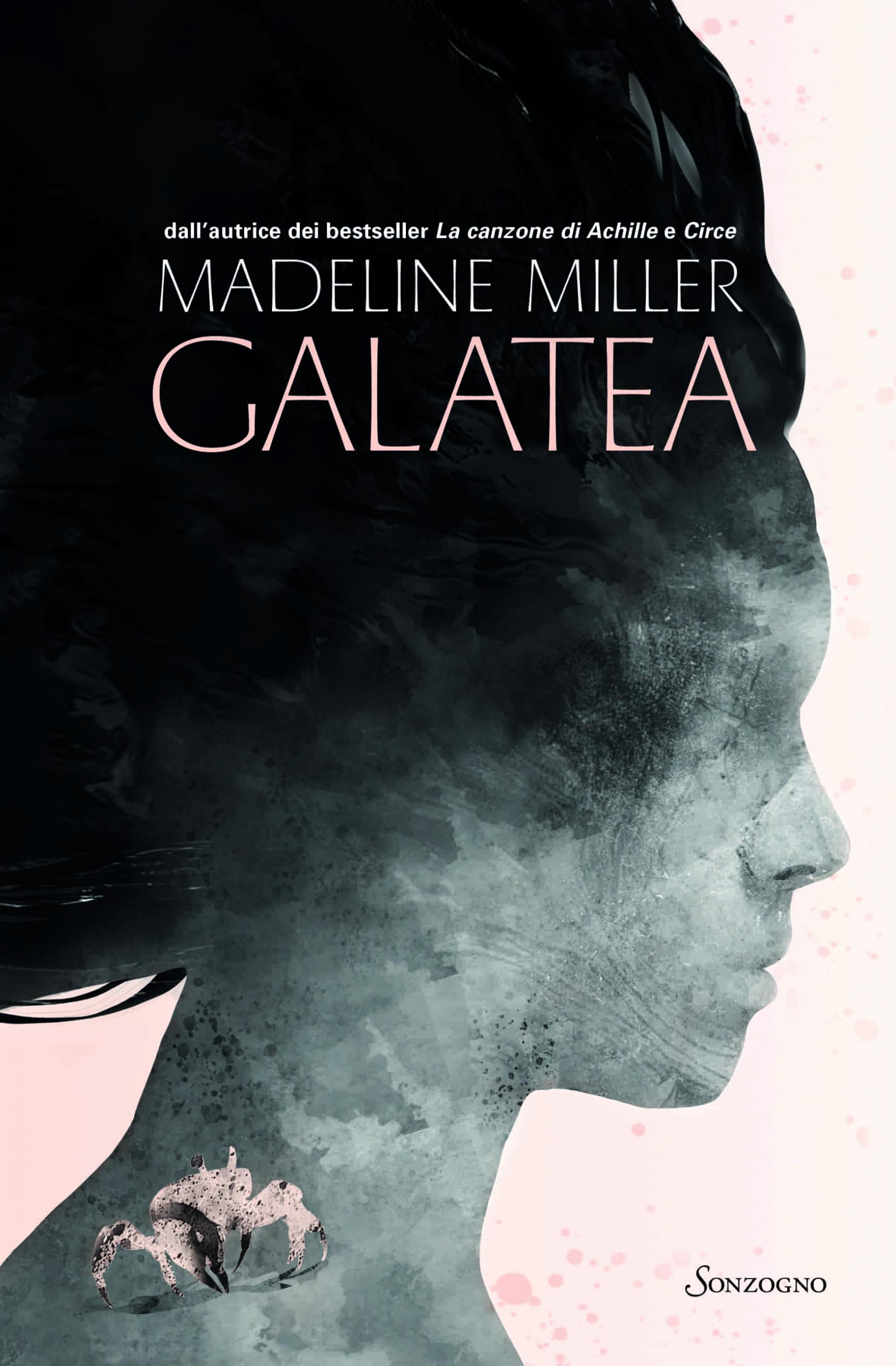
In Metamorphoses, the Latin poet Ovid tells a myth: Pygmalion is a Cypriot sculptor who falls in love with a statue he himself created, treating it as if it were alive. During the festivals in honor of Aphrodite, he begs the goddess to give life to his beloved: when this happens, from their love is born Paphos.
And it is precisely from this story that Miller’s third book began, arriving in Italy in 2022 under the title Galatea (the name given to the story’s protagonist in the tradition following Ovid), published by Sonzogno in Marinella Magrì’s translation, enriched (only in the Italian edition) with illustrations by Ambra Garlaschelli.
Galatea develops in a wholly singular way the theme of love that becomes obsession and possession, through the character of Pygmalion, tormented by the jealousy he feels toward his partner and daughter.
Violence, abuse, loneliness, but also awareness, strength to react and rebellion: the author writes an ode to freedom and self-determination, while this new Galatea becomes a warning and an example with universal reach.
Mestra
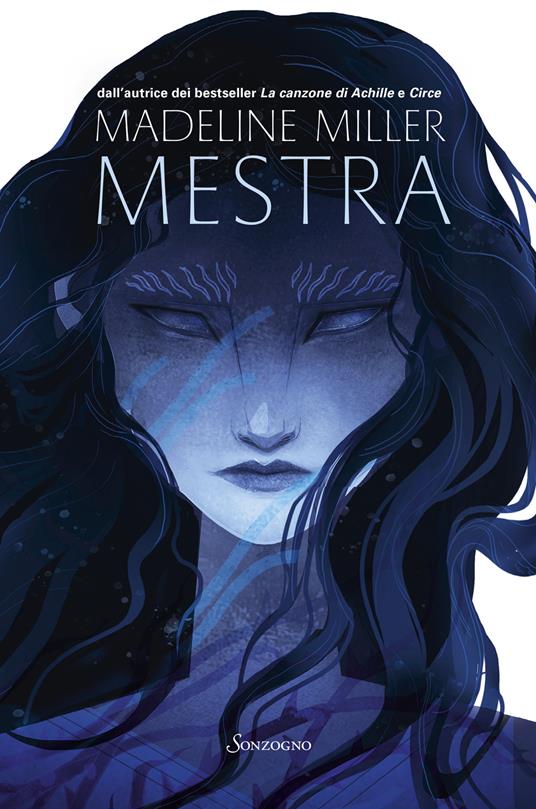
We arrive at the author’s latest work, who for this new story has drawn on the myth of Mestra, daughter of Erisittone, king of Thessaly. He, after having felled an ancient oak dear to Demeter, is punished by the goddess with the sentence of perpetual hunger.
Having fallen into ruin to raise money to buy food, Erisittone begins to sell his daughter, who, however, has the power—granted by Poseidon—to take on any form she desires: the tale ends with the death of Erisittone, who ends up devouring himself.
The myth’s retelling arrives in Italy under the title Mestra, in a Sonzogno edition translated again by Marinella Magrì, and with the illustrations by Ambra Garlaschelli. In the book, the focus is placed on the protagonist’s will to redeem herself, on freedom, on rebellion, and on the importance of the body.
Once again, therefore, at the heart of the narration is the myth, which becomes a key to reading to confront the allure of themes that have traversed history and tradition and have reached us today.
