
Jean-François Colosimo, When China Wobbles…, Albin Michel, September 14, 2026, 352 pages, €22.90.
The most famous prophecy about China is a hoax, and Jean-François Colosimo begins with this debunking in a two-part essay that first scrutinizes today’s China and then places it in the long arc of history. Following explorations of America, Russia, Iran, and Turkey, the essayist completes his investigation into empires and their cults at Albin Michel with a work of biting erudition capable of dispelling many certainties echoed by the press. One comes away astonished, freed from many illusions.
An Authorless Prophecy
The premise took hold in France in 1973, when Alain Peyrefitte made it the title of an essay that sold a million copies: When China Awakens… the World Will Tremble. Fresh from a dazzling return from China two years earlier, as a Tocquevillean figure stepping out of America, the future academician built the work on a wager—summarized by Colosimo with sly wit—as if China were a place where “access to goods would inevitably shape the meaning and acceptance of the Good.” A half-century later, When China Wobbles… describes Chinese millionaires bound to the Party by an oath of servility.
The author thus hands the verdict over to a game of Cluedo, as he himself puts it. In the absence of the Mémorial de Sainte-Hélène, the trail climbs back to Hollywood, where David Niven whispers the oracle in The 55 Days at Peking (1963), and continues to an American evangelical weekly that already attributed it to the Emperor in 1911. Napoleon is said to have harbored a fear that was foreign to him, and Xi Jinping has bent the prophecy to his own purposes by celebrating the awakening of a formerly slumbering lion.
Turning to doctrines and archives, the author asks what visitors—going back to Marco Polo—have submerged beneath the insistence on grandiose terms. His meditation confronts the phantom image that the West has constructed of China with the phantom image that China has of itself, the latter feeding the former.
The So-Called Chinese Dream
In Beijing, the first facade is a slogan. Xi Jinping’s Chinese Dream unfolds in chiastic phrasing, under which Colosimo reads the promise to wash away a century of humiliations at the price of a sacrificed concession made in advance. For those who still await a liberalized China, the author answers in two words: “All false.” The economic miracle rests on three hundred million mingong, rural workers who, when in the city, are deprived of housing, healthcare, pensions, and schooling. The epilogue rightly reframes this as an Occidental curse born of finance that relocated factories through sheer blindness.
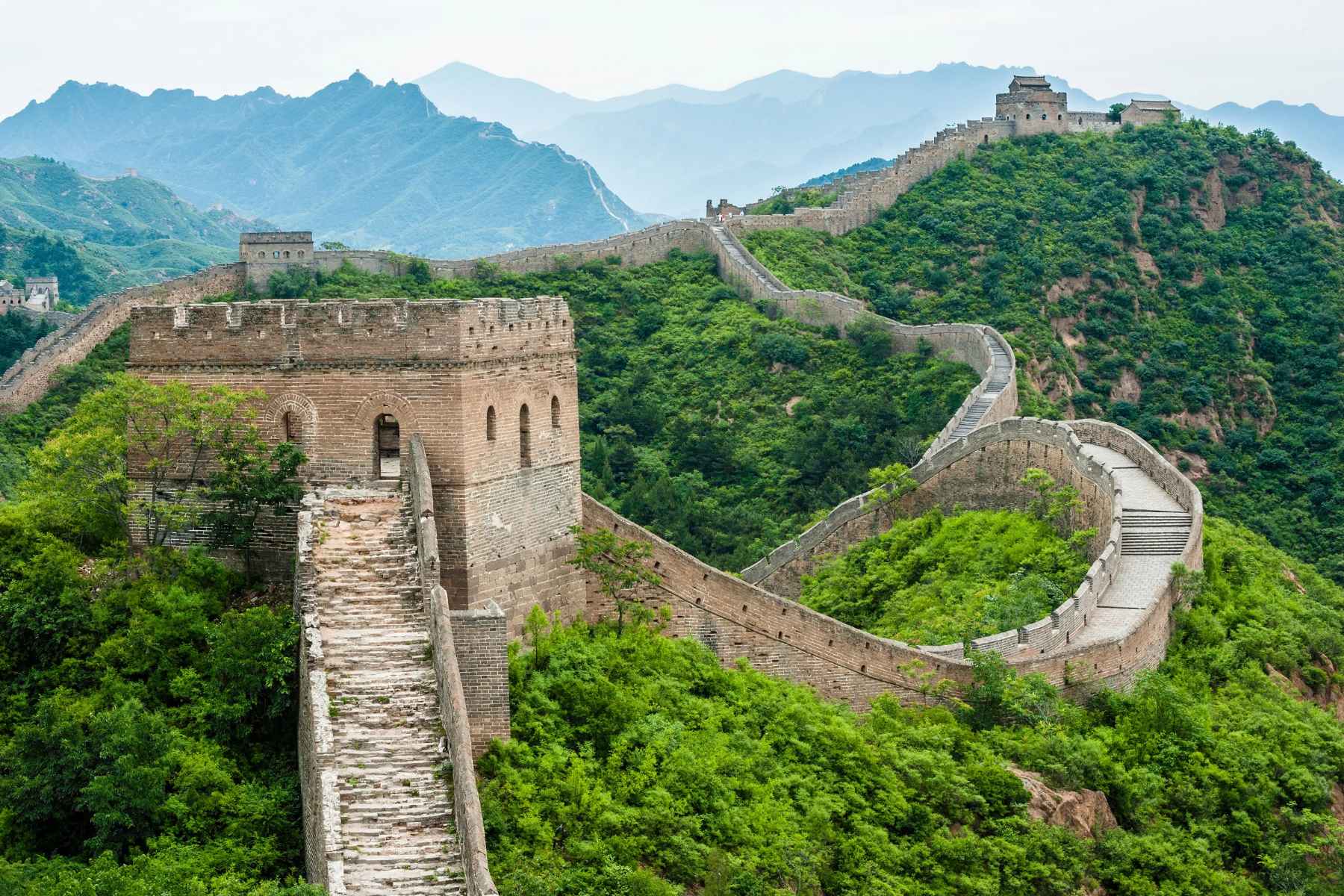
Behind the slogan, while a vast digital Great Wall filters external interference, social credit tracks every citizen, and everyone ends up watching over themselves. In the laogai—rebranded under different names—detainees become students promised professional training. The reader who later encounters the Confucian doctrine of the rectification of names sees how the Party applies it in reverse, a pattern that is emblematic of every totalitarian regime.
The millennial continuity claimed by the regime falters under scrutiny, for a Red Guard in 1966 boasted of razed temples and incinerated incunabula in Qufu, Confucius’ birthplace, where Xi Jinping would visit in 2013 to pay homage to the Master. Behind the confident assurances lies a growing unease, since the population could shrink by five hundred million souls by the century’s end. Urban youth long for runxue, the art of fleeing, or retreat into tang ping, choosing to lie low and stay in place.
China Confronting the Other Empires
On its borders awaits the map that everyone has carried since 1996, the one of the clash of civilizations. The author unfolds it with fairness. Against Edward Said, he absolves Samuel Huntington of having signed a self-fulfilling prophecy, and notes that China’s mediation on behalf of Tehran has since reinforced the political scientist’s forecast of a rapprochement between Beijing and the Muslim world. Yet he folds the map again, for Huntington cast civilizations into blocs and underestimated their internal fractures, while reality looks more like a “war in pieces.” Zhao Tingyang’s response, which opposes collision to the harmony of Tianxia, becomes for the essayist a likeable fable that veils rather poorly the hegemonic claim.
The first rival of China is America, this “double demonic” it has found for itself, whose book shows its radical Right’s disagreements about Beijing. China’s alliances resemble arrangements. With Russia, the openly boundless friendship proves as unequal as old treaties. Moscow claims the role of the Katechon, the power that restrains evil according to Paul and which Carl Schmitt made a political category. A geometric image sums up the dispute between the two empires: “the circle of Tianxia can only undermine the arrow of the Katechon,” an arrow that is destined to break the circle. In Ankara, Erdogan has stopped speaking of genocide against the Uyghurs to invoke Chinese unity, Turkish-Muslim solidarity weighing less than the yuan.
As for Taiwan, Colosimo rejects the 2027 deadline that sends the Pentagon into a fever, while taking the threat seriously, since the real danger, in his view, would be the high-stakes gamble of a China pressed by its own impotence. He also hints at the possibility of a regime that would fear letting the evidence remain that “there exists a sinophone country that is free, prosperous, happy, and harmonious.”
Another traveler, Wang Huning, in 1988 retraced the opposite route of Peyrefitte, touring the United States with Tocqueville as model, before becoming the ideologue of three successive leaders. To the West, China borrows its concepts and struggles to make its own narrative loved, to the extent that its Confucius Institutes close from Belgium to Poland. The epilogue judges this failure “staggering because unjust” and praises the arts of a civilization that “knew how to turn silence into matter,” from Du Fu’s poetry to Zhuangzi’s butterfly. For this estrangement, the author proposes a precise formula: “The Middle Kingdom is an empire of Solitude.”
The Divine Bureaucracy
This solitude has a history, which Colosimo explores in temples as a historian of the sacred. Grounded in the Mandate of Heaven served by the mandarins, state Confucianism assumes all the functions of a religion and provides a form of redemption. Buddhism paid for its survival in China with a process of Sinicization described by two statues. The first, from the Indus Valley, depicts a young ascetic prince draped in Grecian robes. He was followed by the rotund monk who laughs at the entrance to Chinese restaurants, a sign that the empire has neutralized the Buddha “by nationalizing him.”
The essayist lauds the “powerful thesis” of Romain Graziani, who sees in Legalism and rule by numbers the matrix of Chinese power, from the Shang to Xi Jinping, and detects the social credit as a germ in the merit registers to which Taoist piety subjected the celestial bureaucracy. Yet Taoism earns a fair treatment, locating its appeal in “the tension it preserves between an ineffable principle and an indomitable piety,” and it is struck by China’s curiosity toward the spiritualities that visited it.
From the West, other religions left monuments, such as the Xi’an stele erected in 781 by Nestorian Christians, guarded by dragons and lotuses, until the community that erected it vanished in 845 under Emperor Wuzong, a Tao devotee. In Kaifeng, the Jews disappeared without persecution, by a tolerance born of indifference with this constant: “One did not convert. One dissolved.”
These fates lend support to a central thesis of the book: China missed the Renaissance “for lack of having had a church in the face of the State.” That is why the Chinese State, from this perspective, tolerates beliefs anchored in the Order of Heaven and fears any salvation promise rising from below.
The Garden and the Enclosure
Among French writers who imagined China, Colosimo places Octave Mirbeau, whose The Garden of Punishments opens in 1899 the Canton penal colony to a sadistic Englishwoman. Mirbeau published this novel amid the Dreyfus affair and dedicated his “Pages of Murder and Blood” to the masters of men—priests and soldiers at the forefront—so that his garden indicts European colonialism even more than Canton does. This sometimes unbearable novel resonates with the present, for torture flourishes among the blossoms. Under the gaze of cameras, a sterilized China cultivates its own massifs as well.
The final lines of the book quote a popular saying, “It is never too late to repair the enclosure after losing a sheep,” whose peasant’s enclosure forms an unexpected counterpoint to the Garden of Punishments. The closing remark, kept here secret, turns the old prophecy against those who seized it. From Xi Jinping’s lion to the lost sheep, Colosimo guides his argument with a clear-sightedness that also conjures up an image of a sky the Chinese people will have to mend themselves.
The article When China Wobbles, the Mirage of Chinese Power first appeared on Mare Nostrum.
