A pulsating dark forest, like an internal organ, tall, slender palms, the piercing screech of a vulture above their heads, a digital device abandoned at the bottom of a backpack, rivulets of turbid water, absolute and blind darkness: it is in the enveloping flow of these magnetic images, and through a fragmented and loose narrative, that the discourse of the woman presented as one of the most significant literary voices of our time unfolds.
When called to speak, the slight woman moves toward the center of the stage. She carefully arranges a bundle of papers on the lectern, brings the microphone closer to herself, tests it, then thanks the few listeners gathered in the room. There, she says, she will not lay out her writing method, nor the ideas that shaped her literary work, but, aware of the gradual dissolution to which her writing is now exposed, she will give voice to that tangle of ghosts that, ever since she descended into the heart of darkness, have pursued her, oppress her, stand at her throat, and show no sign of leaving her in peace.

She takes a sip of water, shifts her weight from one foot to the other, and returns to the January day when her car pulled up to the roadside to listen more closely to the voice of a theater director who, excited, proposed spending about ten days in the tropics. There, her task would be the verbal transcription of all material needed for a collective inquiry into the mystery of the two missing Dutch tourist women who vanished right there. Driven by an urge to escape, the unnamed writer hops on a direct flight to Panama, crosses the Atlantic, and, beside a varied theater company, ventures into the Amazon rainforest in search of the two missing women.
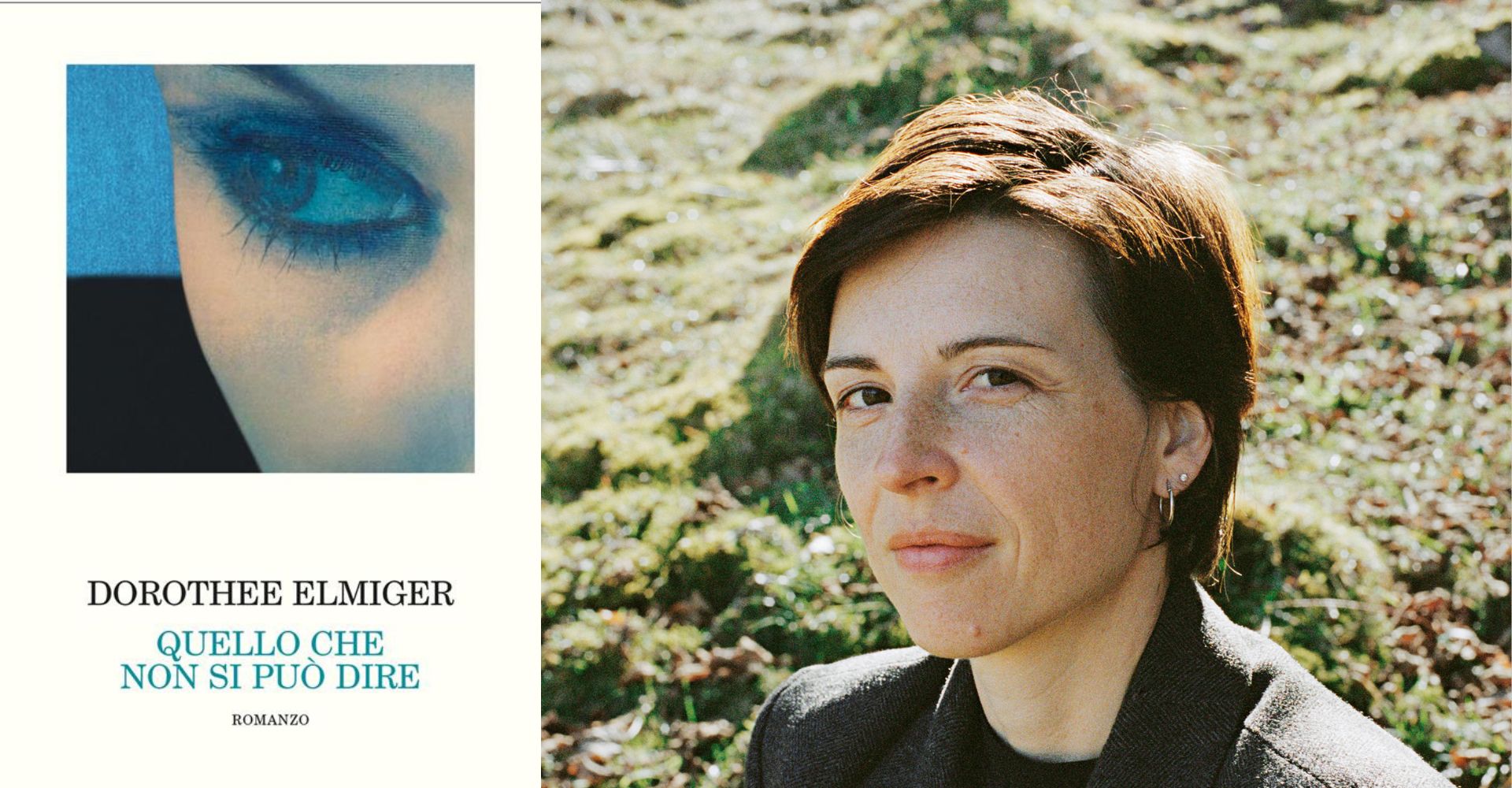
From here unfolds the jagged, dreamlike, wondrous and at the same time terrifying tale of Dorothee Elmiger in Die Holländerinnen (literally “The Dutch Women”) which Gramma Feltrinelli now brings to bookstores under the title of What Cannot Be Said, translated by Nicoletta Giacon.
Nborn in 1985 in Wetzikon, Switzerland, educated in philosophy and political science at the University of Zurich and later in literature at the Swiss Literary Institute in Bienna, Elmiger is a translator and a writer. With her fourth novel, published in Munich in 2025 and acclaimed by German-language literary critics, she won the Deutscher Buchpreis and the Schweizer Buchpreis 2025.
The anonymous writer states that she was at once drawn to and repelled by the disappearance of the two Dutch women. What reflections and aims led you, as a writer, to engage with such a dark subject?
“I myself, as I progressed in the writing, was continually astonished by the amount of violence and oppression that kept surfacing. At first it was not at all in my plans, since I have never felt a particular fascination with this dark side. Simply, as a writer, I am interested in investigating the present time, which is decidedly dominated by multiple forms of violence.”
“Horror inherently lies outside language,” notes the woman on stage. Therefore, is every artistic expression, including the writing of this book, doomed to fail in the attempt to name terror?
“It is a question that is destined to remain open. The protagonist confronts senseless ferocity that seems impossible to explain, and yet she attempts to find a language, pushing beyond her own limits. It is the same search undertaken in the forest by the theater company, which continues to tell stories in order to give meaning and order to what happens.”
Does the limit of language coincide with the failure of the West?
“That is what I was interested in exploring and what led me to reread Adorno and Horkheimer’s Dialectic of Enlightenment, as I searched for a critical approach to the theme. The protagonists themselves reflect at length on the failure of Western values: they have read Adorno and studied the key books, they face reality with critical awareness, and yet they find themselves retracing dynamics already crossed by generations of past centuries. It is necessary to question our system of ideals, but at the same time I believe one should not throw it away entirely, but preserve its still-fundamental aspects.”
In this descent into inferno, political violence — primarily that carried out by colonizing countries — constantly intertwines with gender violence and violence against nature. What is the thread that unites these different forms of domination?
“Human beings, namely the way we ourselves project our potential violence onto the reality around us. If we look at the present, for instance, it is impossible not to identify a correlation between the rise of domestic violence and the ascent of the political right and of the manosphere.”
In the book, Marilyn Trapenard, a renowned and fictional French writer, author of what is commonly defined as autofiction, plays a central role. Was her figure the starting point for reflecting on the possibilities and limits of this literary genre?
“Yes, certainly she gave me the opportunity to reflect on autofiction, which, like any trend, is useful to observe with a critical eye. At the same time, she allowed me to question the power of writing and the limits beyond which, as a writer, I cannot and must not go.”
In the text, references to Ingeborg Bachmann and Thomas Bernhard recur often. What is your relationship with Austrian literature?
“Of Bernhard, Bachmann, and other Austrian writers I am fascinated by how they use language, which is no longer merely a tool to give voice to a story, but becomes a territory to explore. Of Bachmann, in particular, I am interested in Todesarten, her unfinished literary project on the ways of dying.”