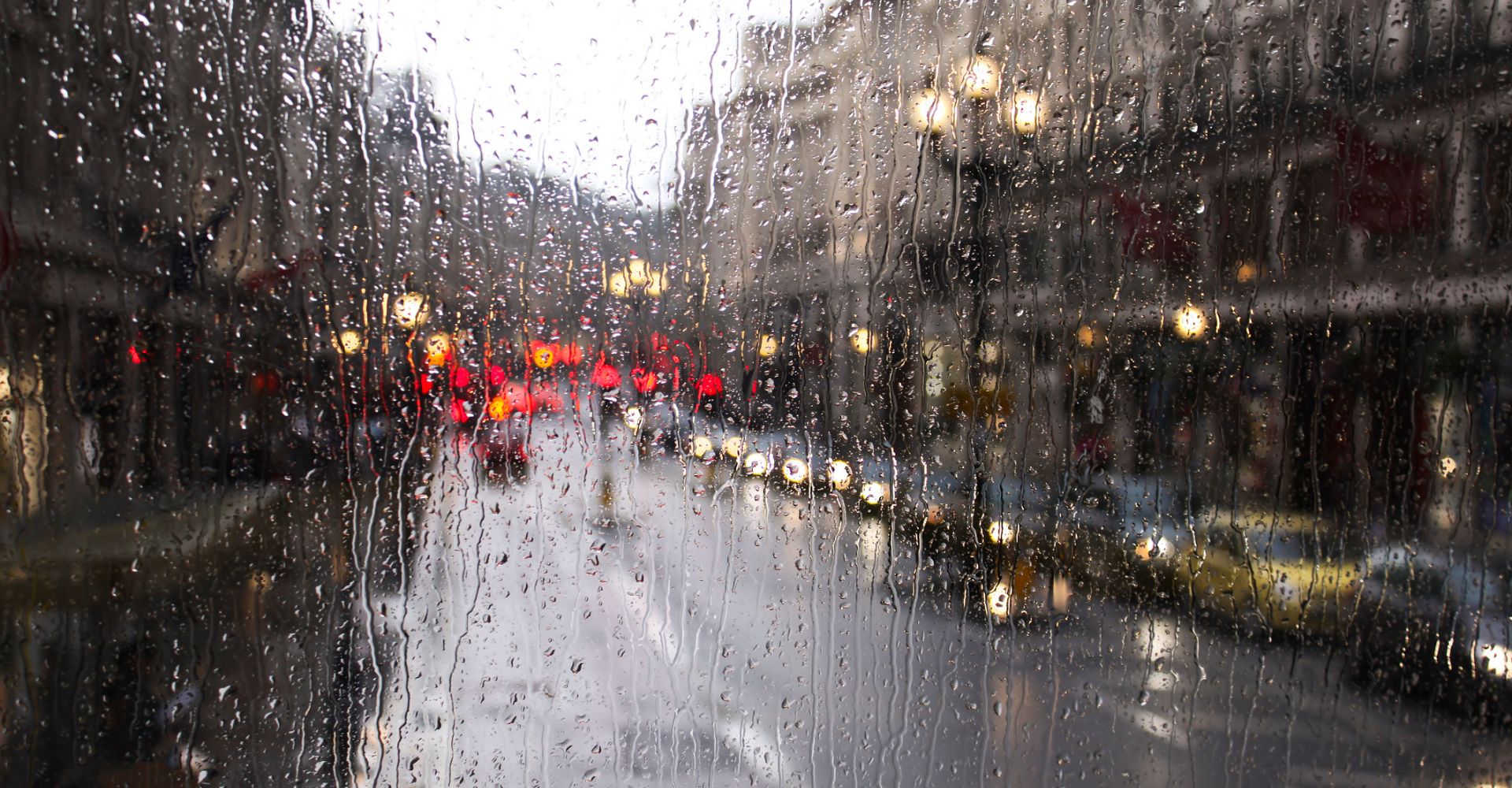
The rain has long been the muse behind poetry, stories, and grand novels, and it has always seemed to mirror human emotions.
Cronically rhythmic and intermittent, sometimes intense and other times barely perceptible, it can speak for our inner peace as well as for our moments of nostalgia, our uneasiness as much as our desire for renewal, accompanying the rhythm of our emotions and thoughts just as much in autumn and winter as during the thunderous springs and early summer storms.
DISCOVER THE QUOTES SECTION OF OUR SITE
Unfortunately, more and more it is becoming, in parallel, a dramatic presence that reminds us how powerful nature can be, with the fragility of its equilibria. Yet, rediscovering it through the words of great writers is an opportunity to reframe it as something more than a mere adverse meteorological event.
From Friedrich Nietzsche to Gabriele D’Annunzio, passing through Yamamoto Tsunetomo, Susan Ertz and Anton Pavlovič Čechov, here are some of the most beautiful rain quotes drawn from literature, to relearn how to perceive rain as the most authentic breath of the earth, the echo of that cycle of life intimately tied to both the external world and the inner world we inhabit…
Rain Quotes from Literature
We begin with a line by Elias Canetti (1905-1994), the Nobel Prize-winning writer and essayist, who in his The Province of Man (Adelphi, translated by F. Iesi) highlights the imaginative power of rain, a force that sometimes confines us to the walls of home, yet precisely because of this, as we carry out our daily activities or wait to go out again, it helps us revive our thoughts:
With the sun, people seem to deserve to live. With the rain, people seem to have many projects.
In the great and inscrutable balance of the world, after all, there would be no seasonal alternation without rain and its reinvigorating power, both metaphorically and in a literal sense. A truth that, according to Friedrich Nietzsche (1844-1900), as we read in his Posthumous Fragments (Adelphi, translation by Giorgio Colli, Chiara Colli Staude and B. Zavatta), applies to both nature and the human being:
Sun and rain are equally necessary to ripen grapes and talent.

But what does it mean to mature talent? For the Japanese philosopher Yamamoto Tsunetomo (1659-1719) it is not simply about refining one’s abilities, but also about recognizing the right approach for each occasion and acting accordingly. A teaching that he develops in some of the rain quotes from his Hagakure – The Book of the Samurai (Mondadori, translated by Maki Kasano):
A downpour dispenses its lessons. If rain catches you halfway and you hurry to seek shelter, you will still get drenched when you pass beneath eaves or in open spots. If, instead, you accept from the outset the possibility of getting wet, you will not trouble yourself, even though you end up soaked. The same mindset, by analogy, holds true in other situations.
Racconti
Alcyone
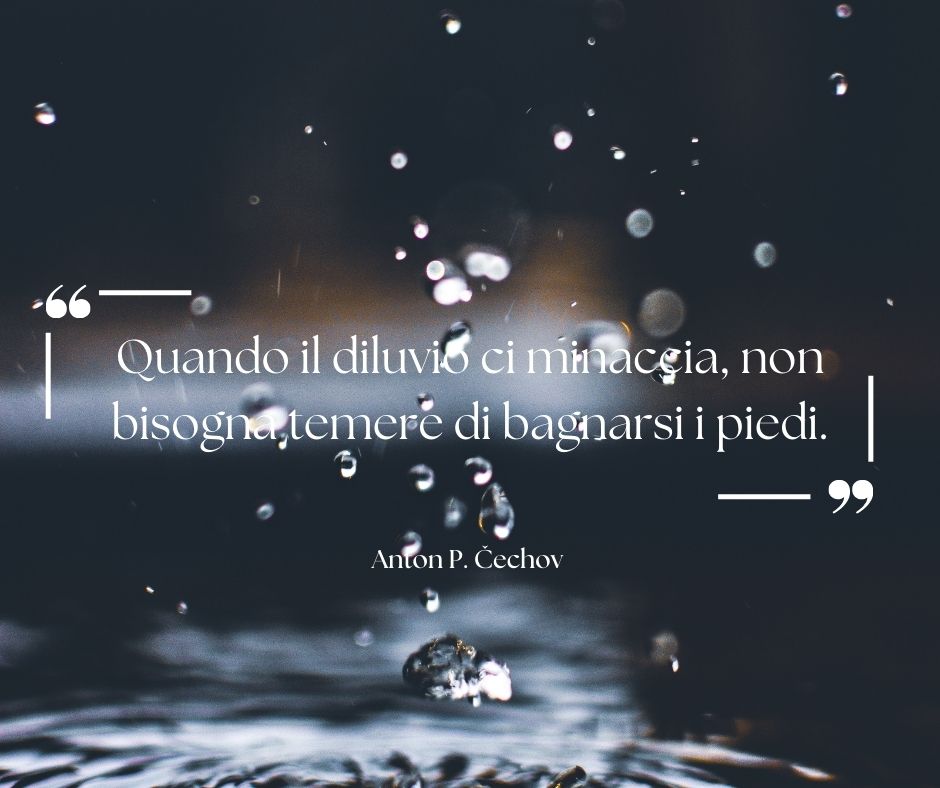
The Russian author Anton Pavlovič Čechov (1860-1904) shared this view as well, and with a shorter yet equally pointed rain quote in his The Duel (Passigli, edited by Marilena Rea) reminds us how pointless it is to try to evade the inevitable, when it would be wiser to embrace (and face with courage) whatever life has in store for us, even if it means a heavy downpour:
When the flood threatens us, one should not fear getting one’s feet wet.
And now to one of the most famous rain poems in Italian literature, not by chance titled The Rain in the Pinewood, taken from the collection Alcyone (Garzanti) by the decadent writer Gabriele D’Annunzio (1863-1938). Here again the thread seems to be the importance of reclaiming a connection with nature and the world around us, as we see in this passage in particular:
[…] Listen. It rains / from scattered clouds. / It rains on the tamarisks / salty and burnt, / it rains on the thorny, jagged pines, / it rains on the divine myrtles, / on the brilliant broom / of flowers gathered, / on the thick junipers / of fragrant berries, / it rains on our wild / faces, / it rains on our bare / hands, / on our light garments, / on the fresh thoughts / that the soul opens / anew, / on the beautiful tale / that yesterday / deceived you, that today deceives me, / O Hermione.
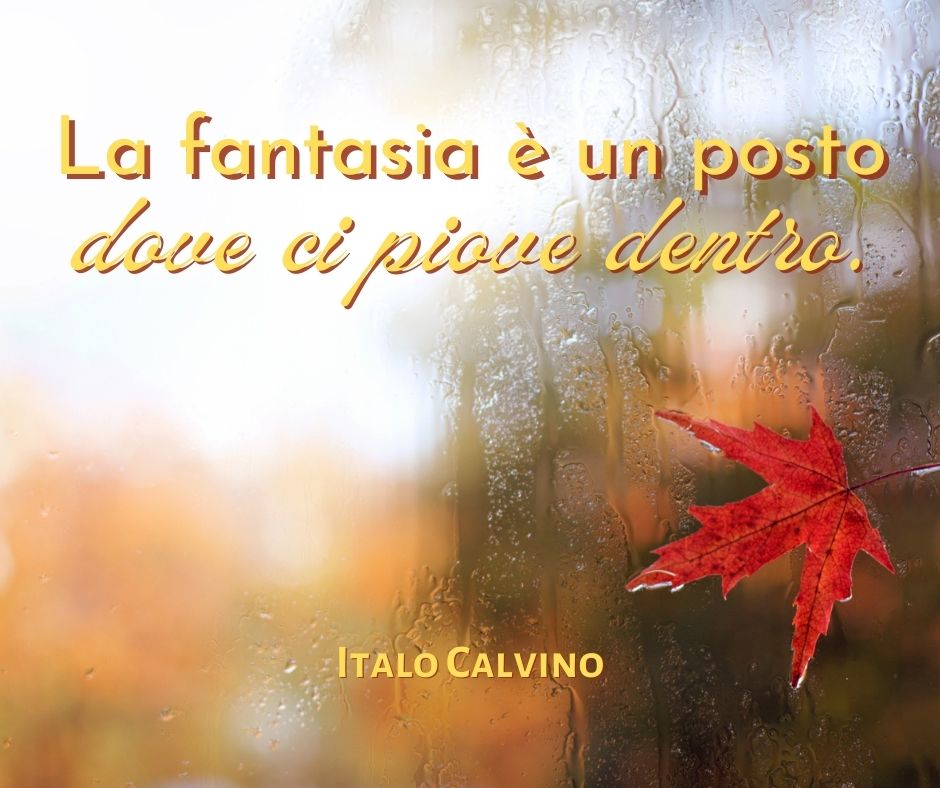
Only in this way, it seems to tell us, the Poet between the lines, will we be able to make the rain’s generative and creative energy our own, awakening both our senses and our imagination. After all, Italo Calvino—the great intellectual—also supported this idea in his discourse on Visibility contained in The American Lessons (Mondadori), invoking in his own way a line from Dante’s Purgatorio:
The imagination is a place where it rains inside you.
And if, on the one hand, rain and creativity are strongly linked in our case, on the other—nature’s side—an atmospheric downpour becomes a reason for gratitude in terms of true survival. This was also emphasized by American writer, journalist, and critic John Updike (1932-2009) in his memoir Self-Consciousness (Knopf, 1989), where he offers the following rain quotes:
Rain is life; rain is heaven’s descent to earth; without rain, there could be no life.
And we end with a rain quote that, after this reading journey, should not find us unprepared. A line that, in a way, ties back to the previous ones, urging us to find in rain a companion with whom to spend time in a full and meaningful way. It was written in 1943 by the Anglo-American author Susan Ertz (1887-1985), in Anger in the Sky (Hodder & Stoughton Limited), and reads:
Millions crave immortality, and then they don’t know what to do on a rainy Sunday afternoon.