A modern fable, a warning, perhaps a presage.
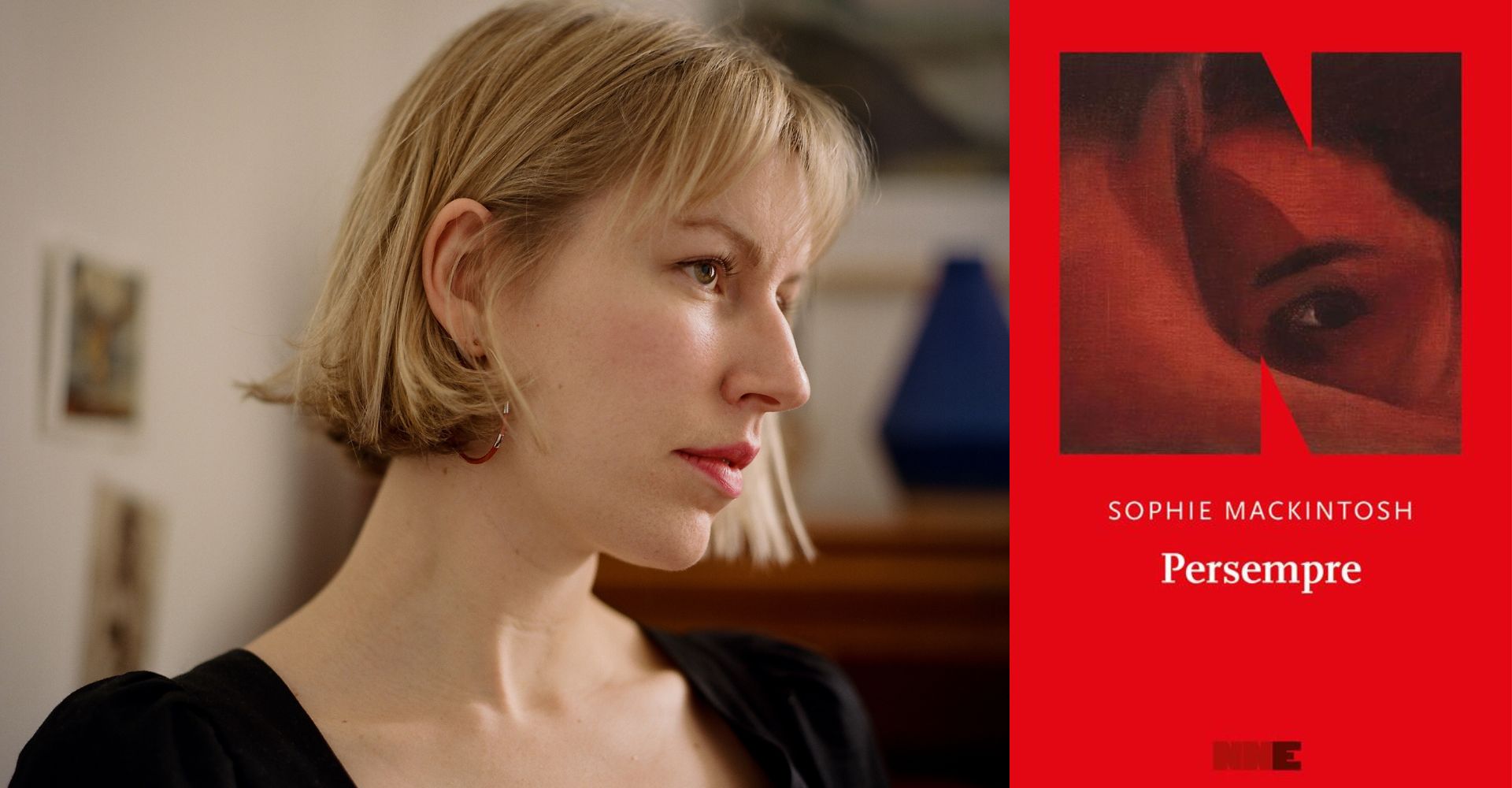
Sintesi di tutte le storie d’amore passate, metafora letteralizzata (e dunque ripotenziata) di quelle in atto e possibile radioscopia di quelle che verranno: s’intitola Persempre (NN, traduzione di Isabella Zani) ed è il romanzo con cui è tornata in libreria l’autrice gallese Sophie Mackintosh.
A synthesis of all the love stories that have passed, a literalized metaphor (and thus reinvigorated) of those underway and possible radiography of those to come: it is titled Persempre (NN, translation by Isabella Zani) and is the novel with which the Welsh author Sophie Mackintosh has returned to bookstores.
Un libro sulle ombre dell’idealizzazione, e sullo spazio da riservare a chi teniamo all’interno di una vita ben più larga di un materasso matrimoniale.
A book about the shadows of idealization, and the space to reserve for those we hold within a life far wider than a matrimonial mattress.
Persempre nella stessa camera
Francis la baciò sulla guancia con la bocca leggermente unta e lei rise per il sollievo e si pulì con la mano, e poi lo baciò come si deve per fargli capire che non se l’era presa. Stava sognando, pensò, o forse era morta e si trovava in paradiso.
Clara opens her eyes and finds herself in a scented hotel room beside Francis, the man she has slept with many times, yet with whom she has never stayed the night. Francis, in fact, returns to his married life and Clara to her solitude, though strangely they are now at the same bedside.
Francis kissed her on the cheek with his mouth slightly greasy, and she laughed for relief and wiped it from her face, and then she kissed him properly to let him know she hadn’t taken offense. She thought she was dreaming, or perhaps she was dead and in paradise.
Clara opens her eyes and finds herself in a fragrant hotel beside Francis, the man with whom she has gone to bed many times, but with whom she has never spent the night. Francis, in fact, returns to his marital life and Clara to her solitude, although strangely they are now at the same bedside.
Lo schianto a cui potrebbe andare incontro la loro storia si intuisce già da questo incipit, e tuttavia Persempre ha per titolo una promessa ammaliante e per protagonista una giovane donna che aspira a un amore tutto per sé in una stanza tutta per sé, anzi, per loro: altro che camere separate, per lei l’obiettivo sarebbe stare con Francis in un’unica camera con vista – motivo per cui, nel constatare che la prima sezione del testo si chiama La vacanza, non si può che capitolare.
The collision that their story might face is already foreshadowed by this opening, and yet Persempre bears as its title an alluring promise and centers on a young woman who longs for a love all to herself in a room of her own, indeed, a room for them: far from separate rooms, for her the goal would be to stay with Francis in a single room with a view—hence, noting that the first section of the text is titled The Holiday, one cannot help but surrender.
Magari per loro sarà diverso, viene da sperare. Magari la loro vacanza sarà più lunga del solito e li porterà a capire che faccia abbia, questo dannato e scivoloso persempre.
Perhaps it will be different for them, one hopes. Perhaps their holiday will last longer than usual and will lead them to understand what this damn and slippery persempre really looks like.
L’inaffidabile urbanistica del desiderio
A quel tramonto risoluto era seguito uno strano crepuscolo, in cui tutto era nitido e remoto. Le coppie riempivano vie e piazze, mano nella mano. Guardavano Clara e Francis che passavano veloci e poi tornavano a guardarsi l’un l’altra, indifferenti.
When they begin to explore their parallel life, Clara and Francis notice that the City of the Sun into which they have been inexplicably catapulted does not resemble Tommaso Campanella’s utopia. The locals serve their favorite dishes, the metro runs better than in Singapore and the streets have just been paved, but it’s as if a clumsy ChatGPT had taken care of it, making every detail cringe and patinated.
Quando iniziano a esplorare la loro vita parallela, Clara e Francis notano invece che la Città del Sole in cui sono stati inspiegabilmente catapultati non assomiglia all’ di Tommaso Campanella. I locali servono i loro piatti preferiti, la metro funziona meglio che a Singapore e le strade sono state appena lastricate, ma è come se a occuparsene sia stato un maldestro ChatGPT, che ha reso ogni dettaglio cringe e patinato.
Se ne accorge specialmente Clara, che avrebbe ogni ragione di questo e quell’altro mondo per lasciarsi andare alla gratitudine, e che però si sente in un instabile set alla Truman Show per coppie clandestine, in cui i giorni si ripetono identici perché svuotati di qualunque tentativo, conquista o cambiamento che esuli dalla simbiosi di coppia.
Eterna “letizia” della mente candida…
Con un piede nella favola e l’altro nell’abisso
Lei avrebbe voluto tornare al museo dove si erano conosciuti e non seguirlo, ignorarlo, radere al suolo il museo.
No, non era vero. L’idea della sua vita senza quel giorno dentro era inconcepibile.
Mi ha punto qualcosa sulla caviglia, disse. Puoi dare un’occhiata?
As if that weren’t enough, the “city of impermanence” proves to be a creature far too awake. In the sense of clever, certainly, but also of reactive: if you offend or drift away from your partner, you will feel an invisible rope tugging at your chest.
The garden Clara and Francis tend to earn a bit of money will wither, Turbines and storms will overturn the houses, and on the body of the offender will appear the blood of a brand-new wound, while in the more severe cases simply closing their eyes will return them for an unpredictable stretch to their previous life, during which his number has disappeared from her phone and hers from his.
It would be the apotheosis of amor s-cortese, which, instead of saving and elevating—once a stain appears on the sheet of the early days—it punishes and rejects the one who had wrapped themselves inside it.
Persempre in un loop
L’amore richiede delle regole, ribatté lei. Forse io volevo che me le dettassi! E forse in quel caso le avrei rispettate.
Dubito fortemente che lo avresti fatto, replicò lui.
From here on, the weave grows with mise en abyme and ethical short-circuits that contradict the twists one would instinctively expect, enhanced, however, by a immersive and silky style that injects into the atmosphere a creeping calm.
From here on, the plot thickens with mise en abyme and ethical short-circuits that belie the twists one might instinctively imagine, enriched by a immersive and silky style that drips into the atmosphere a sinister calm.
Fino a che, dopo aver digerito l’ultimo capitolo di Persempre (La permanenza, che presto o tardi doveva pur arrivare), risulta inevitabile chiedersi perché. Perché l’amore nasce spesso come un regalo, cresce come una gabbia e muore come un contratto? E perché si sguscia fuori così facilmente dalle relazioni che ci si era dati tanta allegria e tanta pena per rendere tali?
Until, after digesting the final chapter of Persempre (La permanenza), which sooner or later had to arrive, it becomes inevitable to ask why. Why does love often begin as a gift, grow into a cage, and die as a contract? And why do we slip out so easily from the relationships in which we had given so much joy and pain to make them so?
Da persempre a perora
Aveva già l’impressione che i particolari di Clara svanissero; fece un rapido inventario terrorizzato, capelli scuri, lentiggini, risata chiassosa, bocca larga, abito azzurro, gambe lunghe, ma erano caratteristiche astratte che giravano in tondo, e si rifiutavano testardamente di coagularsi.
If, however, we were to indulge all the fireworks that explode above us when yesterday’s desire becomes today’s sure habit, even the most spectacular pyrotechnics would end up turning into yet another plastic paradise, Persempre reminds us.
If, however, we yielded to all the fireworks that explode above us when yesterday’s desire becomes today’s assured habit, even the most spectacular fireworks show would end up turning into yet another plastic paradise, reminds Persempre.
Non sarebbe eterno nemmeno finché dura, e si consumerebbe al ritmo di un time-lapse così rapido da farci dubitare che abbia mai avuto importanza – o da farci mettere in discussione il nostro, di valore, del quale continueremmo a elemosinare conferme alla nostra fiamma di turno.
It wouldn’t be eternal even while it lasts, and it would burn away at the pace of a time-lapse so rapid that we would doubt it ever mattered—or question our own value, for which we would continue to beg for confirmations from our latest flame.
Anche Clara cade a suo modo nel tranello, dopo che era già successo a Francis; e a quel punto, come davanti a uno spettro incorporeo, distinguiamo attraverso di lei l’impasto di rime, colpi di scena e titoli di chiusura che fin dall’alba dei tempi (e della letteratura) trasforma le lusinghe del persempre nel più angusto dei perora.
Clara too falls in her own way into the trap, after it had already happened to Francis; and at that point, like facing an incorporeal specter, we discern through her the mash of rhymes, twists, and closing credits that, since the dawn of time (and literature), turn the flattery of the persempre into the narrowest of perora.
L’altra faccia del bovarismo
Non c’era modo di tornare indietro, ora lo sapeva, di tornare quelli che erano stati. E non si tornava indietro da quello che erano adesso. Tutta un’altra vita aveva preso il via. Con le possibilità di ciò che l’amore era capace di essere, di cosa l’amore era capace di fare, raccolte intorno a loro.
There was no way back now, she knew, to be who they had been. And you could not go back from what they are now. A whole other life had begun, with the possibilities of what love could be, of what love could do, gathered around them.
A conti fatti, perciò, neppure questa volta parrebbe diversa dalle altre. E forse “il peccato fu creder speciale una storia normale“, avrebbe intonato Francesco Guccini.
All things considered, this time too would not seem different from the others. And perhaps “the sin was believing that a normal story was special,” Francesco Guccini would have intoned.
Ma è soltanto colpa dei protagonisti? O c’entra anche l’immaginario in cui ci ostiniamo a fare il bagno, convinti che presto o tardi ogni desiderio sia destinato a travolgerci – e che in fondo poco male, perché saprà senz’altro indicarci la via più (di)retta per la felicità?
But is it only the fault of the protagonists? Or does the imaginary we stubbornly bathe in also play a part, convinced that sooner or later every desire is destined to overwhelm us—and that, after all, it’s not so bad, because it will surely point us to the straightest path to happiness?
Che il peccato di Clara, Francis e chi per loro, sembra suggerirci Mackintosh fra le righe, sia insomma quello di scambiare qualunque slancio per l’anticamera di una storia tout court, normale o speciale che sia, illudendosi che resti l’unico spazio in cui riversare caso per caso il proprio attaccamento esclusivo?
That the sin of Clara, Francis, and those like them, seems to suggest to us between the lines, is, in short, to mistake any impulse for the ante-chamber of a story in its own right, normal or special, fooling oneself into thinking there remains the only space in which to pour, case by case, their exclusive attachment?
E che la via d’uscita non consista, piuttosto, nel lasciare che le nostre pulsioni diventino “semplicemente” il nettare con cui abbevereremo i tanti spazi comunicanti dai quali è composta la nostra vita, così da proteggerne persempre l’integrità?
And that the way out does not consist, rather, in letting our pulsions become simply the nectar with which we water the many spaces that connect to the life we lead, thereby safeguarding its integrity forever.
Con buona pace, manco a dirlo, delle alternative di flaubertiana memoria…
With good grace, needless to say, to the Flaubertian alternatives of memory…