
Tap play. Click. Music. “This is the story of Peter Pan. If you want, you can read this book with me. When you hear a bell ringing like this…” – magic sound – “you should turn the page. And now, shall we begin?”
Perhaps not everyone discovered fairy tales in the same way, but when parents grew tired of reading them aloud, the Disney music cassettes came to the rescue for millennials still children.
After all, those born from the eighties onward were children of Disney fairy tales more than any other generation, already beginning to reject the more “disturbing” animated stories such as Snow White and the Seven Dables (1937) or Pinocchio (1940).
E vissero felici e… mutilati
It would be strange to imagine the same calm voice, the same sugary tone of the narrator, accompanied however by the original plots of the Brothers Grimm or Giambattista Basile.
“When you hear the bell, the Evil Queen – which in the first draft of 1812 was Snow White’s biological mother, not the stepmother, ndr – will wear the shoes of iron heated on the fire and will dance until she drops dead on the ground.”
Or: “This is the story of Cinderella and the stepsisters who will amputate their toes and heels with knives to fit into the golden slipper, only to have their eyes gouged out by the magic doves at the wedding as punishment for their envy.” Trauma and years of psychotherapy assured.
And this is not a case of isolated examples. In the original Sirenetta of Hans Christian Andersen, the heroine accepts human legs, feeling with every step the pain of sharp blades tearing into her feet. She will dissolve into sea foam, with her heart broken, after she refuses to stab the prince to death.

In Basile’s Sleeping Beauty, Princess Talia is not awakened by a romantic kiss, but is assaulted in her sleep by a passing king and gives birth to two twins while still unconscious, before the jealous queen tries to have them beheaded and served to their father at dinner.
Not to mention the original Rapunzel from the Grimm: the girl becomes pregnant by the prince during their secret meetings on the tower; discovered by the witch, her hair is cut and she is driven into a desert where she gives birth to two twins alone. The desperate prince throws himself from the tower, landing on a hedge of thorns and losing both eyes.
Among the “more recent” titles we find a puppet who hurls a hammer at the Talking Cricket at the first hint of common sense and who, in the original serialized version of 1881, was supposed to die hanged from the Great Oak by the Cat and the Fox, before readers’ protests forced Collodi to save him and continue the story (Pinocchio by Carlo Collodi).
Nor is J.M. Barrie’s Peter Pan of 1911 any less: far from the eternally playful child of Disney, in the original novel we find a selfish and anguished protagonist, leader of a gang of children who fell out of their prams and were never claimed, who are “thinned out” and removed from the island as soon as they start to grow up.
… And they lived happily ever after.
Dalle corti del ‘600 alle fiabe del focolare
Fairy tales have ancient origins, dating back to prehistoric times when hunter-gatherer populations passed these stories down orally. Only in the XVII century – think, around the time Galileo Galilei was being tried for defending the Copernican theory – did fairy tales receive their first literary consecration dedicated entirely to the genre with Lo cunto de li cunti by Giambattista Basile.
But these early authorial collections were not intended for children, but for the pleasure and entertainment of a public of aristocratic adults in the courts. No parent of the era would ever read to a child about how Cenerentola (Zezolla in Basile’s tale) broke the neck of her first stepmother by dropping the heavy lid of a wooden chest onto her head.
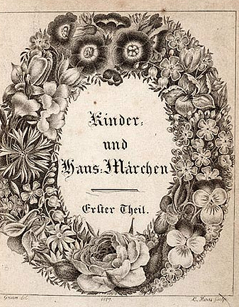
Even in the 1800s, the first edition of the Household Tales of the Brothers Grimm (1812) began as a collection rich in crude details intended for adults. It was only following the public outcry that the authors launched a slow process of pedagogical rewriting in subsequent editions to adapt the tales for younger readers.
Come è cambiata l’infanzia (e con lei le nostre eroine)
The needs of adults were practical: to teach children what is right and what is not. There was a pressing need to turn a child into a man or a girl into a woman, usually at an age we would not consider adult today.
Fairy tales have changed because our perception of childhood has changed. If in the past seven-year-olds worked, if the number of children depended on those who survived, the sensitivity toward youth and the early years of life was completely different from what we have today.
Roughly, stories born before the industrial era or passed down orally for centuries did not aim to protect the youngest; they were meant to warn them about the dangers of life. As childhood gradually became an oasis to preserve, fairy tales were purified: away went the mutilations, away went the cruel vendettas, away went the bitter endings; inside came lullabies, romantic love, and the inevitable “and they lived happily ever after.”
This cleansing operation ended up changing the female protagonists as well: heroines who in the ancient versions were ready to do anything to save themselves were transformed into passive figures, bound by the myth of waiting for the prince charming.
Che cosa cerchiamo oggi nelle fiabe?
The process of sugar-coating did not stop at the last century, but today it takes on new forms in contemporary debate, where fairy tales are continually reanalyzed, modified, or filtered to suit today’s sensibilities: from debates about consent in kisses to the great classics, up to modern reinterpretations.
There are editorial examples such as Cinderella Liberated by Rebecca Solnit (Salani, translated by Guido Calza and illustrated by Arthur Rackham), which transforms the fairy tale into a celebration of self-determination, and The Bloody Chamber by Angela Carter (Feltrinelli, translated by Barbara Lanati), a collection that rereads traditional tales in a Gothic and feminist key.
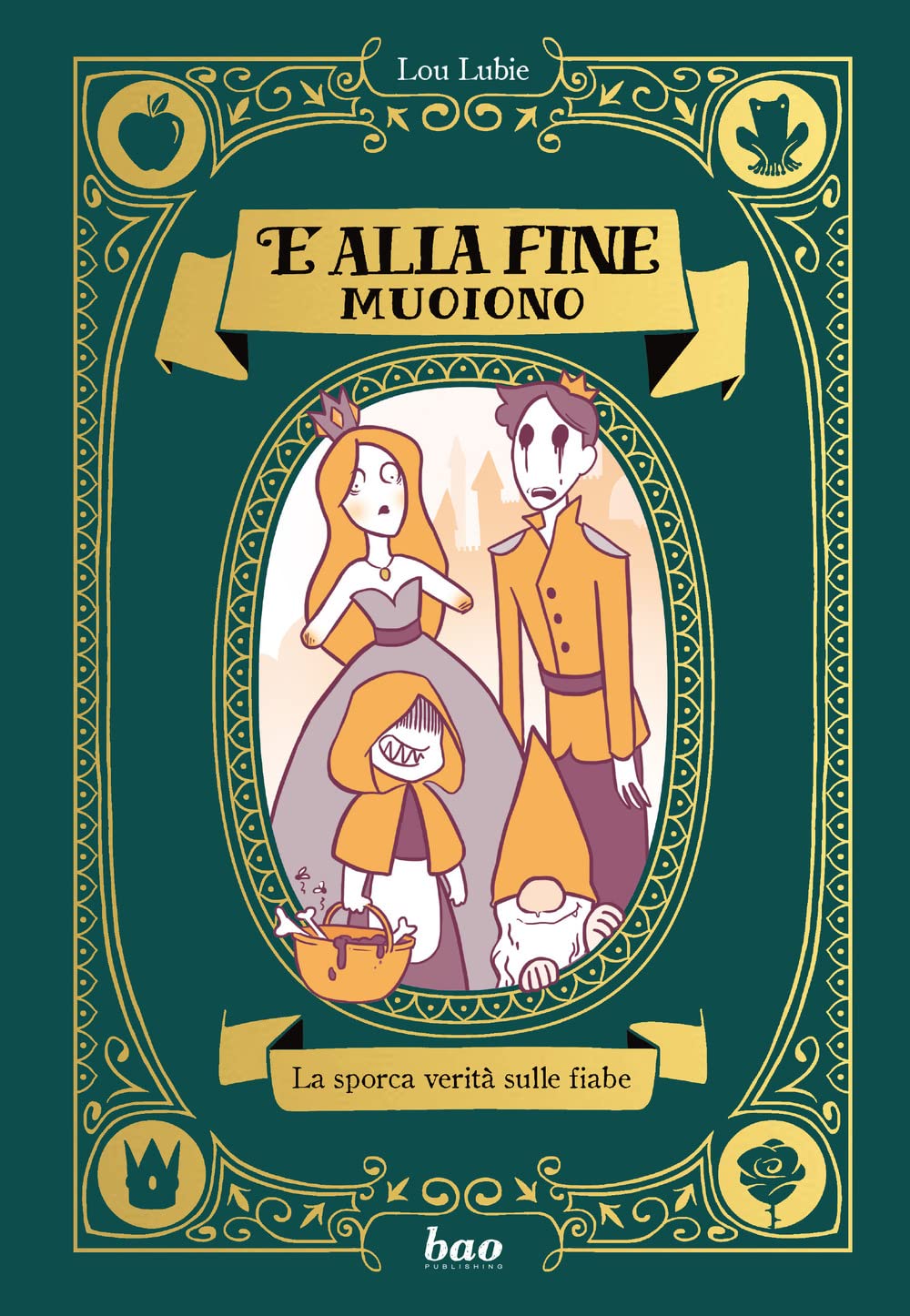
There are also efforts to dismantle the layered stereotypes over time by reclaiming the original: for example, E alla fine muoiono by Lou Lubie, a volume that sits halfway between an essay and a graphic-novel, which analyzes the modern sense of archetypal childhood stories. Lubie thus contextualizes the common morality, gender issues, and the stigmas we have carried with us for a lifetime.
In recent years there has been a renewed interest among adults in the original fairy tales, a desire to know what they really told before Walt Disney rewrote them. Perhaps because, in any case, we’ve all carried our own traumas? Or perhaps because we find something terrifyingly similar to life?