
«We live there. On Monday we go back. I’m entering sixth grade. Mom has found an apartment downtown, on Water Street.» I say these things to have confirmation that they are still true. (p. 50)
Daley is used to observing her family and deducing truths from what the adults say and do.
She learned early, since no one ever explained to her why she must leave the home she has always lived in at Ashing and follow her mother to the grandparents’ house, miles away, keeping it all secret from her father.
The Eleven-Year-Old Summer
The eleven-year-old summer is not what she expected: far from her friends, without the new puppy her father had just given her for her birthday, she tries to understand her mother’s fluctuating mood. When she answers the phone, she perceives her father’s despair and promises him she will return. Because Daley must come to terms with the love she has for her father Gardiner, whatever he does or says.
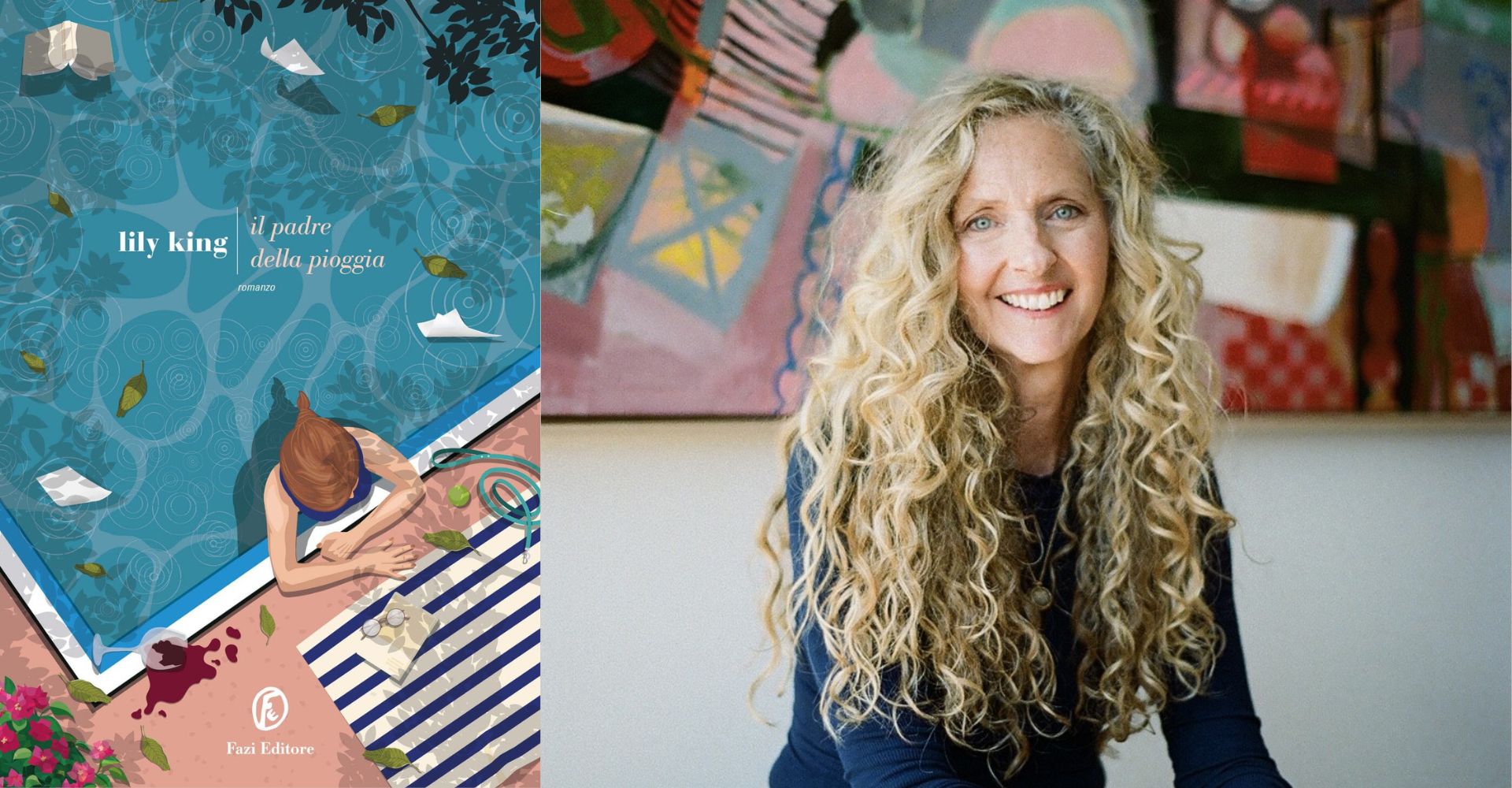
These opening pages lead into The Father of Rain, Lily King’s new novel, much anticipated after the success of Heart, the Lover. Translated by Manuela Francescon for Fazi Editore, the book begins with Nixon’s resignation in 1974 and stretches to Barack Obama’s 2008 election.
There are more than thirty years of United States history, but also more decades of Daley’s life, who, from the eleven-year-old in the first part, becomes a young adult in the second section of the text, then a more mature woman in the brief concluding part.

A unire le tre sezioni è il rapporto con suo padre, Gardiner (un nome ironicamente descrittivo, perché significherebbe “giardiniere”, ma l’uomo non coltiva nulla, se non il proprio ego).
Possessivo ed egocentrico, a lungo inconsapevole di avere una dipendenza dall’alcol, Gardiner è un uomo bianco e privilegiato, che negli anni ’70 guarda con sospetto alla comunità nera e alla lotta per la parità di genere.
A lui bastano le donne, i suoi cani, il club del tennis, i suoi quattro amici con cui brindare e mangiare un filet mignon. Verso i figli avuti dal suo primo matrimonio – Daley e il fratello maggiore Garvey – ha una strana forma d’amore, che prevede di essere sempre e comunque il genitore preferito. Ma, anche se è sempre in competizione con l’ex moglie, non si pensi a un padre pronto a battersi in tribunale per l’affidamento dei figli.
A lui basta vederli ogni tanto, litigare per inezie, ma trovare sempre il modo per essere un perno nelle loro vite. Non di rado risulta addirittura infastidito dall’averli attorno: con Garvey gli scontri sono palesi; con Daley, invece, Gardiner porta avanti manipolazioni più sottili. E la madre? Lo dice Daley stessa:
“Mia madre, che mi amava ma non mi proteggeva, […] mi ha lasciato andare da mio padre ogni singolo fine settimana, anno dopo anno, anche se ogni volta tornavo trasformata in una bestiola feroce. E non mi ha mai chiesto perché” (p. 206).
Difficile, se non impossibile, per Daley poter fare qualche sogno più strutturato per il futuro, che “è sempre stato un pensiero scomodo” (p. 161).
The Unpredictable Mood of the Father
The father’s unpredictable mood, now ironic and provocative, now furious and whimsical, has shaped her relationships. For this reason we are pleasantly surprised to discover in the book’s second part that Daley, at thirty, has a stable relationship with Jonathan (“You two are what all of us spend our lives searching for,” comments a mutual friend on p. 322) and is about to move in with him to a new home. In fact, she has won a prestigious and highly sought-after position at the University of Berkeley to carry on her anthropology research.
Yet, when her brother Garvey calls and asks for help with their father, devastated after being left by his second wife, Daley cannot resist. Jonathan and other friends point out that the father has always manipulated her and deserves nothing, but Daley cannot stay indifferent and returns to her old house. With a countdown: a few days and she will leave for Berkeley. Waiting for her in Ashing is a drunken father, his dogs, a past to confront, a house that has changed in appearance but, in corners, still bears the marks of her childhood there.
Lily King does not offer easy solutions to her characters
The Father of Rain then leans toward important questions (ethical and existential): to what extent is it right to sacrifice yourself for a parent who has often been absent or, worse, harmed you in the past? How subtle is the boundary between loving others and loving oneself?
As in her previous novels, Lily King does not offer easy solutions to her characters: she prefers to let them experiment, make mistakes, reconsider their steps, or take a direction entirely different from what one would expect.
At the core is a humanity that strives to find its own serenity, and it isn’t guaranteed that staying together, in a family, is the best solution.
