
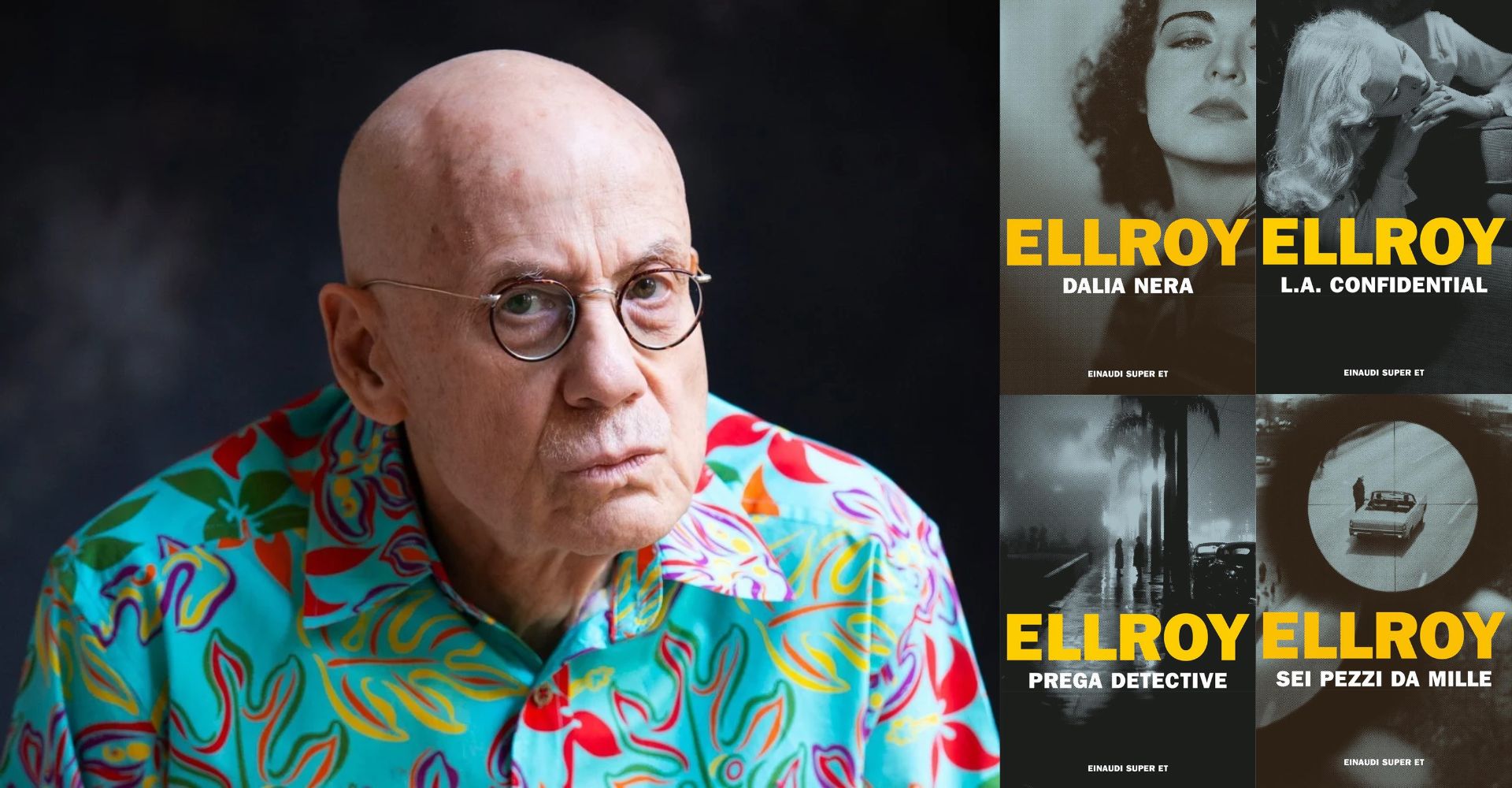
To enter James Ellroy’s books, in most cases, is to step inside a distorted mirror. But it is not one of those that provoke laughter from the observer or radically distort faces. No, this mirror reveals a historical reality, almost identical to the one we have lived through or learned about in school, yet far darker.
A reality in which there are no good guys, only bad and worse, where, as Joseph Conrad wrote, “one does not need to believe in a supernatural cause of evil: men are capable of every wickedness.”

The author who reinvented noir
Born in Los Angeles in 1948, orphaned from his mother at ten—when she was strangled and dumped in a ditch—James Ellroy is known as the Demon Dog of literature, the godfather of noir and neo-noir, a writer who moves with few constraints, avoiding social life or technology, and always choosing a single path: his own.
Over the past 45 years he has reinvented noir, drawing from the genre’s founders while boldly criticizing Raymond Chandler (calling him “the most overrated writer of the American canon”), gradually turning toward the so-called historical crime novel and the political novel. Ellroy tells of evil, of dark crimes, but above all of the corruption and the human shadows that enable it to exist—shadows that, to a great extent, are their cause.
Limiting himself to a historical period long past, but not incapable of speaking to today’s audiences, Ellroy builds intricate portraits of what has been (and, even more so, intricate ladders—as he recounts to the Guardian), blended with some fictional elements—usually the investigative part.
There is always something new in his books
He achieved this with his most famous and valuable series, the Los Angeles Quartet, and he has done so with his other works, repeatedly showing a variation on the theme. It’s always Ellroy, but there is always something new, a shift in style, whether in the choice of narrative voice, tone, or the rhythm of his prose.
What remains unmistakable is a lack of brakes and boundaries. A taut, terse, syncopated prose that challenges even the most fearless readers… Because Ellroy does not aim to recount an exception—the solitary murder in a pretty town where the butler is the culprit. No, James Ellroy tells the rule: street-level drugs, assaults, violence, corruption, and a thirst for power. And more than through images, it is his language that conveys these (dis)values.
Over time Ellroy has become a character himself: the quips, the off-color remarks, the preacher’s cadence. A writer who lives in and through his own literature, pushing prose to the edge. It is hard to say where the performance ends—in his public appearances as much as in his novels.
Index
- The standalone novels
- The Lloyd Hopkins Trilogy
- The L.A. Quartet
- Underworld USA Trilogy
- L.A. Quintet
- Films inspired by James Ellroy’s books
James Ellroy’s Books
In this overview of James Ellroy’s major works, we will follow the division into series (presenting them in their latest edition, published by Einaudi Stile Libero). Although there are links between the various novels, and though most share a setting, each cycle as defined and understood can be characterized by certain themes, elements, or nuances.
The standalone novels
When discussing Ellroy’s books, one must begin with his debut, published in 1981. Prega detective is a crime novel set during a hot Los Angeles summer in the early 1980s, focusing on an ex-police officer who, despite holding a private investigator’s license, makes a living by repossessing cars from people who are late with payments. Fritz is Ellroy’s first character, and his story is the first taste of what is to come: determined not to sink completely, Fritz Brown is hired by Fat Dog Baker (a distinctly odd and peculiar character) to investigate his sister and the man who supports her. But nothing is as it seems, and the murkier the plot becomes, the more the investigator seems to view it as an opportunity for redemption.
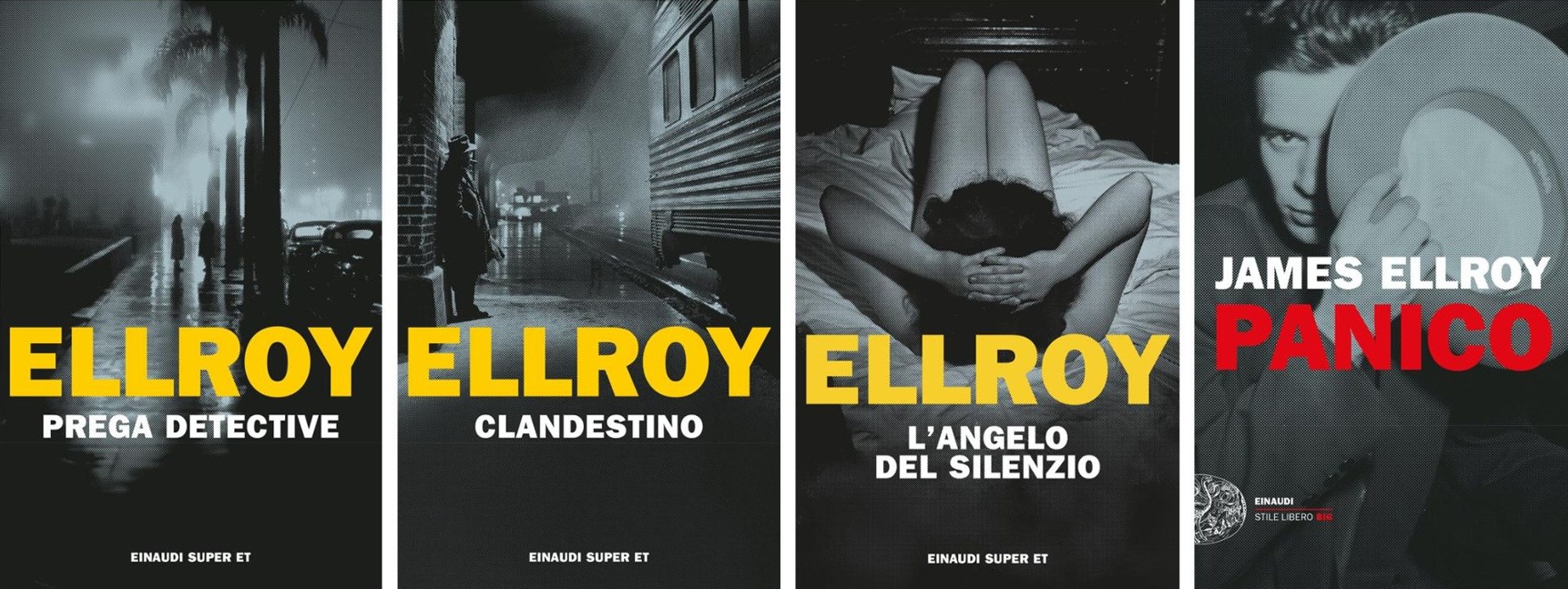
In 1982, Ellroy released his second novel—titled Clandestino—and takes readers back to 1951, chasing a serial killer who targets “lonely and desperate” women. The filthy, ambitious Los Angeles emerges through these pages, populated by men who commit evil and others who pay the price for their deeds. The protagonist is Fred Underhill, a patrol officer who dreams of advancement but, after accusing an innocent man, loses his badge. As the number of victims grows, he has no choice but to pursue the killer.
Throughout his long career, Ellroy has often produced books that fit into series, but during these years he did not neglect stand-alone titles. In 1986, he published The Angel of Silence, and in 2021 Panic. If the former builds the entire narrative around the first-person account of a brutal killer (“The media have given him many nicknames, but the killer’s real name is Death”); the latter centers on the character Freddy Otash, already seen in the story Blackmail, to describe the hunger for gossip, headlines, and the dirtiest secrets of American citizens…
The Lloyd Hopkins Trilogy
Between 1984 and 1986, James Ellroy published the Lloyd Hopkins Trilogy, a series comprising Bleeding the Streets, Why the Night, and The Hill of Suicides, in which the protagonist is the unruly and brilliant detective Hopkins. Once again the 1980s provide the backdrop for these noir novels, which lean more toward classic detective fiction than other works.
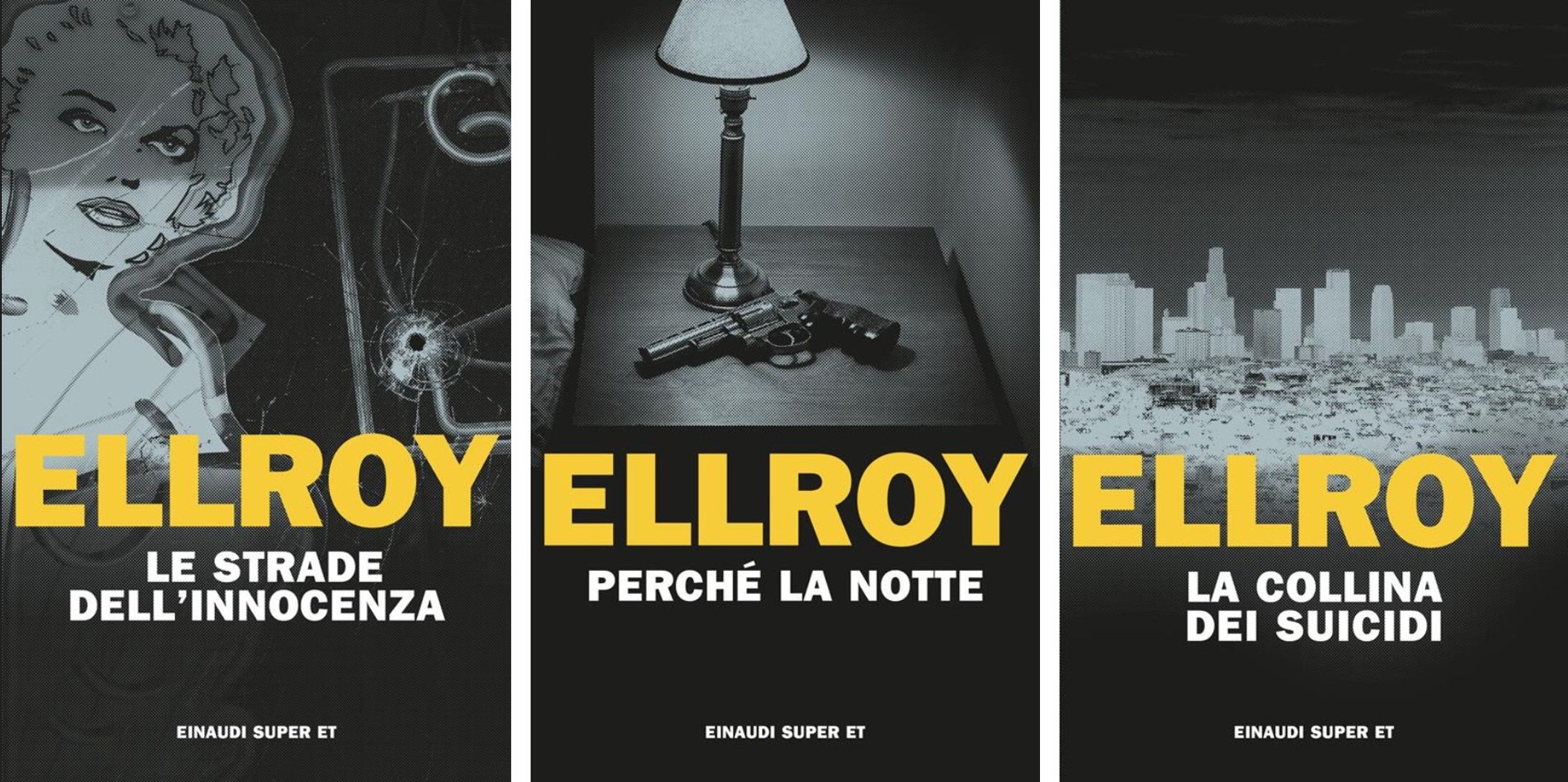
In the first two installments, Lloyd pursues two particularly ferocious and cunning serial killers, opponents whose abilities match those of the protagonist himself. The final installment, instead, revolves around a string of robberies that nonetheless involves two victims in uniform.
With this character, Ellroy stays within the investigative and noir genre, portraying a hero of brilliant mind who is at the same time violent, unyielding toward rules, and obsessed with sex.
The L.A. Quartet
Now a cult series for every fan of the genre, the Los Angeles Quartet comprises The Black Dahlia, The Big Nowhere, L.A. Confidential and White Jazz, which together recount and evoke the decade 1947-1958. It begins with the discovery of the young Elizabeth Short’s corpse and continues in a crescendo of violence and corruption, where the line between legality and illegality disappears, and the boundary between justice and vengeance becomes blurred.

Ellroy often selects a real-world event as a pivot around which to build his story, with one or more protagonists charged with the investigation. Their journey is a hurdle-ridden path guided by a corrupt moral order, depicting the city of Los Angeles as it evolves too quickly. Born as a frontier outpost, LA grows through the oil and film industries in the early 20th century, only to become a metropolis during World War II. It is precisely the return of soldiers from the front, scarred by what they did—or did not do—that yields police officers more resembling thugs, racists, and men chasing easy money.
The city, a protagonist equal to the characters who live in it, mirrors the inner journey readers undertake as they witness Ellroy’s darkest and most fragile sides, confronted with evil and a tension perhaps unsolvable. Although these are undoubtedly echoes of what happened before, they are also the cause of the American society of the 1960s.
Underworld USA Trilogy
American Tabloid, Six Pieces of a Thousand and The Cold is Ragged form the Underworld USA trilogy, which, in line with what has been said, begins in 1958 by following (with the first title) the last five years of John F. Kennedy’s life.
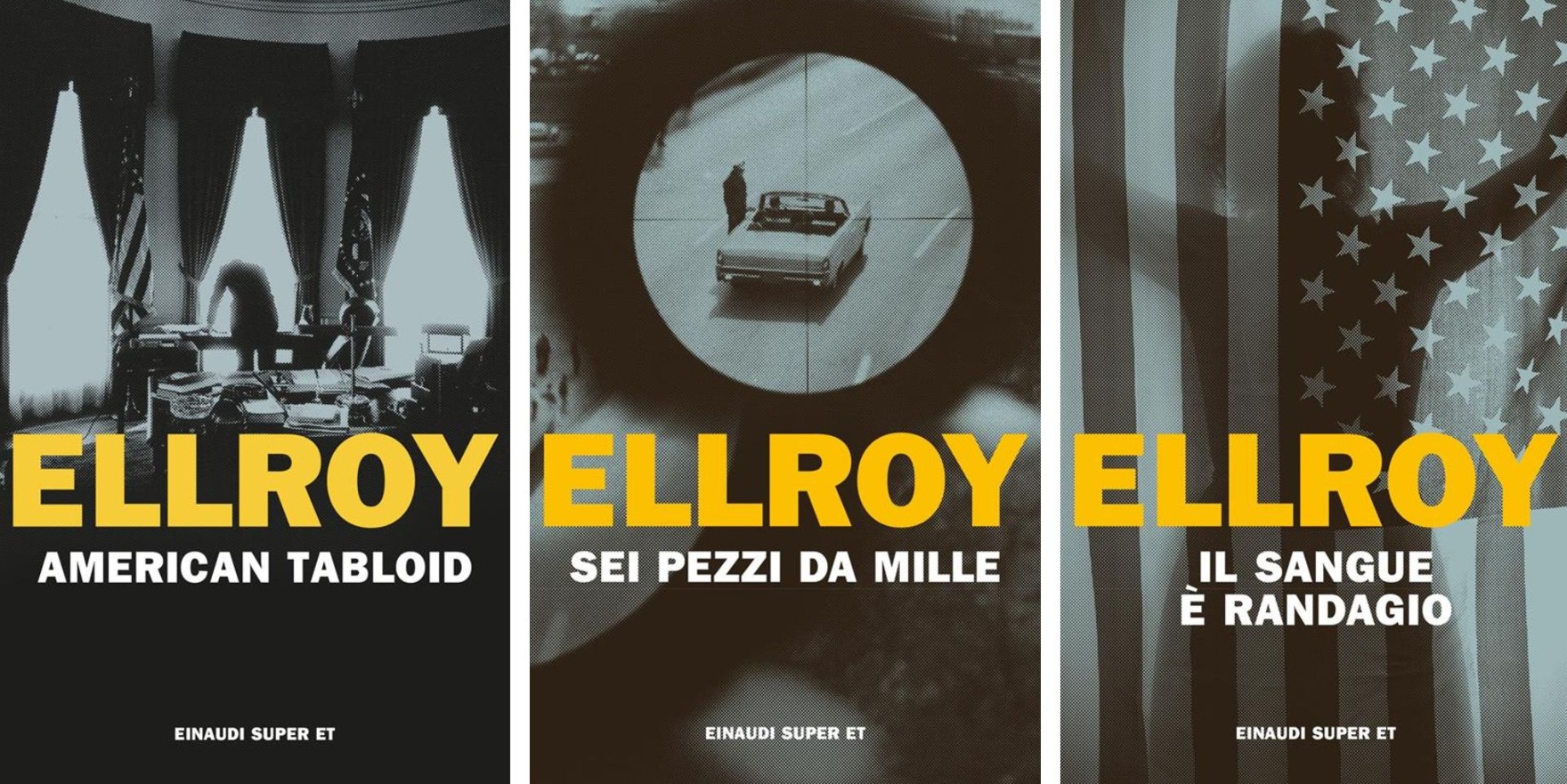
Alternating between genres—from pure thriller to espionage and touching on war literature—Ellroy depicts an America of conspiracies, Vietnam, and civil rights through his (anti)heroes: men who work in the shadows, ex-police officers and ex-federal agents who exchange favors, hide evidence, and write History—at a very high price.
In the three novels, the style accompanies and recreates the atmosphere of the described era. It’s no accident that in Six Pieces of a Thousand we encounter a fragmented, rapid voice, while in The Cold is Ragged Ellroy shifts toward a more hallucinatory and drug-fueled prose.
L.A. Quintet
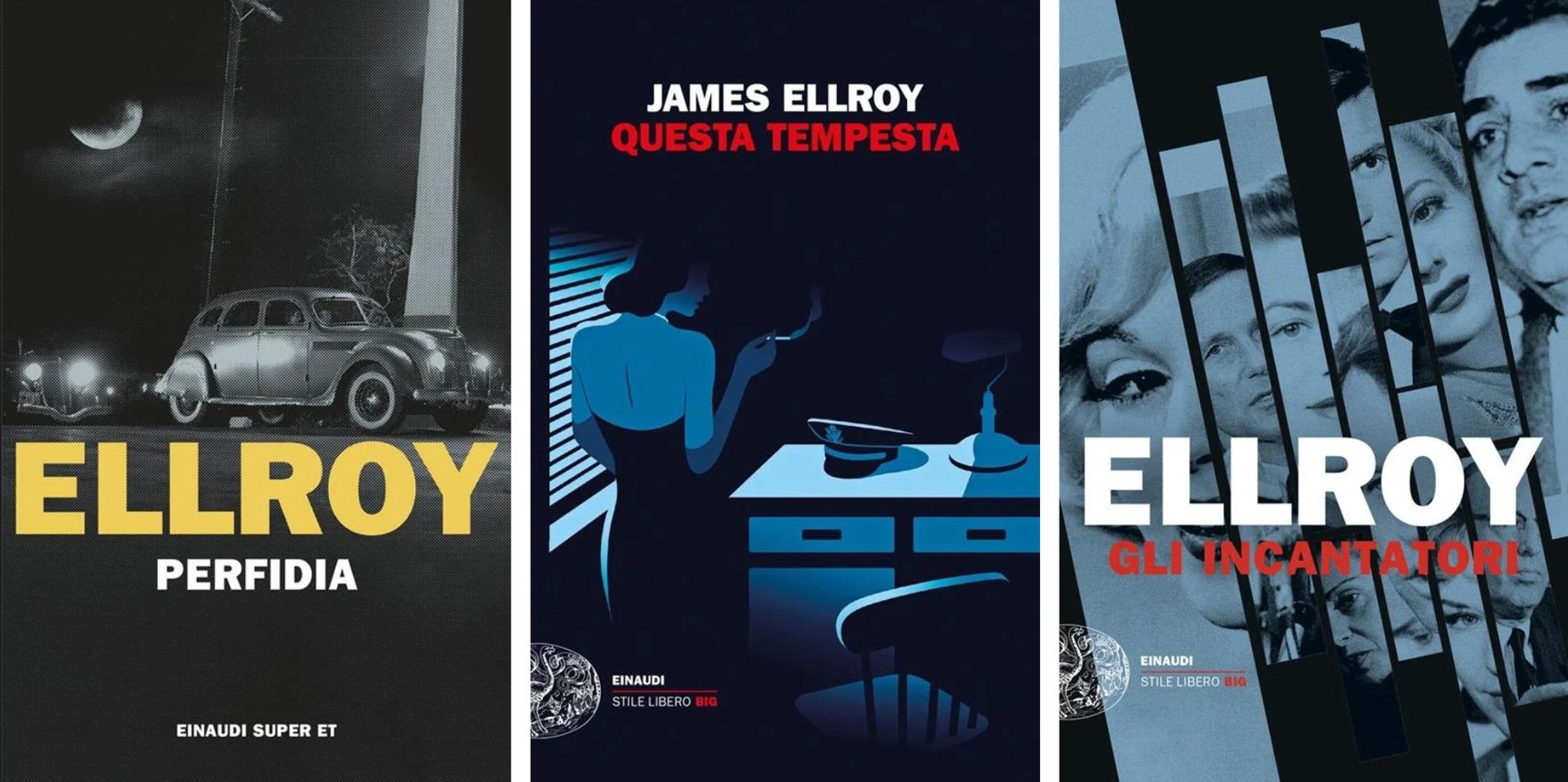
We conclude the tour of James Ellroy’s works with his most recent—and still unfinished—series, the L.A. Quintet. As happened with his best-known volumes, in Perfidia, This Storm, and The Enchanters, Ellroy intertwines grand history with fictional elements. Everything begins in December 1941, with the Japanese attack on Pearl Harbor. While racial hatred runs rampant on the streets of the city and the United States decides to go to war, a second, hidden and all-Los Angeles conflict is about to erupt. With the third book of the series, the narrative moves to 1962, when Marilyn Monroe’s death becomes Freddy Otash’s new obsession.
Awaiting the Italian translation, in June 2026 Ellroy published Red Sheet, the fourth installment of this quintet, set in the wake of the Cuban Missile Crisis.
Films inspired by James Ellroy’s books
Reading Ellroy’s novels, with their pulp sensibility and their tendency to draw heavily on the world of American show business, one could easily describe the writer’s universe as hollywoodian and cinematic. Perhaps for this reason, Hollywood has repeatedly drawn inspiration from these noir novels and, more broadly, from Ellroy’s prose.
The result? Films that have been more acclaimed by critics and audiences than by the Los Angeles-born author himself. As the Guardian notes, Ellroy even called L.A. Confidential the best adaptation, though it’s “as deep as a tortilla” and the action scenes “do not make dramatic sense.”
Among the titles brought to the big screen, we still recall Stay Clean (1988), in which James Woods plays Lloyd Hopkins, and Brown’s Requiem (1998), inspired by the debut Prega, detective. In addition to L.A. Confidential—which earned the Oscar for Best Original Screenplay and boasted a cast including Russell Crowe, Guy Pearce, Kevin Spacey, Kim Basinger, and Danny DeVito—Brian De Palma’s Black Dahlia (2006) also deserves notice.
Looking at projects in which Ellroy himself was involved as a screenwriter, we note Stay Clean, a 2002 short film inspired by The Angel of Silence, The Night Doesn’t Wait (2008) and Rampart (2011).

Amelia Hartwell
I write about books the way I read them: slowly, curiously, and with attention to the details that linger after the final page. At Lythrum Press, I cover literary fiction, essays, memoirs and the wider culture of reading, with a particular interest in voices that challenge familiar ways of seeing the world. My work is guided by one simple idea: a good book deserves more than a reaction — it deserves a conversation.