
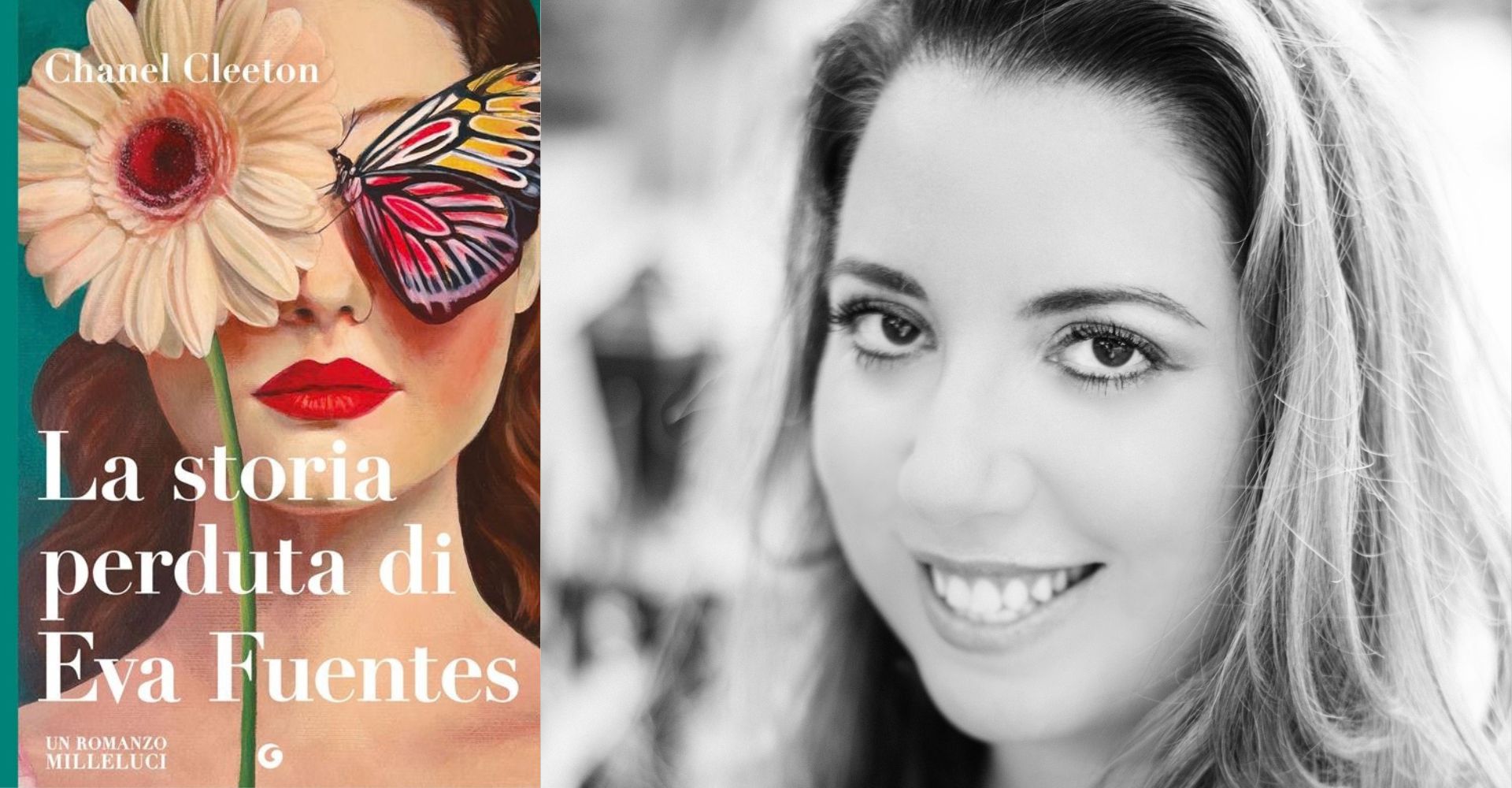
Margo Reynolds, the protagonist of The Lost Story of Eva Fuentes by Chanel Cleeton, in bookstores from Giunti in Federica Merati’s translation, moves through the streets of London driven by a fervent passion: to recover rare and forgotten objects. Between auction houses, drawing rooms, and antique libraries, hers is a genuine treasure hunt. Her new objective? The sole surviving copy of The Time of Oblivion by Eva Fuentes.
Eva, a Cuban teacher at the turn of the century, had seen her life transformed after a study stint in the United States, a dizzying experience from which her only novel was born. Torn from the tumult of the Cuban Revolution by the librarian Pilar Castillo, the manuscript is now hidden in the shadows. It will fall to Margo to recover it, restoring voice and dignity to the women who protected it at the cost of their own lives.
With the Cuban-American author, native of Florida, we spoke about a book that interweaves the fate of three women capable of fighting for their freedom and their dreams across different eras. A novel in which the role of books and reading is central, that moves between early 1900s Cuba and that of the Fidel Castro era, up to today’s London…

How did the idea for the novel come about, blending literary mystery with a love story?
“I wanted to write a novel that celebrated books and the power they exert over our lives. As an ardent reader, books have surely played a significant role in mine. When I began developing the story, I pictured the characters and their relationship with literature. A historical event I had encountered during research for one of my previous books — The Most Beautiful Girl in Cuba — came to mind, and I decided to set one of the narrative strands during Harvard’s 1900 Cuban Summer School, when Cuban educators traveled to the United States for what was then the era’s greatest cultural exchange. It was from this spark that the story took shape. As a writer, I like having the opportunity to explore different genres in my work, and I welcomed the idea of weaving suspense and a love story into the novel.”
How demanding was the research work?
“For me, as a writer of historical novels, the research phase is often one of the aspects I enjoy most. I learn a great deal about Cuban-American history while working on my books, and I’ve been fortunate enough to weave parts of the research from previous novels into later works. In the case of The Lost Story of Eva Fuentes, it was especially useful having already written books set in both the 1960s and the late nineteenth century; I could draw on my prior knowledge and experiences, which undoubtedly made the research process a bit easier.”
Like Eva, you also moved abroad for study: what memories do you have of that youthful experience?
“I had the incredible fortune to live and study abroad; it was a life-changing experience. I had the chance to travel and learn a great deal from the people around me. It was an unforgettable adventure that taught me more than I could have imagined. While writing Eva’s character, I recalled what it felt like to undertake such an undertaking and I wanted to convey some of that enthusiasm and wonder in her story as well.”
At the heart of the book is a novel that, across different eras, united the fate of three women, becoming a tool of struggle. How did your passion for books come about?
“I don’t recall a moment in my life when I wasn’t a devoted reader. Since childhood, books have been a source of comfort, escape, and inspiration for me. The possibility of opening a book and being carried away into a literary adventure is a special experience, and I will always be grateful to the authors who offered me that opportunity throughout my life.”
You described the novel as “a love letter to the power of books and the impact they have on our lives.” By the way, which novels, female authors, and authors have “changed your life”?
“There are so many! Among my absolute favorite books are Waiting for Snow in Havana by Carlos Eire (Italy: Piemme), The Map of Love by Ahdaf Soueif, The Disciple by Elizabeth Kostova (Italy: Rizzoli), The Time Traveler’s Wife by Audrey Niffenegger (Italy: Mondadori), and The Cubans by Anthony DePalma.”
You have written numerous historical novels: in what period will your next story be set?
“My next novel, An Infinite Love Story, is set during the Space Race of the 1960s and tells the story of Vivian Mitchell, wife of an astronaut. Her husband Joe disappears during a Moon mission, and when Vivian begins receiving messages that, in her view, only Joe could send, she wonders if their love is stronger than space and time, determined to do whatever it takes to bring him back….”
