“I have seen things you people wouldn’t believe.”
There are films that are so iconic that calling them iconic almost feels like an understatement. Blade Runner is certainly one of them.
All it takes is a single frame, no actors in sight, only pouring rain and a neon sign lighting the street, and the mind wanders to the Philip K. Dick novel, to his replicants. Blending dark, noir atmospheres with cyberpunk, the cinematographer Jordan Cronenweth built a unique and unforgettable Los Angeles and, together with Ridley Scott’s direction, gave life to a film that, freely inspired by the book of one of the greatest names in science fiction, delivers an unforgettable vision.
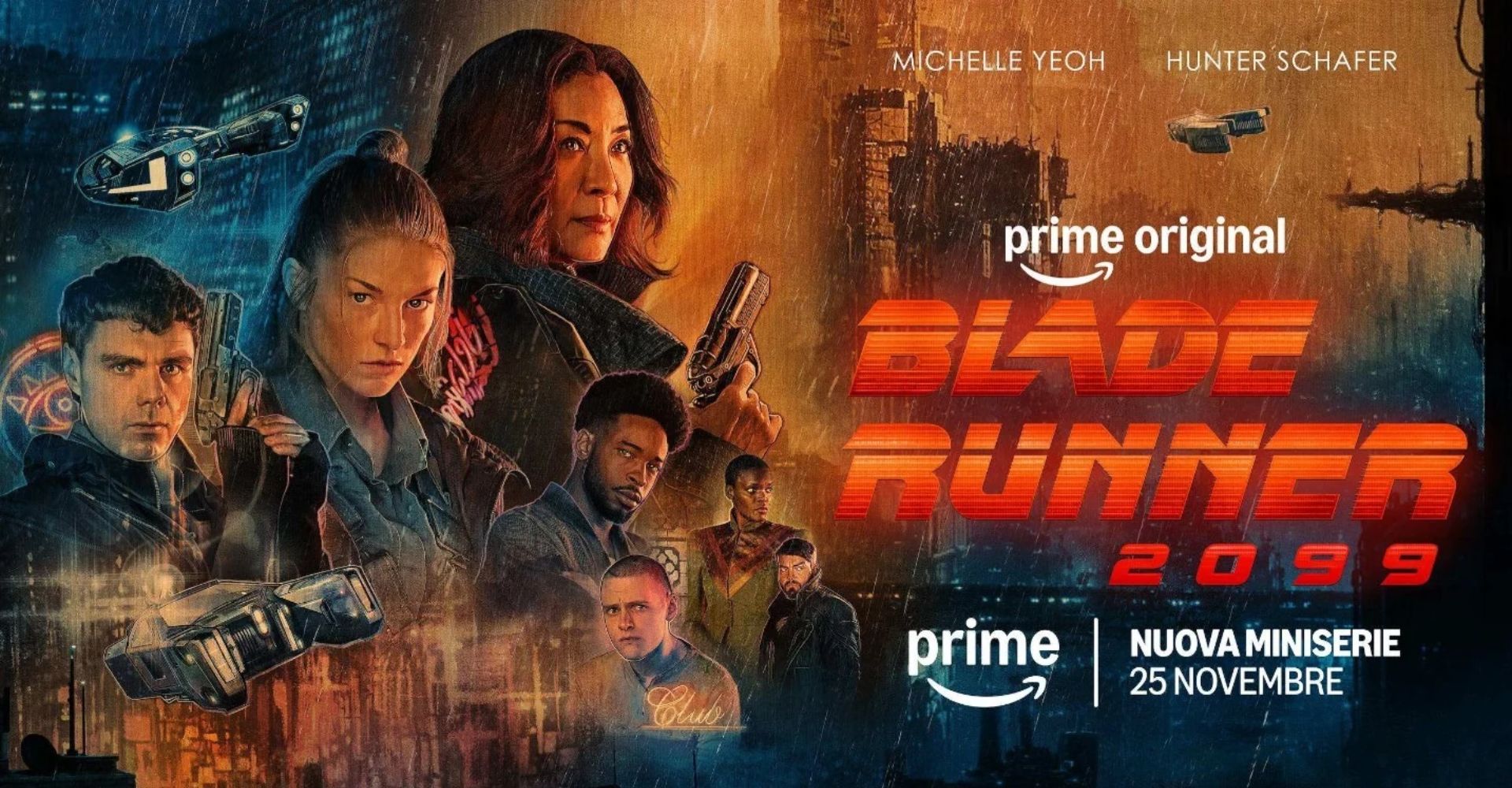
Now, Amazon Prime Video gives it another go and, after the sequel Blade Runner 2049, offers audiences the chance to return to the world created by the American author. Blade Runner 2099 will premiere on November 25, when all eight episodes will be available.
Blade Runner 2099: the Plot and the Cast

The TV series is set fifty years after the events of Blade Runner 2049.
We remain in Los Angeles, a city reborn, but not thanks to humanity. We thus follow the exploits of Cora, a fugitive who has adopted one final identity in the extreme attempt to stop running: that of a Blade Runner. Forced to work with Olwen, a Replicant with only days left to live, she hunts down a fugitive who hides a truth capable of toppling their already fragile city.
The series – which counts among its executive producers Silka Luisa, who also serves as showrunner, and the Ridley Scott mentioned above – brings together an outstanding cast: alongside the protagonists Michelle Yeoh (Everything Everywhere All at Once) and Hunter Schafer (Euphoria), we find Dimitri Abold (The Hunger Games: The Ballad of Songbirds & Snakes) and Lewis Gribben (Somewhere Boy), among many others.
Blade Runner: Where Were We?
The project thus positions itself as a sequel to the film Blade Runner 2049, released in theaters in 2017. That film, in turn, followed the cult movie from 1982, with the story picked up thirty years later. Centered is a new Blade Runner, the agent K, who seeks to get in touch with the former agent Deckard (Harrison Ford) when a long-buried secret resurfaces…
The question remains: Do Androids Dream of Electric Sheep?
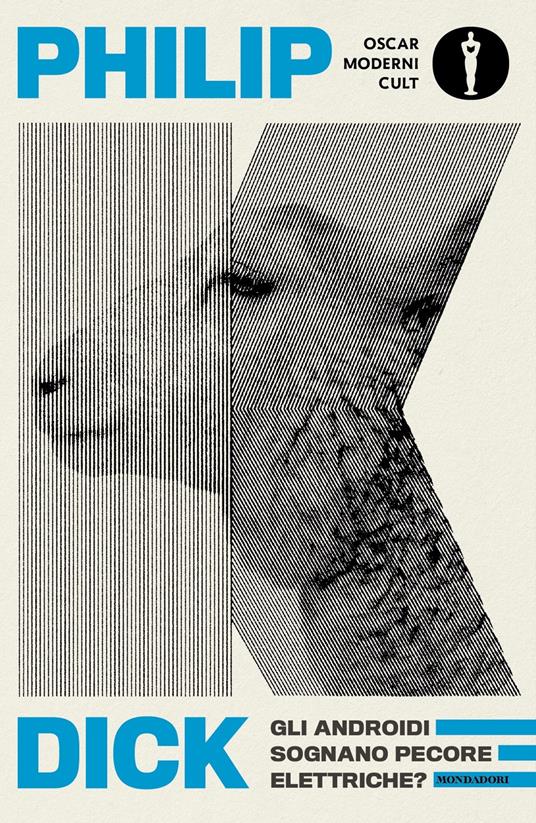
The world of cinema was quick to take an interest in adapting Do Androids Dream of Electric Sheep?, which appeared in 1968 (among the notable names expressing interest were figures such as Martin Scorsese). Written by Philip K. Dick, the author “who invented the future” (as we noted in this article), he was nominated for the Nebula Award the following year.
Set in a post-apocalyptic San Francisco, the novel tells the story of Rick Deckard, a bounty hunter whose job is to “retire” (i.e., kill) six Nexus-6 androids that have revolted and fled. The problem? The androids, of course, have human features and behaviors: the only way to recognize their true nature is to subject them to a test of recognition that pierces empathy, a sentiment that the replicants would seem to lack.
The book, a cornerstone of science fiction and dystopian literature, raises questions about the true meaning of “being human,” about the concept of empathy, but also about more thorny issues, such as police repression, disabilities, and the notion of social exclusion.