Gustave Fayet, André Suarès, The Abbot and the Condottiere: Correspondence 1923-1925, edited by Antoine de Rosny with the collaboration of Olivier Schuwer, The Condottiere, 3 October 2026, 496 pages, €25.
Seventeen years separate the book’s first letter from the next. In spring 1906, André Suarès thanks an unknown reader for having had the courage to name him, and then silence returns until the evening of October 1923 when Gustave Fayet finally rings at Rue Cassette. The friendship that begins that day has two years to reveal itself. It is written in 132 unpublished letters, which The Condottiere Editions publishes in the very year Paris rediscovers the collector.
Né en Marseille en 1868, ami de Romain Rolland depuis l’École normale, André Suarès rejoint en 1912 la Nouvelle Revue française, où ses chroniques paraissent sous le nom de Caërdal. Ses pérégrinations italiennes, dont celle qu’il accomplit à pied en 1893, nourrissent le Voyage du Condottière, qui lui vaut son surnom. Inspirateur de la bibliothèque littéraire de Jacques Doucet, il passe, rue Cassette, pour un ours qui garde sa porte close.
Gustave Fayet, né à Béziers en 1865 et héritier de vastes vignes, devient en 1900 conservateur du musée de sa ville. L’un des premiers à acheter Vincent van Gogh et à exposer Pablo Picasso, il réunit chez lui, à Paris, près de deux cents œuvres de Paul Gauguin et sauve en 1908 l’abbaye de Fontfroide. En 1912, ses aquarelles florales sur papier buvard lui ouvrent une seconde vie, que l’Atelier de la Dauphine, fondé en 1920, prolonge en tapis qui séduisent d’emblée Jeanne Lanvin et Jacques Doucet.
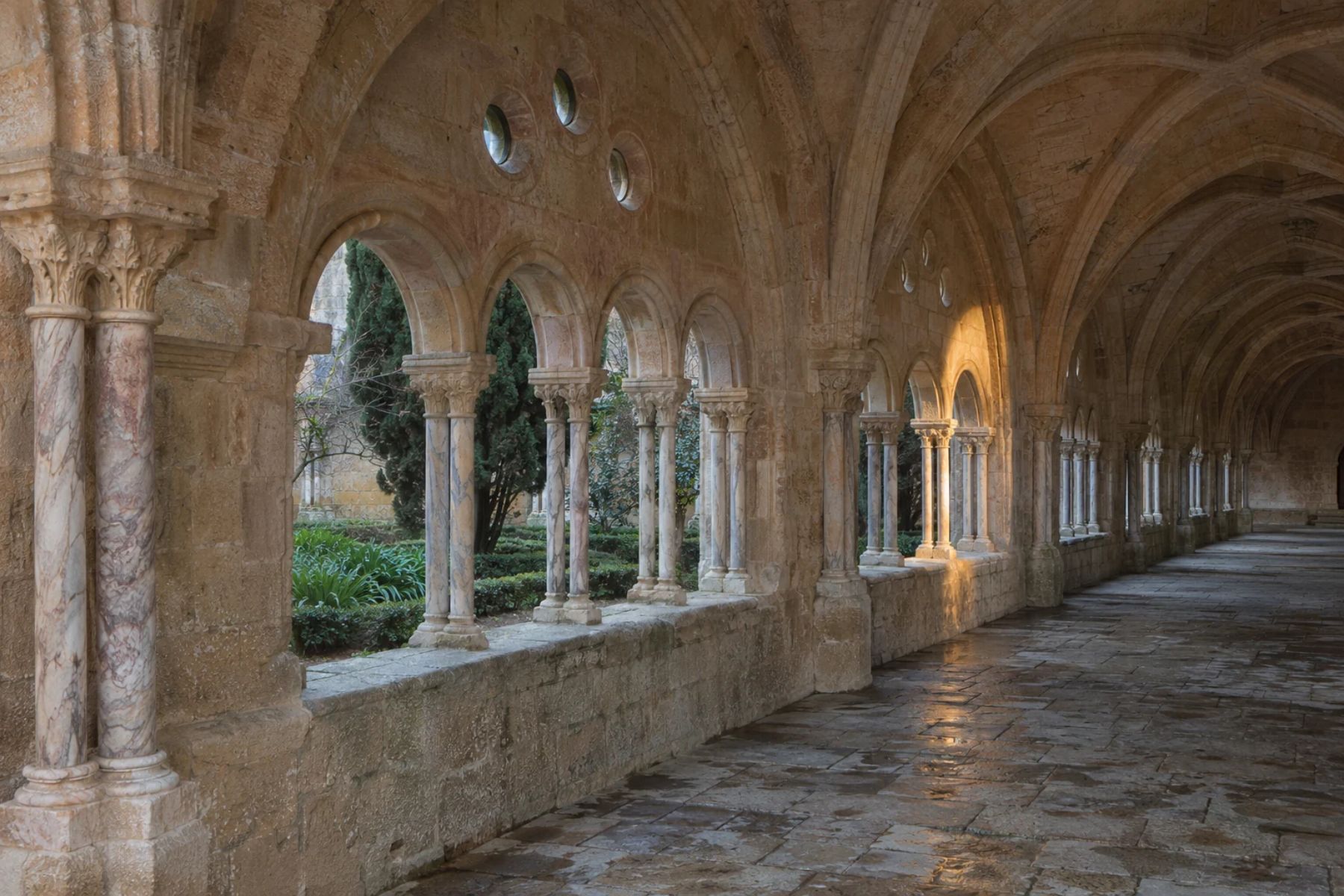
Jusqu’au 8 mars 2027, la Fondation Louis Vuitton consacre tous ses espaces au collectionneur et au créateur. L’Autoportrait à l’oreille bandée et à la pipe de Vincent van Gogh, que les cimaises françaises avaient perdu de vue depuis 1937, y voisine avec le Christ jaune de Paul Gauguin, tandis que se déploie le décor peint par Odilon Redon pour la bibliothèque de Fontfroide. André Suarès a fréquenté en songe cette librairie, assis parmi les in-folios, ces compagnons “qu’on n’entend jamais & avec qui l’on cause le mieux”.
The Door on Rue Cassette
The 1906 letter answers the praise that Gustave Fayet had sent to André Suarès after reading Sur la mort de mon frère. The writer thanks him with a paradoxical phrase, “you have been bold against your surprise”. With Odilon Redon, the amateur then reads each new volume, but they are discouraged from going to knock on the author’s door. Chance in 1923 takes the form of Maurice Pottecher, Fayet’s neighbor at Cap Brun, to whom the Béziers native tells of a dream in which he illustrated a tale by the master.
On 10 October 1923, in a dim vestibule, a figure with long hair parted by a line appears, a visitor whom the painter’s visitor believes to be Christ. The recluse leafs through the Canciones of Saint John of the Cross adorned by the artist, then sits at the piano to play Bach, a Beethoven Andante, and a fragment of Parsifal. Fayet leaves with Japanese poems. “It seemed to me that my body had lost its weight”, he writes of his return. Within a few weeks, a hundred floral drawings—now lost—emerge for a Japan liberated from any notion of japonisme.
A classical-language agrégé, author of La Culture classique d’André Suarès, speaks of “intellectual betrothals”, a phrase that precisely names what begins between the two men. “I had only to recognize you,” writes the Condottière as early as the summer of 1924, before, in October, fixing the image that seals the pact, a fruit that “hid at the top of the most beautiful branch”. From the early days’ dear monsieur, terms slip to dear Abbé, then Fontbonne, a curiously affectionate variation on Fontfroide offered to a private abbot of his abbey, while the painter salutes his dear Caërdal. Nearly two years after the first visit, the man who had been predicted a closed door sums up the exchange with perfect reciprocity, “This door opens for Fayet. Mine will always open for Suarès.”
The Gardener of Carpets and the Tapestry Maker of Flowers
Friendship is proven at the workbench in 1924, when Fayet adorns the Nuage Messager of Kalidasa and entrusts André Suarès with guiding the project toward a Clamart printer renamed Scribe Scribovitch Scribine. The instructions pour in: a square page with a Persian taste, gray paper for vivid gouaches, notes barred, stanzas freed from their Arab numerals, until the old servant Émile Carbonnel unearths a XII-year register with blue folios. “The Messenger Cloud will race, as befits, across the tender sky,” the poet exults.
Convergences flow toward Paris: Igny’s jams and cut flowers, Clermont market goat cheese, and old parchment gathered by bundles from rag-pickers for the recipient’s desk, which is paid with calligraphed dedications and the donation of his own Debussy manuscript. This exchange, with a lighthearted college-boy gaiety, honors the duty of giving that Marcel Mauss analyzed in his Essai sur le don. Fayet blends whimsy with craft, even designing for his dog, Baron Kiki, a casino outfit with violet bishop’s pants. He had introduced his companion Gabrielle Maireville, the Pitchoune, as a woman who “puts a little garlic on the vowels and a dash of pepper on the consonants.”
Pauline Bruley, professor at the University of Angers, deftly shows how André Suarès’s writing loosens in these letters, where the aphorism—more natural than in his essays—offers comfort and solace. “Laughter is the music of health,” he tells the bathers at Royat. The maxim “The spoon is the hand made into tongue, and the tongue into tool” comes to him from the old spoons that Albertine Thomann, his Betty, discovers in Auvergne.
In December 1924, the foreword written for the rug exhibition at Barbazanges becomes a meditation in which the arabesque obeys a new law, “Color is the curve itself”, then a chapter in Présences, a collection that gathers the Béziers man with Bossuet and Stéphane Mallarmé. Olivier Schuwer, a doctor of art history, places this companionship in the lineage of Odilon Redon and Joris-Karl Huysmans, Claude Monet and Octave Mirbeau, and concludes that “Fayet has found his writer.”
The Pilgrims of the Sun
In the autumn of 1924, Fayet takes the Pitchoune and Betty to Majorca. The first letter from Palma marvels at a sky, “so blue that it seems to walk into the room.” The writer responds as a dazzled philologist, dreaming of the Balearic names, these “three biting and sweet syllables, which make a ball and purr a little.”
The olive trees of Puerto de Sóller spark a quarrel of theologians between the two friends. The painter, seeing Jacob wrestling with the Angel or a duel between giraffe and leopard, regards them as monsters, while his friend declares them gods, insisting that “the more they are centuries old, the less they wish to die.” A few days later, Suarès opposes the Northern darkness with a verdict that Fontbonne’s drawings fulfill: “Nothing is deeper than light.” Fayet, perceiving in the olive grove “the sound of a small blue olive falling”, eventually concedes his correspondent a set of “divine monsters.” In his Parisian ground-floor hermitage, the recluse laments that autumn’s robin, which used to perch on the Pleyel to peck at bread between his fingers, has disappeared.
In the spring of 1925, Fayet retraces in Italy, from Venice to Verona, the itinerary of the Voyage du Condottière, book in hand, while his author remains at his desk. Before the pinewoods near Ravenna, whipped by the Adriatic wind, the traveler promises to forget the real landscape “to think only of what you have seen.” Each letter from Italy vindicates Michel Murat, professor at Sorbonne University, who makes Gustave Fayet a Condottière by proxy. The critic notes that reverie, initially dulled by memory, rekindles as the pen flows, for writing is, like Achilles’ spear, “the only thing able to heal the wounds it has inflicted.”
On 24 September 1925, death takes Gustave Fayet and breaks the exchange in full flight. In its complete form, the In memoriam that André Suarès immediately writes for his friend reveals a man who “carried his desert within him.”
Paul Bacou, the son-in-law, had promised to guard these letters safely, away from publication. With a touch of mischief, Antoine de Rosny casts him as a faux prophet. Guillaume d’Abbadie and Olivier Fages, the artist’s great-grandsons and organizers of the centenary season, praise in their foreword this “tomb of a friendship on the heights.” Matured by the affectionate erudition of The Condottiere Editions, this fruit picked from the highest branch preserves intact the moment Fayet longed to share from afar, that of conversations beneath the grand tulip tree, “while the birds played tag under the clipped yews.”
The article L’Abbé et le Condottière, un dialogue entre peinture et littérature first appeared on Lythrum Press.