
Asking why crime and mystery books are commonly called “gialli” in Italy is a canonical moment in the life of any reader.
From Luigi Rusca (considered Arnoldo Mondadori’s right-hand man) and Lorenzo Montano comes the invention of Mondadori’s colored series: the blue (dedicated to Italian fiction), the green (linked to historical texts), the black (the line entirely reserved for Georges Simenon’s works) and, above all, the yellow, the famous line devoted to crime novels.
Among them, it was precisely the latter that achieved the greatest success: inaugurated with The Strange Death of Mr. Benson by S.S. Van Dine, followed by The Mystery of the Two Cousins by Anna Katharine Green, The Man with the Two Faces by Edgar Wallace and The Suicide Club by Robert Louis Stevenson, the series proved to be a particularly successful editorial experiment, thanks especially to its captivating graphic presentation and to the quality of the publications and their translations.
Over time, the series (which remains a mainstay in bookstores to this day) solidified its market position to such an extent that, almost a century later, in our country the original color of the series identifies the genre associated with mystery.
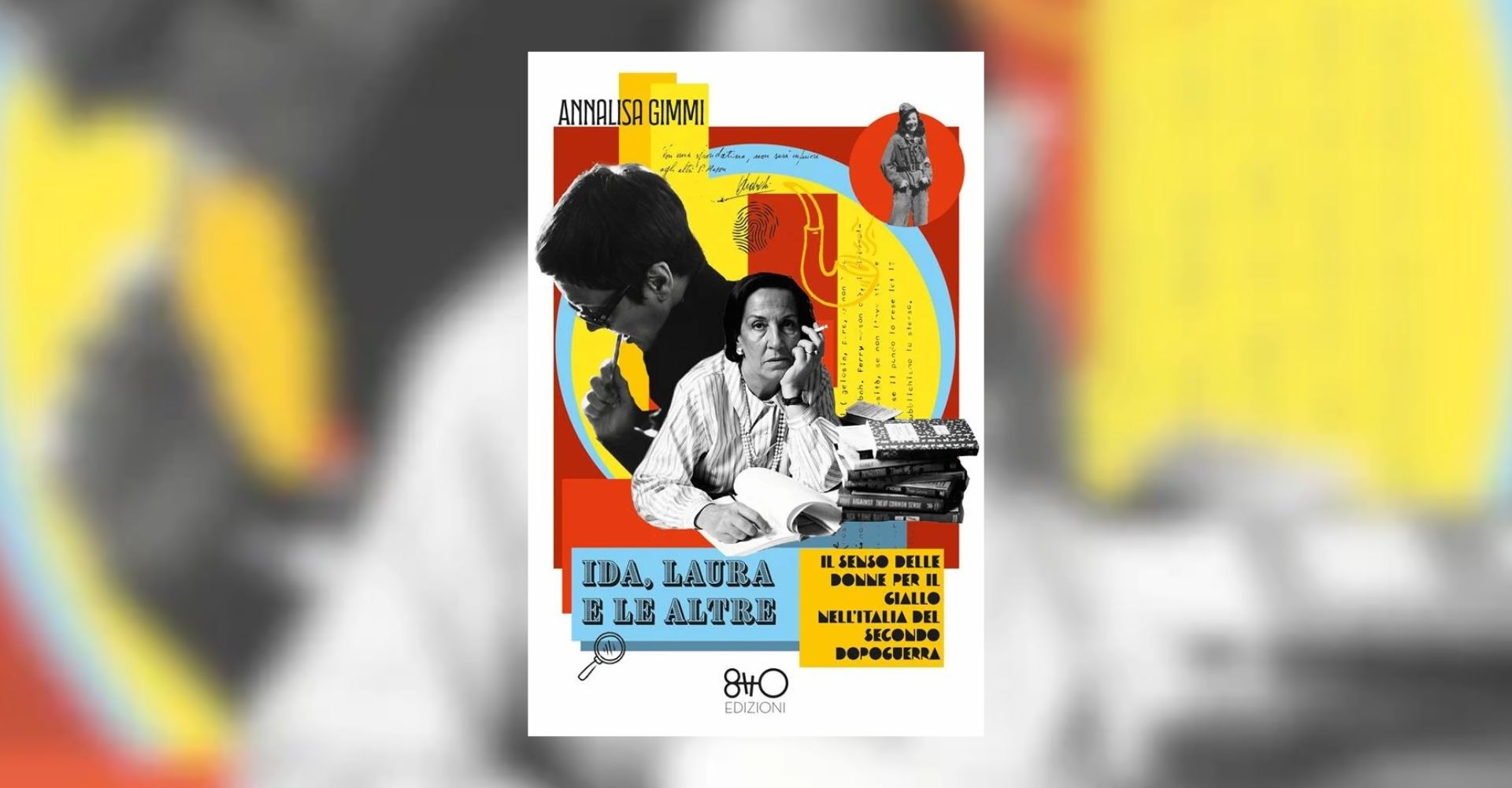
To celebrate the history of the Mondadori Gialli, there is Ida, Laura and the Others – The Sense of Women for the Giallo in Postwar Italy, a study published by 8tto editions and written by Annalisa Gimmi (who long worked in twentieth‑century publishing and who in 2002 published The Craft of Reading with Saggiatore) which tells the story of Italian publishing from a new perspective: that of Ida Omboni, Laura Grimaldi, Lydia Felicioni and all the other women who, in the 1950s and 1960s, away from the limelight, helped to secure the success of Mondadori’s Gialli.
They were the ones who weighed, analyzed, reviewed, and decided the fate of manuscripts. It was a period of great change for publishing houses, which expanded catalogs and translations and intensified their relations with international labels. And the women, who worked behind the scenes and whose names struggle to surface in studies on publishing from those years, were often the balancing point for the publication and subsequent success of a volume…

In the Beginning Was the Color
A man sits in an armchair. He is absorbed in reading a book he holds in his hands. Beside him is a small table with a glass of water. At a certain moment, burglars enter the apartment, but the man is so focused on his reading that he does not notice anything. And the burglars begin to empty his home. One object after another, they take almost everything. In the end, just as the man is drinking without ever lifting his eyes from the pages, they take away the table as well. The glass, placed by the engrossed reader, falls to the ground and shatters into a thousand pieces, but the man continues to stare at the pages without a doubt. Soon after, he closes the book and exhales a long, satisfied sigh.
That is what emerges from my memory of a long-ago Carosello, interpreted by Giulio Marchetti, which advertised the Mondadori Yellows. Today, with all the attention given to home security systems, such an advertisement could never be broadcast, but we are talking about the Sixties. Almost another world.
And, if we think about it, it was another world also in which books were advertised on television, an operation attempted several times thereafter as well, but without appreciable results.
In that case, however, the situation was different. We are talking about one of the most popular and successful series collections of Mondadori, with extremely high print runs and record sales. The Giallo Mondadori, in the postwar period, was distributed at newsstands and targeted readers with a medium‑low level of education, thus combining the legacy of the feuilleton with presenting the book to a very broad audience, which, starting from easy crime stories, found itself perhaps for the first time handling the cultural object par excellence.
The series was a genuine periodical, to the extent that the text of the novel was accompanied by short stories, advertisements, and even word puzzles and humorous vignettes. In short, by everything that could attract a reader not very familiar with the literary world.
Yet, when it appeared in 1929 on the Italian literary scene, when the collection was still called, simply, I Libri Gialli, the care devoted to the volume’s packaging, its beauty as an object, had priority and was meant to represent a meeting point between the world of the book, often identified as a niche reserved for intellectuals, and a genre of so‑called (and presumed) sub‑literature, which nonetheless had the potential to attract a new type of audience.
It is well known that the definition of “gialli novels” as a synonym for “police stories” is exclusively Italian. In all other countries they speak of detective stories, of thriller, of investigative novel, but never of the color “yellow.”
The Italian designation was born right within Mondadori, which was inaugurating a series of editions each distinguished by a different color cover, a solution that contributed to immediate identification by potential readers. This simple scheme guided readers to choose novels aligned with their interests.
Shortly after (1930), the I Libri Azzurri (Blue Books) were launched, which gathered Italian authors’ novels; I Libri Verdi (Green Books) appeared in 1932, containing historical texts; and I Libri Neri (Black Books), between 1932 and 1933, offered twelve crime novels by George Simenon.
The French author appeared exclusively with titles featuring the Commissioner Maigret, and after the line’s closure, which did not meet the hoped-for success, his works were hosted in the Gialli economici (an economy line paired with I Libri Gialli from 1933) and, subsequently, in numerous other Mondadori collections.
The idea of a collection dedicated to crime novels was proposed, in 1929, by Luigi Rusca, who was its first director, but the choice of the enduring cover was a decision made by Lorenzo Montano, certainly the true architect of the collection, who helped to give it an identity.
The color that characterizes it was suggested by crime series published abroad, particularly by a series of Edgar Wallace titles (Yellow Jackets) published in the twenties by the British publisher Hodder & Stoughton, (but already used in the United States, especially by Street & Smith for Detective Story Magazine). So it is not an original Mondadori idea, but it was deftly reworked to the point of becoming an iconic image that still endures today.
On the English covers there was also a red circle, which highlighted the writer’s signature, and Montano had the intuition to make that circle the graphical boundary from which the cover drawings protruded. In fact, the first four volumes, published in the autumn of that same 1929, had hard covers, without a dust jacket and with an hexagon, always red, replacing the circle. But the result did not satisfy the publishing executives in Milan. For Montano and Rusca, and even for Arnoldo Mondadori himself, it was essential that the product be of a higher standard, also to counter the reputation of “popular” and of little value that the genre carried, not only in Italy. Thus the books of the new collection had to look good in any setting, as stated in the promotional notices that appeared in newspapers and magazines of the time. That is, they had to represent a bending of volumes that would otherwise have been relegated to an undifferentiated limbo of minor literature. The visual aspect was therefore redesigned, improved, and by 1930 the book, with an orange hard cover, received a yellow dust jacket known to us, with the red circle, the title in large type, the author’s name, a striking illustration (since 1950, and for more than thirty years after, drawn by Carlo Jacono), and a slogan-like line intended to attract the public, such as “Every page a thrill!” or “This book will not let you sleep!” or even references to authors or serial characters, guaranteeing a certain type of investigation: “Wallace is irresistible!”, “Philo Vance has no match!”, “A new adventure of the Devil’s Advocate” (of course, Perry Mason).
The release of the first volumes was an enormous success, helped by competitions promoted by the publisher, for both readers and booksellers. Readers were invited to a challenge, in line with the investigations of the most famous detectives, to identify four deliberately inserted printing errors. For each error, one had to note the page number, and by adding those numbers up, a historically important date would emerge. This was the solution to the quizzes. And the prize amounted to 5,000 lire, a substantial sum for those days. Unfortunately, however, the winners and the solution of this contest were never revealed.
Salespeople were not left out, as they were encouraged to publicize and distribute the volumes of the new series, since a prize of 6,000 lire waited for those retailers who, among “all the bookstores in Italy and the Colonies,” had purchased the most copies. This phenomenon naturally drew the attention of the press, both specialized and not, and also of the critics, who were far from benevolent toward the venture. The country’s literati looked at the project with suspicion (and often with a certain hauteur), because for them crime fiction appeared as a delightful pastime with little to do with literature, and this publicity reinforced in their minds the frivolous and overly popular aspect of the venture. Leonardo Sinisgalli, in particular, dedicated an unflattering article to the newborn series in La fiera letteraria, aptly titled I libri gialli, yet it is from that moment that the term “giallo” can be considered official for referring to the entire genre.
At the End of the War, a New Beginning
The period we are examining, however, is postwar, when publications resumed after the forced suspension imposed by the Fascist regime. The police novel had never been loved by the regime, which saw it as too violent and as corrupting the new generations. Moreover, the fact that the authors were mainly from the Anglophone world did not help. But it was the Minculpop that really made life difficult for detective fiction publications.
Initially there was a request to increase the number of Italian authors in the series, to demonstrate that our country could also excel in crime writing, provided the novels adhered to certain essential principles, consistent with the vision of an Italy “of sound moral values”: that the culprit would not be Italian and that cases of suicide would never be depicted. Later it was also imposed that the settings be exclusively foreign. Among the Italian writers appearing in the collection we can mention at least Alessandro Varaldo (whose first novel, Le scarpette rosse, appeared in 1931), Augusto De Angelis, with his commissioner De Vincenzi, from 1936, and Ezio D’Errico, also from 1936. In 1941, with La bambola cieca, Giorgio Scerbanenco made his debut.
These interventions, however, foreshadowed what actually happened: in 1941 came the ban on publication and the obligation to close all detective story series. The yellow books thus ceased to exist, although some novels were still hosted in other popular collections, such as I libri della palma. Some small publishers managed to avoid the prohibition, precisely because they were less well known and thus less under the censorship spotlight. But the regime’s follies did not stop there. In 1943, following a crime involving a group of youths, including some minors, a ban was even issued on pulling from bookstores all novels, even those already published and circulating. It seems that during a search of one of these youths’ homes many crime novels were found. The charge of corrupting Italians had been confirmed and the consequences were inevitable.
After April 25, when life began to flow again freely, Mondadori prepared for a rebirth, and in restructuring its production criteria the I Libri Gialli line was reaffirmed — soon evolving into The Mondadori Giallo. It was entrusted to Alberto Tedeschi, one of the company’s brightest officials, who had already been director of the Gialli economici and who had supervised many translations of both collections. The Mondadori Giallo featured a soft cover, thus without a dust jacket, and was distributed at newsstands. From a premium volume, it moved to a high‑distribution periodical.
From an editorial perspective, one of the most significant innovations was the establishment of a reading committee tasked with producing reports that analyzed the strengths (or weaknesses) of the original text and evaluating the suitability of a translation and its inclusion in the line.
The use of reading opinions, already common even before the war, now becomes an integral part of corporate activities. The process of identifying, selecting, and (as in the case of the yellows) translating was structured through different, well-organized steps that engaged officials and even external collaborators. And so a new Italian culture emerged — the postwar era, the years of recovery, the economic miracle — which moved within a society still traditional and Catholic, politically led by the Christian Democracy, embodying the thinking of ordinary people.
In practice, the team working on a series, even with frequent crossovers between collections, decided whether to include a book and how to present it to the public, allowing readers to know and appreciate an author while discarding others deemed unsuitable for the Italian public. It was a real screening that allowed or blocked a novel’s arrival in bookstores, substantially shaping what Italian culture would be in the Fifties and Sixties.
The series’ periodical nature meant a fixed release cadence and a standard format, to which the novel’s length had to conform. It was therefore inevitable that original texts were often cut and adapted to editorial needs. Other cuts or genuine changes occurred as preventive censorship, to align with the moral thinking of the average Italian. For example, all sexual scenes were eliminated, or too violent ones, but also direct discourse containing brutal or vulgar terms. Finally, situations touching on taboos were softened or completely altered.
Voices on the Opinions
Among the readers who worked for Mondadori in those years, there are also some big names. Standing out above all is Elio Vittorini, who examined volumes destined for the major lines: La Medusa first and foremost, which from 1933 hosted contemporary foreign masterpieces and, from 1947, La Medusa degli italiani (also known as La Medusa arancione for its orange cover design, unlike the green of La Medusa maggiore), which offered the country’s narrative novelties. Then there are names like Oreste Del Buono, Cesare Garboli, Niccolò Gallo (the first and among the greatest editors of Italian novels), Enzo Siciliano, and many others. And these are all male figures. Only two standout women appear in that almost entirely blue-tinted panorama: Lavinia Mazzucchetti, a Germanist, literary critic, and excellent translator, and Maria Teresa Giannelli, administrative officer and editorial reader. Two people of such competence that their presence at the company’s top levels was unquestionable. A rare, indeed rare, presence of other women, mainly as clerks or executive secretaries to the “bosses.”
But if we focus specifically on the yellow books we find a reversed situation. It is chiefly women who form the working team, which was also common for other so‑called “genre” series. In effect, the minor novels. It was almost as if the executives in charge of the top posts were men, while the periodical boards composed of those responsible for the shorter, more ephemeral editorial life were largely women.
Women readers are among the most active, the ones the series director would turn to for secure and reliable opinions. Among them, the names of Ida Omboni, Laura Grimaldi, and Lydia Felicioni stand out clearly. These professionals gave a decisive contribution to shaping the series and thus helped guide the tastes of Italian crime fiction enthusiasts. The reading opinions of Ida Omboni and Laura Grimaldi are also brilliant texts, sometimes decidedly witty and biting.
In short, the judgments are not only of interest to readers but also to scholars, confirming that we are dealing with a true literary genre capable of hosting authors of great value. Of course, there are male signatures as well, some occasional and others more constant, especially from the Sixties, such as Sem Schlumper, and Oreste Del Buono, Ettore Capriolo, and others. There are also numerous, and with a style that makes them easily recognizable, the pieces by Alberto Tedeschi, who often intervened personally, especially when evaluating particularly innovative books or difficult choices, drafting judgments presumably intended for the publishing director Alberto Mondadori.
Looking more closely at the reading opinions, we can identify some fundamental characteristics: first of all, they are intended for internal circulation, i.e., they are often read by the series director, by some officials, and rarely by the editorial director; in those short writings there is a succinct summary of the novel’s plot, an objective and stylistic evaluation of the text, and a broader view of the book, considered in the complexity of the author’s production but also in the set of texts already accepted in the series.
It is not uncommon, for example, to read very hesitant judgments that nevertheless conclude with an approval due to the author’s fame, which would guarantee a high number of sales anyway. Or the favorable conclusion could arise from the need to avoid the book being acquired by a competing publisher, thus depriving Mondadori of exclusivity. In Italy readers were not numerous, and publishing houses were still relatively few in number. To make a name for itself in the bookstore world it was necessary to secure the top names that foreign markets offered. Options were signed on books. Rights were bought for all works of the most highly valued authors. And one preferred an unproductive investment, rather than risk losing an author and thus indirectly benefiting a competitor company.
Before naming the major names among these readers, it is also necessary to remember that they themselves handled the translations.
And for this we would need to open a very complex chapter, but this is not the right place. It is worth noting that in the major series the translator’s name was always known. Take, for example, the Medusa collection, i.e., the series through which Italy circulated the best known foreign writers. The translators were always identified, on the cover or in the colophon, and they were recognized professionals. In the yellow series, however, the translator’s name remained for a long time unknown. There are several factors at play: firstly, the urgency of the translation, which often led to products far from flawless (even though during his long tenure, Alberto Tedeschi attempted to raise the level of every professional activity), but also because translations were part of a routine task aimed mainly at adapting the original text to the demands of the periodical line. In any case, it is a fact that the authors (and the translators, of course) of this complex and delicate activity often remained in the shadows and were forgotten.
© Annalisa Gimmi, 2026
All rights reserved
8tto Edizioni s.r.l.
(continua in libreria…)
