
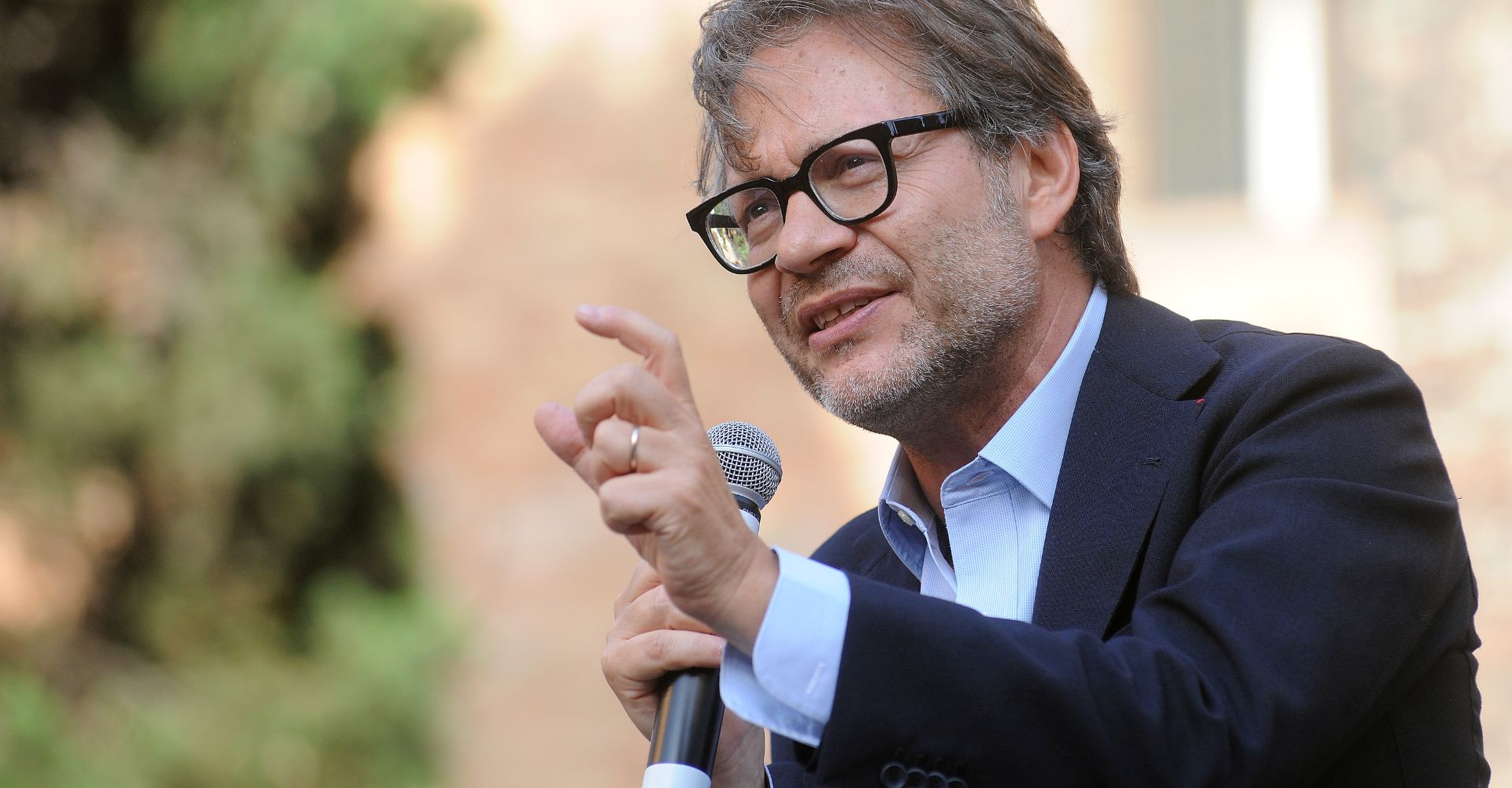
Renowned Lacanian psychoanalyst, essayist, director of the IRPA School of Specialization in Psychotherapy, and professor at the University of Pavia and at Verona, Massimo Recalcati, born in 1959, has concentrated his studies on a few specific threads which, over the years, he has been able to deepen in his expansive body of essays.
Thus appears here a mapped path dedicated to the macro thematic areas he has tackled since the nineties, starting from his earliest publications to the latest titles that have reached bookstores, up to Acquaragia – Confessions of a Deserter.

The book, in which the author “lays himself bare without concessions,” is the tale of his life: it recalls a night when a rainy incident changed his life; it speaks of a beautiful mother and a father who made himself from nothing, through his own efforts; and then of a family plan that seemed already mapped out for him, but to which he would not adhere. The protagonists of this work, published by Einaudi, are failures, restlessness, and loves. The author retraces the trajectory of his life—from the original family, to a passion for reading, to a devotion to beauty, to loves, to companions of ’77, to teachers, to philosophy and psychoanalysis, to his beloved wife, his children, and the dog Alaska.
Psychopathology and Exponents of Psychoanalysis
The early works of Massimo Recalcati mostly orbit around psychopathology: from eating disorders to pathological dependencies, from panics to depressions and latent psychoses. This is evidenced by works such as The Last Supper: Anorexia and Bulimia (Bruno Mondadori), Clinical of the Void (FrancoAngeli), and Anorexia, Bulimia and Obesity (Bollati Boringhieri), the latter co-authored with Uberto Zuccardi Merli.
Anoressia, bulimia e obesità
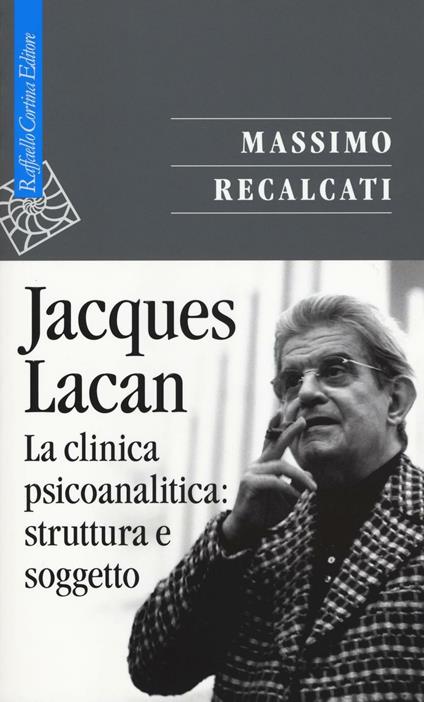
Concurrently, Recalcati has repeatedly devoted himself to the history of psychoanalysis, with essays on some of its main figures, such as Sigmund Freud (1856-1939) and Jacques Lacan (1901-1981), focusing in particular on the exegesis of the latter’s thought, which he has traced in the volumes The Void and the Rest (CUEM), The Universal and the Particular (Marcos y Marcos), Jacques Lacan, A Teaching on the Knowledge of the Unconscious (Bruno Mondadori, with Antonio Di Ciaccia), Jacques Lacan. Desire, Enjoyment and Subjetivation (Raffaello Cortina Editore) and, more recently, Jacques Lacan. The Psychoanalytic Clinic: Structure and Subject (Raffaello Cortina Editore) and Jacques Lacan (Feltrinelli).
Typical of the Lacanian (but also Freudian) method is the constant use of myth and symbol, a trait that Recalcati himself also adopts, who makes use of continuous allusions to cinema, to literature, and to all those figures that can be seen as expression and representation of a time and a society.
Massimo Recalcati and the Family Figures
Over the years, particularly after the publication of What Remains of the Father? (Raffaello Cortina Editore), Massimo Recalcati has devoted himself to studying the figure of the father and fatherhood in contemporary times, which are marked by the dismantling of the traditional family and the loss of the subject—an absence of guidance, a lack of a Law, and a susceptibility to Desire.
Through the aforementioned Freud and Lacan, as well as some figures of contemporary literature (including Philip Roth and Cormac McCarthy) and cinema (see Clint Eastwood), the author outlines the traits of a weakened but still vital fatherhood, devoid of any theological aura and grounded in the ethical value of singular testimony.
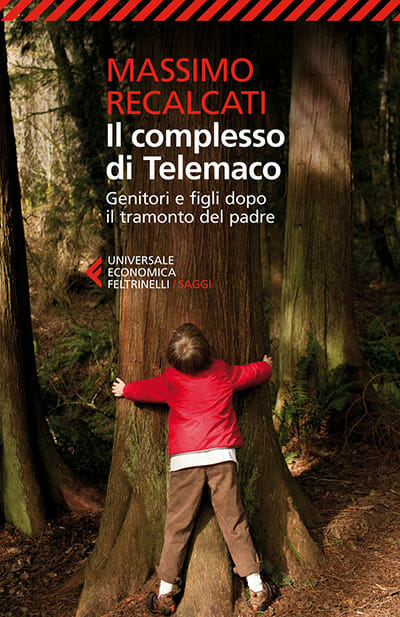
His research on the father and, consequently, on the father–son relationship has led Recalcati to propose the idea of a Telemachus complex as the reverse of the Oedipus complex, fully developed precisely in the essay The Telemachus Complex (Feltrinelli).
Where the Oedipus complex was a concept crafted by Freud and later taken up by Carl Gustav Jung (1875-1961), who, drawing from the myth of Oedipus, referred to the idea that a child matures through an identification and a rivalry with the same-sex parent, connected to the desire for the opposite-sex parent, Recalcati proposes that today the father–child relationship has changed.
Drawing on ideas already developed by Lacan, he suggests that this bond may be better explained by the figure of Telemachus, the son of Ulysses who awaits his father’s return: the paternal figure has disappeared, it is absent like the Homeric hero, but at the same time “new signals, increasingly insistently, come from civil society, from the world of politics and culture, to reawaken a new and pressing demand for a father.”
Odysseus, however, was not only a father but also a king: what the children await, then, is not merely the return of the male parental figure, but also that of authority and the law. The Telemachus complex, therefore, according to Massimo Recalcati, belongs to a capitalist society where paternal authority and the law have dissolved, where the process of heredity between fathers and sons has eroded, and where the young lack a figure who can serve as example and testimony of how to live with vigor and vitality.
The contemporaneity would thus, according to the author, be characterized by a compulsive drive toward solitary enjoyment (narcissistic and cynical), which excludes symbolic exchange with the Other. This idea, already explored in the essay The Man Without the Unconscious (Raffaello Cortina Editore), serves to explain the most widespread forms of distress in today’s society: anorexia, bulimia, obesity, drug abuse, depressions, panic attacks and somatizations.
Subsequently, Recalcati turned his gaze to the figure of the mother in a work titled The Hands of the Mother (Feltrinelli), in which he sought to move beyond the more canonical representations by recounting the various facets of motherhood, with its lights and shadows through cultural and clinical examples.
There is no such thing as the so-called maternal instinct: the mother is not the child’s parent; and the father is not its savior. The generation also does not exclude specters of death and appropriation, cannibalism and narcissism: because maternal love is not without ambivalence.
In this sense, the absence of the mother is as important as her presence, her desire can never exhaust the woman’s, and her care resists the absolute neglect of our time: her inheritance, after all, is not that of the Law, but that of the sentiment of life. Her gift is the breath, and her face is the first face of the world.
But also society as a whole and its political dimension lend themselves to being analyzed with the tools of psychoanalysis. This is what Recalcati does in the essay Patria senza padri (minimum fax), a book-interview in which he offers a reading of Italy’s political and collective life through the categories that have long underpinned his work: desire and Law, the relationship with the Other, narcissism, the dynamics of conflict…
The crisis of parties, the disenchantment with institutions and the rise of new populisms, a crushing precariousness, the malaise widespread, the resignation of a pope and the dragging on of power by a leadership class unable to forge heirs: these are the phenomena that created in twentieth-century Italy a situation of deep instability, from which Recalcati seeks to determine where a healthy debate and public life—psychologically sound, responsible, and courageous—might resume.
Some years later, with The Secret of the Son (Feltrinelli), the author completes an ideal trilogy dedicated to the father, mother, and son: “In the era when the Law that punishes and punishes harshly is fading, the primary task of parents,” Recalcati writes, “is to have faith in the inexplicable secret of the child.”
The splendor of a child consists precisely in its secret, which eludes the dominant rhetoric of empathy and dialogue. A child is a unique, distinct, irreducible existence, incomparable to that of their parents.
And, against all authoritarianism and against a falsely libertarian pedagogy, Recalcati asserts the child’s right to safeguard the secret of their life and their desire, proposing a confrontation between two mythical figures of the child—from the Oedipus of Sophocles (497-406 BC) to the found child of the Lucan parable—which allows us to observe their role from a new perspective.
This thread also includes the recent Uno diviso due – Siblings (Feltrinelli), a book that investigates firstly the conflicts and torments that characterize the relationship between brothers and sisters: the first impulse that shapes this relationship is not love of brothers or sisters, but hatred and enmity. For Recalcati, with the birth of a brother or sister our life is exposed to the plural regime of the Two, to the impossibility of being a single unit. And the human first pulsional tendency is not to welcome the Two, but to reject it, to deny its existence. Thus cannot Nature—the substance of blood—be the foundation of a bond of brotherhood or sisterhood. As the author notes, brothers and sisters always risk open conflict, unbounded fighting, inexhaustible aggression of a jealous and envious rivalry that seems to know no possible pacification. How then can siblings become brothers and sisters beyond the myth of consanguinity? How can one realize a brotherhood and sisterhood that do not fall prey to hatred, envy, or aggressive demands? Is it possible to build a discreet, solid bond of solidarity without the claim that everything be shared, without erasing the separate existence of the Other, without forcing the two-entity into the closed space of the One?
The Biblical Figures according to Massimo Recalcati
Starting in 2019, Recalcati has turned his focus to a number of crucial episodes from the Bible, aiming to trace the deepest heritage of psychoanalytic thought and to examine the relationship between the figures present in the Old and New Testaments and the paradigms of our days.
To open this path is The Night in Gethsemane (Einaudi), the moment when Jesus spends the night in the olive grove just outside Jerusalem, at the end of the Last Supper. Judas’s kiss, Peter’s tears, the disciples’ flight, sweat and blood, the abandonment by the father, the prayer: the night of Gethsemane, Recalcati argues, is the night of man.
And most of all, it is the scandal reproached to Jesus: having dragged God toward man. This is why the experience of absolute abandonment, fall, and the nearness of death and prayer takes center stage.
Then follow The Gesture of Cain (Einaudi), in which the author reflects on the fact that—in biblical narrative—the love for one’s neighbor comes after the primal experience of fratricidal hatred, and The Cry of Job (Einaudi), a figure who suddenly finds himself “naked and shaven,” covered in boils, and who falls into the ashes.
In being exposed to the senseless violence of his own suffering, Job—whose name in Hebrew means “Where is the Father?”—offers to God a prayer in the form of a cry: “Why me? Why this injustice of all this suffering?”
Certainly, as Recalcati emphasizes, this cannot be reduced to a sense-order, because no theology, like no other form of knowledge, can explain its excess. Job’s cry occurs when words are forced into silence, broken by the trauma of evil. And it is not so much a sign of resignation as a sign of struggle and resistance.
Recalcati’s reflection develops further into two volumes on the biblical roots of psychoanalysis: The Law of the Word and The Law of Desire, both published by Einaudi. In the first, the author commits to demonstrating that not only is there no opposition between the biblical logos and psychoanalysis, but that that ancient logos constitutes one of its most ancestral roots.
In the second, however, the aim is to challenge commonplaces and stereotypes of the psychoanalytic reading of Christianity, telling how Jesus’s testimony is first and foremost a testimony to the indestructible life of desire.
An inheritance taken up once again by Freud and Lacan’s psychoanalysis, for whom the Law, through desire, serves life and not death. In other words, it is not about submitting life to the Law, but about seeing in the Law—love and grace—the force in the service of life: only thus will the Law no longer inspire fear of severe punishment, freeing it from death to sustain desire.
A Look at the Contemporary World
Alongside, Massimo Recalcati has never stopped observing the present in a cross-cutting way, addressing timely and highly resonant topics by drawing from now secular and now religious sources, now psychoanalytic and now broader horizons, as in The Taboos of the World (Einaudi) and Against Sacrifice (Raffaello Cortina Editore), and later The New Melancholies (Raffaello Cortina Editore), Does the Relationship Exist? (Raffaello Cortina Editore) and The Light of Dead Stars. Essay on Grief and Nostalgia (Feltrinelli).
Among his outreach works, which have also attracted non-specialist readers, is Keep the Kiss. Brief Lessons on Love (Feltrinelli), which, in seven brief chapters, probes antique and universal questions about the world’s oldest emotion, offering readers the texts of the television program Lexicon of Love.
Not to forget, also within the realm of divulgation, Open a Book (Feltrinelli), in which Recalcati discusses the ten books he loved most, showing to what extent literary works are meetings of love capable of resonating with our deepest enigma, and The Slips of Reading (Castelvecchi), in which a series of meditations reassemble the intellectual autobiography of a psychoanalyst who continually questions the mystery of the word.
As for the broader social dimension of Massimo Recalcati’s production, there is the volume The Temptation of the Wall (Feltrinelli), where the author uses the tools of his craft to pause at the crucial nodes and the paradoxes that characterize the psychic life of individuals, groups, and institutions when one must decide whether to live within the confines of one’s own identity or to enroll one’s life in a relationship with the Other.
Senza dimenticare A pugni chiusi (Feltrinelli), a psychoanalytic portrait of collective life and of the problems of the last twenty years’ world, and the very recent The Void and the Fire. For a Psychoanalytic Clinic of Organizations (Feltrinelli). This latter, more specifically, offers us a synthesis of Recalcati’s work in organizations, explaining how they can endure over time while keeping alive the mysterious and moving vitality, as Pier Paolo Pasolini might say, of their beginnings, avoiding illness and dispersal of their power: a radical rethinking of the collective subject, which again cannot do without the sharp lens of psychoanalysis.
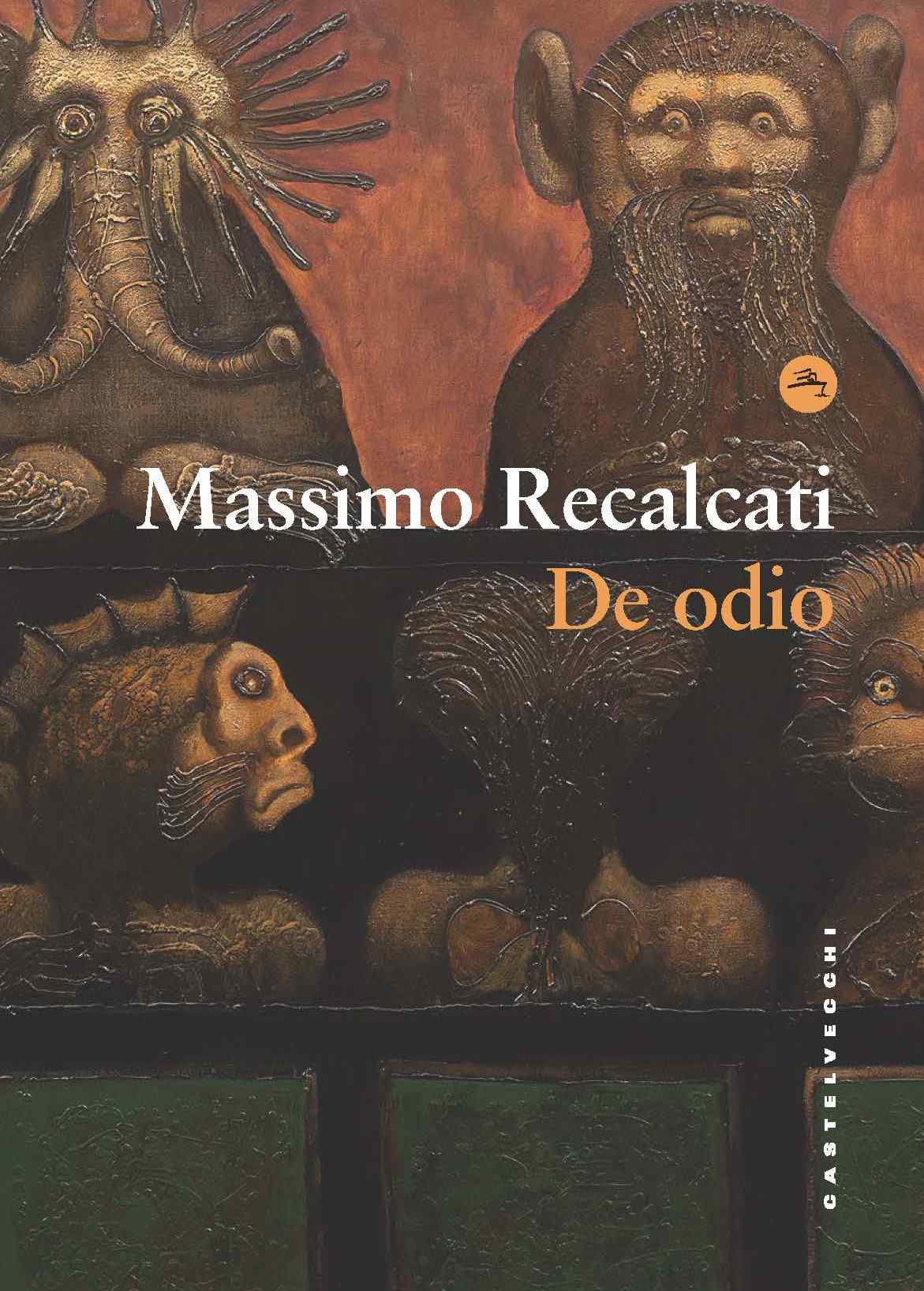
A proposito di uscite recenti, a marzo 2025 Castelvecchi ha proposto De odio, saggio dedicato a una passione propriamente umana, l’odio appunto. In tempo di guerre la sua sconcertante attualità non può non farci interrogare sulle sue più profonde radici. Se l’aggressività appare come una reazione impulsiva e disordinata a una frustrazione o a una fascinazione, per Recalcati l’odio si configura come una passione lucida che vorrebbe annientare la vita dell’Altro. In questo modo il saggista invita a guardare il lato più in ombra del desiderio: non la sua dimensione dialettica che mostra il desiderio umano come desiderio di essere desiderati dal desiderio dell’Altro, ma come spinta brutale a liberarci dall’Altro, a sottrarci al vincolo del Due che l’esistenza dell’Altro impone.
L’insegnamento secondo Massimo Recalcati
Nel corso degli anni la scuola è stata sempre più al centro di dibattiti e riflessioni. Anche Massimo Recalcati ha offerto la sua personale visione, sia partendo da esperienze personali sia sfruttando le molte conoscenze legate ai giovani e al ruolo di insegnante (non a caso è stato docente nelle Università di Milano, Padova, Urbino e Losanna; mentre ora è professore presso l’ateneo di Pavia e di Verona).
Due testi in particolare offrono spunti e suggerimenti per quanto riguarda la scuola: L’ora di lezione (Einaudi), pubblicato per la prima volta nel 2014, e La luce e l’onda (Einaudi), l’ultimo libro di Massimo Recalcati.
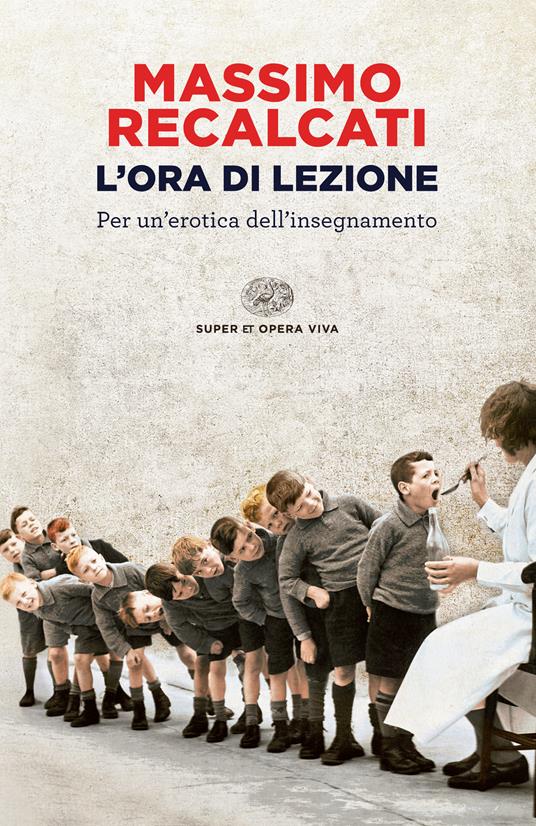
In the first text, Recalcati reworks his years at school, at the Agricultural Institute, starting from the figure of Giulia: the young literature teacher who makes her work a passion. The encounter with the teacher saves the author, who in this book—an homage to the practice of teaching—reflects on the meaning of these figures in contemporary society, “without fathers and without masters.” A good teacher, in Recalcati’s view, is one who, during the lesson, creates and transforms new worlds, turning the object of knowledge into an “erotic” object, making the book a body.
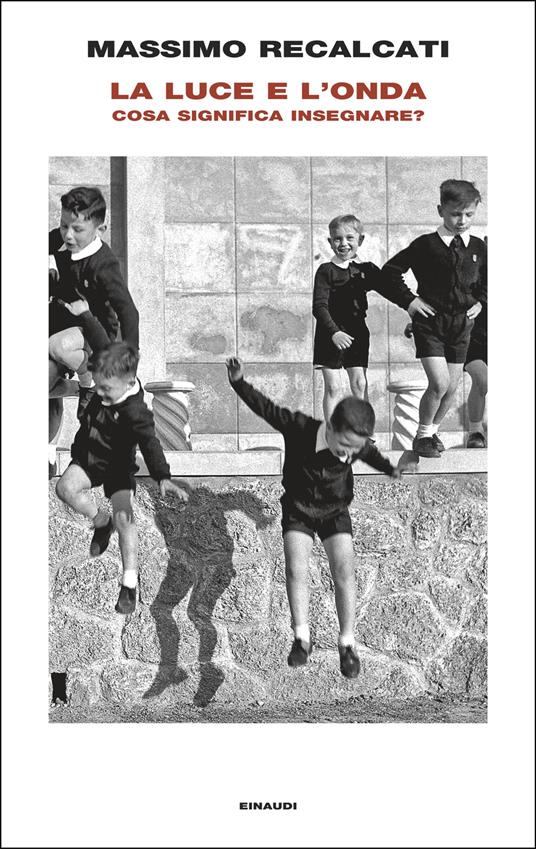
In September 2025, Massimo Recalcati returned to the topic after ten years with the previous essay. Published by Einaudi, The Light and the Wave – What Does It Mean to Teach? was described in its presentation phase as a “praise of the teacher,” a figure here depicted precisely as light, capable of widening the horizon of students, but also as a wave, since it “embodies the impact of the student with something that endures.”
The writer and psychoanalyst, with a style made of questions and arguments, reflects on the school system and how this institution can keep alive the two impulses that define teaching, without reducing everything to technical transmission.
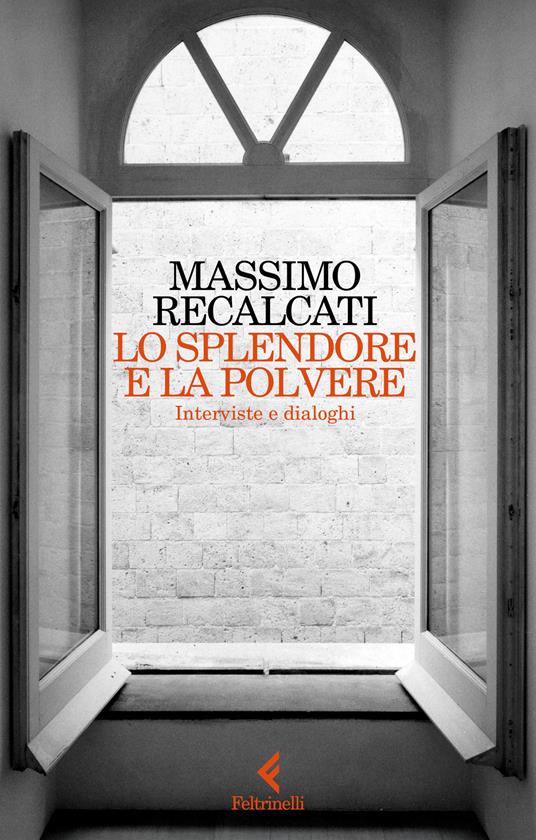
In the spring of 2026, Feltrinelli published The Splendor and the Dust – Interviews and Dialogues, Recalcati’s new book: it spans almost all the themes that characterize his research: family ties, the clinic of institutions, the reading of political and civic life, the psychopathology of anorexia and so-called new forms of the symptom, melancholy and nostalgia, the relationship between psychoanalysis and artistic practice, and with biblical tradition. Not only that. Recalcati also pays homage to his most influential teachers: Freud and Lacan above all, but also Pasolini, Sartre, Beckett, Basaglia and Fachinelli.

Amelia Hartwell
I write about books the way I read them: slowly, curiously, and with attention to the details that linger after the final page. At Lythrum Press, I cover literary fiction, essays, memoirs and the wider culture of reading, with a particular interest in voices that challenge familiar ways of seeing the world. My work is guided by one simple idea: a good book deserves more than a reaction — it deserves a conversation.