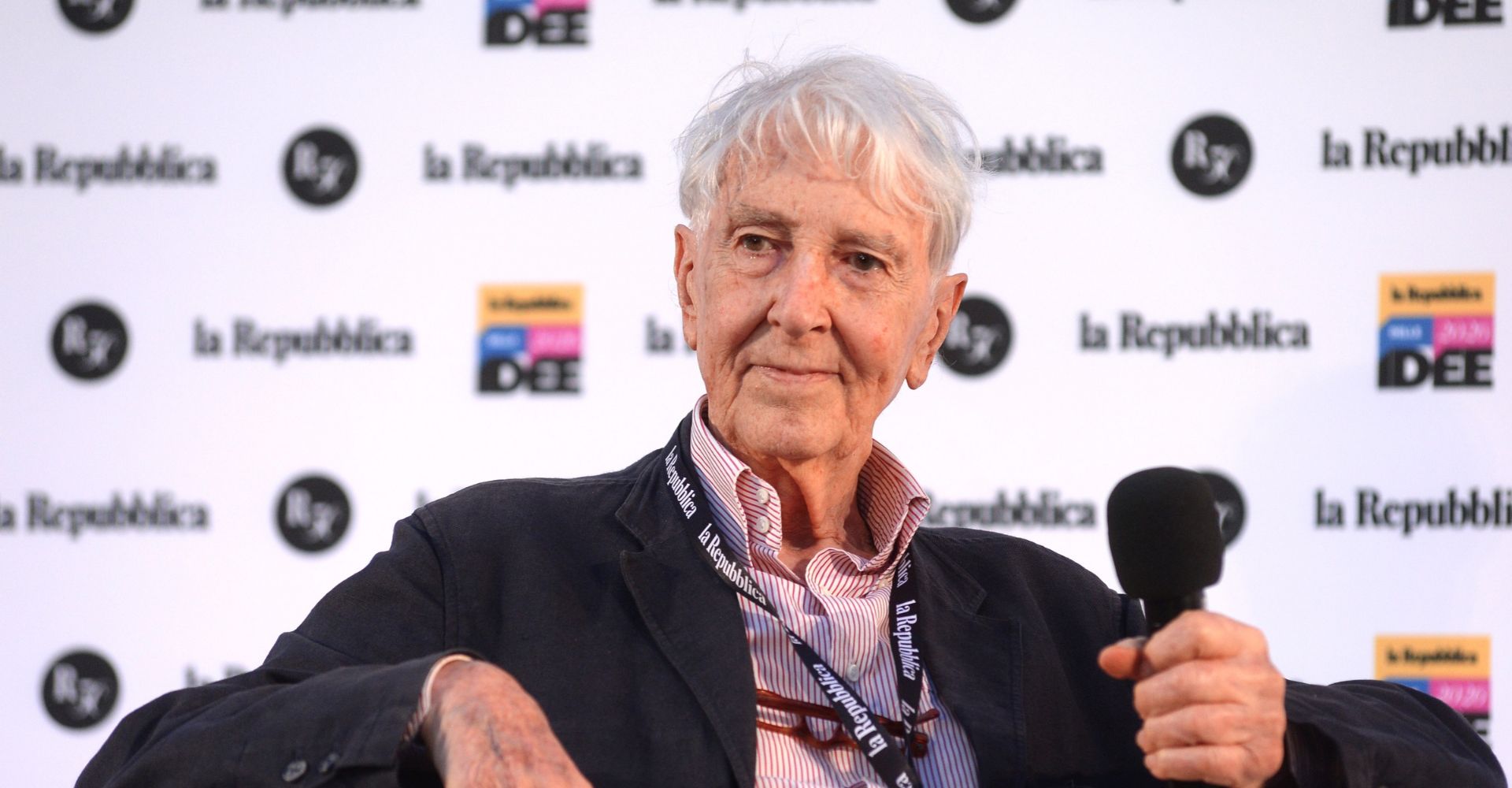
The world of culture, journalism, and television is in mourning for the death, at 91, of Corrado Augias.
A journalist, writer, and author of cultural programs for TV, he was born in Rome on January 26, 1935.
Augias joined Rai in 1960, starting his journalistic career as a New York correspondent between 1966 and 1968, before moving to Paris, where he covered international news for L’Espresso and Panorama. In November 1975 he arrived at Repubblica. His fame rose in 1987, with hosting on Rai 3 of Telefono giallo.
Among the TV programs hosted by Augias, a great lover of classical music, were also Babele, Enigma, Le storie – Diario italiano, Quante storie and Città segrete. In 2003 he moved from Rai to La7 to host La torre di Babele.
“We have no reasons to be optimistic“

In an interview in recent weeks with D of Repubblica, he confided: “We have no reasons to be optimistic. But ultimately it is not a great evil, because optimism can be a bit foolish. In history we have lived through worse moments. For this, as Machiavelli teaches, we must have faith: that is a true strength. And it is the one we must cultivate.”
The concern about AI
In the same interview he also spoke with concern about the impact of artificial intelligence: “Nothing unsettles me more than AI, a revolution whose impact no one knows. I only know that it will change everything, personal lives and collective destinies. In the face of the infinite potential of the algorithm, we ordinary people are truly little men lost in confusion. The great physicist Stephen Hawking used to say: we know the universe is infinite, but if this infinity will find a boundary after millions of light-years we do not know. Today we are like this: we know nothing, we do not know the boundaries, perhaps because the boundaries do not exist. This deep ‘crisis of meaning’ seems unbearable today, but if you think about it it has lasted for more than twenty years. Perhaps since 9/11: it was from that day that, together with the Twin Towers, all our certainties collapsed.”
“It was as if Corrado Augias could hear the music of things, sense the tone of people”“
Ezio Mauro, on his newspaper, Repubblica, remembered him this way: “It was as if Corrado Augias could hear the music of things, sense the tone of people. And indeed he tuned into the interlocutor thanks to a precious and increasingly rare faculty in the speed of the times we live in: the ability to listen, with a natural interest to know and understand. Thus arose his typical form of inquiry that seemed a dialogue, but in reality was something more, a maieutic procedure of unveiling and deepening through the instrument he knew how to use better than anyone, conversation.”
Bestselling author
Author of numerous books (among thrillers, essays, stories and reflections), published mainly by Einaudi and translated into the main languages, he published, among others, Il sangue e il potere – Processo a Giulio Cesare, Tiberio e Nerone (together with Vladimiro Polchi, 2008 and 2025), the novel Il lato oscuro del cuore (Supercoralli, 2014), Le ultime diciotto ore di Gesù (2015 and 2016), I segreti di Istanbul (2016 and 2017), Questa nostra Italia (2017 and 2018), with Giovanni Filoramo, Il grande romanzo dei Vangeli (2019 and 2021), Breviario per un confuso presente (2020), Modigliani. L’ultimo romantico (2020), I segreti di Roma cristiana (2024, published in 2022 under the title La fine di Roma), La vita s’impara (2024 and 2025), La musica per me (2025), with Natalia Augias, L’uomo che inventò la politica – Inchiesta su Machiavelli (2026) and he curated the collection Racconti parigini (2018).