

It isn’t always easy to identify good short stories to read or to reread, since short texts, by their nature, are elusive and fleeting – and often hide within broad collections where it isn’t easy to distinguish the theme of one story from another.
Not to mention that, once read, it isn’t easy to find them among the many volumes on a shelf.
Yet if there is one thing that is certain, it’s that – after we discover them – these tales are hard to forget. They strike straight at the heart like a literary bolt, a narrative fist dense with images and strong emotions: a trait that confirms what Italo Calvino (1923-1985) said about short fiction, which, according to him, would pace like a steep ascent, followed by a rapid descent.
A concept that, in a more exhaustive and articulated way, would also be developed by Frank O’Connor (1903-1966), whose reflections on this matter would later culminate in the volume The solitary voice – A study on the short story (forthcoming from Racconti edizioni on September 25, in Stefano Friani’s translation). Here, indeed, the Irish writer and teacher analyzes with solid, competent, and engaging arguments some of the most interesting short stories in literary history, highlighting that “the novel and the short story are two distinct artistic forms and that the novel can afford slippages, unlike the short story.”

Considered, among other things, a fertile training ground for writing, thanks to which one can experiment with themes and languages that are always different, short stories distinguish themselves from novels not only by their length, but also by their breath and rhythm: they are tales to be devoured in one bite, windows that allow us to glimpse a small slice of the world, only to close again and leave us to imagine the rest.
To better navigate this vast universe, we have prepared a reading path (not claiming to be exhaustive, and whose titles are not placed in order of importance) dedicated to some of the most beautiful short stories to read, from different eras and literary genres.
From science fiction to horror stories, from detective tales to childhood books, naturally passing through great classics and more contemporary works (keeping in mind that many of the mentioned stories could have found room under more than one entry)…
And, for those who love stories and want to read more on the subject, here are some more of our thematic reading paths:
- 10 short stories to read in life
- 10 love stories to read in life
- The collections of short stories written by women to read in life
- 10 short stories to read in life: author recommendations by Luca Ricci
- Why read short stories
Index
- Short stories to read: some great classics
- American short stories
- Short stories to read from around the world
- Short stories to read for childhood
- Short stories of the horror genre
- Short stories of the detective genre
- Short stories of science fiction
- Summer stories
- Short Italian stories of the 20th century
- Short and very short stories
- Short stories: contemporary Italian stories
Short stories to read: some great classics
-
Lisabetta da Messina, Giovanni Boccaccio
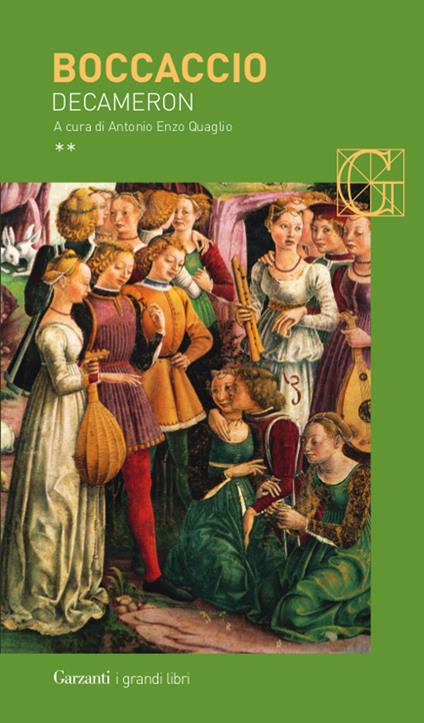
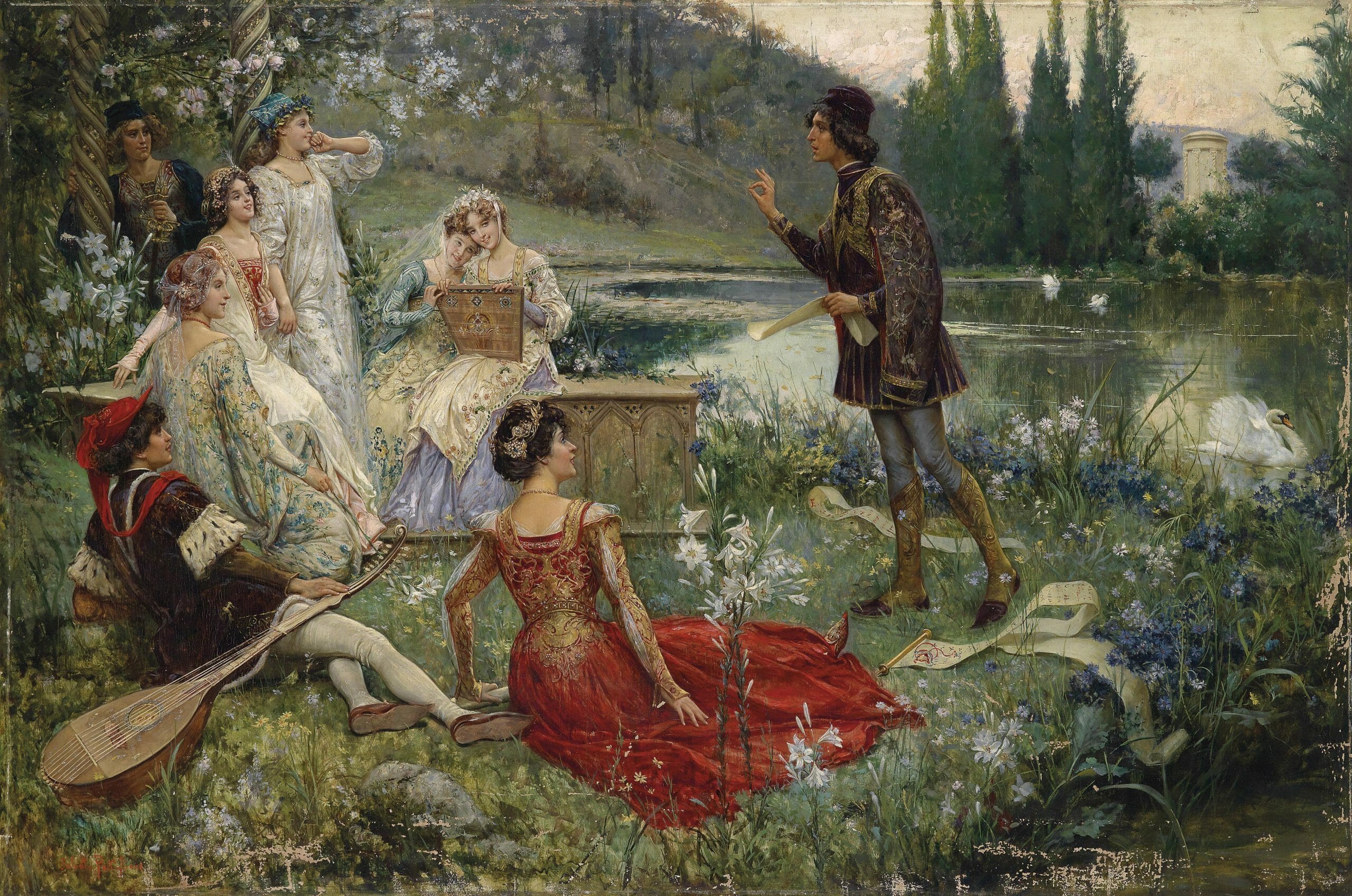
We begin our reading path with a cornerstone of Italian literature: The Decameron (Garzanti, edited by Antonio Enzo Quaglio), a collection of one hundred novellas written in the fourteenth century by the great writer Giovanni Boccaccio (1313-1375). The work opens with a frame narrative in which a group of young people, seven women and three men, retreat to the countryside to escape the Black Death devastating Florence. Here, in a setting detached from reality, they immerse themselves in a bucolic world of stories and imagination, spending the days creating and reciting tales. The work, which at the time was condemned as immoral and scandalous, represents in prose the ideals of courtly love. Among the numerous novellas that compose the volume, we have chosen one that best synthesizes all these aspects: Lisabetta da Messina, told by Filomena in Day IV.
-
Il cappotto, Nikolai Vasil’evich Gogol’
Nikolaj Vasil’evič Gogol’ (1809-1852), a writer and dramatist of the 1800s, is considered one of Russia’s greats. From the collection Petersburg Tales (Garzanti, translated by Pietro Zveteremich) we highlight The overcoat (Garzanti, translated by Pietro Zveteremich), in which Gogol’ presents to readers a lowly clerk who transfers a burning desire for dignity into the dream of a new coat…
-
La morte dell’impiegato, Anton P. Čechov
Do you know the principle of the so‑called Chekhov’s gun, applicable to any form of narration? “If a gun appears in a novel, it must fire.” It means that, when writing, one should not introduce certain elements (objects, details, characters, descriptions…) unless they will later play a meaningful role in the plot. Everything must have a meaning, significance, and consequence. A bit like in one of his absolutely essential stories: The Death of the Clerk (contained in the collection Racconti, published by Garzanti and curated by Fausto Malcovati).
-
La morte di Ivan Il’ič, Lev N. Tolstoj
The Death of Ivan Ilyich (Garzanti, translated by Giovanni Buttafava) is one of the best known short stories by Lev Nikolaevič Tolstoj (1828-1910), another cornerstone of Russian literature. Set in Saint Petersburg, the tale reflects the author’s spiritual crisis, which led him to convert to Christianity.
-
Rosso Malpelo, Giovanni Verga
The voice of the Verga era, the founder of Italian verismo, Giovanni Verga (1840-1922) is renowned for the novel I Malavoglia and for his numerous short stories. His tales—ranging from the expansive to the shorter—are marked by tragic settings and heartbreaking situations, told with a restrained, almost indifferent, gaze; among them Rosso Malpelo (included in the Garzanti collection of Novelle), a story that starkly shows the exploitation of the poorest classes in late 19th‑century Sicily through a young protagonist who is persecuted and belittled.
-
Oggetti solidi, Virginia Woolf
Virginia Woolf (1882-1941), a master of stream of consciousness and feminist intellectual, authored cult works like Mrs. Dalloway, To the Lighthouse, Orlando, and A Room of One’s Own; she was also a major writer of short stories. As gathered in Oggetti solidi from Racconti edizioni (translated by Adriana Bottini and Francesca Duranti, curated by Liliana Rampello with illustrations by Franco Matticchio).
-
Eveline, James Joyce
Would you have thought the most representative artisan of the stream of consciousness would also be so superb at writing short stories? We are talking about James Joyce (1882-1941), one of the greatest and most brilliant writers of all time. Gente di Dublino (Dubliners) (Garzanti, translated by Emilio Tadini and Marco Papi), his first collection of short stories published in 1914, is surely one of the most evident proofs: particularly, Eveline.
-
Dante e l’aragosta, Samuel Beckett
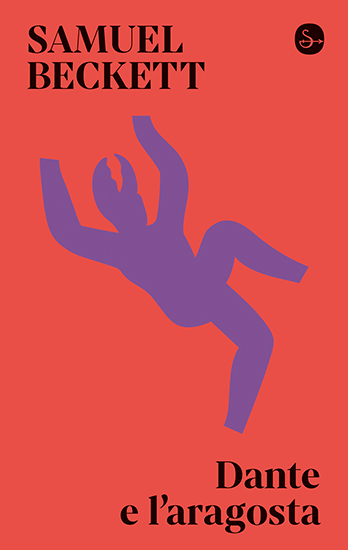
Another Irish writer not to be missed when we discuss classic stories is the Nobel Prize winner Samuel Beckett (1906-1989), renowned for his “theatre of the absurd,” but also the author of numerous novels, radio plays, and short tales. Among these, we particularly recommend Dante e l’aragosta (reissued in Italian by Il Saggiatore in Paolo Bertinetti’s translation, in the Saette series): a moving short tale about the ordinary day of a teacher, who has four tasks to finish by evening. The final task—“the lobster”—accompanying his lessons, becomes a shocking reminder that the crustacean is not exactly as it should be…
-
La metamorfosi, Franz Kafka
In autumn 1912, in Prague, between November 17 and December 7, Franz Kafka (1883-1924) wrote The Metamorphosis (Garzanti, translated by Emilio Castellani), the nightmare subterranean and literal of Gregor Samsa, a travelling salesman who wakes one morning, after troubled dreams, to find himself transformed into a huge insect. The hope of reclaiming the lost condition, attempts to adapt to his new state, family and social behaviors, the oppression of the situation, the passing of time—these are only some of the ingredients with which a foundational author of early 20th-century literature speaks to us about the modern human being, condemned to silence, loneliness, and insignificance.
American short stories
-
Un giorno ideale per i pesci banana, J. D. Salinger
We begin with A Perfect Day for Bananafish, included in the collection Nine Stories (Einaudi, translated by Carlo Fruttero) and written by the cult author J. D. Salinger (1919-2010), best known for The Catcher in the Rye. The story follows Seymour Glass, a World War II veteran with psychological troubles, on vacation in Florida with his wife Muriel. While Muriel chats on the phone with her mother, worried about her husband’s unstable behavior, Seymour befriends a little girl named Sybil on the beach… A tale that delves into alienation, the trauma of war, and the childlike purity contrasted with adult corruption.
-
Sulla matematica del respiro e dello stile, Charles Bukowski
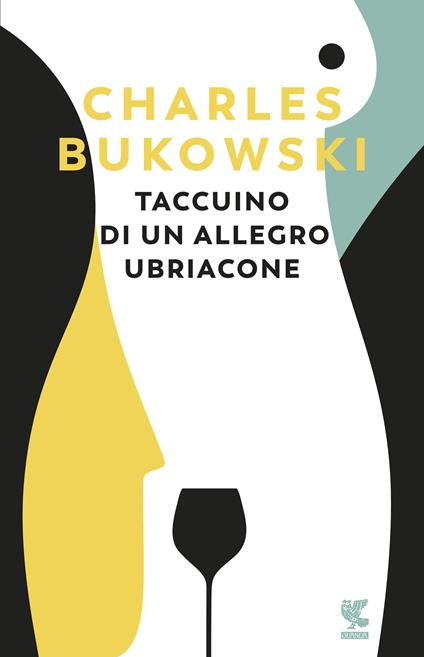
In this selection of stories to read, we could not omit Charles Bukowski (1920-1994), one of America’s masters of the short story (he wrote hundreds, with his unmistakable style). Among the many collections, we intentionally call out a lesser-known one, Taccuino di un allegro ubriacone (Guanda, translated by Simona Viciani): sardonic, corrosive, ironic, in these pieces Bukowski attends to his favorite themes—women, sex, alcohol, horse racing, boxing matches… A collection rich in gems, starting with the opening piece: Sulla matematica del respiro e dello stile.
-
Balzano e figlio, Gordon Lish
Re-emerging as a writer of short stories, rather than merely as the respected (and sometimes controversial) editor of major names like Raymond Carver and Richard Ford, Gordon Lish has been published in Italy by Racconti Edizioni, first with the volume Come scrivere un racconto (translation by Roberto Serrai) and more recently with Volevo essere stupefacente (translated again by Roberto Serrai, and whose title echoes the opening line of one of the book’s gems, namely The Death). Inside it lies the story Balzano e figlio, where the reader-facing dialogue is unmistakable from the start, yet imperfect: the narrator tries to reveal something essential about the father and his shoes, a truth he himself has misplaced and cannot recover, which perhaps loses importance in the face of a tragedy so grave it is barely nameable…
-
Cattedrale, Raymond Carver
Considered by many as “the perfect short story,” Carver’s The Cathedral gathers all that a short tale should possess (not by chance the online magazine Cattedrale – Osservatorio sul racconto takes its name from this famous text). Included in the eponymous collection, published by Einaudi in Riccardo Duranti’s translation and with a preface by Francesco Piccolo, the story stages the unexpected, not-so-pleasant visit of a blind friend of the husband of the protagonist, showing how even the smallest event can move forgotten emotions.
-
Addio fratello mio, John Cheever
In his stories, another master of the form, John Cheever, captured the secrets and torments of American middle class life. As we highlighted in this article, his works portray “happy families with a few frictions, unhappy families, families destroyed…”. Among Cheever’s texts, who won the Pulitzer and the National Book Critics Circle Award in 1979 and the National Book Award in 1981, we suggest a quarrel between brothers that unfolds with unspoken words and bitter misunderstandings, told in Addio fratello mio.
-
Tutti i racconti di Kurt Vonnegut
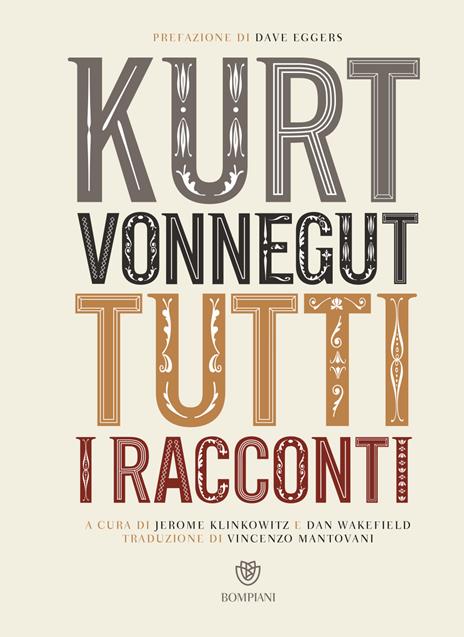
Kurt Vonnegut, born in 1922 in Indianapolis and died in 2007 in New York, was one of the most important names in American literature of the 20th century. Jerome Klinkowitz and Dan Wakefield curated the essential collection Tutti i racconti (Bompiani, translated by Vincenzo Mantovani), containing 98 pieces by the author of Slaughterhouse-Five written between 1941 and 2007. We can only suggest opening the volume at random to savor the satirical talent and humor of a writer often likened to Mark Twain.
-
Non si può essere più poveri che da morti, Flannery O’Connor
Another great master of American short fiction is unquestionably the author Flannery O’Connor, whose writing, like that of William Faulkner, fills stark, poor landscapes with cruelty and violence. In her stories (published by Bompiani, translated by I. Omboni) you find a strong religious theme — the writer was deeply Orthodox — that never slides into bigotry or moralism: as in Non si può essere più poveri che da morti, a disturbing tale in which the presence of the divine is depicted in a tense, ambiguous, yet at times comforting light.
-
Soldier, Joyce Carol Oates
Joyce Carol Oates, a prolific American author (writes about eight hours a day), has published numerous short stories. In 2018, Il Saggiatore offered the collection Il collezionista di bambole (translated by Stefania Perosin) which, as we explained here, houses six dark tales “that make you think of horror stories at first glance, but are realistic narratives that evoke the banal horror haunting the news: a sequence of psychological and physical abuses, abductions, assaults, and murders.” In Soldier the anger and frustration of the protagonist find an outlet in the murder of a young Black man, against whom he feels threatened, for no apparent reason.
-
Quattro chiamate nell’ultima mezz’ora, Amy Hampel
We keep returning to the cultist writers: it’s no coincidence that Amy Hampel has been hailed by Chuck Palahniuk as the queen of writing. In her collection Nessuno è come qualcun altro (, translated by Silvia Pareschi) is included Quattro chiamate nell’ultima mezz’ora, where the author ponders narcissistic people who only need themselves to feel fulfilled. A pupil of Gordon Lish, the editor of Carver, Hampel demonstrates a precision of writing such that not a single word is out of place even in the shortest texts.
-
La lavanderia a gettoni di Angel, Lucia Berlin
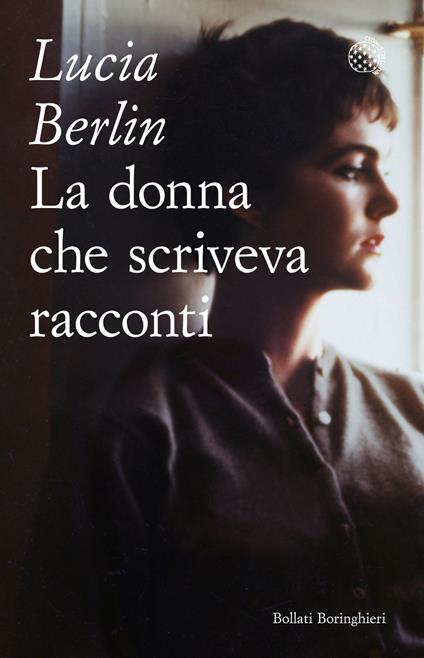
The rediscovery of Lucia Berlin (1936-2004) began years ago, first in the United States, thanks to the prestigious Farrar, Straus and Giroux, and continued in Italy, with Bollati Boringhieri’s publishing of the collections La donna che scriveva racconti and Una sera in paradiso. The author, with deceptively simple, clear and essential prose, transposes to the page her difficult and tormented life, made of unhappy marriages and poverty, and American jobs without roots: but the experiences of switchboard operator, housekeeper, precarious teacher, or nurse, and as a single mother, provide precious and vast material to tell one’s own story with eccentric, highly personal talent. Do not miss, among other works, La lavanderia a gettoni di Angel.
-
Madre, Grace Paley
Grace Paley was one of the greatest authors of short stories of the twentieth century. Born in 1922 in the Bronx to Russian Jewish parents, she depicted life in her city and, above all, the humanity of the people in working-class neighborhoods, often from a female viewpoint and in a language close to everyday speech. As noted in a piece dedicated to the topic, Sur in 2018 published Tutti i racconti (with an introduction by George Saunders and translated by Isabella Zani). Of the 45 texts by the author, admired by generations of peers ( Philip Roth and Ali Smith), we select in this context the very brief Madre.
-
Una donna di cuore, Alice Munro
My Mother’s Dream collects eight stories of women told by Alice Munro (translated for Einaudi by Susanna Basso), Nobel Prize in Literature in 2013. About her, Pietro Citati wrote: “When we read Munro, everything seems enchanting; yet the backdrop, vast and intermittent, that one senses in every line, is full of threats – sinister deaths, incomprehensible fates, pains that no one could bear, disasters, intrusions of something akin to love, the terrible wounds inflicted by the dead; or cruel jests that realize the plans of one who may bear the name Providence.” Among the stories in the collection you will be struck by Una donna di cuore.
-
Territorio, David Leavitt
Ballo di famiglia, a 1984 collection marking the debut of David Leavitt, an American writer deeply connected to Italy. In his stories the author portrays with minimalist style the contradictions of American bourgeois life and speaks of homosexuality. Speaking of Leavitt’s acclaimed debut, Fernanda Pivano wrote of “a knowledge so deep of the psychology of adults and especially of women that it would surprise in a writer so young.” The opening line of the volume’s first text, Territorio: “Later, the plane makes a slow turn over New York, and on board two men hold hands, eyes closed, and breathe in unison.”
-
Storie di bambini molto antichi, Laura Orvieto
Another must-read is Storie di bambini molto antichi, signed for Mondadori by Laura Orvieto: tales of children so ancient that no one has ever known them… Like little Ebe, who loves to dance freely on the meadows; Perseus, who cuts off the head of the hideous Medusa demonstrating courage; Proserpina, forced to descend into the Underworld even if darkness scares her; and little Zeus, who wages a terrible battle with his father Saturn. The author, born in Milan in 1876 and died in Florence in 1953, wrote children’s works that are beloved to this day, such as Storie della storia del mondo.
-
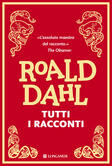
La meravigliosa storia di Henry Sugar, Roald Dahl
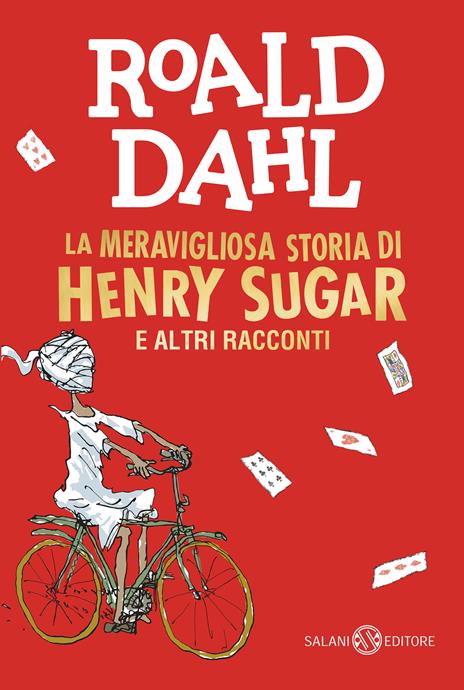
Generations of children (and adults) around the world have grown up with his characters: The Wonderful Story of Henry Sugar and Other Stories (Salani) collects seven of Roald Dahl’s most successful children’s tales (the renowned author of Charlie and the Chocolate Factory and other beloved works). The volume, translated by Luisa Corbetta, is illustrated by Quentin Blake. In the story The Wonderful Story of Henry Sugar the protagonist learns to see without using his eyes, allowing him to win at casinos around the world…
Il cappotto
La donna che scriveva racconti
L’avventurosa storia dell’uzbeko muto
Tutti i racconti
Dopo le fiamme
Microfiction
Racconti neri
Horror genre short stories
-
Il cuore rivelatore, Edgar Allan Poe
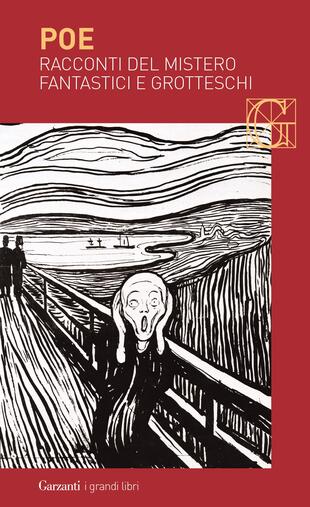
There is a heart beating so strongly that it drives the listener mad in the tale The Tell-Tale Heart. Rightly among the most famous stories by Edgar Allan Poe (1809-1849), the text is a refined condensate of adrenaline, tension, and fear, in perfect alignment with the Gothic style. Dark, satanic presences, disquieting atmospheres, and unsettling moods are the ingredients of Racconti del mistero, fantastici e grotteschi (Garzanti, translated by Gabriele Baldini and Luciana Pozzi), a foundational collection for fans of this literary genre.
-
La lotteria, Shirley Jackson
Among the great horror‑story classics, published in the New Yorker in 1949, the The Lottery by Shirley Jackson (1916-1965)
aroused many people, who took that story literally, thinking it was based on a true event. Set in a small New England village, the tale describes a lottery that appears ordinary at first but ends up revealing a terrifying and shocking collective act of ritual purification. One of the author’s most famous works, admired by Stephen King, to be read with chills and shivers in sequence.
-
Delitto con accetta, Angela Carter
Ispired by the Lizzie Borden case, Delitto con accetta (in the volume Nell’antro dell’alchimista, published by Fazi) is a story following a young woman accused of brutal murder of her father and stepmother with an axe, amid suspicions, hypocrisies, and Victorian repression. Written by the British author Angela Carter (1940-1992), known for feminist works, magical realism, and science fiction, here she uses a true crime as a means to deconstruct the myth of feminine innocence, exploring repressed rage, rebellion against patriarchal oppression, and the dark side of the bourgeois family.
-
I figli del grano, Stephen King
Even the king of horror, Stephen King (born 1947), published a great number of stories to read during his prolific career. We propose starting with I figli del grano, written in 1977: Burt and Vicky are a couple in crisis on their way to California to give their marriage a boost. Halfway there, after an accident, they end up in a near-abandoned town, where a community of teenage farmers lives. There are no adults; they have all been killed…
Detective genre short stories
-
Il mistero del diadema di berilli, Arthur Conan Doyle
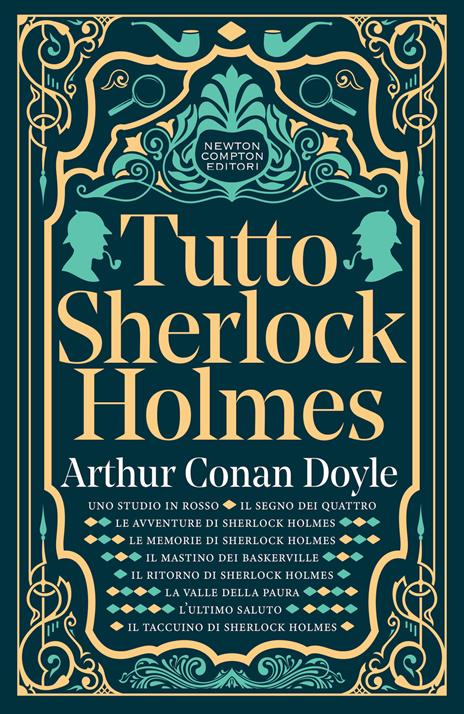
We start with The Adventure of the Benedictine Emerald, found in the collection Tutto Sherlock Holmes published by Newton Compton in Nicoletta Rosati Bizzotto’s translation. When a banker entrusts the Baker Street detective Sherlock Holmes with the case of a damaged and stolen emerald diadem, suspicions fall on the unruly son, but the detective uncovers a more complex truth and exposes the real culprit. Here, the celebrated author Arthur Conan Doyle (1859-1930) crafts an enigma that plays on deceptive appearances, highlighting Holmes’s logical intelligence and showing how prejudice and assumptions can distort reality.
-
L’ammiratore della signora Maigret, Georges Simenon
We are certain you won’t go wrong recommending one of the many stories from the master of international detective fiction: the Belgian Georges Simenon (1903-1989), inventor of the unforgettable character Maigret. He is indeed the protagonist of L’ammiratore della signora Maigret, contained in the collection La Locanda degli Annegati e altri racconti (Adelphi, translated by Marco Bevilacqua), where even his wife aids in solving a murder.
-
La maledizione della tomba egizia, Agatha Christie
There are truly numerous stories by Agatha Christie, the “Queen of Mystery” (here is our piece on her life and works). The creator of Hercule Poirot and Miss Marple authored long‑running works like Murder on the Orient Express and And Then There Were None, while among her brilliant short stories we highlight The Mummy’s Curse, featuring Poirot and dating back to 1924.
-
Due fratelli, una ragazza, una rapina, Giorgio Scerbanenco
Giorgio Scerbanenco, a prolific writer capable of traversing multiple genres, produced a large corpus of short stories over the years. Included in Garzanti’s Racconti neri (Black Tales), they range from the late 1950s to his sudden death in 1969. Violence, twists, and a tale of a transforming Italy fill these pieces. In particular, note the twists in Due fratelli, una ragazza, una rapina…
Short science‑fiction stories
-
Rapporto di minoranza, Philip K. Dick
Philip K. Dick (1928-1982) is one of the pillars for those who love science fiction. His works, from novels to short stories, have inspired films, TV series, video games, and many other forms. For instance, you might know Minority Report, Steven Spielberg’s film with Tom Cruise? It is adapted from the short story Rapporto di minoranza, in which, in a dystopian scenario, humanity has eliminated murder and crime thanks to a special police force that employs clairvoyants able to foresee the future.
-
Il segregazionista, Isaac Asimov
Isaac Asimov (1920-1992), one of the greatest and most prolific science‑fiction writers (and beyond), also penned numerous short stories. Renowned for the Foundation Cycle, the Empire Cycle, and the Robot Cycle, in one of his 1967 sci‑fi tales, Il segregazionista, he imagines a future where humans make use of robotic prosthetics, in plastic or metal. A story that is also a meditation, still relevant, on the relationship between man and machine.
-
Verranno le dolci piogge, Ray Bradbury
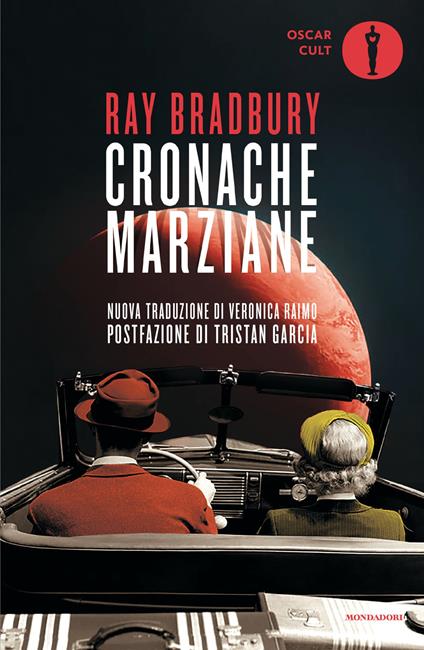
Ray Bradbury (1920-2012) is the author of Fahrenheit 451 (a dystopia adapted many times to the screen, among others by François Truffaut) and a master of science fiction; in Cronache marziane (Mondadori, translated by Veronica Raimo) he gathered twenty‑eight tales dedicated to the red planet that undoubtedly contributed to his fame. The unsettling Verranno le dolci piogge is set in August 2026 in a California city now deserted, save for a robotic house whose inhabitants perished in a nuclear war.
-
Quelli che si allontanano da Omelas, Ursula Le Guin
We continue with Those Who Walk Away from Omelas, a story by the eminent science fiction writer Ursula K. Le Guin (1929-2018), created in 1973. In the utopian city of Omelas, the inhabitants live in perfect joy, but their happiness depends on the suffering of a single child kept in inhumane conditions in a dark room. Once grown, all the inhabitants discover this terrible truth: most accept the compromise, rationalizing the horror as necessary, while some, unable to tolerate it, choose to leave for an unknown fate. A powerful allegory about the moral cost of collective happiness, prompting us to question sacrifice, complicity, and the individual’s responsibility in the face of injustice.
-
La regina mangia la torre, Tanith Lee
Le visionarie (Not, translated and coordinated by Claudia Durastanti and Veronica Raimo) is a volume gathering twenty-nine stories that “sketch the edges of a world that is sometimes futuristic, unsettling, dreamlike or simply odd.” As explained in the anthology’s introduction, curated by Ann & Jeff VanderMeer, these tales range from science fiction to fantasy, from horror to weird fiction, written by women who have made the history and present of fantasy literature. The result, the introduction explains, is a kaleidoscope of imaginary stories that, in unexpected and non‑ordinary ways, links genre fiction and gender studies. Yet there is room for fantasy too, particularly with La regina mangia la torre by Tanith Lee (1947-2015), who wrote it in 1987.
Summer stories
-
Inviti superflui, Dino Buzzati
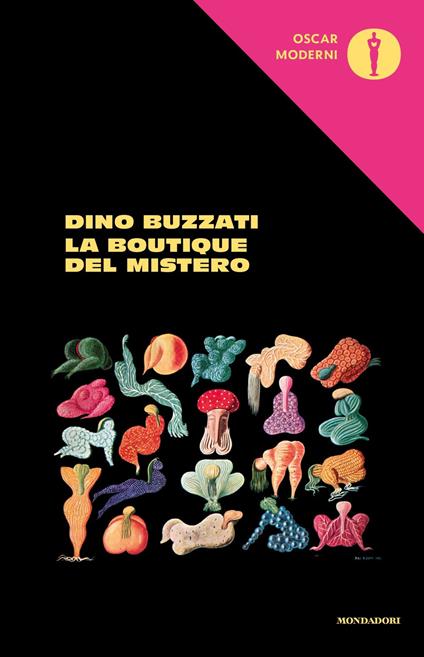
We insert among summer stories this brief, romantic and tender text, taken from the collection La boutique del mistero (Mondadori) by Dino Buzzati (1906-1972): what makes it particularly evocative is the reading by Sofia Irene Graziosi (with Sofia Viscardi, of the Venti channel), who highlights its melancholic and sweet notes, typical of the hot season.
-
La bella estate, Cesare Pavese
The long short story La bella estate (Einaudi, 1940) by Cesare Pavese is a coming‑of‑age tale. Initially titled La tenda, the author defined it as “the story of a virginity defending itself.” The author of La casa in collina and La luna e i falò describes here a love destined to burn out within the brief moment of a season.
Short stories from Italian 20th century
-
L’avventura di un viaggiatore, Italo Calvino
Love and communication are the central themes tackled in the collection of novellas Gli amori difficili (Mondadori) by Italo Calvino (1923-1985). Among the fifteen stories that compose the volume, our recommendation falls on L’avventura di un viaggiatore, a text about waiting, beginnings that seem to end, and how in all relationships it is impossible to establish clear and sincere communication. When we speak of Calvino, however, choosing is truly impossible: thus, once the anthology is in your hands, you will not be able to resist reading all the other adventures.
-
Lo zingaro, Primo Levi
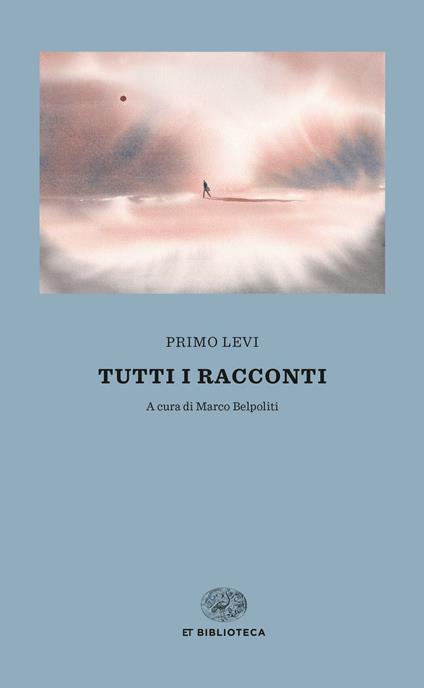
Primo Levi (1919-1987), a chemist by training and a great writer (famous for two books of testimony, If This Is a Man and The Truce), wrote numerous short stories. Einaudi has collected in a single volume Storie naturali, Vizio di forma, Lilít, Il sistema periodico, and L’ultimo Natale di guerra. Levi’s stories intertwine autobiographical episodes from the camps, fantastical tales, other dreamlike Kafkaesque atmospheres, and even fables about animals. In Lo zingaro (a 1979 text) the setting is a prisoner‑of‑war camp: at times the Germans allow prisoners to write home. The author helps a beggar to write a letter to his fiancée, promising to send her a doll…
-
Donna Amalia, Elsa Morante
In the heart of a working‑class district, Donna Amalia, a fragile and submissive woman, endures her husband’s violence and her son’s ambitions without ever rebelling against her fate. Trapped in a society that suffocates women, she lives a life of sacrifice and subjugation, while around her characters move who embody various shades of selfishness and oppression. This is a short story, written in 1967 by a major Italian writer of the 20th century, Elsa Morante (1912-1985), who paints an intense portrait of female loneliness and impotence, highlighting the oppressive dynamics of family and society, where resignation becomes a prison with no escape.
-
Dialogo dei massimi sistemi, Tommaso Landolfi
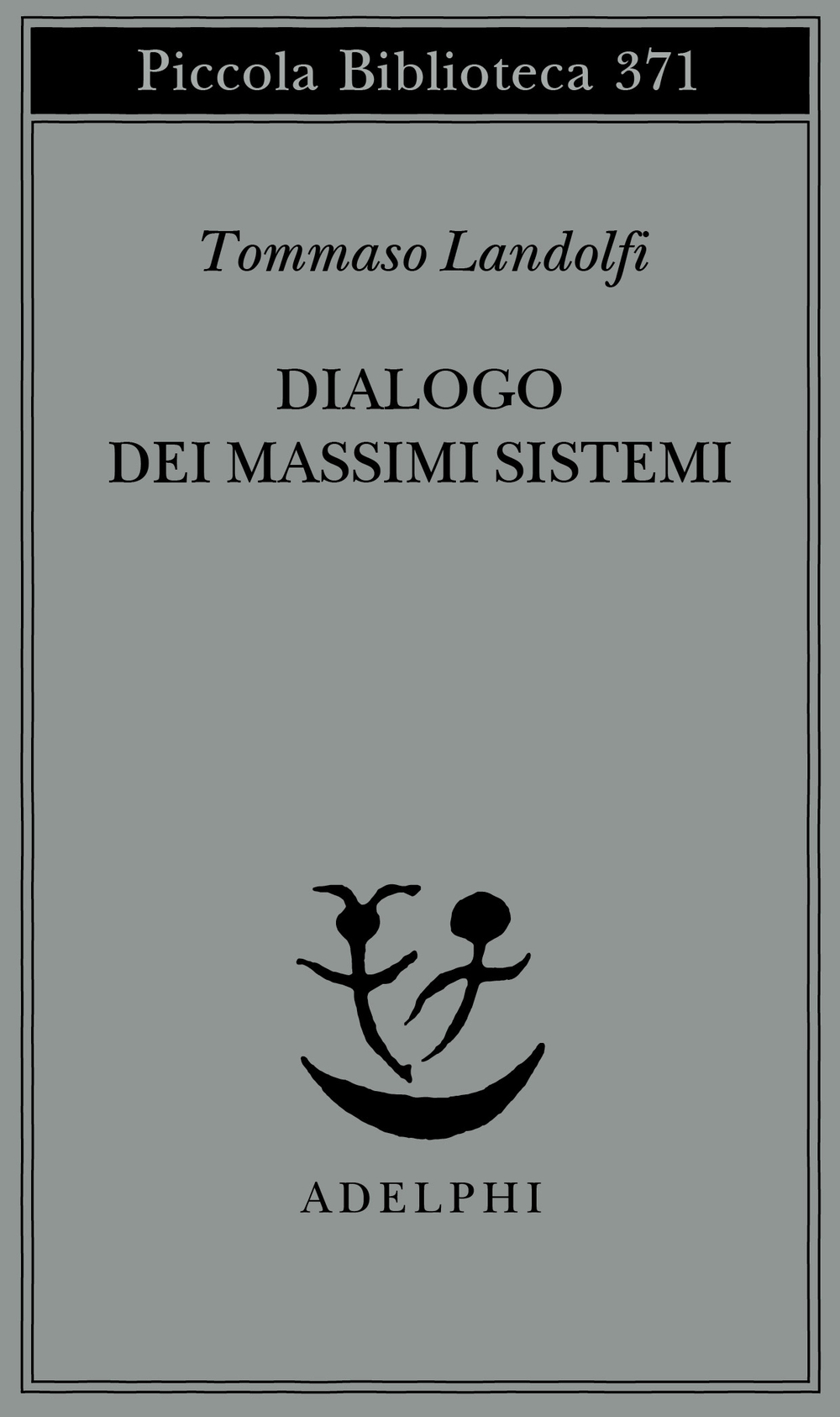
Tommaso Landolfi (1908-1979), the “dandy of Italian 20th century” (here is our in‑depth piece), was a writer who valued concise storytelling as his preferred form. In the diverse universe of his works, the short story’s compact form is without a doubt his favorite. In 1937, with a collection, he began his career. On language and its social and individual implications, the work Dialogo dei massimi sistemi (Adelphi) gives name to the entire oeuvre. His early prose is destabilizing and self‑contradictory, carrying the seeds of his broader themes.
-
Ragazza che precipita, Dino Buzzati
Returning to Buzzati’s La boutique del mistero (Mondadori), here is another story from the 1968 anthology. Ragazza che precipita tells the tale of Marta, a nineteen‑year‑old who one day decides to throw herself from the roof of a glorious city. Her fall is witnessed by the building’s inhabitants, who watch her slowly wither as the moment of impact approaches. And so we too, reading this, glimpse a life fading away in the image of that bright, bold girl heading toward death.
-
Un paio di occhiali, Anna Maria Ortese
Opening story of the collection Il mare non bagna Napoli (Adelphi), Un paio di occhiali is perhaps the most agile text in the body of work by Anna Maria Ortese (Neapolitan writer, too little known). Of this author, indeed, one should recover every novel (we’ve written about her here), from L’iguana to Il cardillo addolorato, through the essays gathered in Corpo celeste, to fully understand the greatness of her voice.
-
Erica e i suoi fratelli, Elio Vittorini
Long short story, initially conceived as a novel, Erica e i suoi fratelli is a shining example of Vittorini’s prose. If you haven’t read anything by him yet, you can begin to sample his style with this text (edited by Bompiani in a volume that also includes the story La garibaldina), where the main features of the author’s poetics—lyrical, dreamlike, yet deeply honest—shine through.
-
Vino generoso, Italo Svevo
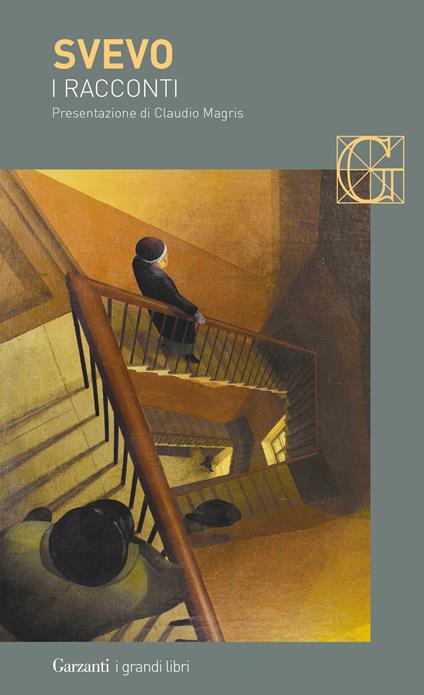
“There is a common denominator in Italo Svevo’s tales (1861-1928), mostly written in late maturity. The author of Una vita, Senilità and La coscienza di Zeno gives great emphasis to the theme of old age. If the Svevo protagonist is the one who can’t live, the elder is the quintessential figure, the man displaced from the social mechanism. To these survivors of life the Triestine writer grants one last chance – a brief burst of renewed vitality – that rekindles the taste for experience: an adventure of short duration. An example? Vino generoso (written in 1926) tells of an old, ailing man who indulges in one last drunken spree. Garzanti has collected Svevo’s stories in a volume with a presentation by Claudio Magris and an introduction by Gabriella Contini.
-
Il treno ha fischiato, Luigi Pirandello
Impossible not to mention, in a list dedicated to stories to read, Il treno ha fischiato by the Nobel laureate Luigi Pirandello (1867-1936), perhaps one of the most read novellas in our country’s school anthologies. The story of Mr. Belluca appears in almost all school anthologies—likely because it can summarize, with irony and psychological tension, the core points of 20th‑century literature: the sense of displacement, the double, the fall of heroes, and psychoanalytic revolutions. It is found in the collection Novelle per un anno, published by Newton Compton.
-
Silvio D’Arzo introdotto da Jhumpa Lahiri
Jhumpa Lahiri, a writer born in London to Bengali parents who grew up in the United States and achieved recognition in Italy as well, selected (and introduced) for Guanda some of the Italian short stories most connected with her, creating a personal anthology of strong authorial value. Among the authors included are Arpino, Bianciardi, Ginzburg, Landolfi, Tabucchi, Tomasi di Lampedusa, in addition to many names present in our selection. From the Pulitzer Prize winner’s anthology with her first collection of stories, L’interprete dei malanni, we recommend the piece by Silvio D’Arzo (1920-1952), the author of the indispensable long story Casa d’altri.
-
Postoristoro, Pier Vittorio Tondelli
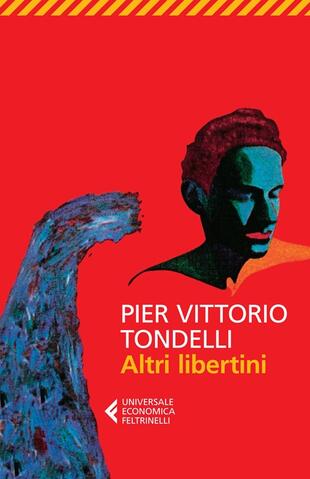
Postoristoro is the story opening the cult volume Altri libertini (Feltrinelli), the debut book of Pier Vittorio Tondelli (1955-1991), which marks a turning point (and rupture) for Italian 20th century literature. It was 1980, the debut of the Correggio-born writer (who died young in December 1991 after leaving behind some of the decade’s most important works). The story narrates with a postmodern, raw style themes of sex, youth, degradation, and violence that opened up new directions for Italian writing.
Short and very short stories
-
Il dinosauro, Augusto Monterroso
Among the briefest tales in literary history there is one by Augusto Monterroso that contains seven words and a comma, capable of opening a vast imaginary universe and generating questions and conjectures. Short, but so short that we must include it here: At his awakening, the dinosaur was still there.
-
Six word story, Ernest Hemingway
And we come to another extremely short and evocative tale. According to a legend, Hemingway (1899-1961) once, during a lunch with friends, bet he could write an entire story using only six words (and thus the expression six word story was born, inspiring many literary experiments). And so, the famous line was born: “For sale: baby shoes, never worn,” which shows, in its compact form, the boundless power of words.
-
Tutti i nostri corpi, Georgi Gospodinov
Tutti i nostri corpi (Voland, translated by Giuseppe Dell’Agata) collects 103 short and very short stories by Georgi Gospodinov, today regarded as one of the most important Bulgarian authors. “Called the Milan Kundera of Bulgaria for his journeys through inner worlds, he might also be compared to Friedrich Dürrenmatt for his rewriting of the Minotaur myth. But in truth Georgi Gospodinov is a writer unto himself,” as his Italian publisher notes. Among these brisk (and often ironic) tales we recommend the one that gives the collection its title.
-
Le Bestie di Federigo Tozzi
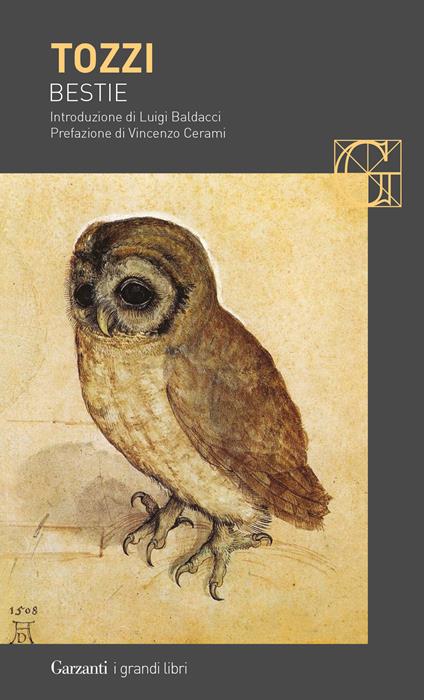
Bestie, published in 1917 and reissued by Garzanti (with Luigi Baldacci’s introduction and Vincenzo Cerami’s preface) offers the opportunity to rediscover the work of a great author of the 20th century Italian literature: Federigo Tozzi (1883-1920). In sixty‑eight brief prose pieces, topics, characters, situations and atmospheres cluster around a single thread—the presence of animals.
-
All’improvviso bussano alla porta, Etgar Keret
How to write a powerful and incisive short story? Have Etgar Keret explain it to you, one of the most popular Israeli writers today. One of his best‑known short story collections, All of a Sudden, the Door Knocks (Feltrinelli, translated by Alessandra Shomroni), takes its title from the opening piece, which sums up, in a surprising and ironic way, all the ingredients needed to craft an effective and striking text. Complete with a final twist.
-
I racconti di Claire-Louise Bennett
As we already wrote in this article, the stories in Stagno by Claire-Louise Bennett (an author who grew up in Britain and later settled in Ireland) all center on tiny, everyday happenings: “I have no interest in large‑scale changes; I am attracted to the constancy of small things. For example, almost all the stones that make up the cottage are of the same size and shape,” confesses the narrator, and the stories reveal the domestic sphere. Between naturalism and lyricism, it’s hard to choose just one of the short pieces offered in 2019 by Bompiani in the author’s own translation by Tommaso Pincio. The sensations evoked by her stories sometimes recall the atmospheres evoked by Emily Dickinson…
-
La voce, Margaret Atwood
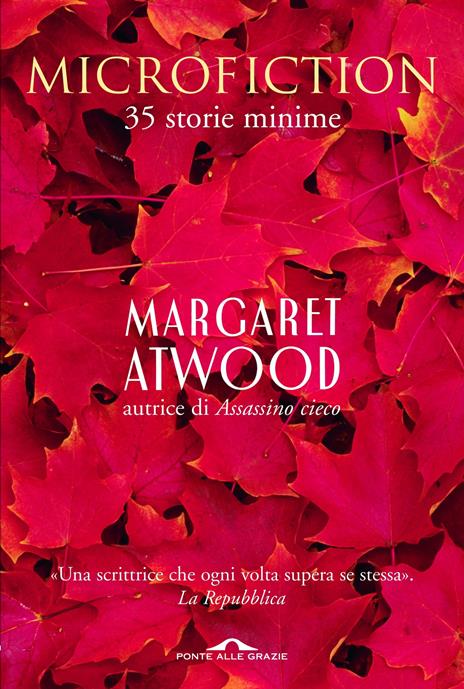
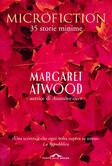
Iconic also, in its brevity, is The Voice, by the award‑winning Canadian writer Margaret Atwood (author of the dystopian novel The Handmaid’s Tale, which inspired the television series). The story, in the volume Microfiction (Ponte alle Grazie, translated by Raffaella Belletti), is set in a dystopian future where women have lost all rights and are brutally controlled: here a girl finds herself isolated after her voice is censored, a symbol of a power that has been stripped from her. As she tries to endure in silence, the world around her becomes increasingly hostile, reducing her to a shadow of herself. A meditation on repression and the loss of identity, showing how language control is a tool of oppression and how imposed silence can extinguish a person’s very existence.
Short stories: contemporary Italian stories
-
I racconti di Claudio Magris
One of Italy’s best‑known writers and essayists in recent decades, author of Danube and Microcosmi, in 2019 the Triestine Claudio Magris, master of Mitteleuropa, published with Garzanti Tempo curvo a Krems: the five protagonists of the stories confront a time that seems to have neither beginning nor end. From Magris’s latest collection we particularly point out the story featuring an elderly writer who is a guest of honor at a prize, and measures his estrangement from the world and from literary rituals.
-
Bambini pendolari che si sono perduti, Gianni Celati
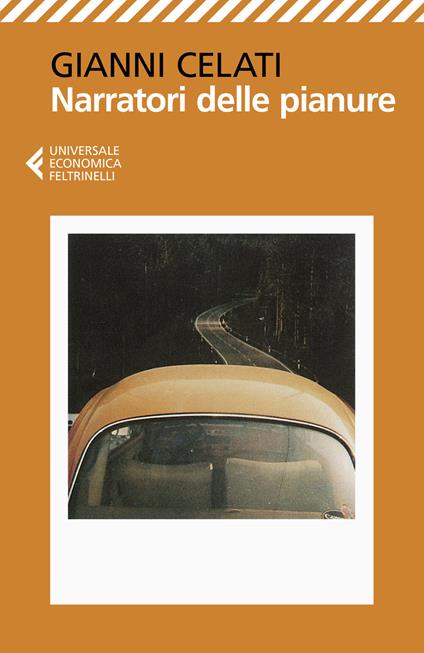
Narratori delle pianure (Feltrinelli) is one of the most important books by Gianni Celati (1937-2022), author of Lunario del paradiso and La banda dei sospiri, with Italo Calvino himself having noted its importance in 1984. Celati is a figure dear to Walter Benjamin, the notion of the oral storyteller, whom Celati sought to rediscover in these thirty stories, “comic and fantastic, sad or terrible,” traveling along the banks of the Po. Among the stories included, we recommend Bambini pendolari che si sono perduti.
-
L’orecchio assoluto, Daniele Del Giudice
Daniele Del Giudice, a cult author who passed away in 2021, was also esteemed abroad by colleagues such as Ian McEwan and Emmanuel Carrère. As Tiziano Scarpa wrote in introducing the collection offered by Einaudi in 2016, “there is a melancholic utopia in his stories. It recurs in one scene: someone tells another about a shared intellectual passion; in doing so, they discover a mutual resonance; a genuine curiosity arises. Consequently, the two‑person relationship becomes the most authentic, because only in two‑person relationships can you build the trust needed to open a door to one another and host each other. But this trust is not about revealing an inner state; rather, its content is something external. One does not share a private confidance, but describes an object, a craft, a technical characteristic: the details of a painting, the dust, the absolute ear, decomposition, struggle, cemetery architecture, military fortresses, comets…”. Among Del Giudice’s works, we propose L’orecchio assoluto.
-
Da qualche parte, al sicuro, Francesca Manfredi
Winner of the Campiello Opera Prima prize in 2017, Un buon posto dove stare (La Nave di Teseo) is the debut collection by Francesca Manfredi. Eleven stories share the common thread of characters who move, relocate, leave, and search for a place to call home. Because the places we inhabit say much about us, becoming containers of the moods that animate us: thus the country house in the story Da qualche parte, al sicuro rises as a symbol and guardian of the first sexual experience of the young Marta with her friend Veronica.
-
Vorrei essere albanese, Elvis Malaj
Between two houses that overlook each other there might be a road. Just as there could be a road between two countries that look at each other across borders—the Italy and Albania. That road is built by Elvis Malaj with the collection of tales Dal tuo terrazzo si vede casa mia (Racconti edizioni), an invitation to come to the other side, to leave home and cross your own borders. A case of sharing and hybridity, a different gaze, of which we feel the pull.
-
Il rothiano, Luca Ricci
The story by Luca Ricci that opens the anthology I difetti fondamentali (Rizzoli) drags us into the world of publishing, a setting chosen by the author as a stable backdrop for many of his works. Portraits of writers, editors, and literary agents pass one after another, with all their quirks, ugliness, and fixations. But, as one looks more closely, the figures in this humorous and captivating universe are not just insiders of the literary field; they mirror the contradictory and fragile nature of human beings in general.
-
Soltanto due euro, Loredana Lipperini
The Magia nera explored by Loredana Lipperini in the collection bearing her name slips quietly into our days, hiding among objects in a vintage shop—a few trinkets, Murano chandeliers, Liberty‑style furniture, and two hypnotic crystal pyramids—like the ones purchased by Elena, the protagonist of Soltanto due euro, who somehow wins back her husband’s love through an unknowable and mysterious force. In this tale, as in all those in the volume, the real and the magical entwine so closely that it’s hard to tell where one ends and the other begins.
-
Amen, Marco Vichi
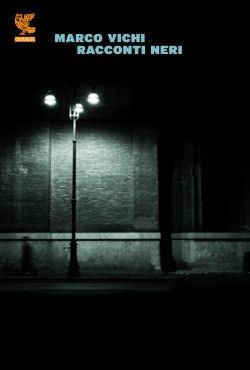
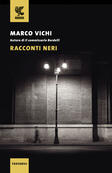
For lovers of contemporary Italian noir, we recommend the Racconti neri (Guanda) by the Tuscan author Marco Vichi, famed for his police novels starring Commissioner Bordelli. In the Florentine author’s collection you’ll find his atmosphere and his characters, and that ability to be heard while narrating daily and terrible events where, suddenly, something breaks, a mechanism jams, and gradually everything becomes madness, absurdity, mystery, until the final, often entirely unexpected plot twist; in Amen, a rich, idle young man is attacked by a quirky old man who accuses him of having murdered his closest friend…
-
Splatter, Giulio Mozzi
In 1998, Mozzi’s collection Il male naturale (published by Mondadori and later reissued by Laurana) sparked a fair amount of controversy. Particularly, the piece Amore, which dealt with pedophilia (a subject discussed in the new edition’s Demetrio Paolin essay). Among the stories, we also mention Splatter, where the narrator declares, “Death repels me, and I believe there is no suffering stronger than feeling it approach. I don’t know what comes after death. I don’t know if it makes sense to say: come after death. Death is: to end.”
-
Dritto dritto negli occhi, Valeria Parrella
The writer Valeria Parrella (Lo spazio bianco, Almarina) made her debut in 2003 with a collection of stories, Mosca più balena, which earned her the Campiello Opera Prima prize. The six texts, short and set in Naples, all feature female protagonists. As in Dritto dritto negli occhi, where Guappettella has a dream: to become a “well‑to‑do woman.”
-
Alla deriva in Antartide, Letizia Muratori
The Spifferi—six stories by Letizia Muratori (La Nave di Teseo, 2018)—where the unseen becomes tangible as a breeze, sometimes a person, sometimes a sound, sometimes a hope; and, as in all ghost stories worthy of the name, there is someone who can believe in them, there is a boundary between reality and, perhaps, imagination that the ghost can cross at will, and there is a missing thing to fill. Among these, we recommend Alla deriva in Antartide.
-
Due ragazze orizzontali, Paolo Cognetti
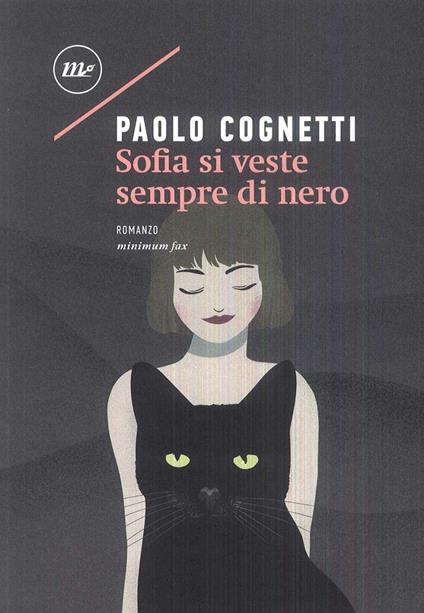
Before his Strega 2017 victory with Le otto montagne, Cognetti had written a novel composed of ten autonomous short stories, Sofia si veste sempre di nero (Minimum Fax), which lets us glimpse the unsettling lead character from childhood to early adulthood, through a difficult adolescence. Aware that these stories were not meant to be read separately, in this context we propose the third, Due ragazze ozzontali (note: the original title is “Due ragazze orizzontali”), in which the protagonist tests suicide on a late‑summer afternoon…
-
Il volto delle cose, Michele Mari
In the story Il volto delle cose, however, Michele Mari, a writer and translator known for a rich, complex, and often introspective and lyrical style (we’ve interviewed him here), explores perception and unease through a series of reflections and encounters that blur the line between dream and reality. The protagonist is trapped in a routine that blends with surreal experiences, confronting objects and places that seem to come to life, turning into mysterious and unsettling presences. Mari thus tackles identity and the fragility of perception, suggesting that things and people, while tangible, possess a hidden face that escapes our understanding, as if reality is constantly balanced between what we see and what we cannot grasp.
-
Alba tragica, Niccolò Ammaniti
Our survey of short stories ends with a collection by Niccolò Ammaniti titled Il momento è delicato (Mondadori) – the title itself referring to a certain skepticism in the publishing world about short story collections – and, in particular, with the opening line that accompanies his book: “A novel is a love story; a short story is the passion of a single night.” We hope thus to have given you all the tools to navigate the vast universe of short works and to experience unforgettable, surreal nights of literary passion, just like the one recounted by the author in Alba tragica.
