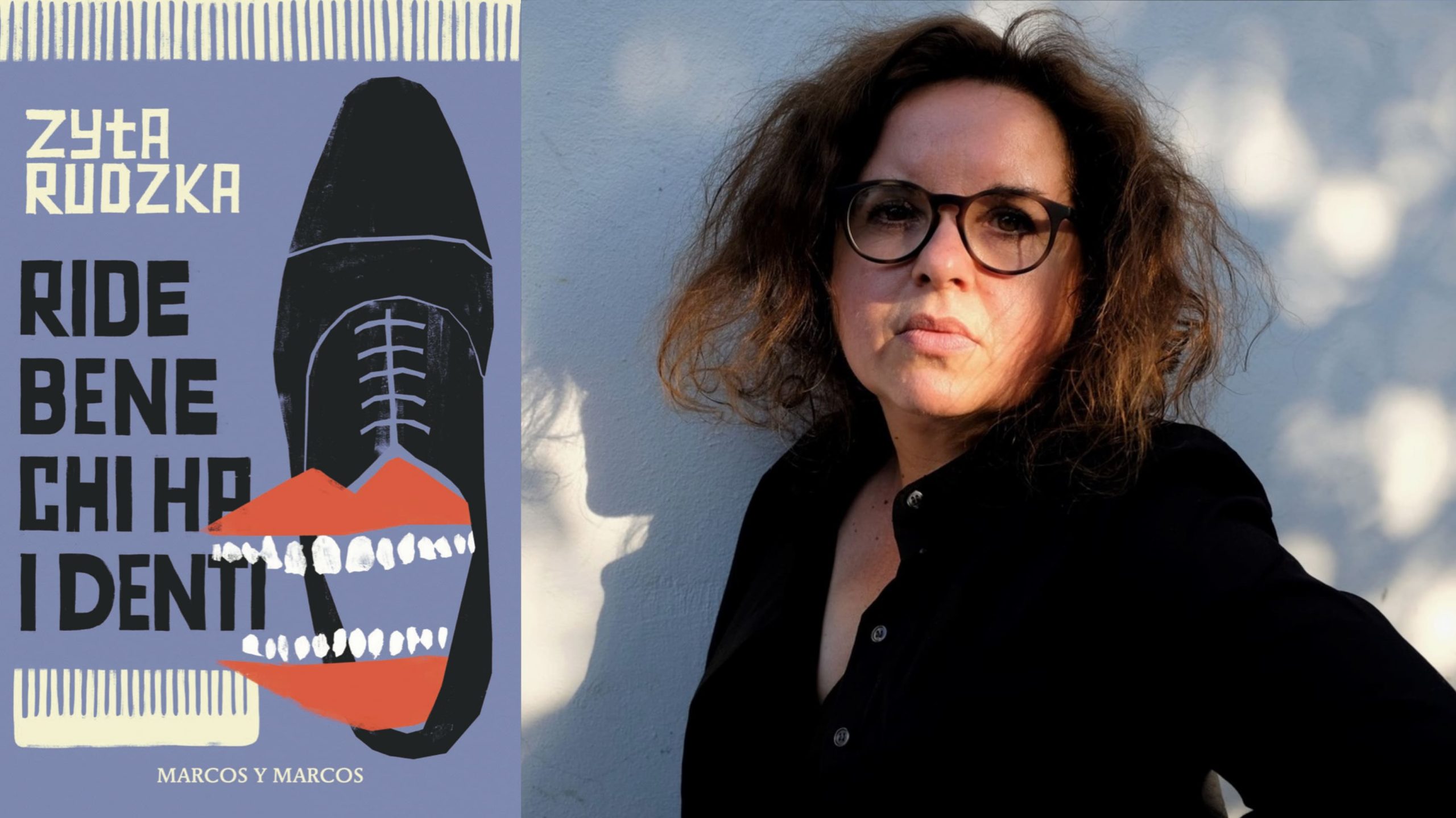
In a literary universe we have long been accustomed to sweet female protagonists, loving, benign and reassuring – at times, one could even call them “stereotyped” – today, perhaps, the moment is mature enough to welcome the exact opposite: infused with a razor-sharp, brutally honest and sensuous language, Ride bene chi ha i denti (Marcos y Marcos, translation by Irene Salvatori) by Polish author Zyta Rudzka is ready to undermine our certainties about the women “angelic” of literature, through a dry and entertaining plunge into everyday realism.
Ride bene chi ha i denti is the first Zyta Rudzka novel published in Italy, even though the author, as she herself has recounted, began writing at a very young age, already during high school, eventually winning the Nike Prize, Poland’s most prestigious literary award, previously awarded to Olga Tokarczuk and .

The absolute protagonist of her novel is Wera, a woman who is very ironic, strong and independent, who suddenly finds herself alone to bury her husband, a former jockey. Thus the reader is catapulted into her life, which from the shop “Wera. Hairdresser for men” goes backward along the path of a life marked by tragedies, unforeseen events and many passions.
Between cigarette ashes, horse races and jockeys, vodka, scissors and hair, one of the recurring themes is sexuality, almost never pure and romantic, but often blunt, at times even cynical, where Wera is a woman who “Loves whom she wants and does not hide for this”.
Guai, però, a incasellare la storia in semplificazioni: “Ride bene chi ha i denti è un’Odissea della povertà”, ha commentato l’autrice. Un romanzo che racconta la vita di uomini e donne ai margini, spesso invisibili, tra cui, oltre a una “lotta d’amore tra Eros e Thanatos”, spicca il ruolo della solitudine femminile: “Non è, per fortuna, una storia strappalacrime. Semplicemente non credo al semplice lieto fine”, ci ha raccontato Zyta Rudzka nel corso della nostra intervista.
Characterized by a rough, raw and passionate narration, Ride bene chi ha i denti does not soften or give in, but tells life as it is: a push to never give up, even in the face of the most absurd tragedies.
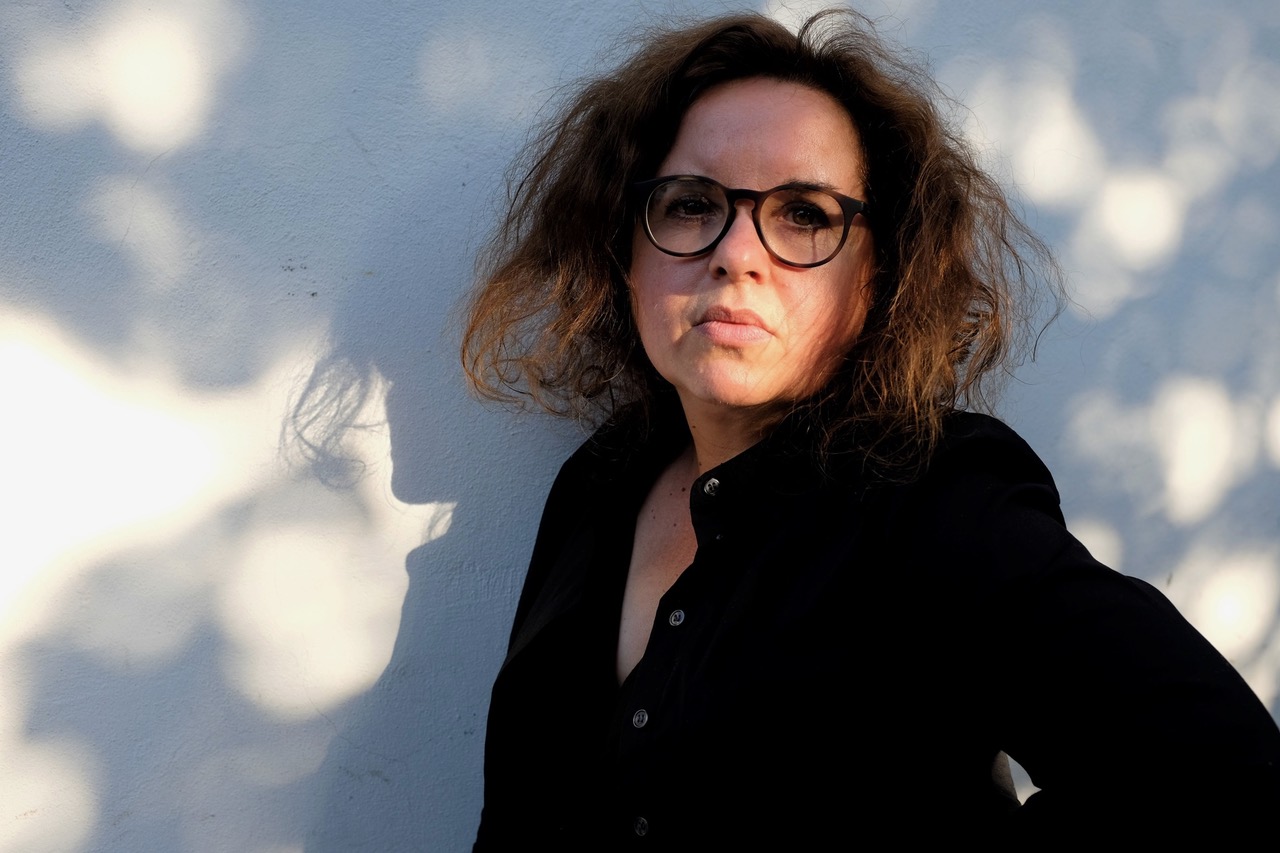
The protagonist of Ride bene chi ha i denti is the hairdresser Wera: a woman who has spent her life cutting hair for thousands of men and who suddenly finds herself alone, having to bury her husband, the jockey. She is a woman through and through: strong, very cynical, brazen, independent, who in solitude and misery knows how to fend for herself. What is the inspiration behind this story? Does a “Wera, a hairdresser for men” exist, or has it ever existed? “Wera and her shop I invented, but there would not have been this character without a particular day when I went to the market near my home and, suddenly, a woman cut in front of me. A woman who, in a brazen way, wanted me to buy one of her used dresses. I am small and that woman was very tall, twice my height. I barely escaped. Suddenly I saw that market in another light. I saw the poverty of the city. The poverty of all those people who are not merchants, but who bring something from home and go to the market to sell it, because they have nothing to eat. I could not forget that woman. Even today I regret not buying that dress from her. And I began to write.”
And how did she arrive at the character of Wera? “Naturally, it wasn’t that I wanted to write about the market. I was interested in female solitude, the one that is forced and the one that is chosen. That moment when the world thinks you have given up, because you are old, poor and unloved. But not my protagonist. I had written 400 pages and then, suddenly, the line ‘difficile trovare scarpe buone per un defunto’ came to me. I put it at the beginning of the novel and I began to write again. I gave voice to a woman who had nothing, except a sharp tongue. And that tongue is her weapon of defense, her shield. And I also had to invent that strong, vigorous language. Literature for me is a form, a language to create.”
Beyond the relationship with the deceased husband, Wera relives parallel stories with several lovers, both men and women. Sex is a recurring theme in the book. And the sex of Wera and her lovers is never sweet, pure or romantic, but often hard, passionate, and perhaps a way of engaging with the rest of the world. When it was published in Poland, what reactions did the book provoke? Is the world finally ready for women who speak about sex so freely? “The reactions were very good. No one ever said that it was a book about sex. It is the story of a strong woman who loves who she wants and does not hide for that. While writing I did not ask myself whether the world was ready for something, because art should not bow to bourgeois tastes. If someone lacks courage and wants to please everyone, it is better not to write, because you ruin your life easily.”
“We grabbed the glitter of our hearts and galloped off. Neck-breaking gallop. At a trot, at a gallop, racing and over obstacles. I carried it and let myself be carried.
I sat on the bed. I looked for a long time at the dead jockey, that corpse almost belonged to me.
How many things happened. How many carnal acts in the bushes, in the stable, by the river. All in horse-doses. Love had been our leap. What kind of love is there without leaps?”
da Ride bene chi ha i denti
In the book there are also horse races and jockeys, vodka and cigarettes. For a Western reader it is almost inevitable to think of the imagery crafted by Charles Bukowski. “Ride bene chi ha i denti is an Odyssey of poverty: cups in one scene, vodka and cigarettes are prerequisites. They are not autobiographical notes. I have a language different from Bukowski. Mine is constructed, strongly metaphorical, poetic and at the same time plebeian.”
In other words? “I believe in metaphor. I think a well-constructed metaphor can overturn a taken-for-granted, superficial view of the world, reveal something more, show a form of suffering not obvious, or challenge life or happiness models that we are led to believe. My protagonists have something more to do in this world than simply getting drunk and having sex. I do not feel in any way indebted to Bukowski. It is the not-so-obvious existential experiences that interest me: old age, loss, and the effort to save oneself.”
“Wherever you have lunch, there must be vodka. Lunch must be washed down; after a funeral you cannot sit with a dry mouth. Despair must be swallowed. Drowned.”
da Ride bene chi ha i denti
Ride bene chi ha i denti is the first among Zyta Rudzka’s books to be translated into Italy, even though she began writing at a very young age, between the late 1980s and early 1990s, and to date has published about ten books. What does writing mean to you?
“I debuted very early. I may have published my first stories in high school and, since always, when I write I feel free. For me it is essential to give voice to those who often lack a voice in the public sphere. Or who are not heard, or feel confused, or laughed at. A hairdresser, a physical education teacher, a corset maker, a pawnshop worker, a single woman living in the countryside who one day begins to speak to the well.”
Mourning today is no longer a taboo, thankfully, but perhaps to some extent certain rites around it still are: the funeral, the separation, the idea of eternity. In the novel she decided to talk about death directly, at times also playfully, almost mocking it. “It is imagination that guides me, not research. I do not write comforting, reassuring, tearful novels. But why should I write about death on one’s knees? I am not interested in how people statistically behave at funerals, nor in the customs of funerals. I wrote the story of Wera, a hairdresser who ages, is wounded, but strong. It is not a tale of bourgeois satiation.”
“To die in installments one must struggle. Fortunately I no longer had for him the heart of old. I was not good. It would be best if I did not come near the wounds, or they would swiftly go gangrene.”
da Ride bene chi ha i denti
Wera is a woman all of a piece, even though she is full of sadness she does not wish to cry and never cries, not even at her husband’s funeral. Why does her character seem to fear showing pain? Why does she avoid crying? “It’s not that Wera avoids crying; she does what she wants. More than sad, she is angry. And why should she cry at her husband’s funeral? Because he was a failed husband, unsuccessful. ‘A woman’s life does not end with widowhood,’ she says. In literature there are many women who cry. My protagonist is not one of them. I don’t like the idea that a literary character functions only when she is sad, or pays the price of her happiness. I have a woman who fights poverty and the wounds of feeling, but instead of crying she goes out and tries to do something with her life.”
“I did not move. I did not move either leg. Perhaps I wanted to keep that veil of sadness on me. If I moved, it would topple and the sadness would cover me from head to toe. Little by little, step by step, I then emerged from that puddle to dry land.”
da Ride bene chi ha i denti
She has training in psychology, and perhaps she has directly known a variety of human emotions. Has that helped her in shaping her characters? “I do not use my experience as a psychologist. I do not write psychological novels. I studied psychology because I was interested in human nature, which, as we know, is never clear when it is not completely murky. This same curiosity accompanies me in writing. I would not want to simplify, or flatter or sweeten what happens to us.”
(thanks to the translation by Irene Salvatori)