
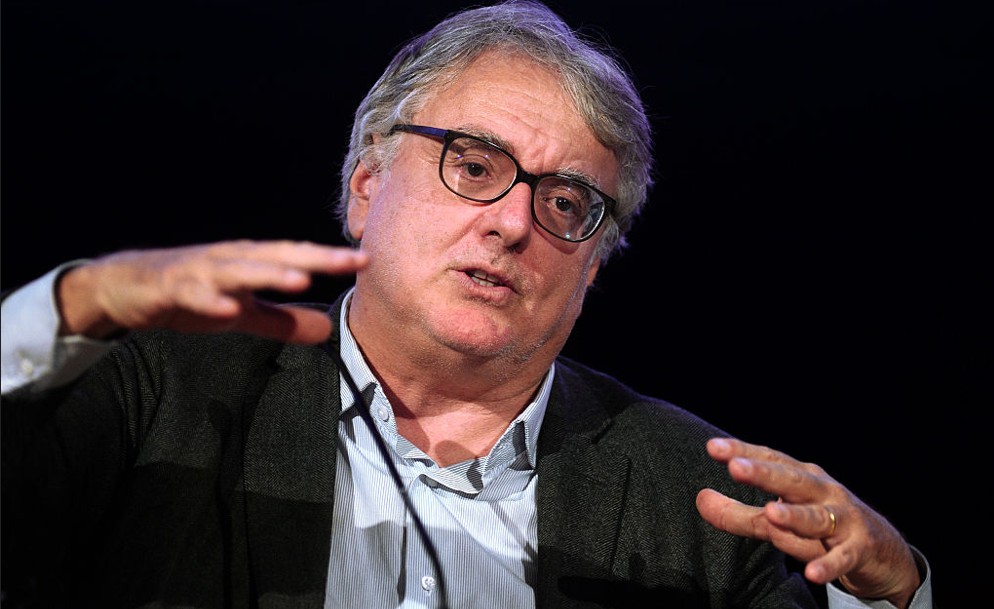
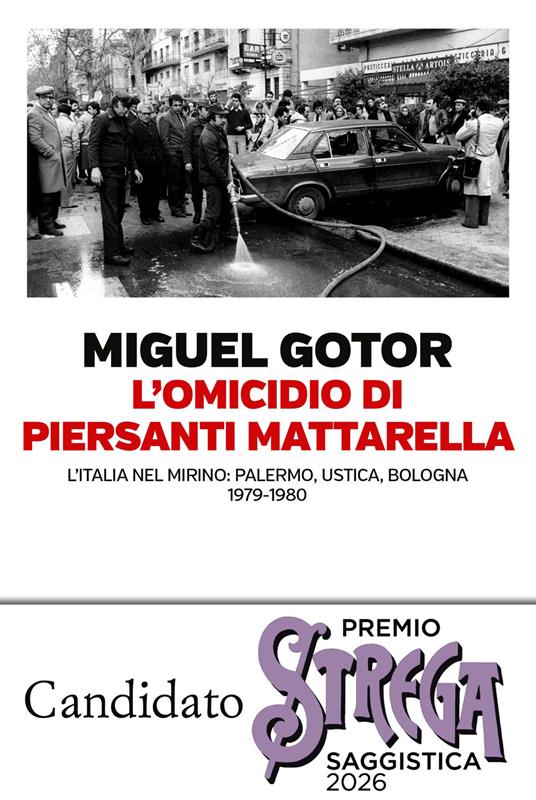
With 31 votes out of 53, Miguel Gotor emerges as the winner of the Premio Strega Saggistica 2026, the prize now in its second edition. Gotor is honored for his book The Murder of Piersanti Mattarella – Italy in the Crosshairs: Palermo, Ustica, Bologna 1979-1980 (Einaudi).
The historian’s essay returns to January 6, 1980, when the then-president of the Sicilian Region, Piersanti Mattarella (brother of the current President of the Republic, Sergio), regarded as Aldo Moro’s political heir, was assassinated. Following the acquittal, in 1999, of neo-fascists Valerio Fioravanti and Gilberto Cavallini, to this day only the masterminds from the mafia are known, but not the actual perpetrators, and an inquiry is still underway to identify them.
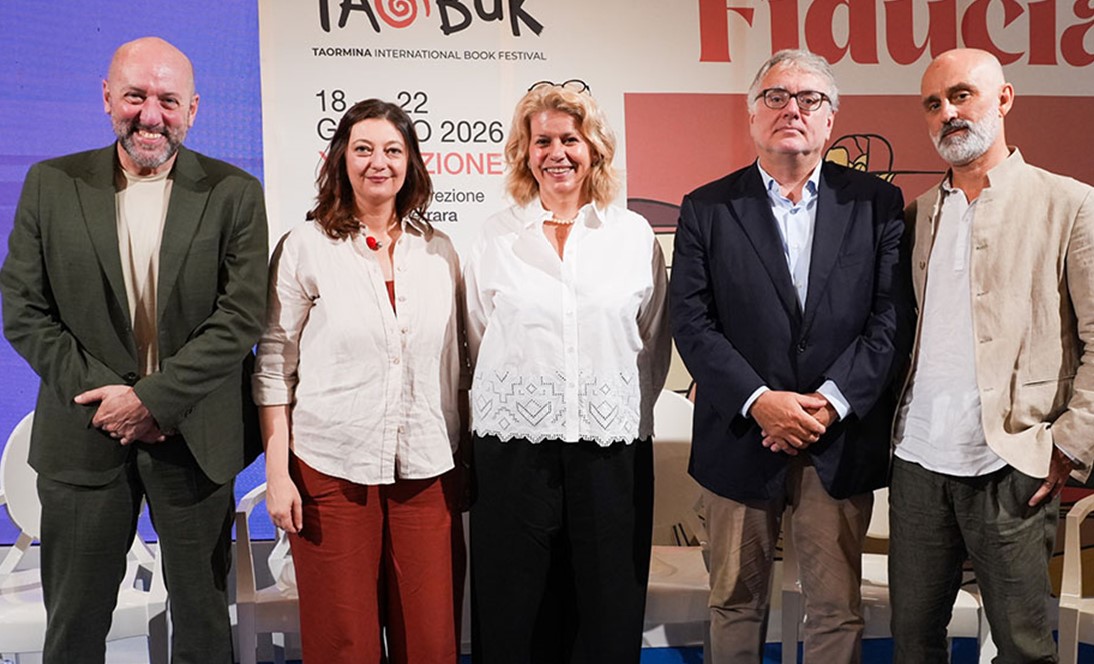
The prize, promoted by the Fondazione Maria e Goffredo Bellonci, Strega Alberti Benevento, and Taobuk – Taormina International Book Festival, with partner BPER and in collaboration with Gabinetto Vieusseux, was awarded at the Palladium Theatre of Roma Tre University, in a ceremony hosted by Eva Giovannini.
Following remarks by Massimiliano Fiorucci, Rector of Roma Tre University, and Riccardo Chiaradonna, Professor of the History of Ancient Philosophy at Roma Tre, the finalists’ authors were joined by the finalists: Giovanni Solimine, President of the Fondazione Maria e Goffredo Bellonci, Antonella Ferrara, President and Artistic Director of Taobuk – Taormina International Book Festival, Giuseppe D’Avino, President of Strega Alberti Benevento, Lorena De Vita, Sponsorship Office of BPER.
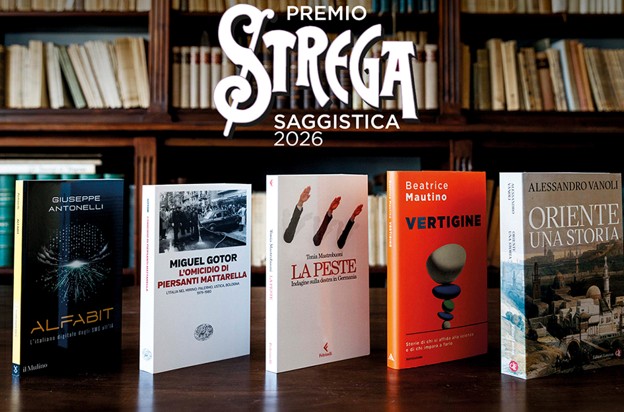
In June, the Scientific Committee — composed of Carlo Felice Casula, Alfonso Celotto, Antonella Ferrara, Simonetta Fiori, Anna Foa, Paolo Giordano, Francesca Mannocchi, Melania G. Mazzucco, Matteo Motolese, Nico Pitrelli, Lucrezia Reichlin, Nino Rizzo Nervo, and Giovanni Solimine (president) — had selected, in addition to the winning book, also the essays by Giuseppe Antonelli (Alfabit – L’italiano digitale dagli SMS all’IA, Il Mulino), Tonia Mastrobuoni (La peste – Indagine sulla destra in Germania, Feltrinelli), Beatrice Mautino (Vertigine – Storie di chi si affida alla scienza e di chi impara a farlo, Mondadori) and Alessandro Vanoli (Una storia, Laterza).
In the jury, prominent figures from academia, scientific research, and investigative and cultural journalism, including the members of the Scientific Committee.
The International Strega Saggistica Prize to Luciano Floridi
Luciano Floridi also attended the ceremony as the recipient of the Premio Strega Saggistica Internazionale, awarded by the Comitato promotore. A professor at Yale University and the Alma Mater Studiorum University of Bologna, Floridi joined a discussion with Antonella Ferrara at the Teatro Palladium. His works mark a turning point in thinking about a topic that poses a decisive challenge for the future of knowledge: artificial intelligence. Floridi is the author, among others, of the essays The Fundamental Difference. Artificial Agency: a new philosophy of artificial intelligence (translated by Massimo Durante, Mondadori 2025) and The Ethical Knot. Information and values in the digital society (also curated by Massimo Durante, Raffaello Cortina Editore 2026).
“Nonfiction books are of great help to those who want to look around and orient themselves”
“At a moment like the present — when all the values guiding our lives and our coexistence are being questioned — nonfiction books are of great help to those who want to look around and orient themselves, to understand what is happening, to develop critical thinking, and to participate responsibly in social life. Books can continue to perform this function because, as a recent survey shows, they are considered the most reliable tools for information and in-depth exploration,” stated Giovanni Solimine.
“The Strega Saggistica Prize stems from the belief that making knowledge accessible is a cultural and civic responsibility: to valorizate works that can bring the depth of studies into public dialogue, creating opportunities for authors and readers to meet and engage. Nonfiction renews the questions and the categories through which we interpret the world, as demonstrated by the thinking of Luciano Floridi, winner of the Premio Strega Saggistica Internazionale. In our dialogue, his distinction between intelligence and the ability to act invites us to reflect on technologies that affect reality without fully understanding it. A perspective that places human responsibility at the center: deciding what to delegate, according to which values and for what ends,” explained Antonella Ferrara.
“The recognition of nonfiction quickly integrated into the broader Strega Prize ecosystem, which today includes awards for fiction, poetry, European literature, and children’s literature (in addition to youth categories). Just as the other sections offer a metaphor that describes the world around us using the language of prose or poetry drawn from the realm of intangible feelings, the nonfiction prize explains the times we live in through a different language and provides us with another key to reading them,” commented Giuseppe D’Avino.
In the months leading up to the event, the five finalists met readers in Casarza Ligure and Forte dei Marmi (June) and in Alberobello, Foggia, San Benedetto del Tronto, and Montichiari (October). The author of the winning book will then be a guest in Catanzaro and Florence, at the Gabinetto Vieusseux.
The conference What does AI produce? Authorship and creativity in the era of large language models
Tomorrow, November 19, at 10:30, in the Igea Hall of Palazzo Mattei di Paganica, home to the Istituto della Enciclopedia Italiana Treccani, the conference titled What does AI produce? Authorship and creativity in the era of large language models will take place, promoted by the Fondazione Maria e Goffredo Bellonci and the Fondazione Treccani Cultura.
The protagonist of the event will be Floridi, who will delve into the themes of authorship and creativity in the age of generative artificial intelligence and large language models. Discussing the topics will be Sofia Bonicalzi from the University of Roma Tre and the Italian Society of Analytic Philosophy, and Gino Roncaglia from the University of Roma Tre and the National Academy of the Lincei. The meeting will be opened by the institutional greetings of Solimine and a representative of the Treccani Cultura Foundation.
The conference “aims to offer a space for reflection and dialogue about the transformations brought by artificial intelligence to the processes of cultural production, examining central questions such as the nature of authorship, the role of human creativity, and the relationship between people and AI systems.”
