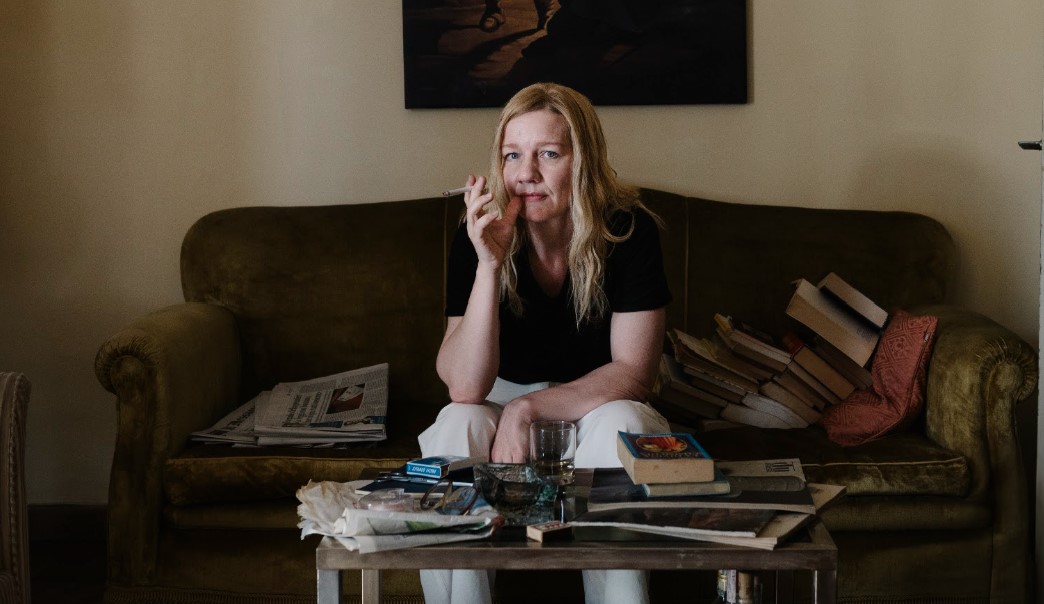
In one of the stories that compose the collection Three Paths to the Lake, the protagonist, Elisabeth, is a photographer, a famous photojournalist: she has eyes that know how to see in order to reveal to others, even war, even violence, even the unspeakable. In the story she returns for a short vacation to her widowed father’s house, in a land of forests, of rivers and of lakes, perched exactly on the border between three languages and three countries, Austria, Italy, Slovenia.
Just like Klagenfurt, the small city in Carinthia where Ingeborg Bachmann was born. Her father awaits her at the station, with the gentle affectionate anxiety of not wanting to see her step off the train: but it is impossible, the station is tiny and the tracks are only two.
One is the one from which she departs, from which she has departed many times; the other, the one at which the return train stops, which brings her back home and to the ghosts of a past left unfulfilled. Interrupted loves, like the paths that should lead, if only one could trust the topography, to the lake where she swam as a child. And which remains in the background, an impossible promise to keep, a welcoming and unreachable womb because the paths vanish, because even those who have made a living of watching their own craft can lose the way in the forest, not see it. And even the woman who day after day stops moments to imprint them on film cannot rewind time, the missed occasions, missed appointments.

In another story from the same collection, Happy Eyes, Miranda bears a telling name; she is more visible than she sees herself: indeed she is very nearsighted and stubbornly refuses to wear glasses. And in the refusal opens a fleeting possibility of a collateral experience. How do others manage to see clearly, to see too much, and not feel overwhelmed? Seeing less is for her a way to protect herself and, together, to prevent the dulling of senses that would otherwise be crushed by the overpowering primacy of sight.
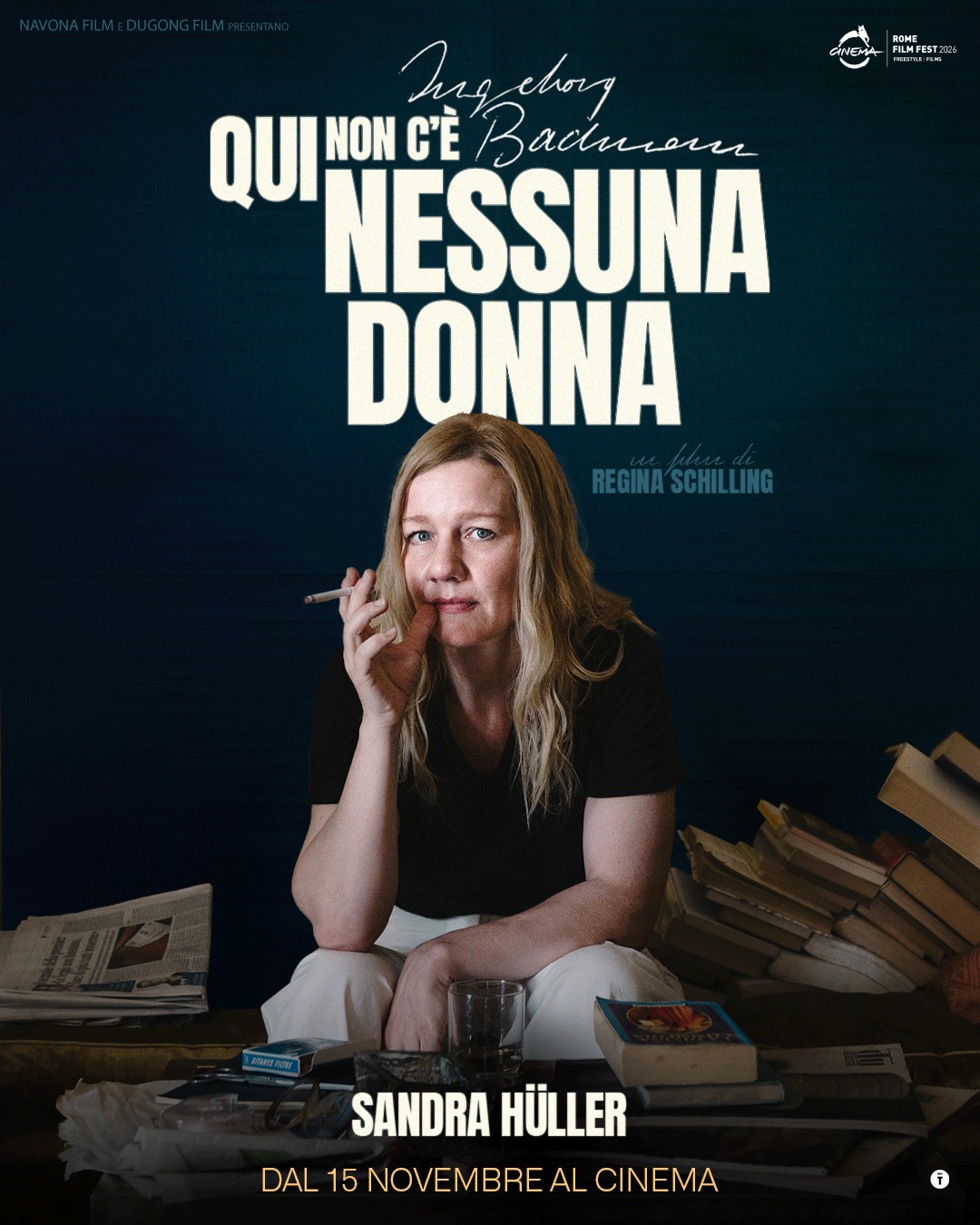
To this play between seeing and not seeing as a conscious choice, with a weight almost ethical, that threads through many of Bachmann’s works, I was thinking a few days ago, while previewing the documentary by Regina Schilling that will be in cinemas from November 15, distributed by Navona Films in collaboration with Dugong Films and FlickMates. I thought about it, and as I watched, ruefully recalling, like Miranda, leaving her glasses at home, I felt a rising emotion difficult to put into words.
The documentary is the work of a director who is also an avid reader of Bachmann: this is evident in every frame, and even in the intuition to cast a great actress, Sandra Hüller, who is herself an avid reader of the works of the woman whose image alternates on the screen with hers.
Sandra Hüller does not interpret Bachmann; she does not imitate her, nor does she stage her. One could perhaps say that she evokes her. She wears a wig, we see in one of the opening sequences with the help of a makeup artist applying it carefully to her hair. But the transformation, so explicit, does not camouflage, does not pretend. More than a metamorphosis it is a doubling. She smokes, types, like Bachmann in a famous series of photographs; she drives an old Alfa Romeo through the streets of Rome. She paints her lips, and meanwhile the words written by Ingeborg Bachmann resound. It is a bit like what happened in Ruth Beckermann’s 2016 delicately enchanting film, Die Geträumten, in which Anja Plaschg and Laurence Rupp, two actors from a youth that is itself moving in the vague resemblance to Bachmann and Paul Celan in the early Fifties photographs, gather again in a recording studio to read the lovers’ correspondence, and in the film there are no other dialogues than those of the letters and the tiny playful exchanges between her and him, who during pauses smoke a cigarette on the external stairs, joke, live, exist.
Three Paths to the Lake, the story of Elisabeth Matrei and the symbolic journey that leads her to lose herself in the topography of lost childhood and a betrayed early youth, has been translated into images by Michael Haneke, then barely more than thirty, in 1976, in a television-shot film of grays and browns, of creaks and silences, speaking the language of a restrained melancholy where unspoken words render the past oppressive to the point of asphyxia. So much so that a film that begins as an intimate, almost welcoming, almost moved, story becomes charged with a tension that prefigures the director’s future poetics, his merciless exploration of the mechanisms of hypocrisy and cruelty that gave shape to his best-known works, such as The White Ribbon or Funny Games. And the same sense of oppression returns, in a sharper and more hallucinatory form, in Malina, brought to the screen by Werner Schroeter in 1991.
In this case the screenplay is by another great Austrian writer, Elfriede Jelinek, written together with Patricia Moraz with the director’s collaboration. The protagonist, the unnamed first-person narrator, who binds her desperate lucidity of gaze in a triangular romance that progressively drags her through whorls of an ever more distorted game of domination and misunderstanding, suspended between crude realism and the shadow of a psychedelic delirium, has the perfectly overturned composure of Isabelle Huppert, and is an unforgettable character even in the final sacrifice, the mysterious disappearance to which the world of men—subtle and invisible violence—condemns her, a power dynamic that crushes and annihilates her, preventing the breath she sought among the two elusive lovers, indifferent to her disappearance. Here there is no woman, is the cruel phrase with which the disappearance of the lover-narrator of Malina is denied, over the telephone, as if nothing had happened. And yet the tragedy did happen.

Three Paths to the Lake, the story of Elisabeth Matrei and the symbolic journey that leads her to get lost in the topography of a lost childhood and of a betrayed early youth, has been translated into images by Michael Haneke, then barely more than thirty, in 1976, in a film – made for television – of grays and browns, of creaks and silences, speaking the language of a restrained melancholy in which the unspoken words render the past oppressive to the point of suffocation. So much so that a film that begins as an intimate, almost welcoming, almost moved narrative, becomes charged with a tension that foreshadows the director’s future poetics, his ruthless exploration of the mechanisms of hypocrisy and cruelty that shaped his best-known works, such as The White Ribbon or Funny Games. And the same sense of oppression returns, in a more piercing and hallucinatory form, in Malina, brought to the screen by Werner Schroeter in 1991.
In this case the screenplay is by another great Austrian writer, Elfriede Jelinek, written together with Patricia Moraz with the director’s collaboration. The protagonist, the unnamed first-person narrator, who lays hold of her desperate clarity of sight in a triangular love story that gradually drags her through the coils of an ever more distorted game of domination and misunderstanding, suspended between raw realism and the shadow of a psychedelic delirium, possesses the perfectly unsettled composure of Isabelle Huppert, and is a character unforgettable even in the final sacrifice, the mysterious disappearance into which the subtle and invisible violence of the world of men compels her, a power dynamic that crushes and annihilates her, preventing the breath she sought among the two elusive lovers, indifferent to her disappearance. Here there is no woman, is the cruel phrase with which the disappearance of the lover-narrator from Malina is denied, over the phone, as if nothing had happened. And yet the tragedy did happen.
Here there is no woman is also the Italian title of Regina Schilling’s documentary, in which the woman, the writer, is very much present, and fills the screen, doubled between archival footage and the magnetic presence of Sandra Hüller, who seems to open up to a distant evocation rather than to imitation, a call of gazes and words.

L’OMAGGIO ALLA RASSEGNA DI PALERMO – In Palermo, until November 15, the Efebo d’Oro Film Festival, in its 48th edition, in collaboration with the Austrian Forum of Culture in Rome, dedicates a cinematic homage to Ingeborg Bachmann (1926-1973), on the occasion of her centenary. At Cantieri Culturali alla Zisa, films by Haneke, Schroeter, Beckermann, and Schilling will be shown. In particular, there will be room for the German director Regina Schilling‘s documentary, Ingeborg Bachmann – Jemand, der einmal ich war (2026), starring the Oscar-nominated Sandra Hüller, presented in a Sicilian premiere after its showing at Filmfest München and at the Rome Film Festival.