
When discussing culture and entertainment, the role of Milano remains central. Not by chance, in the Lombardy capital the share of cultural consumption expenditure is 11.4% of the national total (while the resident population accounts for 2.3%). In 2025, in particular, the turnover reached 489.9 million euros, down 1.5% from the previous year due to lower revenues from pop, rock and light music concerts. If we also consider sports and entertainment events, the figure climbs to 741.9 million euros, up 1% from 2024.
But 2025 was also the year with the highest number of events in Milan: 37,900 in a year, equivalent to 104 per day excluding cinema screenings, while library loans rose to almost one million (987,651 in the twelve months). Finally, in 2025 the Milan book market remained stable (-0.3%) against a national decline of 2.2%. One book every ten in Italy is sold within the city’s municipal boundaries.

The data presented by the Observatory for BookCity Milano: stable participation in events, sports activities, and museum admissions
These are the main figures from the Observatory for BookCity Milano, prepared by the Italian Publishers Association on the topic of Cultural, library, and museum consumption in Milan, presented at the Forum Cultura at the CASVA in Milan, together with the City of Milan – Department of Culture and BookCity Milano, and conducted in collaboration with SIAE and Sistema Bibliotecario di Milano. The event, moderated by Radio 24 journalist Alessandra Tedesco, featured speakers such as Tommaso Sacchi, Milan’s Culture Councillor, Innocenzo Cipolletta, president of AIE, Giovanni Peresson of AIE’s research office, Stefano Parise, director of the Libraries area of the City of Milan, Piergaetano Marchetti, the Garante of the BookCity Milano Foundation, and Luca Formenton, president of the BookCity Milano Foundation.
The attendance in events and sports, cultural and musical activities remains steady at 25.1 million visits (it was 25.3 million in the two preceding years). Museum admissions number 6.3 million for an outlay of 36.9 million euros, while admissions to exhibitions total 2.8 million for an outlay of 36.4 million euros.
More than one in ten books bought in Italy was purchased within the Milan City limits
Regarding the world of books, purchases within Milan’s territory through trade channels (physical and online bookstores and supermarkets) in 2025 totaled 155.8 million euros: more than one book every ten bought in Italy was purchased within Milan (10.5%).
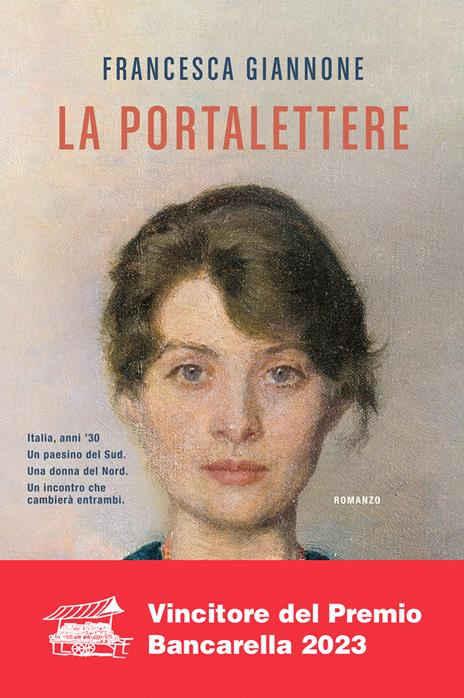
Important and growing is the role of municipal libraries: the 93,000 members, up 4% in 2025, carried out just under a million physical loans (987,651) over the twelve months. The three most borrowed books in 2025 from the Milano Library System were The Postwoman by Francesca Giannone (Nord, published January 2023), Changing the Water for the Flowers by Valérie Perrin (e/o, published July 2019), The Chestnut of the Hundred Horses by Cristina Cassar Scalia (Einaudi, published June 2024). The Postwoman, by the way, had also been the most borrowed book in 2024. Here is the complete ranking.
Regarding the library stock, thanks to the Library Bonus, between the end of 2025 and the first months of 2026 16,639 printed copies were purchased in local bookshops, for a total expenditure of 296 thousand euros; in addition, the libraries bought 3,385 eBooks, for a total expenditure of 32 thousand euros.

What is a public library today? What value does it have and for whom? The social report of the Milan Library System
Talking about libraries, the suggestion is to read the 2025 social report of the Milan Library System, which starts from questions such as: what is a public library today? What value does it have and for whom? And further: beyond the number of memberships, loans, and other objective and measurable data, is it possible to account for the library’s impact on people’s quality of life, on the community, and on the entire city? These are questions the local library system has posed and has asked to those who use the libraries, through interviews, focus groups, and surveys. From these inquiries arose an analysis, carried out in collaboration with the cultural transformation agency cheFare, which combines library activity data with the results of qualitative and quantitative research conducted with staff and with the public.
In the report, among other things, it discusses the position of libraries, between cultural and social dimensions, the library as a space “an open, democratic, and inclusive public space,” and its ability to respond to new questions from citizens; and again, the benefits generated, including social cohesion, shared well-being, equitable access to information and culture, and both individual and collective growth.
The “Milano model,” also made of “attention to the social value of the cultural proposal”
Returning to the meeting, AIE president Innocenzo Cipolletta stressed: “The AIE Observatory, now in its sixth edition, confirms Milan’s central role in Italy’s cultural industry: the figure of more than one hundred events per day reflects a broad offering that continues to grow over time. The rising library-user data also testifies that the ‘Milano model’ is built on an attention to the social value of the cultural offering, which must be accessible to everyone. Publishers, libraries, booksellers, and the entire book supply chain in this city work particularly well together, to the benefit of all actors and of the entire urban fabric.”
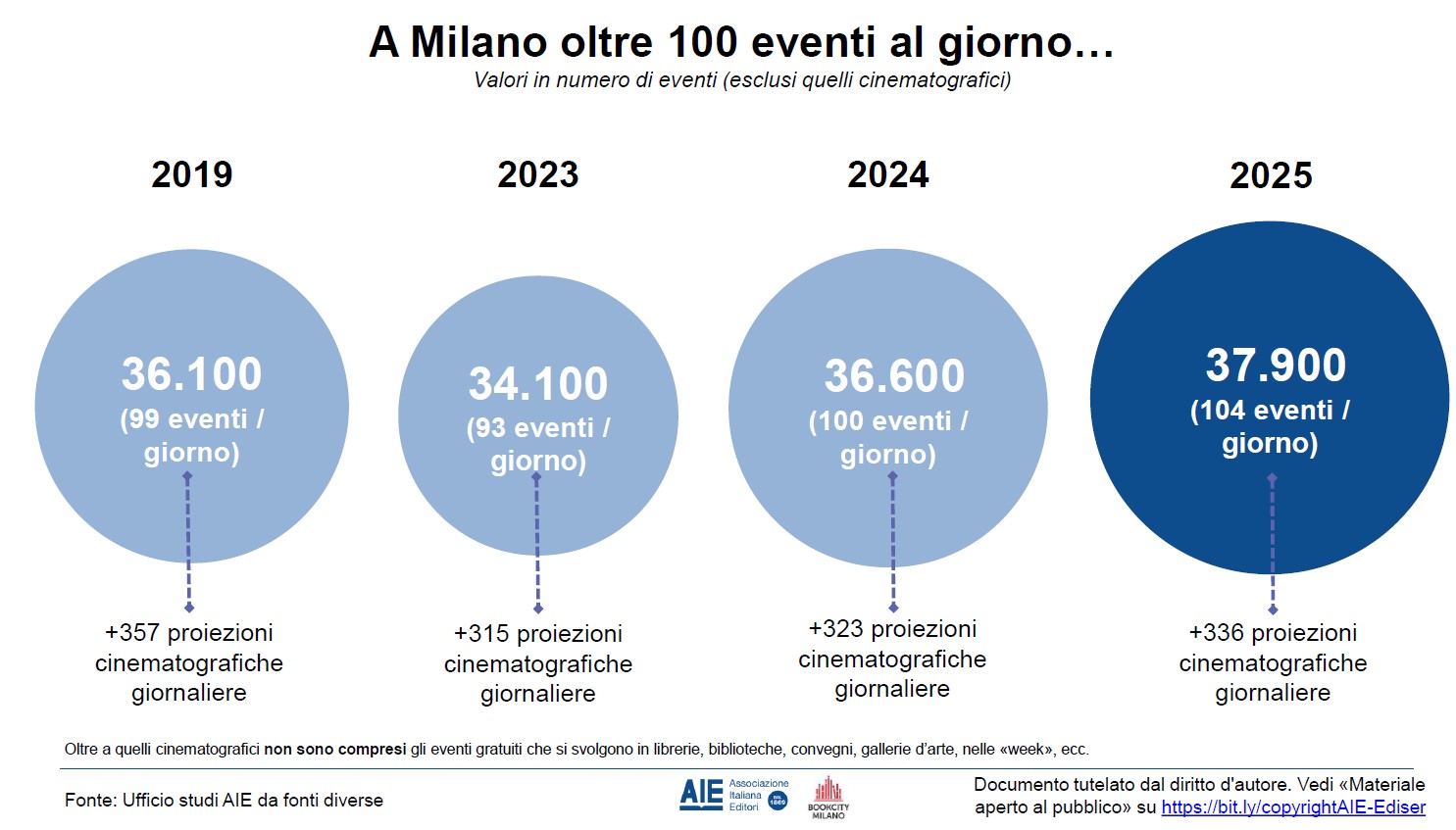
“The data from the AIE Observatory tell of a Milan in which culture is not an accessory, but a strategic resource for the city and its economy,” commented Milan’s Culture Councillor Sacchi, and he added: “Over a hundred participation opportunities per day, 6.3 million museum visitors per year, and one book out of ten sold in Italy purchased in Milan confirm the strength of this system. I also want to highlight the growth of libraries: 93,000 members and almost a million loans show that they are essential hubs of knowledge, participation, and sociality. Our responsibility is to consolidate this network, invest in cultural venues, and bring increasingly accessible opportunities to all neighborhoods.”
“The data on Milan’s cultural consumption in 2025 confirm the city as one of the capitals of literature, not only Italian,” stated the Board of Directors of the BookCity Milano Foundation, adding: “A city that, with the new BEIC, can boast an absolute record of 53,000 square meters of space dedicated to libraries — not only places for reading, as the wonderful neighborhood libraries also demonstrate — but spaces for cohesion, dialogue, hope, and redemption.”