We can “know everything.” All we need to do is type, even in a rough, unfocused way, an idea, a tiny request, a doubt, and we will discover whatever we want. It’s easy, within reach, all the time. Perhaps that’s why the things we learn seem to become less sturdy. Or perhaps because the things to know keep increasing continuously and we don’t manage to hold on to one before another arrives.
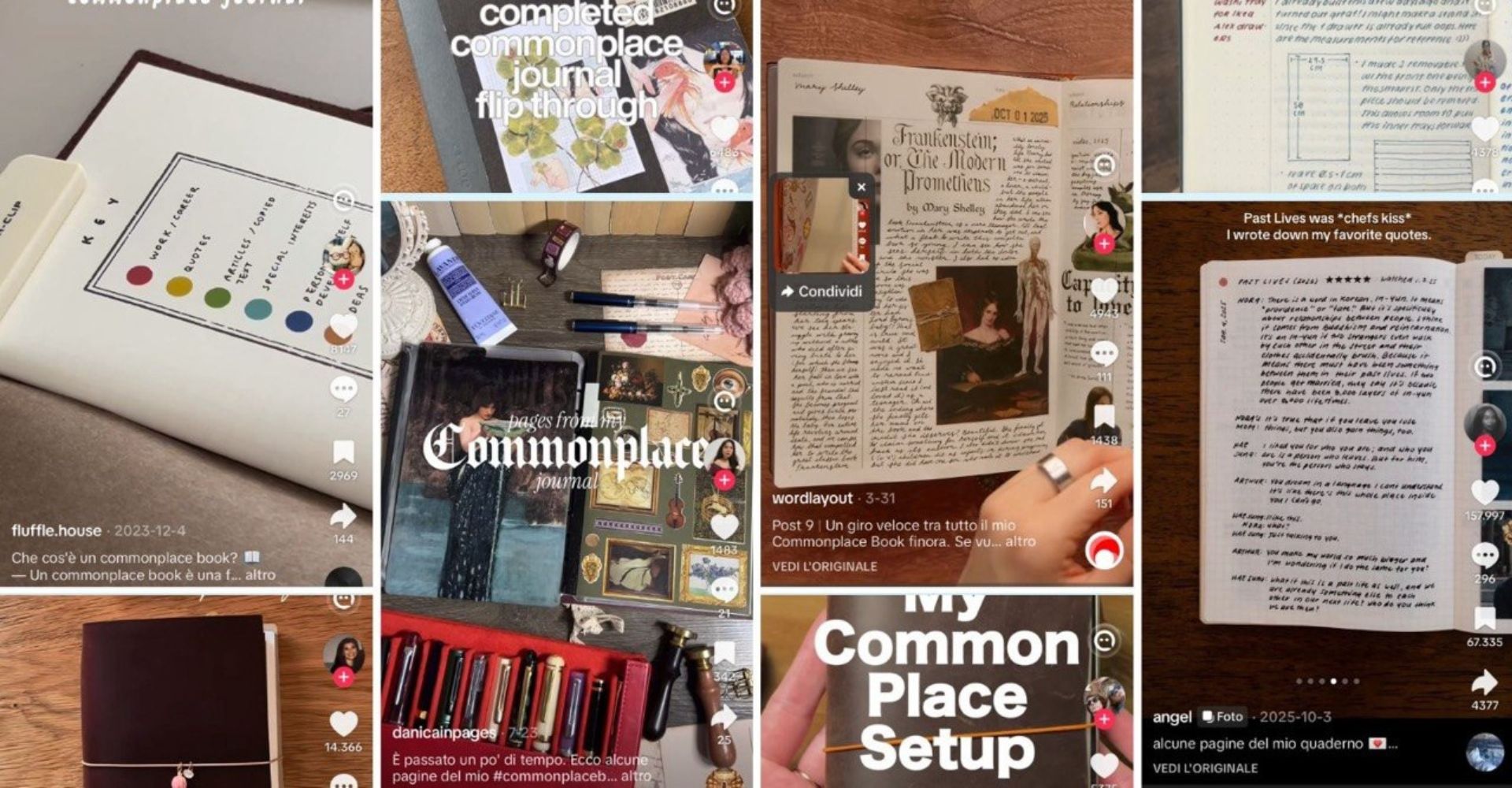
Yet, precisely on social media, where information flows rapidly and curiosities are consumed in the time of a video, a trend has spread that seems to go in the opposite direction: the “commonplace book.”
Commonplace book: what are they?
They are personal notebooks in which to collect notes, passages from books, ideas, observations about a show we’ve attended, or reflections on a film we’ve seen.
A kind of archive of thought, a place to preserve what strikes us and that we don’t want to let slip away. Not necessarily a diary, nor a school notebook, but rather a space to bring together things that, at first glance, seem to have nothing in common, and begin to build connections.
The practice has a long history, predating TikTok and Instagram by centuries: writers, philosophers and scholars have used for generations notebooks and collections of extracts to accompany their intellectual work. Today, however, the commonplace book seems to have found a new life online as well, among videos that show handwritten pages, notebooks full of annotations, underlined quotations, and more or less elaborate organizational systems. Some use it to gather what they read, some to delve into a topic and some convert it into a kind of personal encyclopedia, to be built up a little at a time.
Studying does not simply mean accumulating knowledge
Beyond the usual aesthetics – colored pens, Post-it notes, neat calligraphy, pages that look as if they came from another era – the phenomenon tells how, in a digital environment designed to capture our attention and move us quickly from one content to another, the desire to pause and digest information arises, to make it ours, to understand where to place it. A trend that also sits within the line of videos gathered under the hashtag #EducateYourself, where people share moments of study and deeper exploration, showing how it’s possible to cultivate interests and broaden one’s knowledge even outside school and university contexts.
It isn’t guaranteed that behind every notebook there is a conscious reaction to the superficiality of social media. It would be too simple (and probably also incorrect) to read the phenomenon as a confrontation between a frivolous digital world and a virtuous analog one: even a thirty-second video can spark genuine curiosity, just as a perfectly organized notebook can remain a performative exercise. But the question remains: why do we feel the need to study even when we don’t have to pass an exam, obtain a degree, or prove something to someone? What does it represent, and how important is it for our identity?
Perhaps it’s because studying means not only accumulating facts, but acquiring tools to interpret what surrounds us. A single news item can tell us little; a news item connected to history, politics, economics, or culture can open up different perspectives. For this reason, reading offers us a time and depth that we don’t always find in the daily stream of information, helping us begin a personal journey, made of widening interests, questions that generate further questions, and books that lead to books.
Where to begin: 10 books to broaden your outlook
We have therefore prepared a selection of books to read for those who want to enrich their cultural baggage – a list that does not pretend to be a study program nor, naturally, an exhaustive list of indispensable titles. It is a collection of possible starting points, spanning classics and contemporary essays that cross philosophy, physics, anthropology, narrative, politics, conflicts and economics. Different titles for different topics and approaches, united by the ability to open a window onto something we thought we already knew, or onto a territory we had not yet explored.
The Work of Art in the Age of Its Mechanical Reproduction

We begin with a famous essay, a work published in the 1930s, still useful today for reflecting on our relationship with images: The Work of Art in the Age of Its Mechanical Reproduction (Einaudi, translated by Enrico Filippini) by Walter Benjamin is a foundational text, exploring how the possibility of technically reproducing a work — through photography and cinema, for example, but also through digital media — transforms its status, perception, and public role. It is not merely a reflection on new artistic forms; it is also a way to consider how media tools alter our relationship with images and with culture.
Seven Brief Lessons on Physics
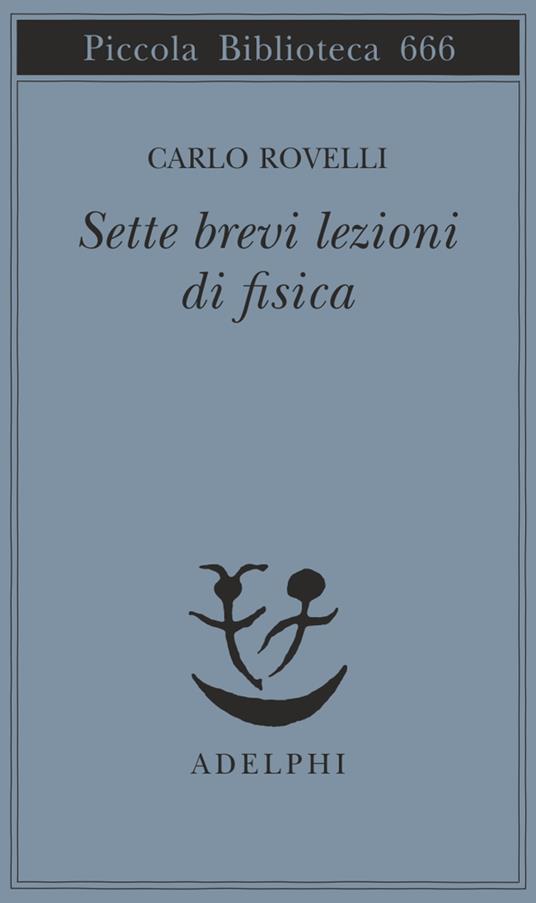
From reflections on culture and media, we move to existential questions about the universe. In the long-selling Seven Brief Lessons on Physics (Adelphi), Carlo Rovelli guides readers through some of the ideas that have revolutionized contemporary physics, from general relativity to quantum mechanics, to the mysteries of time and open questions about the structure of the cosmos. His book is short and accessible, not shying away from complexity but attempting to render it approachable, showing how fascinating the boundary between what we know and what we still do not know can be.
Arms, Steel, and Diseases – A Short History of the World in the Last 13,000 Years
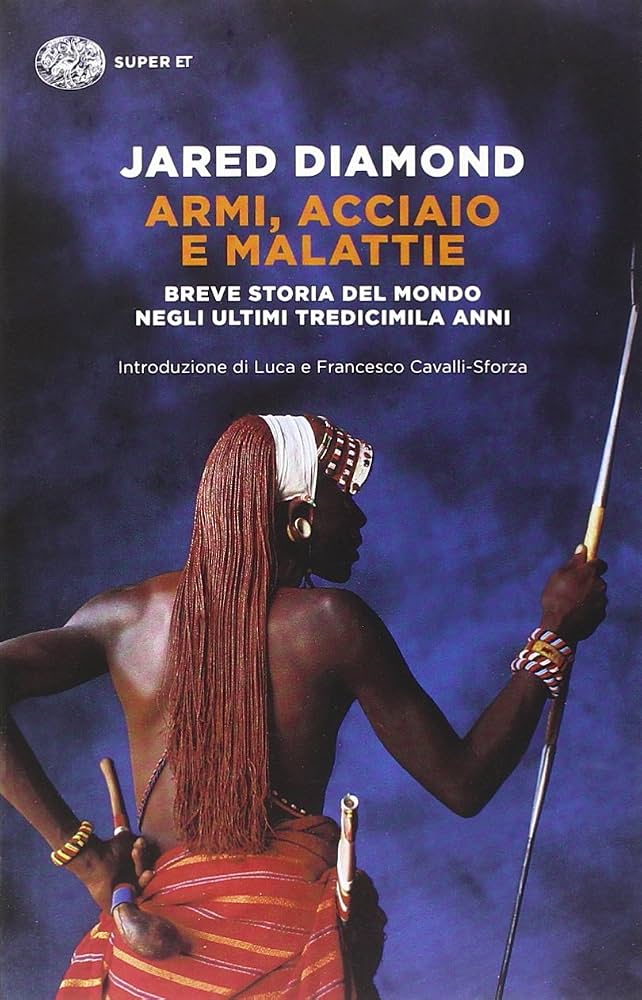
If, instead, we want to read about how human societies have developed in such different ways, a classic in popular science is Guns, Germs, and Steel – The Fates of Human Societies (Einaudi, translated by Luigi Civalleri) by Jared Diamond. The author tackles an ambitious question: why did some peoples conquer and dominate others? To answer it, he weaves geography, ecology, history, archaeology, linguistics and biology, exploring the role of environmental conditions and resources in the development of civilizations. The book offers a broad perspective on the historical inequalities among societies and invites us to question simplistic explanations, especially those that attribute the dominance of certain peoples to purported innate qualities.
The World of Sophie
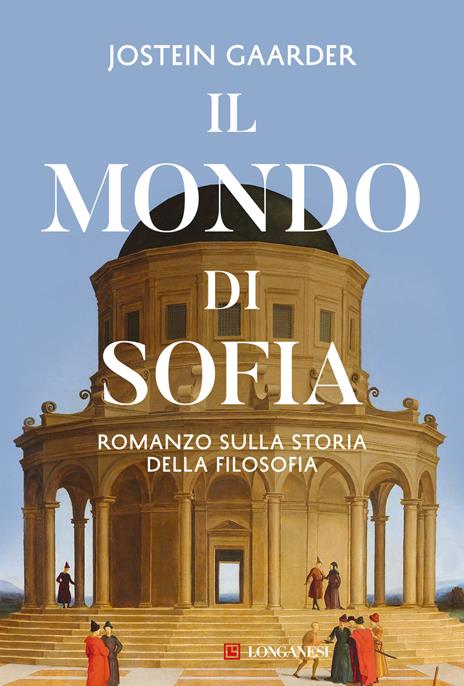
For those who want to approach philosophy without starting from a manual, The World of Sophie (Longanesi, translated by Margherita Podestà Heir) by Jostein Gaarder is a narrative gateway. Sophie Amundsen is a girl who begins to receive letters containing questions about life, about identity and existence, followed by lessons from an enigmatic philosopher, Alberto Knox. What seems like a mystery becomes a journey through the history of Western thought, from antiquity to modern philosophers. The novel presents philosophy as an activity far from abstract: a way to question what we take for granted and to return to questions that, as we grow, we risk stopping asking.
The Dark Side of Stories
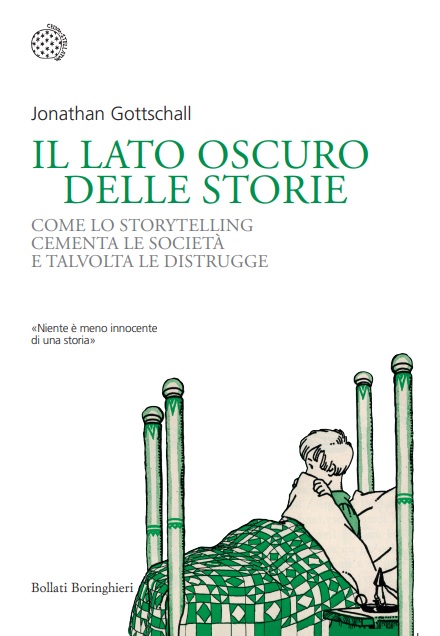
The stories we tell ourselves are another fundamental tool for reading reality. Not only those we find in novels, but also those through which we make sense of events, build collective identities, and decide who to regard as friend or foe. In The Dark Side of Stories (Bollati Boringhieri, translated by Giuliana Olivero) Jonathan Gottschall asks: why do humans need to tell stories? Stories help us imagine other lives, share values, and form bonds, but they can also become instruments of manipulation. Gottschall traverses psychology, neuroscience, communication and literature to show how narratives influence the way we think and interpret events. Propaganda, conspiracy theories and misinformation thrive precisely because they offer simple narratives capable of turning a complex reality into a tale with heroes, culprits and enemies. A useful book to remind us that it’s not enough to ask whether a story is gripping: one must also understand what it invites us to believe.
The Hero with a Thousand Faces
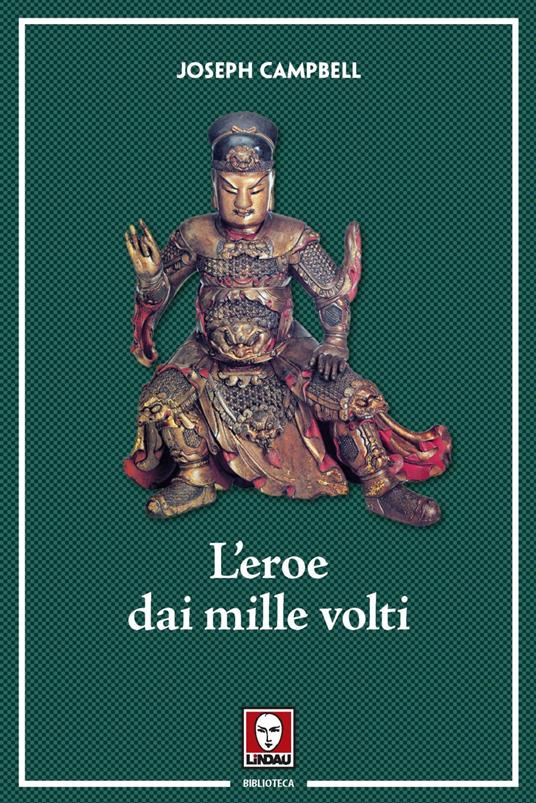
The need for stories, after all, is part of human nature itself. The Hero with a Thousand Faces (Lindau, translated by Franca Piazza) by Joseph Campbell is a classic of myth studies that explores the similarities among tales from different cultures and eras. Through legends and heroic figures, Campbell identifies recurring structures and presents a reading of the hero’s journey as a path of transformation. His approach, also influenced by Jungian psychology, has had a major impact on popular culture and on the writing of stories, from cinema to literature. It’s a book to start with to discover how certain narratives are rooted in our imagination and how ancient motifs keep resurfacing in the stories we love.
How Do We Get Out of This?
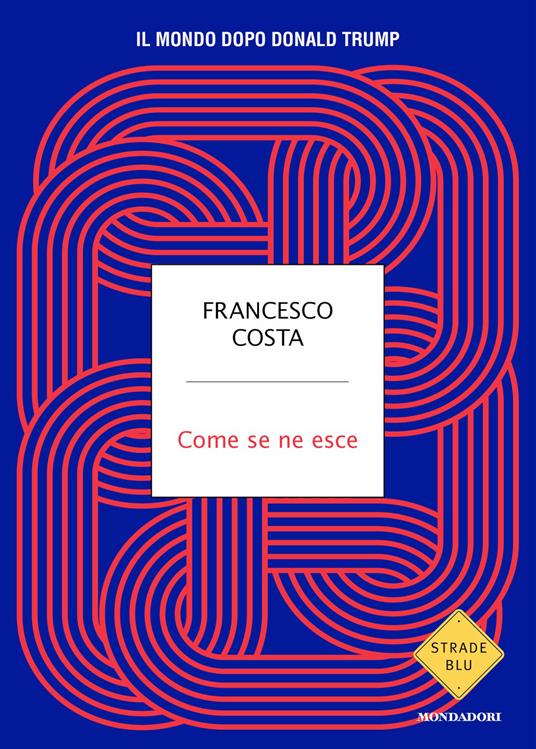
And now we shift the recommended titles’ type: from the great collective stories to those that try to explain the present political moment. In How Do We Get Out of This? (Mondadori), Francesco Costa confronts the crisis of Western democracies and the conditions that have fostered growing distrust in institutions. The centrality of figures such as Donald Trump, the author suggests, cannot be understood by treating them as isolated anomalies: we must look at economic and social problems, the feeling of insecurity, and the difficulty of politics in offering answers. In his journey from the United States, the journalist also seeks experiences and communities that try to rebuild trust and participation by addressing real problems (and proposing solutions).
Children of Hate
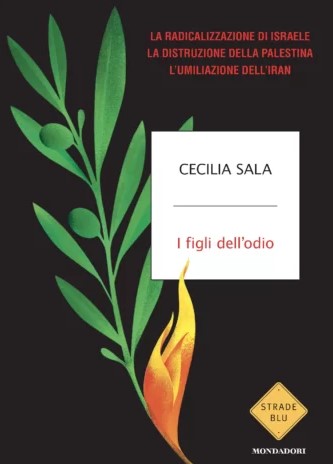
To read the frictions of international politics, we also recommend The Children of Hate (Mondadori) by Cecilia Sala, a book in which the journalist and podcaster traverses some of the most painful fractures of the contemporary Middle East, recounting the experiences of young Israelis, Palestinians and Iranians. From radicalization in Israel to the destruction of Palestine, up to the role of Iran and the transformations of the region, the book seeks to convey the region’s complexity, often told through opposing factions and repetitive news formulas. The reportage does not replace the study of history and geopolitics, but it can be a starting point for approaching conflicts through the voices and lives of those who experience them.
Utero
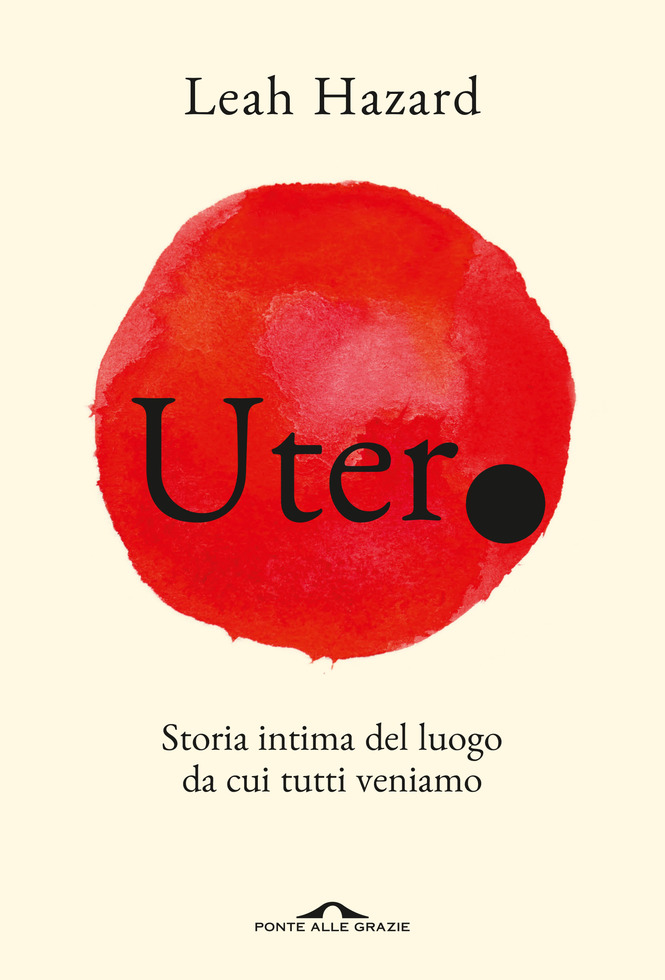
We take another turn and move to another field altogether. Among feminist books and essays, Utero by Leah Hazard has a distinctly singular approach because it unfolds entirely around this organ, asking what it does when it is not involved in pregnancy or childbirth. Scientific studies and testimonies form the basis that allows the author to retrace what we know about the uterus and how medical research, cultural beliefs and expectations surrounding femininity have shaped its understanding. The book tackles topics such as the menstrual cycle, conception, pregnancy, and menopause, showing how the female body has long been told through stereotypes or primarily observed in relation to motherhood.
24 Words to Understand the Economy
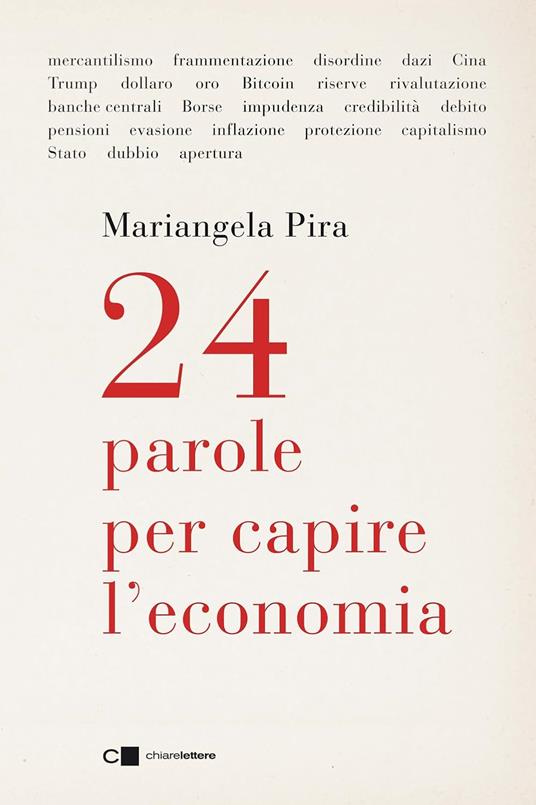
Another language that often seems opaque but directly affects our lives is that of economics. Interest rates, inflation, markets, tariffs and public debt appear in the news every day, not always accompanied by the explanations needed to understand their consequences. In 24 Words to Understand the Economy (Chiarelettere), journalist Mariangela Pira builds an accessible guide to finance and to geopolitical economics, organized around keywords that help navigate concepts and events. The aim is to make the mechanisms that influence political decisions, markets, and even everyday choices more understandable, in a context where economic uncertainty has become part of our experience.