I’m thirty-six years old, and for some time now I’ve been on the other side. I don’t know exactly when or how it happened. But I do know I can’t pretend it isn’t true anymore. Of course. I still retain a sliver of modesty when I say it out loud. If I happen to tackle the topic I end up producing a sequence of clumsy, populist premises. Let me be clear, please, let’s not kid ourselves, I’m aware that generalizations are the ultimate evil. That every person is an individual in their own right. That our parents had similar thoughts about us and, look, look at the beautiful world they’ve left us.
But
Deep down, when I fight my way through heaps of overstructures and proprieties, I think my generation is a little… better than the others. I know, I know. But trust me. Give me one more moment.
Question of Generations…
Since my generation is better than the others (and two more) when asked, “Why, in your view, do millennials feel more than later generations the theme of returning and facing the past?” I instinctively approached the question in terms of a generational gap. I sat down in front of the computer and knocked out a half-page that was fairly weak but argued, in broad strokes, this: millennials are the last generation tied to the physicality of places. To the soccer fields. To the basketball courts. To the stages. By contrast, today’s young people were born and raised in a globally interconnected reality, so they are no longer able to distinguish between real and digital. I even came up with a punchy line: the new generations have an infinity of places in which to be and no place to return to. I concluded by stating that it’s evident that for them, for those guys, for the youngsters, the literature of return has no reason to exist anymore.
It’s a thesis that, despite the somewhat biased premise, seemed to me to have an internal logic and which, indeed, even as I prepared to deny it, I decided to recycle here as well.
(There was also a second version phrased in more humanistic terms: the new generations have an infinity of people to know, and no one to return to. But I preferred the other one.)
Satisfying the atavistic need of human beings to belong to a tribe
The more I reread that half-page, the more I realized that something didn’t add up. That, digging deeper, beneath the legitimate acrimony toward teenagers who boast about not loving Harry Potter (which, by the way, is a classic Slytherin attitude), I don’t really believe it. That perhaps the distinction between generations is more than anything a convenient way to satisfy the age-old human need to belong to a tribe. And nothing else.
I think today, just as yesterday, the concept of return is a strictly material matter. Tied to the reality that the five senses can experience. To the physicality of places. The existence of an ether in which potentially unlimited information spreads at the speed of light can modify its shades, alter its context, expand its playing field, but not change its substance.
The Beta Generation
The reasoning was starting to strand itself a bit more convincingly now. But I wasn’t yet fully persuaded. I sat there in front of the computer, trying to understand how to disagree with myself, and I found myself thinking of my grandson. Truth is I think of him often. It’s probably a thing you do as an uncle. Nicolò is exactly one year old. I googled it. He belongs to the Beta generation. I started imagining what his world would be like when he’s grown. When he’ll be my age. It’s hard for me. Strange, banal thoughts come to me—ones you realize come from someone who grew up watching the Jetsons. I wonder if there will finally be flying cars. Teleportation. If he’ll have a chip implanted in his brain. If he’ll use it to turn on, say, the blender. If blenders will still exist. I wonder if he’ll display on a shelf the Mac I’m writing on right now, as a relic of a far-off era.
And despite everything, despite flying cars and telepathic blenders, I’m convinced that sooner or later Nic will also feel the desire to return. To return to his grandparents’ house. To the room on the first floor where he learned to crawl. To the little room where he chased Lin trying to catch her tail. Or to the backyard. Where he spent hours watching his grandfather draw a bow, laughing heartily, for reasons unknown. To hold in his hands the thick woolen cap his grandmother had knitted for him even before he was born. And I am also convinced that he will feel nostalgia for places that exist only in his mind. The room where he will learn to walk. The one where he will first see Santa Claus. The kitchen where he will taste chocolate cake for the first time. And then, later, the road where he will learn to ride a bike. Or the playground where he will meet his first girlfriend (or boyfriend; it’s still early to make predictions).
In him, as in all of us, the uncontrollable desire to return will take root. And perhaps, why not, the desire to write about it as well.

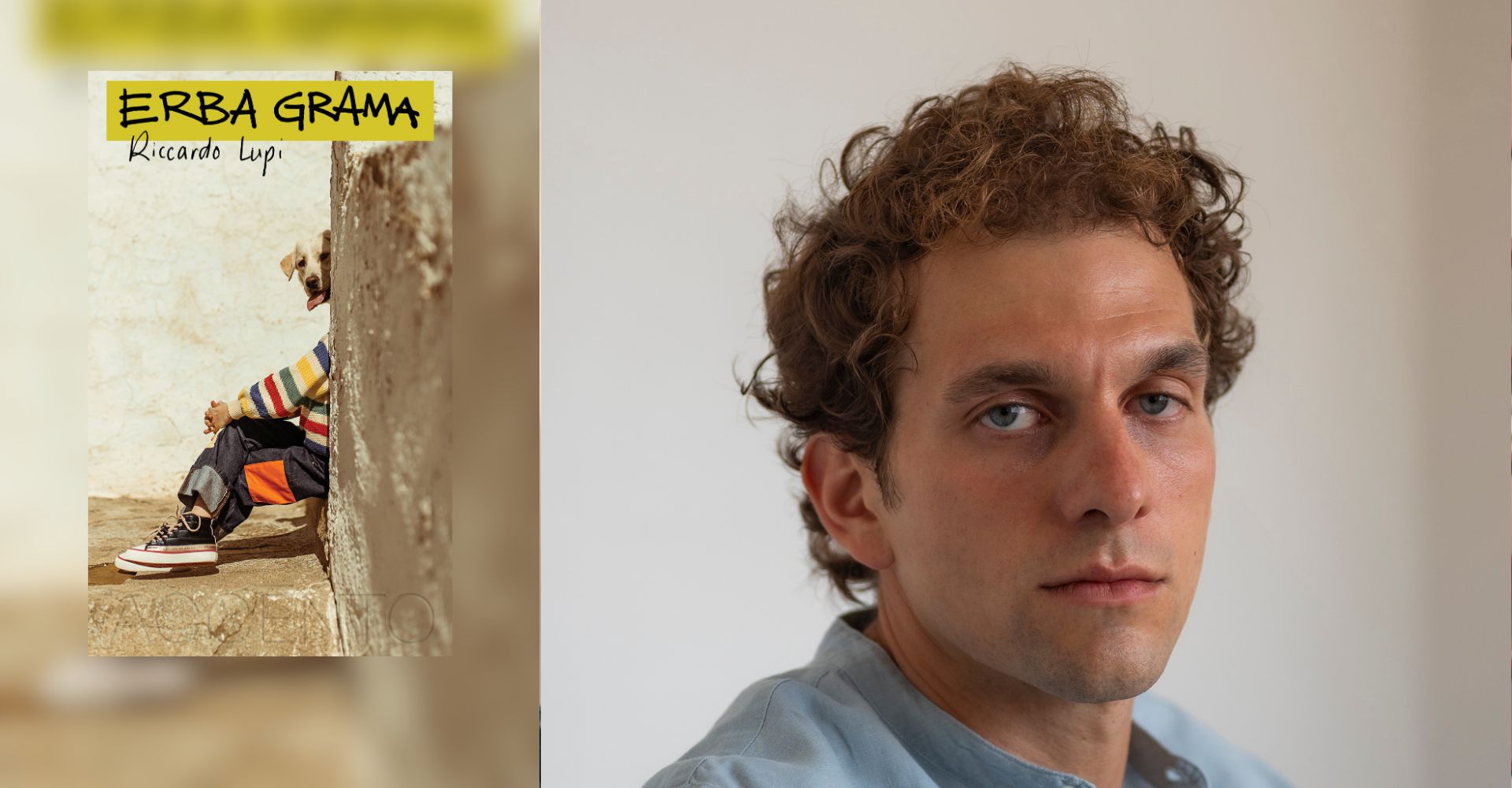
L’AUTORE E IL LIBRO – Riccardo Lupi, classe ’91, è originario di Pavia. A otto anni scrive dei racconti, per poi prendersi una pausa di circa 20 anni della scrittura. Dopo la laurea in Odontoiatria, riprende a scrivere nel 2021.
Erba Grama è il suo romanzo d’esordio, ed è edito da Accento. Il protagonista è Jacopo, un professionista di successo: è dentista in un prestigioso studio cittadino. Ma, se in superfice si presenta come un uomo brillante con una vivace vita sociale, nella penombra si cela una pericolosa tendenza autodistruttiva, tra sesso casuale, alcol e droga. Ma interrompere questo ciclo arriva l’annuncio della morte della madre, che lo costringe a tornare al paese d’origine. Ad attenderlo sua sorella Selene, con cui non parla da mesi, che ha una grossa novità da rivelargli. E poi, soprattutto, la fantasma di un’infanzia ingombrante, che per oltre 20 anni ha provato a seppellire.
Erba Grama è una storia di formazione “distorta e compromessa”, in cui il protagonista nasconde dietro un’ironia cinica e una vita dissoluta gli scheletri e i peccati di famiglia, tra le crisi depressive della madre, i maldestri tentativi di affrontarle del padre e, soprattutto, la presenza disturbante di zia Conny.