
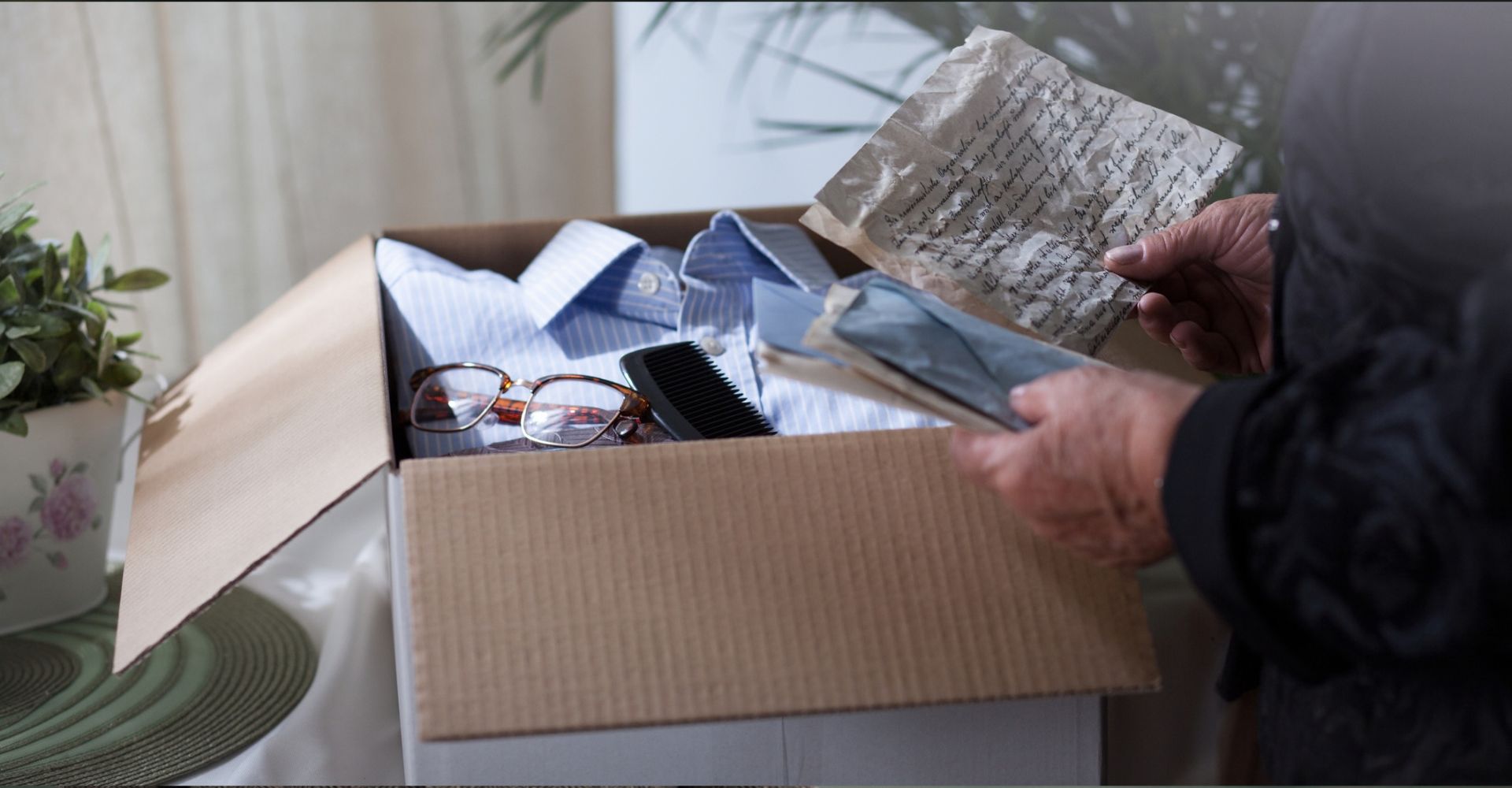
There is a moment, after the death of a parent, when one must cope not only with the emotional burden that erupts within us, but also with the more practical aspects related to the passing of someone so close.
As the grief and awareness gradually make space and one learns little by little to live with it, there is a need to confront the urge to put things in order, to arrange and, where necessary, to discard. Metaphorically and concretely.
Analyzing the Loss of Parents from Personal Experience
How I emptied my parents’ house, published by Saggiatore in Edda Melon’s translation, captures the delicacy of this moment: Lydia Flem, drawing on her own personal experience, narrates and deepens the emotions that inhabit these instants, in a mix of anger, oppression, endless sorrow, unreality, revolt, remorse, and a strange freedom.

The weight of the loss is thus joined by the task of managing a material inheritance, and one finds oneself compelled to touch their memories and documents, to open drawers, to empty the wardrobes of objects that had filled them for decades.
In this edition, the preface is entrusted to Vittorio Lingiardi, a writer and psychoanalyst who reflects here on the intrinsic meaning of the verb “to empty,” on the house as not only a physical space but also— and above all— an emotional one, dwelling on the meaning of an operation that is “counterintuitive,” aimed at “emptying outward to make space inward.”
The Story of the Parents’ Lives
The author, a photographer and psychoanalyst expert in Freudian theories, brings in this book the story of her father, asking how he himself experienced the grief of losing his parents; he who, arrested at 18 in Belgium because he was Russian, was a prisoner in the labor camp Wülzburg, from 1942 until the end of the war; he who, “once liberated, perhaps never left completely that refuge, that inner prison, which had saved him but which had stuck to his skin.”
And then his mother, who passed away shortly after him, herself deported as a girl during World War II, to Auschwitz, and who had written (and kept) a note on which she had scribbled a few words for her loved ones, to reassure them about her fate.
Flem, relying on the hypothesis that even Freud—if he had not lost his mother so young as happened to him at 9 years old—would have spoken of this “difficult and yet liberating work of emptiness,” offers her own reading, bringing her own experience between the pages and celebrating her parents, for what they were first and foremost in life.
Dispersing the objects they had loved, chosen with care or accumulated by chance, kept out of habit or because “you can never know,” wished as signals to keep life on track, tucked inside the pockets of oblivion or protected from the decay of time to testify to their existence… Did I have the right to do so? How could I not feel guilty when I invaded their privacy, entered their room without knocking, revealed their little or large obsessions, their eccentricities, their wounds, broke into aspects of their personality that they themselves perhaps did not even glimpse and that now appeared unpunished to my gaze? And that always implicit question: were there family secrets? What was I about to discover that I would want or not want to learn? Would I dare open all the drawers, read all the papers, scrutinize the gaps, or would I modestly withdraw from some things, stuff them into a bag or box without violating them, or throw away or burn them so as to know nothing?
How to consent to the wrongdoing of such an indiscretion, which struck at old desires buried in early childhood: eavesdropping at doors, peering through the keyhole, listening to the sounds in the bedroom, quenching a curiosity that had always been forbidden yet legitimate: what was the date of my birth? From what loves was I born? From what survival desire? Which unconscious traces had my parents transmitted to me, without their knowing?
From what unimaginable maternal and paternal line had I emerged? How to inscribe myself in a lineage laden with mortals vanishing in smoke, with families massacred in total impunity? How to be the daughter of orphaned parents, slaves put to work, humans stripped from the human race, reduced for so long to silence by the world’s deafening quiet? How to inherit from parents who had made me a barrier against horror, not so much a daughter but a bulwark?
To this inexpressible past, to this succession of traumas experienced before my birth, what could I oppose other than the stubborn, wandering search for lost words? To become their “free” heir, I had to break the absoluteness of a silence that had held me hostage for so long. Writing became an urgent task.
Through the processing of language, the unspeakable part of their past would no longer prevent me from living my life, separate from theirs. I would no longer be the passive enclosure of their distress and muteness, but the active heir of my lineage. “What you have inherited from your fathers, reclaim it if you truly want to possess it.”
Returning from their home, laden with a quantity of bags, suitcases, archives, and with a lamp that my father had designed and built in the seventies, I sat down at the desk and jotted down a few notes on the fly, in a kind of excitement that acted as a barrier to the multiple feelings that overwhelmed me. Feelings difficult to articulate aloud: a mix of pain and release.
The death of my mother, so close to that of my father, made them both terribly present, obsessive. They occupied all my thoughts, all my actions. I did not stop mentally but also not far from it did I stop examining and delving into every aspect of my bond with them over the years. It was a concentrate of psychic exploration.
I reread some letters I had written to them. I opened up with a sincerity to which they had never echoed. That touching naïveté now unsettled me, I almost felt ashamed. I would have preferred not to recognize myself in that shameless mirror, in that illusion of transparency nourished for too long.
I had too many words toward my parents, who had too few for me. This disparity justified my writing, but it also sent me back to the vertigo of the solitude I had felt in their presence.
The shock that inhabited me was more intense because it was twice their own shock which they had not known how to face, process, digest, or transform, but at most had tried to avert, to keep at a distance. I had grown up without being able to lean on them, absorbing their anxieties and their nightmares. Nothing was ever said. And perhaps they never knew anything.
© il Saggiatore S.r.l., Milan 2026
(continues in bookstores…)
