There are seasons when we feel a desire to read love stories. And then there’s autumn, when suddenly all love stories seem to make more sense. It doesn’t take much: a rainy day, a cup of tea, a blanket on the sofa, a few colorful leaves outside the window. Perhaps a film you’ve already seen, one of those where we know exactly how it will end.
Autumn has something that makes romance almost inevitable, perhaps because it is a season of transition. Summer is over, winter hasn’t arrived yet, and we find ourselves in that in-between territory, in that middle ground where everything can change. The trees shed their leaves, the days shorten, we return to warm, enclosed spaces and rediscover small rituals we had forgotten during the brighter months. It is a season that speaks of transformation without turning it into a tragedy, and perhaps that is why it pairs so well with romance.
“Many romantic stories begin when something has already gone wrong”
If we think about it, many romantic stories begin when something has already gone wrong: a relationship that’s ended, a career interrupted, someone who had to leave their city, a failed project. In short, a character finds themselves suddenly forced to start over from zero, and we follow their vicissitudes with great interest because their difficulties are, after all, also ours.
Even before the romantic encounter, in romance there is almost always a small or large crisis, and it is here that autumn becomes a perfect metaphor: romance, like autumn, speaks of what we let go to make space for something we do not yet know. Perhaps this is one of the reasons we continue to love these stories so much: they don’t simply promise that we’ll find love; they tell us we can change our own life’s trajectory.
In summer we often dream of adventure…
The imagery of autumn romance also says a lot about what we seek in stories.
In summer we often dream of adventure: the sea, a vacation, a casual encounter, a place far from daily life. Autumn, on the other hand, brings us back home. And indeed, in romances set in this season, the same places keep returning: the small town, the cottage to be renovated, the pub, the library, the cafe, the neighborhood shop. There are fireplaces, just-baked cakes, walks in the rain, dogs too big to sit comfortably on the sofa, and people who seem to know everything about everyone.
Are they clichés? Certainly. But clichés become interesting when we ask ourselves why we keep desiring them. Perhaps because, in a world that continually asks us to hurry, the imagery of autumn romance offers a more concrete and slower fantasy of life, a life made of places where people know each other, of repeated rituals, of small gestures. And, above all, of something we risk losing in our daily lives: the possibility of belonging to a community. It’s no accident that many romances choose as the center of the story precisely a place where people meet: a bookstore, a pub, a shop, a restaurant. In my case, it’s a café.
The first step to feeling at home again
The Little Pumpkin Café is the heart of the small village where Ivy arrives. It’s the place where you drink coffee and tea, eat pastries, swap gossip, and, above all, meet people. Ivy arrives there knowing no one, then, slowly, she begins to get to know everyone. And perhaps this is exactly the first step toward feeling at home again.
When I imagined Ivy, I didn’t want her to set off in search of a man; I wanted her to leave because her life had just fallen apart. In a matter of hours she loses her job and her husband and finds herself without the anchors that had defined her existence. When she discovers she has inherited an old cottage in Norfolk from a distant relative, she makes a decision that, under normal circumstances, she probably would never have made: she leaves London and goes. The cottage is far from the perfect refuge she had imagined. It’s dilapidated, full of problems, decidedly unwelcoming, and the village is not exactly postcard-worthy either. But Ivy stays, finds a job at the Little Pumpkin Café, begins to build a new daily life and, almost without realizing it, starts meeting people she would never have met in her old life. Among them is Rupert. If you want to know how things will go between them, you’ll have to read the book.
Romance lets us talk about love without talking only about love
I believe one of the reasons romance remains so beloved is precisely this: it lets us talk about love without talking only about love. It speaks of loneliness, fear, failures, changes, family, friendship. It speaks of the moment when we realize that the life we had imagined for ourselves no longer exists and we must find the courage to invent another. And above all, it reminds us that a second chance does not have to resemble the first.
Ivy does not become the person she was before losing everything; she becomes someone else. Perhaps someone more aware of what she wants, perhaps more capable of choosing, perhaps simply freer to imagine a different life. And it is here that, for me, autumn and romance really meet. Autumn teaches us that letting go is part of change, that trees can shed their leaves without stopping to be alive, that a season can end without meaning the end of the story. And romance does something very similar: it tells us that we can lose something and still find another path, and that we can arrive at a place we hadn’t chosen and discover that, perhaps, that is exactly where we were meant to be.
The Season of Second Chances
Besides, cinema has always drawn on autumnal settings. How could we not recall the autumn stroll in New York in When Harry Met Sally, or the protagonist’s delightful coat in You’ve Got Mail, but also the utterly romantic Autumn in New York.
I think these are the reasons we love autumn love stories so much. Not just for the red leaves, sweaters, rain, tea, and country cottages, but because, in the end, autumn is the season of second chances. And the romance we seek in books and films isn’t merely the promise of finding someone to love. It is, far more, the promise that even when our life suddenly changes direction, the story isn’t over yet.

Anything Can Happen at the Little Pumpkin Café

All Too Mysterious

All Too Secret

All Too Complicated

Love Is Never at First Sight
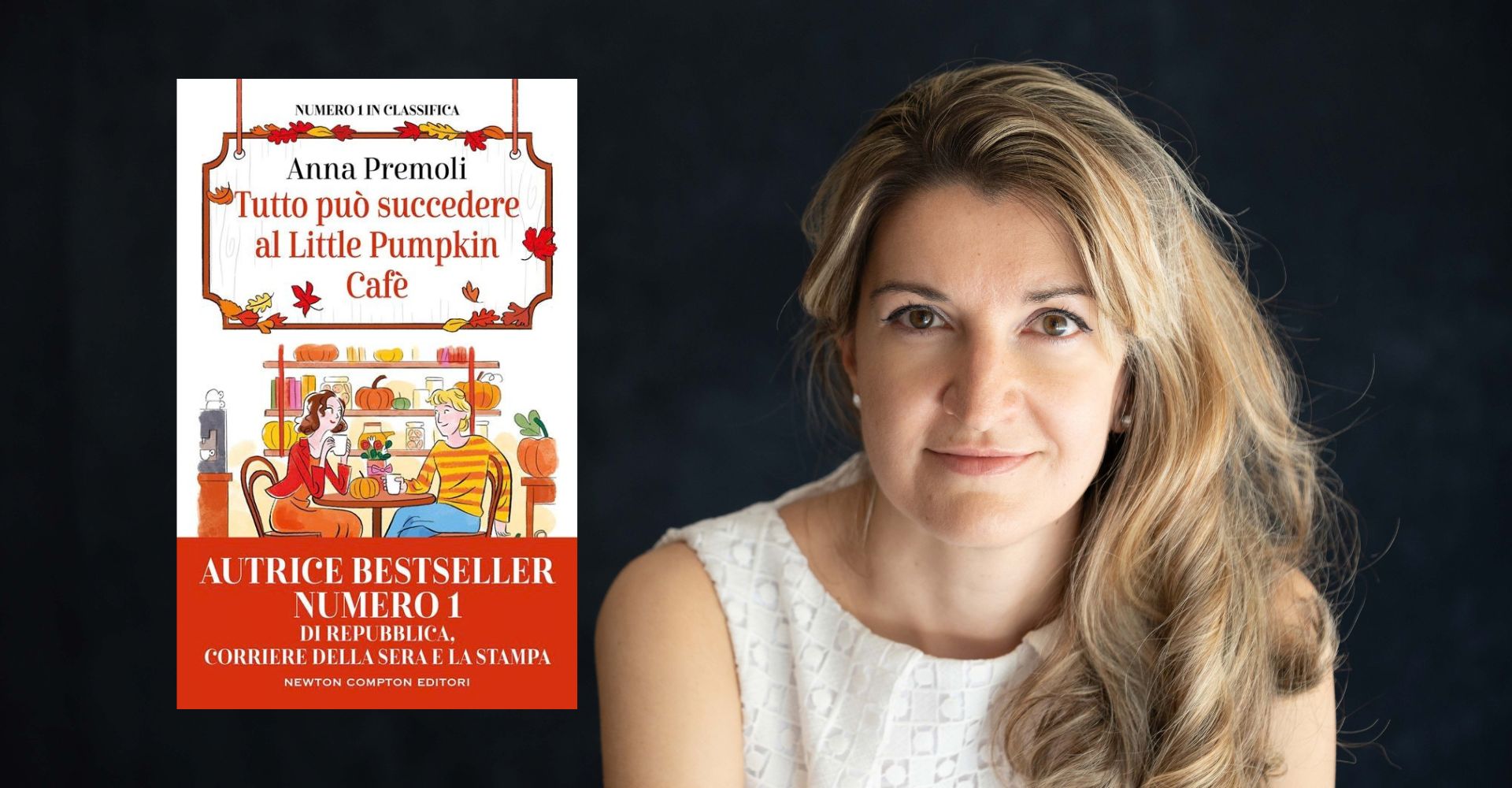
THE AUTHOR AND THE BOOK – Born in 1980 in Croatia, Anna Premoli (here are her articles on our site) lives in Milan, where she graduated from Bocconi. Her debut novel, Ti prego lasciati odiare (published by Newton Compton), spent months at the top of the charts and won the Bancarella Prize in 2013.
Prolific author of romance novels that have enjoyed great success, published in twelve countries and optioned for cinema, Premoli has published numerous titles for Newton Compton Editori, including In amore vince chi rischia, Ti odio ma ti amo di più, Tutto troppo complicato, L’amore non è mai a prima vista, Tutto troppo segreto and Tutto troppo misterioso.

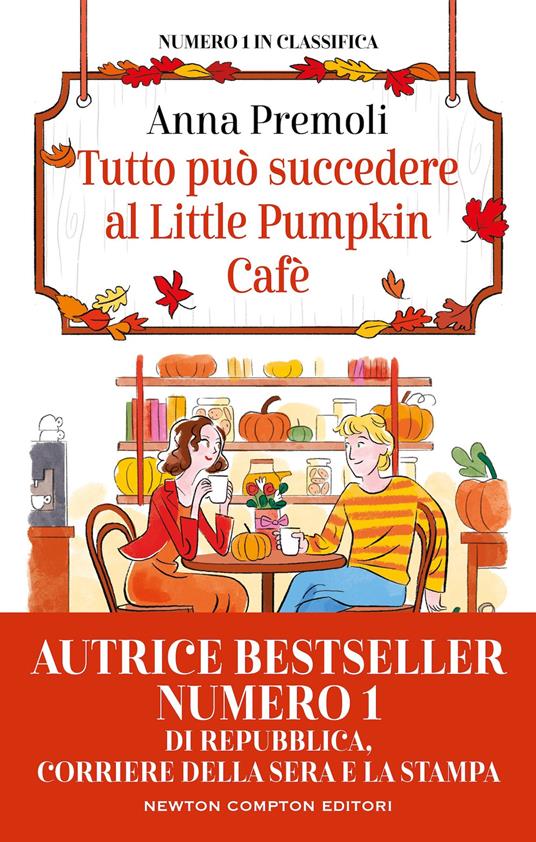
Tutto può succedere al Little Pumpkin Cafè is her new novel. Ivy, the protagonist, finds herself without anchors after losing her job and husband within a matter of hours. With the feeling that she has nothing left to lose, she sets off in search of a new life, moving from London to a old cottage in Norfolk, inherited from a distant relative.
Yet the desire for a quiet life is dashed against reality: the cottage is dilapidated and the small village that welcomes her seems to watch every step with a curiosity as discreet as it is constant. But, determined not to be knocked down, Ivy finds work at the Little Pumpkin Cafè, where she begins to weave her daily life and get to know the village community. And… Rupert: reserved, brusque and perpetually on the defensive. But behind his impermeable gaze lie wounds that time has never managed to heal. And as quarrels, misunderstandings and unexpected moments of complicity weave into their days, Ivy realises that Rupert is breaking down, piece by piece, all the barriers he had raised…