
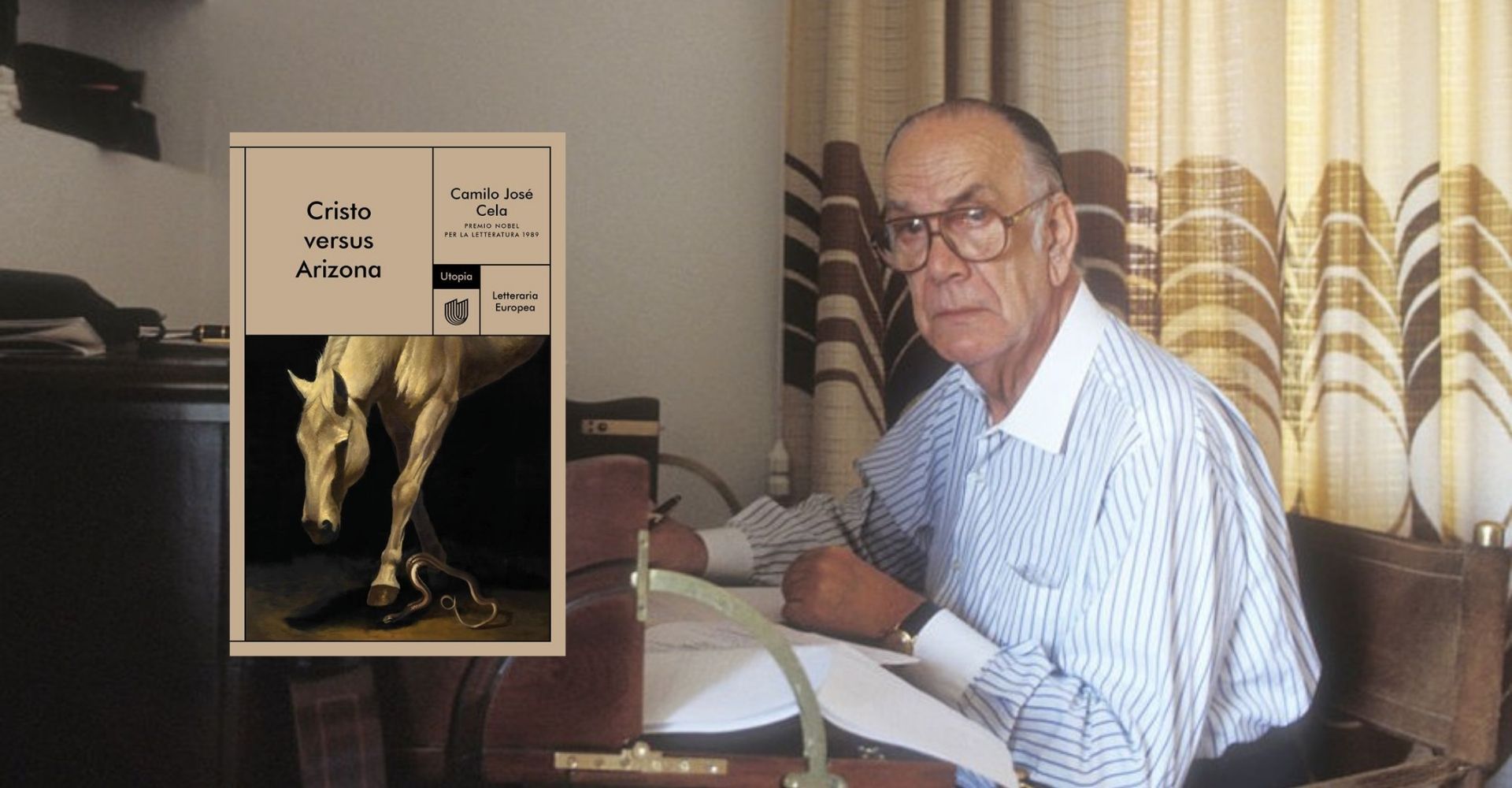
One year before the Nobel Prize of 1989, which unleashed a flurry of polemics, Camilo José Cela published one of his most complex and perhaps most controversial books, Christ versus Arizona: 200 pages in a modernist style that owes something more to William Faulkner than to Joyce; not a single firm point, only commas marking a kind of very long interior monologue (or, as narratologists distinguish, an interior monologue performed) where a character whose name is almost uncertain, Wendell Espana, speaks of himself, his memories, and the town of Tombstone (early 1900s), recalling among other things the famous duel at the O.K. Corral from about twenty years earlier, which later became a classic of American Western epic. He does so from the typical vantage point of the so‑called unreliable narrator: “I assure you I’m not telling lies, I’ve been left unsure of who I was, where I came from, that is, who my parents were until twenty, twenty‑two years old; my mother, who worked as a prostitute in Tombstone, recognized me.”

Christ is the metaphor of an impossible redemption in the face of nihilism and violence
The flow of words creates a kind of chaotic mosaic, where times and chronology leap, where the main episodes recur anaphorically in the narration, and violence and the grotesque dominate the tone of a litany of dust and blood. The dust is that of the Arizona, dust that kills.
Christ is the metaphor of an impossible redemption in the face of nihilism and violence, set in a context where, for instance, the narrator’s father (a scoundrel, naturally) is recalled killing a poor wretch for no reason, declaring that “there is no point in killing anyone, not even in dying, there is nothing or almost nothing worth it, neither killing nor dying, nor even raising one’s voice.” The victim, the “cholo” Zuro Millor – here the term is used with a note of strong disdain to denote a mestizo – is a poor fellow, sick, who spits blood and indulges in a sex doll; on his own he is no problem for anyone, but for everyone he is something despicable that must be erased from the world.
His senseless death returns cyclically in the pages, like a leitmotif, alongside others that would seem infinite and obsessive (after all the characters number around two hundred, among outlaws, prostitutes, drunks, hanged men, breeders, bullies, sexual maniacs, snake hunters, innkeepers and their wives, sheriffs of dubious integrity), such as the depictions of the O.K. Corral epic, here reduced to a blind shooting spree of a few moments in which once again people die by chance, and which can stand as a recurring example of his prose: “Half a minute or so, the aim, in which death danced its sinister can-can with ease; these stories of duels are always invented or at least they seem so, because no one can know the precise sequence of every instant, and hardly remember it; the challenge to the O.K. Corral is usually explained in the way Wyatt Earp, the Lion of Tombstone who was the last to die, told it, and no one could dispute him; to me it seems he sometimes added a bit of flour from his own sack or made up some details.” And these nicknames, he repeats in various passages about Earp’s life, up to his death from tuberculosis in a dingy hotel, are not earned by chance.
The poetics of “tremendismo”
We have arrived at the poetics that Cela named “tremendismo,” typical of a certain Spanish literature during the Franco dictatorship, centered on a grotesque narration of the dirtiest and most violent aspects of existence: a veiled form of opposition, and the curious thing is that the writer served the regime during the civil war, just as a censor. This and other aspects of his life—for instance, presenting himself, in his twenties, as a spy—emerged, of course, soon after, along with the Nobel prize.
A broad summary is offered by Hans Magnus Enzensberger in a portrait published posthumously within Artists of Survival (the translation by Einaudi is 2022, the German edition is 2018), which provides, within the framework of a constellation of other figures with similar traits, a decidedly unflattering portrait, making him a perfect example of the “survival artist” (Überlebenskünstler), a chameleon figure capable of navigating Francoist censorship and international success up to the Stockholm Prize. He was not the only one, as we know, of his generation; many others in Europe had similar stories and greater or lesser posthumous fortunes.
The controversial relationship with the Franco dictatorship
Cela could not, of course, reply, at least in that case: he died in 2002 without seeing, moreover, the end of a mundane plagiarism trial, which did not help his image. It should be said in his defense that the regime to which he had adhered in his youth had later sidelined him, for example by ruthlessly censoring him: his most famous novel, The Beehive, banned initially in Spain, appeared in Argentina in ’51 and cost the author his expulsion from the Asociación de la Prensa de Madrid and even a kind of ban from newspapers: he could not even be mentioned.
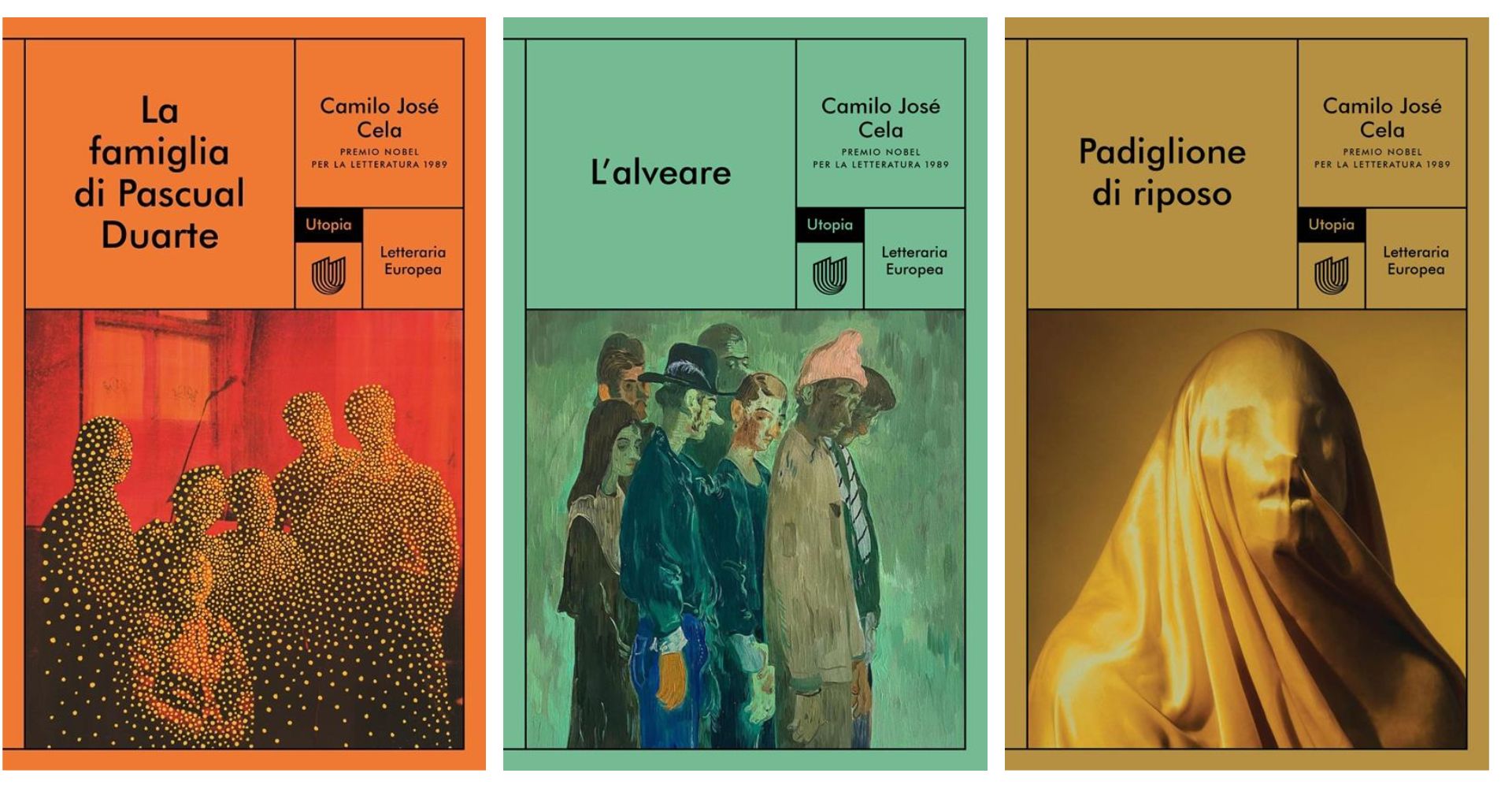
That did not prevent him, as detractors suggested, from “making money by the boatload.” He was indeed incredibly popular. The tremendo ism was sustained by a nearly always provocative public presence and, in his successful novels (for example The Family of Pasqual Duarte), by sturdy plots and dialogues with an effective, well‑calibrated impact. In Christ versus Arizona he seems almost to answer the desire to escape a cliché, to change everything, to challenge himself and readers with surprising writing — but also to take advantage of a new atmosphere of liberty, with the end of Francoism (in ’75).
The historical context of the old West, stripped of cinematic epic but also literary, becomes a universal mirror: and the American desert sets the stage for representing a constant historical theme, the unchanging brutality of human nature, both in late 19th‑century America and, it would seem, in 20th‑century Spain. Hence a novel that is almost apocalyptic, about the collapse of civilization and religion in the face of brutality but also the nihilism of the frontier, using all the techniques of modernism.
The question remains, or the doubt, whether his is a somewhat instrumental application, let us say, a cool one. But this ambivalence seems almost inherent to the author. Tremendously skilled, perhaps a little too Tremendous.
