
Red Goldfish
One summer night in 1987, in Tokyo, the writer Mayuzumi Madoka woke up and walked into the kitchen to drink some water. In the dimness of the living room she glimpsed the aquarium with the goldfish. They were still, their eyes wide open. I wonder if they dream, she asked herself. And if they imagined flying?
She recalled unemployed people she had once seen sitting on a sidewalk in Shibuya, among the neon lights. They might have enjoyed levitating through the air. Mayuzumi also thought of herself: she was twenty-five years old and, above all, dreamed of taking to the skies.
In 1994, in the book The Other Side of Summer (B men no natsu), the author inserted this poem: «At midnight the goldfish dream – / they are flying!». The original respects the constraints of the haiku, namely three lines of five, seven and five syllables: «tobu yume o / mitakute yoru no / kingyo tachi». The term kingyo, meaning “goldfish”, is a “seasonal word” that alludes to summer. Another rule, indeed, always requires a reference to the time of year.
Illuminations
Sometimes I think in haiku form.
Matsuo Bashō (1644-94): «on a barren branch a crow alights / autumn evening». There are no comments, metaphors, or moods suggested by the poet: simply, the writer lets the crow settle also in the reader’s mind.
Haiku enter and exit time. Here are two poets and one author born in the eighteenth century: «The rain falls / silently on the moss – / How many memories!» (Yosa Buson); «Even my father / looked at these mountains / in the long winter» (Kobayashi Issa); «The first snow – / what I write disappears / and is erased» (Fukuda Chiyo-ni).
All of this happens today, here, in the moment when the words live inside me.
Haiku compress the maximum of meaning into the minimum of space. For me, a novelist who tends to use more words than necessary, they are a good lesson. It seems that nothing happens: cicadas sing, a frog jumps into a pond, a man on horseback passes by, the moon reflects in a bowl of soup. A haiku grabs a fragment of everyday life and sheds light on it for the breath of a moment, before letting it flow together with everything else.
A Small Forbidden Thing
What do haiku evoke? Poetry, everyday life, brevity. And I, what do I do? I write, in prose, detective novels… you might say we are at opposite ends. Not only that: my books are set between Switzerland and Italy, while haiku originates from 17th-century Japan.
Could they be more distant?
Who knows, perhaps precisely for this reason I have always loved haiku.
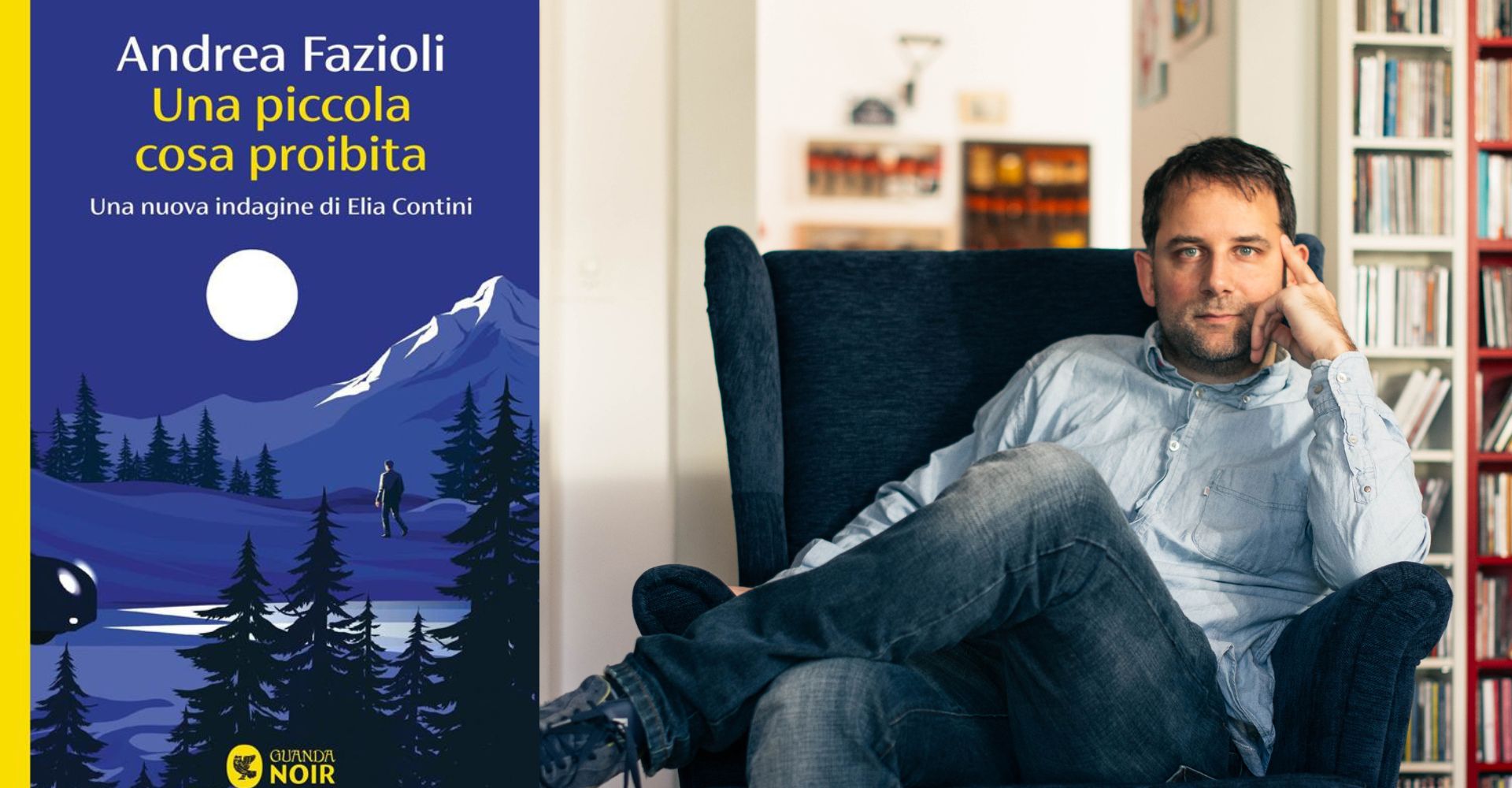
While writing A Small Forbidden Thing I tried to bring these lightning-fast appearances into the knots of a crime novel. After all, poetry is far too often seen as “a small forbidden thing,” a lazy deviation on the life of profit.
In my novel it will be the haiku that serves as the key to approaching the solution. But in a subdued, elegant way. Because those who seem most distant from the world, those who are small and lacking means, manage to grasp truths that elude the powerful.
Where Is That Boy?
I found resonances between the Swiss atmosphere and the Japanese one. Not only that, but I discovered that the short verses, with their reticence, with what is left unsaid, fit well within the mysteries of a detective story. Perhaps because haiku—as does crime fiction—does not theorize, does not get lost in chatter, “does not formulate but, swiftly, makes a leap toward the thing, a fusion with it, silence already within its words” (Yves Bonnefoy).
Apart from their Eastern origins, these poems confront Western restlessness: how to truly see the world, amid deceit and fake news? Haiku do not offer answers, but they speak to us. The poet Andrea Zanzotto used to say they are “glimpses through which something dazzling and at the same time affectionate filters; elastic cusps of something that must stay submerged, for us (and perhaps for everyone), yet we necessarily feel it as our own.”
As a young man, while preparing for my final exams, I kept haiku notes in a notebook. I rediscovered those notes. Some of them—attributed to a fictional character—found their way into the novel. Now I ask myself: where did that boy who struggled to study go? It’s me, but no longer me. And that is a good thing, because haiku teach us to quiet our ego, to step back and welcome, without clutter, the melancholy and beauty of the world.

Una piccola cosa proibita
Le strade oscure
Il commissario e la badante
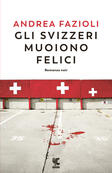
Gli svizzeri muoiono felici
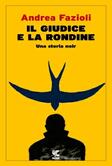
Il giudice e la rondine
Of the author (who has a blog) Guanda has published, among others, The Homeless Man (2008, Stresa Narrative Prize, Premio Selezione Comisso), How to Rob a Swiss Bank (2009), The Disappearance (2010, Premio Fenice Europa), A Splendid Deception (2013), The Judge and the Swallow (2014), The Art of Failure (2016, Premio Fenice Europa), The Swiss Die Happy (2018) and The Commissioner and the Caregiver (2020).
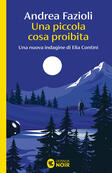
Let us turn to his new book, A Small Forbidden Thing: a new investigation of Elia Contini. The novel, which features the private investigator for the ninth time, opens with a ferocious murder in Italian Switzerland: the body of a man, a prominent Milanese lawyer, has been found at the entrance of an ancient mine. To accompany Contini, more at ease among the woods than among people, arrives from Milan a police inspector, Anna Scovalupi, who confronts the cautious machine of Swiss justice. While the police follow leads that venture into the darker edges of finance between Switzerland and Italy, a young bookseller keeps receiving anonymous haiku that seem to foreshadow every development of the investigations…
