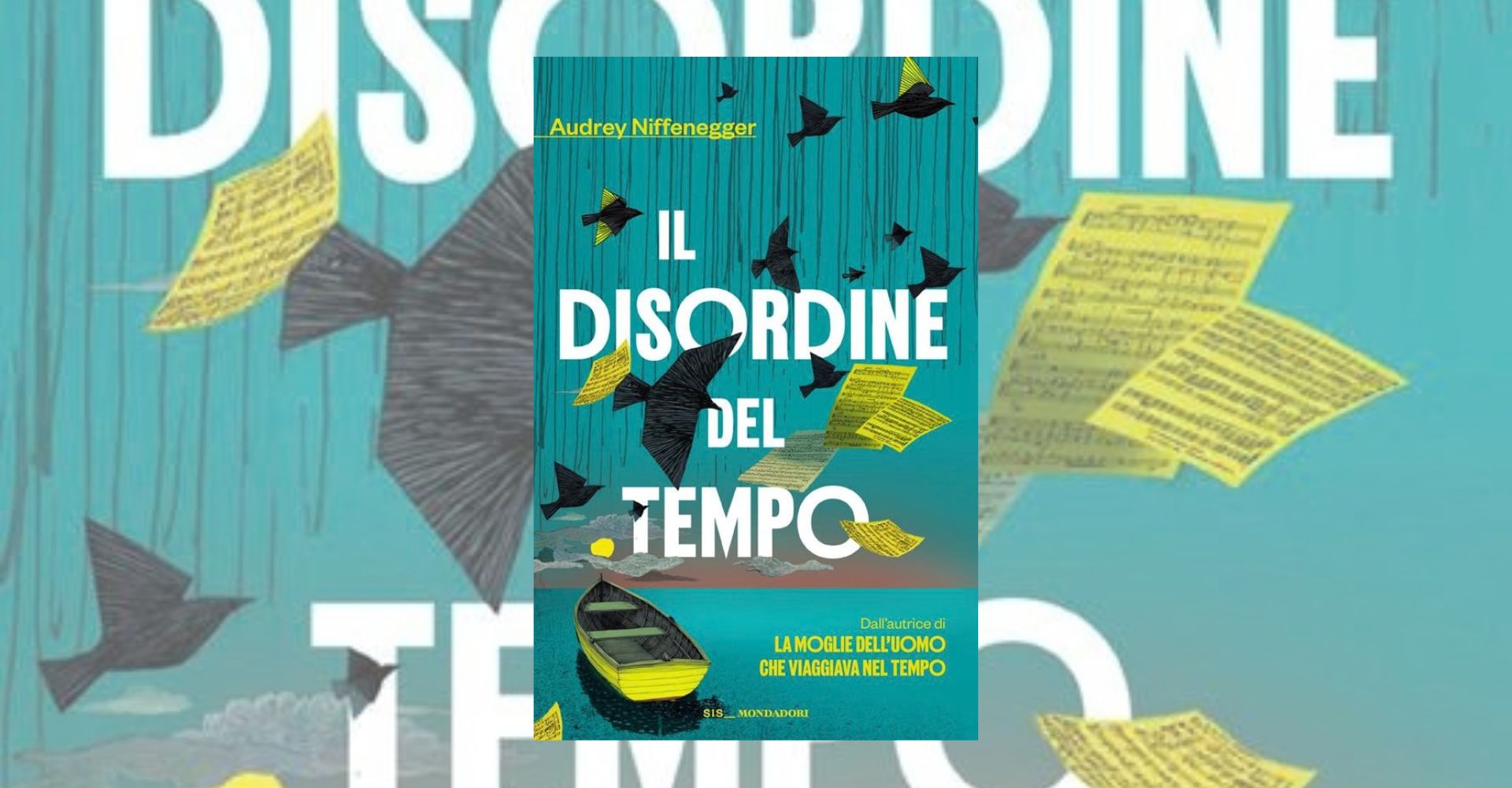
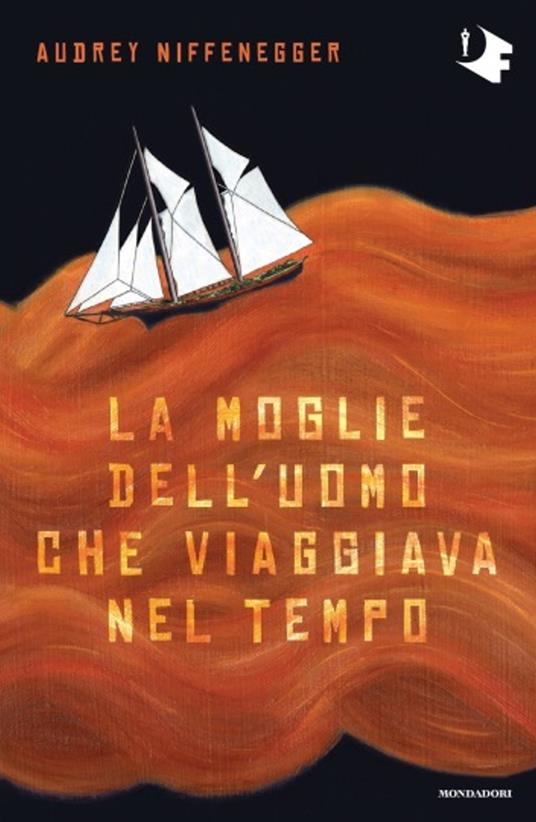
Time travel, genetic anomalies, two great loves. Here are the main ingredients of The Time Disorder, the novel that marks the American writer Audrey Niffenegger‘s return to bookstores, the author already behind the bestseller The Time Traveler’s Wife (published by Mondadori), of which this book, in a sense, serves as a sequel.
In a sense, because The Time Disorder (which lands in Italy with Mondadori, in worldwide simultaneous release with the American edition, in Katia Bagnoli’s translation) expands the universe Niffenegger had told us about more than twenty years ago, introducing us to Alba De Tamble, Henry’s daughter (the protagonist of the previous novel).

For those who haven’t read the 2003 book (from which a 2009 film adaptation, The Time Traveler’s Wife, directed by Robert Schwentke and starring Eric Bana and Rachel McAdams and later a 2018 HBO series), no problem, because the story here focuses on the woman, also a time traveler, just like her father.
Traveling Between Different Eras
The author — who has also written and illustrated the graphic novel Three Incestuous Sisters (coming in 2027 again for Mondadori and from which a film directed by Alice Rohrwacher will be produced) — chooses this time a female protagonist who travels between eras in an unpredictable way, due to a rare genetic anomaly.
Alba, however, strives to maintain an outwardly normal life, finding refuge in the music of her violin and in her tight-knit community of artists and activists who look after each other, in a world that is increasingly unstable.
Yet the heaviest burden for Alba is not the time travels, with the weight of futures she cannot reveal and pasts she cannot change: the woman, in fact, finds herself torn between two people she loves, two people who could offer her two different lives. On one side there is Zach, who represents her present, but who cannot follow her when she disappears; on the other is Oliver, who has the same gift.
Loving in a Restless and Fragmented World
Sleeting between one era and another, through a Chicago whose streets are ravaged by riots, a sinister “Yellow House” suspended in time, and the digital corridors of the Museum of Lost Souls — a virtual sanctuary of forgotten memories and lost artifacts cared for by the mysterious stepsister Isadora — the protagonist is continually haunted by the same dilemma: how is it possible to love and, at the same time, live in an increasingly restless and fragmented world?
E così, ad ogni salto temporale, Alba deve fare i conti con le scelte che la definiscono, con le persone che non può sopportare di perdere e con la domanda che tormenta ogni viaggiatore del tempo: si può mai appartenere veramente al presente?
Monday, December 26 and Tuesday, December 27, 2022
(Alba is 21, 29 and 47 years old; Zach is 22)
«How did you know Junior?» I ask him.
«Actually I don’t know him. He’s a friend of a friend and he’s hosting me for Christmas. This year I didn’t want to go home because my parents are getting a divorce and I, well, just couldn’t face the situation. Since the dorms are closed, Junior offered to host me. He’s a good guy.»
At this point I’m a little puzzled; Zach seems genuinely happy to hang out with him. I’d like to ask Nadia which side the truth lies on. “Where do you study?”
«At the University of Chicago. And you?»
«At Northwestern.» I look at my hands. I bite my nails until they bleed, a sign of my usual sloppiness. I fold my hands to hide them, embarrassed. “But I don’t think I’ll go back.”
«Why?»
«It’s been hard. I don’t handle stress well, and a conservatory is constant stress.” Obviously my real problem is the fact that I travel through time: it’s terribly stressful to end up in another moment, miss classes or an audition or a performance, and then have to come up with excuses is even worse. A vicious circle that never ends.»
«What instrument do you play?» he asks.
«The violin.»
«Oh, wow, I’ve always wanted to learn to play the violin.»
I laugh. «Everyone says that.»
«But can you do it? Not returning to the conservatory, I mean.»
«It isn’t a prison. Of course I can not go back.» I haven’t thought through the practicalities yet, but right now I’m determined. I won’t go back. No one can force me. I take a sip of my drink and make a face.
«Wanna drink something else?» asks Zach. «I’d gladly have a beer, can I bring that glass back to the kitchen…?»
«Sure, thanks. Maybe a Coca-Cola.» This guy proves eager to be useful. I hand him the glass and after a few minutes he’s back with a bottle of Coca-Cola, a beer, and two glasses, one of which has ice. I hold the glasses, he opens the bottles and pours. «Do you really wait tables?»
«Yes. Why would I lie about something like that?»
«Right. But what are you studying?»
«Literature. Creative writing.»
«So neither of us has practical skills?»
«Waiting tables is very practical.» Zach seems a little gloomy.
«You know what I mean.»
Zach looks at me more closely. «How old are you?»
«Twenty-one.»
«And how old were you when you started playing the violin?»
«Four.»
«And your parents don’t mind if you drop out after seventeen years of study?» I open my mouth to answer but he continues: «Do you have to be already extraordinarily good just to get into Northwestern?»
«Yes, you have to be good.»
«So quitting wouldn’t be… a waste?»
«I could still play…»
«But how will you perfect yourself?» Zach seems to have turned into my grandfather. I’m getting tense because he’s getting tense, and I forget that we don’t know each other and that we are sitting on a bed full of coats in a house full of fake Nazis and a few real Nazis, and I say, louder than necessary: «And why do you care?»
He laughs. «Nothing. Absolutely nothing.» He keeps sipping his beer and watches me with interest. «Seriously, though. Do you really want to abandon what you’ve done your whole life?»
«Yes.» And I’d like to add that the thought fills me with joy.
«I understand. I was also writing a novel and then I stopped. It wasn’t anything special.»
«What was it about?»
«It was a kind of autobiography about my difficult childhood. But the more I wrote, the more it became boring. I thought that if it bored me, imagine others. I even stuck a zombie apocalypse in it, but it stayed mediocre. Actually, I’m thinking of giving up writing.» Zach slides a hand into the inner pocket of his jacket, then stops. «Do you smoke?»
«No.»
«Good. Neither do I. I mean, I just stopped.»
«When?»
«About an hour ago. I finished the cigarettes.»
I laugh. «So you gave up your novel?»
«Yes. I burned it.»
«What melodrama.»
Zach smiles at me, radiant. «You’re the first person I’ve told who didn’t get shocked.»
I shrug, but inwardly I am pleased. «You’ll have a copy on the computer.»
«Deleted, discarded.»
«Any backups?»
«No. It’s not just dead, it’s truly dead, honestly dead.»
«As Woland says, “Manuscripts don’t burn.”»
Zach nods: «It’s my favorite book.» Okay, good. Bulgakov is an interesting choice for a friend of a friend of Junior.
«I’ve always wanted to have a cat named Behemoth» I say. «If you don’t plan to write, what do you think you’ll do?»
«That’s a secret» he answers.
«Come on, tell me.»
«Maybe later» answers Zach.
«When? I have little patience.»
«When we’ll drift away in a foam-covered car from our wedding ceremony.» He seems sincere, for a moment. He doesn’t know I could never marry anyone with that haircut. I laugh. We smile at each other. «I shouldn’t even joke about it, I’d probably be a terrible husband» says Zach.
«My parents are unbearably insufferable, they should have divorced years ago and now that they’re finally doing it they can’t agree on anything. They argue about my sisters, about the dog, even about things neither of them wants, like the Tupperware. Last week my mother smashed all the dishes just because he told her he didn’t want to let them go.»
«Geez.»
«She threw them out the window. He lives on the twelfth floor.»
«Did anyone get hurt?»
«No, but it was a miracle. And anyway the police came. Are your parents still married?»
«My father died when I was five.»
«Oh, geez, I’m sorry… Do you remember him?»
«Yes…» He managed to draw me out, without me even realizing it. I can’t tell him that I just saw my father, that last week he wasn’t dead yet, or that we meet regularly in casual moments, that he is present in my life even if he will never reach his forty-fourth birthday. It isn’t an absolute secret that I travel through time; the people who know me well know it. However, I have a habit of not telling new acquaintances, and if they stay in my life and become friends, telling them becomes strange and complicated and in the end seems more important than it should be.
© 2026 by Audrey Niffenegger
© 2026 Mondadori Libri
(continues in bookstores…)