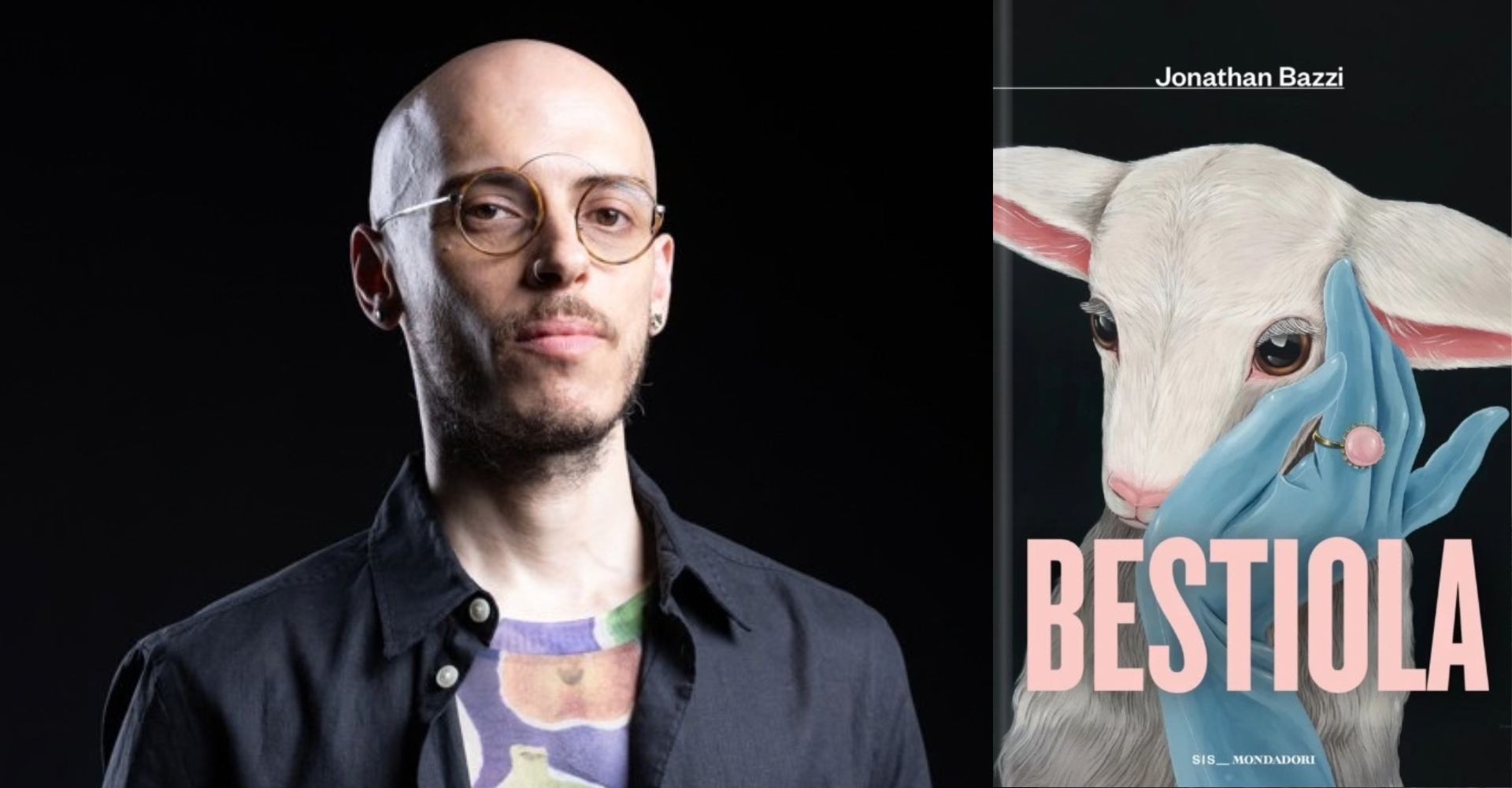
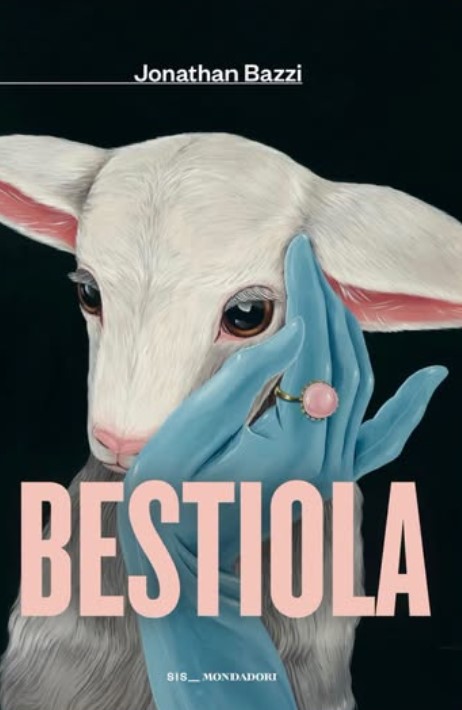
After his debut with the award-winning Febbre, released by Fandango in 2019 and a finalist for the Strega Prize in 2020 (but it was also Fahrenheit-Radio3’s “book of the year,” and it won the Bagutta Opera Prima, the Premio Sila, the Premio Kihlgren, and the Premio POP), Jonathan Bazzi, a writer born in 1985, in 2022 signed with Mondadori Corpi minori. And, four years later, still with the Segrate publishing house, he releases Bestiola, in which he seeks to find the most intimate and radical words for what we are used to letting disquiet us in silence.
At the heart of Bazzi’s new book, in fact, is the death of one of the author’s cats, Mirtilla. What the writer does is attempt to open himself to the non-human other, “not for simple consolation,” but because it is the only way the protagonist finds to stay in the world, a beast among beasts, trusting only the skin.
A Milan where (almost) everything is a feverish race toward profit and performance
After all, the protagonist of Bestiola has lived for 16 years with his two cats, Mirtilla and Purè, and thanks to them he learned to widen the boundaries of his own self, to care for and protect.
In a Milano where (almost) everything is a mad dash for profit and for performance, the two cats become a counter-spell to the coercions of platforms. An antidote that returns him to a reality of skin-to-skin contact, to what comes before language, reasoning, and the strategies for winning.

inevitably, when Mirtilla dies, everything erupts: how can one find a place for grief in the absence of shared rites? What shape can clandestine mourning take, to which no legitimacy is granted?
Thus, the protagonist, after a three-year slump and beset by precarity and moves, returns to writing. Alongside Mirtilla, other presences crowd the pages, “guardians of thresholds and liminal creatures”: Jofi, the chow-chow Freud used to bring to his sessions; Carlo the Newfoundland, a silent accomplice of Emily Dickinson; Korasek, the inseparable crow of biologist Simona Kossak. And “animality becomes a key through which to tell the class difference, neurodivergence, narcissistic wounds, and the many forms of family.”
“For four years I couldn’t write…”
“For four years I couldn’t write. I thought there wouldn’t be another book. Then Mirtilla, the cat with whom I had lived for sixteen years and a half, stopped eating. I began to recount the sweet and harrowing days of her illness, and from there I started looking around again: in search of a den, I dug tunnels. I ended up inside a larger crisis, and not only a personal one: the lethargy and loneliness, narcissism and paralyzing competition, the money shortfalls and the trouble — at forty — of not being able to afford a home where I could feel safe…
From the moment writing began to work, my life has become hyper-domesticated: already in the final years in the loft we started spending most of our time all together on the sofa.
From morning until bedtime, two humans and two cats, many blankets. Fleece, because Devon Rex are very cold-natured (even in August). A large, crowded den.
I curled up with them in our nest of drapes and cushions whenever I thought things were too heavy to bear. Face to face, and it didn’t matter anymore whether the rival I had chosen at the time had written a book or an article that was doing too well. The sound of their breath against mine, and it didn’t matter if I had been invited to the festival everyone went to. Skin-to-skin, and I no longer cared whether my career truly seemed hopeless. Saying to myself: this is enough.
That, and I am fine.
I began to think that animals are the antidote that brings us back down to earth, the counter-spell that dissolves the enchantments of the platforms. Look at me, validate me, on a scale from one to ten: how much do you like me? The restlessness with which we are programmed these days, the never enough.
With animals we return to bodies that choose to stay together. They find in that staying together, even when unproductive, the center, the purpose.
We have a texture, we breathe, and through the senses we interact with the world.
We eat, we drink, a sound puts us on edge.
The animality as a remedy to the psychosomatic contagion of performance. A bond of living matter only.
Many times I have been tempted to write it, to turn it into a manifesto. A necessary and sufficient reason to live: thanks to them it has found meaning.
To tell ourselves, to say it: if only for them, it has been worth it.
I am not their owner, I am not their metaphorical parent: I reject, here as everywhere, the hierarchical view of relationships.
They say they are inferior, and yet they have pushed me toward unknown experiences, completely impossible before meeting them. Who and what is human, then, who and what is moral?
Since Mirtilla left, I think I fear death a little less.
More than that: the thought that it could touch me too, that it could touch everyone, for a few seconds brings me relief.
A beloved body that ventures into the unseen — I learned from her how to go about it.
For love, push beyond the terrifying boundary.
Do not let it cross you alone.
A family member leaves, and we are the ones who survive.
For the first time — in six months — at a certain moment I see Purè sniffing the pink carrier.
Inside is still the blanket from the last night of his sister.
Brown, incredibly soft — as soon as I feel it, I promise myself to check whether there are traces, clues (however useless and irrational it may be, I expect a sign).
He didn’t seem interested, despite the loft where I had kept him under the table all the time, and now among the boxes in the new house.
Since she left, he is no longer the cat he used to be.
At first it seemed he hadn’t even noticed.
Two or three days later: a failure of the hind legs. A few steps and increasingly slow. X-rays, the opinion of an orthopedic specialist required. He concludes: inflammation caused by osteoarthritis. Hocks swollen like billiard balls: lying on his side all day, legs stretched, a siren.
The veterinarians, excluding the correlation, the reaction to grief: some cats, left alone, are happier, relaxed, they say. But he loses his appetite too: suddenly he no longer bites food, only tolerates things to lick.
Two weeks after her death, for us, the torture restarts.
No recognizable sign of distress, and then he aged in an instant.
For a month, almost moribund. Please, recover at least for a while, I think: so soon, I cannot bear it much longer.
Until a new drug, monoclonal antibodies: an injection, eighty euros every month, the shot that relieves pain (holistic veterinarians very active on Facebook warn: no magic serum, they’ll make them die).
Brother and sister born in the same litter — if they were humans, we would call them twins. The fear of organisms tuned to each other, the expiration date set by genetics: as one weakens, the other follows. Experts deny a causal relationship, grief-decline, but living with them has instilled in me a great distrust of thoughts and words.
The Western myth of reason as the key to everything.
Now I know there is another plan, a different way of being, another style of response.
From a certain point of view, this is a book without meaning.
The psychologist, when I tell her about Purè’s sudden and late interest in the pink carrier, smiles and says: he understood that I am about to start writing again.
My problem with therapists is that they believe too much in happy endings.
2026 Mondadori Libri S.p.A., Milano
Published in agreement with S&P Literary – Agenzia letteraria Sosia & Pistoia
(continua in libreria…)