What If Odysseus Was the One Waiting in Ithaca?
I detest that hypocritical Odysseus, with his excuses, that veneer of integrity and the feigned desire to return home—at least I despised him, until I became Odysseus myself.
One day I found myself on a journey—literally, a one-way journey, with an equal longing to keep wandering forever and to turn back, to return to Ithaca.
A friend told me that The Worst Person is Penelope’s journey while Odysseus, for once, waits. And a bookseller friend immediately added: yours is Penelopean. My character, who is named Raffaella, travels because she reaches a point in her life where she can do nothing but “let go of everything.”
The Urge to Escape
An instinct shared by many, that of escaping. Both she and I have some practice—we run from different things, but we all know that restlessness. What happens when we indulge it? When no one holds us back? Jobs, situations, relationships, not really leaving but fleeing—that is, pausing—after all, like Odysseus does. Indeed, to flee is precisely a way to never leave, to try to freeze time while trying to understand something.
Desire by Its Nature Is Not Satisfied, and Therefore Is Painful
It isn’t a whim, but it is an inability to stay in one place or truly in motion. In fact, Odysseus continually wants to return—at least a part of him. In Nolan’s film, he tells his own: “one more stop or two won’t kill us” — the famous last words. Taking another stop is, on one hand, fulfilling the instinct to see what’s on that other island, that other rock, the “thirst for knowledge” of the Western hero, which we learned in middle school. But it is also the incapacity to stay in one place, to enjoy something without guilt or longing for something else. Here, the Worst Person, like Odysseus, lives in desire. And desire by its nature is not fulfilled, and therefore is painful. To desire is a particular kind of suffering. For some the desire is better than the pleasure it (perhaps) anticipates, for Odysseus certainly, and perhaps also for me.
On my journey, I also encountered my own semi-deities. There was Shiva, who is actually a man of about fifty who calls himself, indeed, Shiva. He organizes sex parties in Bali, with varying rules of engagement and more or less explicit boundaries. There was also Amrita, who transforms women into a sacred goddess, at least for a few hours—just like Circe, who then reverts them to ordinary humans after a course that makes them feel connected to the feminine divine.
The Worst Person, Grounded by Her Own Gaze
My preferred deity is Irina, a mysterious Russian friend, who could do anything, from escort to spy—but perhaps it’s all a figment of Raffaella’s imagination, a projection to deny that Irina is truly a free woman, not like her, The Worst Person, Grounded by Her Own Gaze, who may be intelligent but is a distance between her and the world.
There are also the Sirens – these beautiful men who do nothing but surf, and practice yoga, with long hair and sun-kissed skin. Californians, Argentines, pseudo-enlightened, pseudo-gurus, digital nomads. They are sirens because they sell a concept of freedom that none of them really practice; their freedom is always at the expense of others: the clients they deceive, or to whom they in good faith sell watered-down teachings, the women they seduce without loyalty, the territories they colonize. A new kind of colonization, spiritual tourism, but still a predatory journey.
If Raffaella is the worst, it’s because she isn’t always clear, not honest with herself: like Odysseus, she says she wants one thing but pursues another; she wants the love of others, but judges them a little. She is naive and disenchanted at the same time – like Odysseus, she errs so that others can stay at home and know that, in the end, they lose nothing.
The best people do not need this search; fortunately there are others, and fortunately for me there was her—the worst.

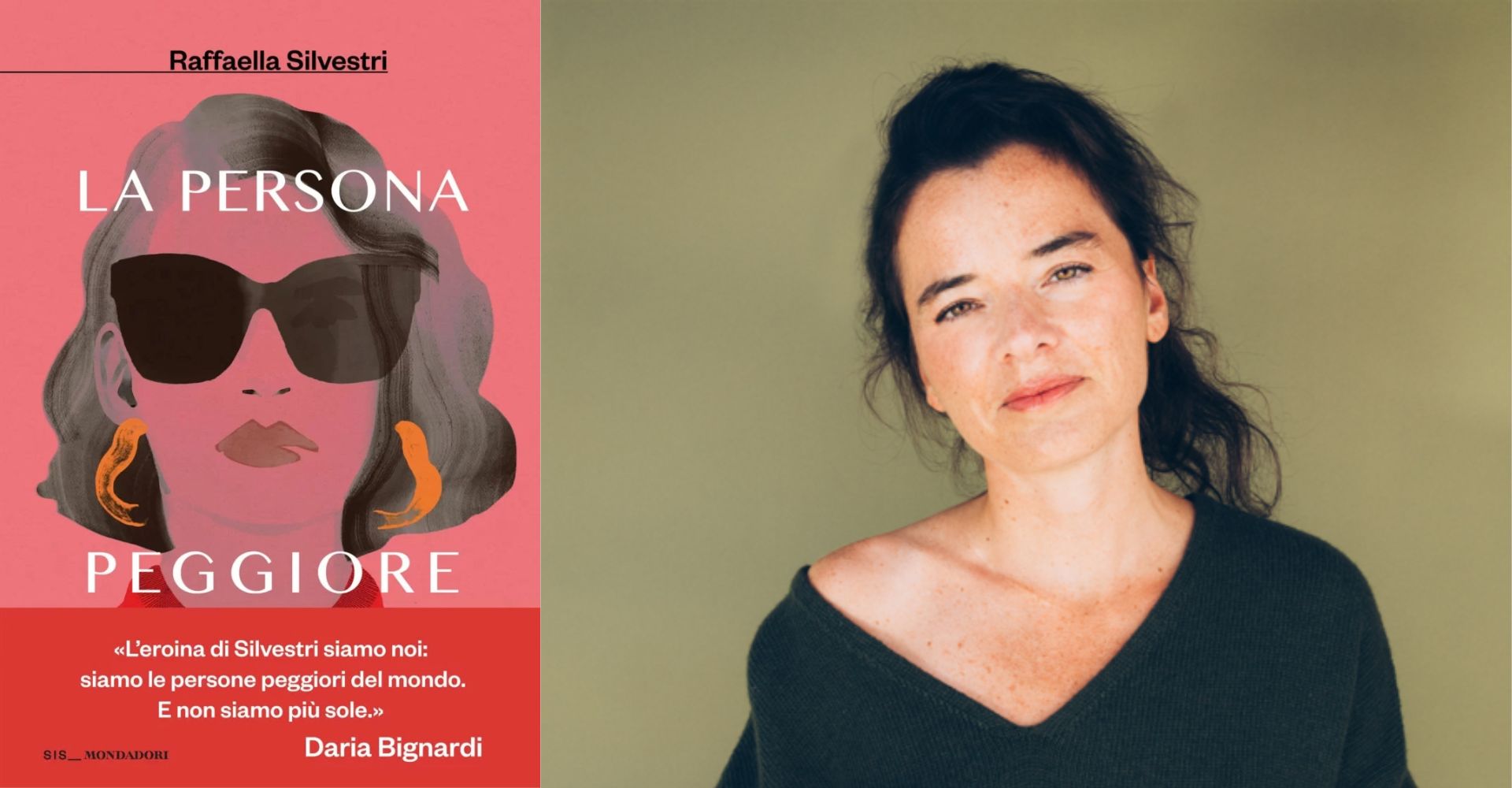
THE AUTHOR AND THE BOOK – Raffaella Silvestri was born in Milan, studied literature and gender philosophy. She debuted in 2014 with the novel The Distance from Helsinki (Bompiani) and in 2016 published with Garzanti The Fragility of Certainties. She lives in Rome today. She writes about current events, relationships, gender issues, books and cinema, collaborating with various newspapers and magazines including Il Foglio, Review, and Domani, and has a newsletter, Velluto.
The protagonist of her new novel, The Worst Person (Mondadori), has just married the man of her dreams, whom she has chased for a long time. And yet, she feels trapped: she decides to embark on a journey with no set return date, to… Bali. On the Indonesian island she encounters people searching for themselves, contemporary nomads who practice yoga and tantra to rediscover themselves. People who, like her, have run away from something. In a narrative where “Penelope travels and Odysseus waits,” Raffaella finds the courage to leave for six months a man who left Finland to reach her in Rome, to go live an adventure in search of some form of freedom, told with sharp irony.