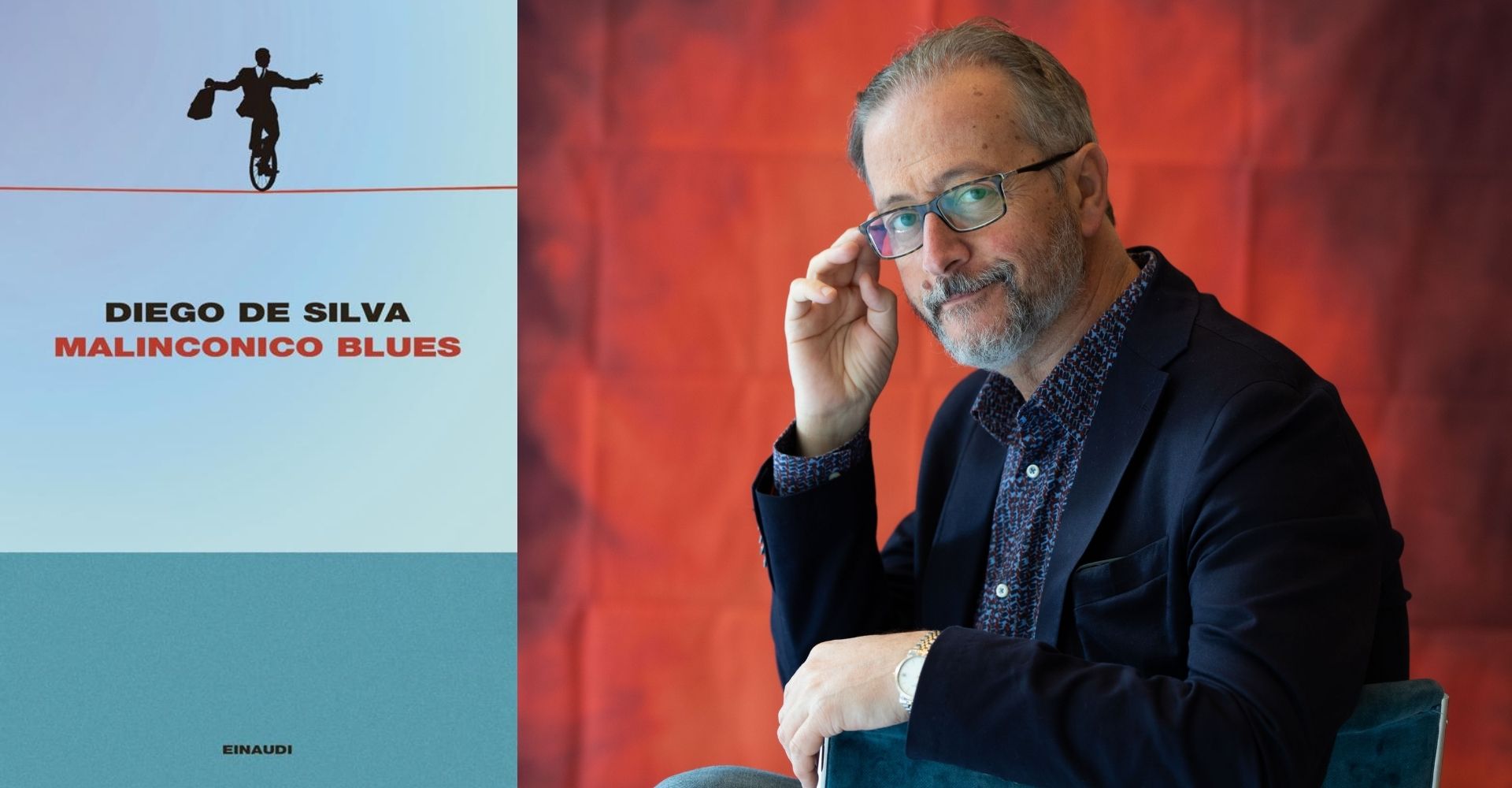
In a world that chases success, inhabited by people who live to seize their place in the Olympus of money and career, Vincenzo Malinconico moves forward, unsure that he wants to win, full of doubts and above all drawn to the idea of going back.
Malinconico is on the edge, one more step and he would be among those who have made it, the envied ones, pointed at in the corridors of the courts, in the glittering restaurants: a big firm, the secretary, the entourage of interns, clients with life-changing checks. But nothing—he feels out of place, suffocated, money makes him uncomfortable, as do the furniture from a design magazine and the complacency of his colleagues.
“I’m not cut out for career advancements. I’m cut out more for leftovers, understood as remnants (ruins, above all).”

The Unsuccessful Lawyer Is a Tangle of Doubts
The perfect size for him is a small shared office, Ikea furniture that makes him feel good, his time to reclaim, his idea of freedom. It may be aging, but above all it is his intolerance for adrenaline-filled routines, chasing things that do not interest him, and for the price he is not willing to pay. He has never heard of downshifting, but in that English term, which doesn’t belong to him either, lies his sense of a life resolved, peaceful with the world and without regrets.
Not that Malinconico’s mind is so clear and defined: the unsuccessful lawyer is a jumble of doubts, hesitations, and contradictions. His is a constant dialogue with himself, seasoned with irony, far-fetched connections, improvised professional moves dictated by lack of preparation and saved by flashes of intelligence and isolated but fortunate insights.
While everyone else knows what they want, Vincenzo keeps asking himself what the right direction is: he is not a self-aware hero, he is a collection of imperfections, unable to make decisions, superb at postponing them, a master of mental films, only to always choose the wrong thing to say.
His guardian angel knows him well, a shabby fellow in sandals, a t-shirt from Esselunga, a ponytail and dermatitis that sheds fetid feathers at every appearance: a bureaucratically appointed angel who, between a scratch, puts before his protégé all his incapacities and weaknesses, quoting Pasolini and not sparing insolent jabs. A comic and awkward presence that manages to dialog with Vincenzo’s inner voice, which never stays silent.
In the grip of Instagram’s popular juries
When a lucrative job lands in his lap, with a social-media and television star, like Pasquale Bellissimo, Vincenzo suddenly becomes famous, at the mercy of Instagram’s popular juries, with all their baggage of hypocrisy and easy shaming, and the tremors of a jealousy that is hard to control. Because Pasquale had a very brief relationship with Veronica, Vincenzo’s partner, and this makes him jealous in a childish and irresistible way.
“Even retroactive jealousy: you’re a compilation of flaws, Malinconico.”
Pasquale Bellissimo, in name and deed, is the opposite of Vincenzo Malinconico: popular, at ease in a world made only of form and surface, always confident, brazen without asking too many questions.
Veronica is the solid core of the couple. Witty, beautiful, capable of taking Vincenzo by the hand, but also of giving him a five-fingered shove in the face when she senses his insecurity about her and their relationship.
She is not just his certainty; she is the one who compels him to step out of his head and into life. In a world that flaunts, judges quickly and superficially, transforms and homogenizes everything, Veronica and the home they share embody for Vincenzo the very idea of happiness, sometimes, in his view, undeserved. Happiness, he thinks, has nothing to do with external appearances, and for Vincenzo Malinconico it is something very real, tied to his own world, not to the world outside. He just needs a bit of improvisation, without too many mental formalities.
“Return to improvising. To not knowing what will happen. To not setting appointments. To invent. In the blues you never know where you are. It’s like always losing yourself in your own city, and each time looking for a different road to get back home.”
Happiness Goes Its Own Way, and the Blues Is His Perfect Metaphor
Contradictory, jealous, mean, hesitant, jammed-together, Vincenzo Malinconico seems to have truly understood that happiness goes its own way and that the blues is his perfect metaphor: this champion of improvisation and doubt is exactly what we needed, and with him Diego De Silva challenges the entire system of pursuit and restlessness that governs our existence, which pushes us to gaze with feverish envy at “the one who made it,” and to pigeonhole anyone into that category, regardless of what they know (or don’t know) how to do, because his value is now defined only by the number of followers he can boast.
“Today I care very little. It’s a constant of my life: things always happen to me late.”
With his discursive, bright, never-linear prose, Diego De Silva gives us a Vincenzo Malinconico in blues mode who withdraws but does not give up, who has no formulas, nor a direction, and who does not always have the right answer. But perhaps he has begun to choose how to be in the world: a more livable world where you don’t have to prove you are someone. Happiness exists and can be a small thing, within reach: you can feel good in your own world, with all its imperfections. For Vincenzo Malinconico there is only one thing missing to be fully satisfied, a can of whipped cream spray from the Ikea catalog.