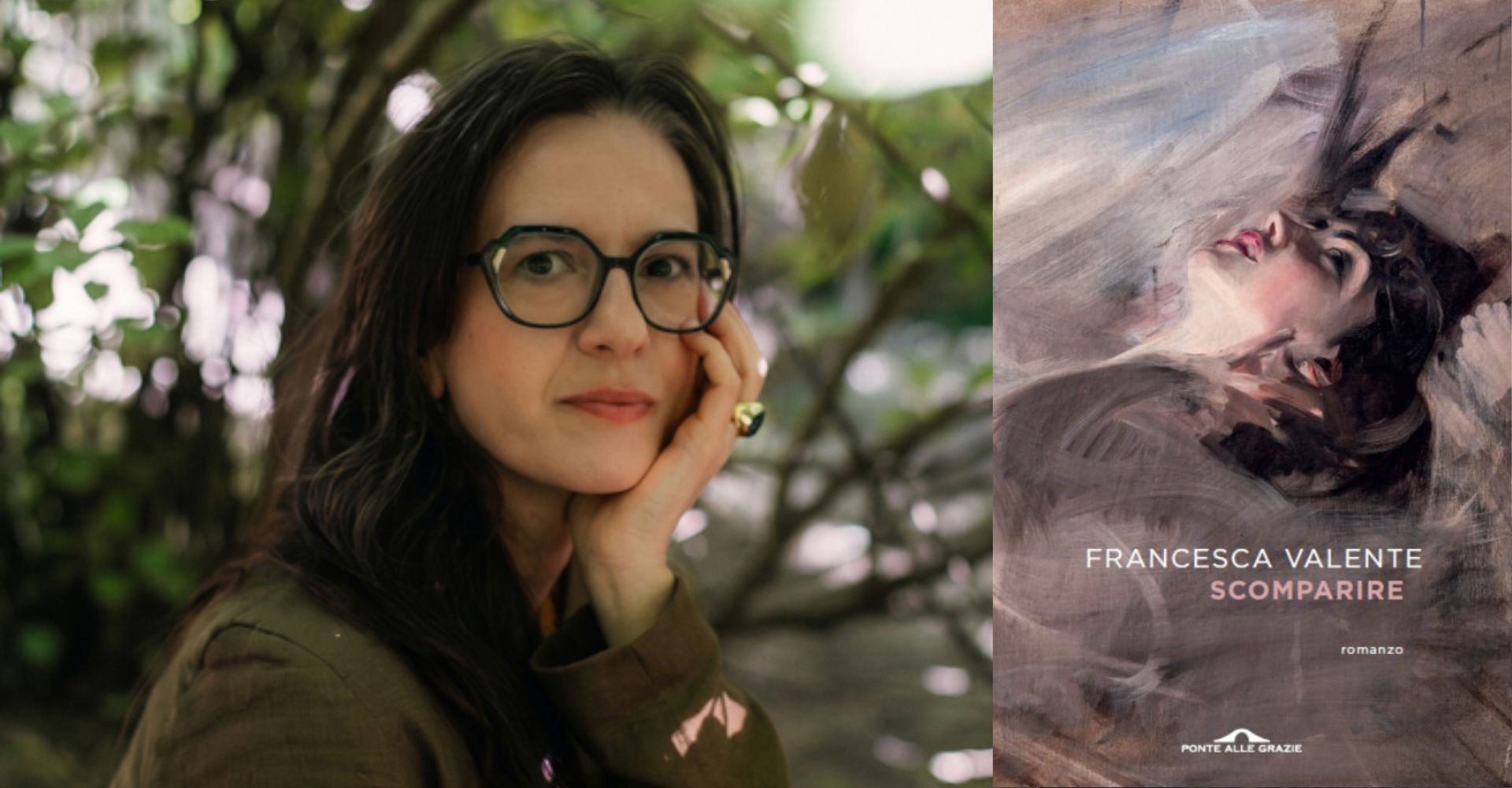
Presented below is the unpublished storyThe Writer’s Notebook, a spin-off of the novel Disappear by Francesca Valente * to be published by Ponte alle Grazie.
We encounter again the co-protagonist writer, who, while passing through Paris for a conference, returns to some of the familiar places of Amalia Falier, the pianist who vanished into thin air at the height of fame in the 1920s, and of her teacher Nadia Boulanger, between Paris and Gargenville. Years have passed since the meeting with Amalia in Venice and the story we uncover in the novel. The state of the Gargenville house, the objects the writer sees, the sense of abandonment and certain old memories push him to a further reflection on the sense of art and on the desire to be there without having to necessarily appear.
The Writer’s Notebook
A Paris I returned to attend a conference on Schoenberg, invited—certainly with an excess of confidence in my abilities—to speak about a somewhat pretentious book of mine on the Viennese composer to an audience of refined musicologists. Free time, so to speak, was abundant, but in Paris the fear of emptiness has never really taken hold of me. I left the Musée Nissim de Camondo, however, with a slight daze. Before the Venetian landscapes of Guardi, which, more than Sèvres porcelain, Houdon sculptures and cabochon tiles in the magnificent bathrooms with unusual bidets, had captured my attention, and immersing myself in his fancies, the imagined architectural landscapes, I had felt the light wind of the pianist Amalia Falier brushing against me. Music arrives from afar and while one is thinking of something else, or busy with something else. I cannot say that she came to mind from time to time: more accurate would be to admit that her presence, throughout all this time, has never faded.
Memory, what a deceit. I remembered that as soon as I crossed the entrance to Parc Monceau, closest to the Camondo, protected by a boxwood hedge among sicomores and tulip trees, the Chopin monument stood there, where the composer rests a hand gently at the edge of a piano that sinks out from the marble, with the right hand just lifted from the keyboard, legs as if ready to run, and turns a compassionate gaze toward the allegory of pain. I remembered perfectly the harmonious pose, but in my memory it had been uprooted from the place. I also remembered that, a little further beyond the Opéra toward Montmartre, already on rue de Clichy, there was the little square whose imposing but familiar horse-chestnut trees conceal in its oval center the porous statue of Hector Berlioz. The square opened up by veering onto Rue de Ventimille and Chopin stood at the opposite entrance. I realized I no longer possessed a comprehensible geographic syntax; the arrangement of spaces in my head follows atonality.
Walking has always been my antidote to disorientation, so I went down toward the Palais Garnier, briefly raised my eyes to Harmony and Poetry, and then climbed back toward rue Ballu, a few tens of meters from Berlioz. I passed many times in front of number 36, in my years in the city and in my roaming life, and I have always had the same strong desire, gazing at the long wrought-iron balcony and the plaque dedicated to Nadia and Lili Boulanger, to enter that apartment where the two great musicians had spent their entire, unequal lives, and where Amalia had studied; to visit it not in its current condition but in the one it was then, which she had told me about with dreamlike vividness in our meeting in Venice. I wanted to see the walls the color of butter and the Cavaillé-Coll organ in the dusty air that while listening I had imagined eternally pierced by the sun. To listen to the silence between lessons. I continued this time toward the Montmartre cemetery, just minutes away from there, where the tomb of the Boulanger sisters lies. On the tombstone, without effigies, various names crowd in, besides Nadia and Lili. The Russian mother, princess Michetsky, the father Ernest, singing teacher, other ancient relatives.
Not sure why I hadn’t done it before, but I decided then to visit Gargenville’s house, Les Maisonnettes, which Nadia’s mother had bought at the turn of the century and where both summers were spent hosting students and resting. Amalia had also lived here. I wrote to the town hall address, the only reference I had, receiving a reply from a retired councilor who explained that the house is not normally visitable except on special occasions, by prior arrangement, and with a guide, adding that at that period everyone was on vacation but that he would be very happy and honored to accompany me. He had the keys. I took the train from Saint-Lazare the next morning. Watching the northwestern outskirts of Paris glide by, I thought that in my writing I have always sought to probe reality, and this is as far removed from a novel as one could be; but Amalia had shown me, through the folds of her history, that existence, the place of human possibilities, is far more interesting than reality.
The councilor, a jovial and patient man, opened the little gate to the house and began to recount some historical facts I already knew, and others details that were new to me—for instance, that it was Raoul Pugno, Nadia’s mentor, who pushed her mother Raissa to buy Gargenville; Pugno had his retreat right in front of Les Maisonnettes (the house was destroyed by a fire)—and seeing that soon after I made my way through the tall grass toward the two bronze busts of Nadia and Lili, which appeared to me as farewell figures, he hurried to say that he hoped the gardener would return, that he would soon tend to that rose garden now wild, and then fell silent until, after lingering to gaze at the two faces, he reached the entrance door of one of the two structures of the house.

«Denso di simboli è l’ornato dei suoi fiori», says a line from the Lied Herzgewächse, “foliage of the heart,” which Schönberg wrote after discovering or inventing a new way of listening, when he was immersed in nature and in his painting, in dialogue at a distance with Kandinsky. That line seems to speak of Amalia to me. It marks a boundary between her soul, and her body, and the rest of the world, “over all the pain that has become leaf,” while still and always she sends white glints into my life “like a moon, little by little.”
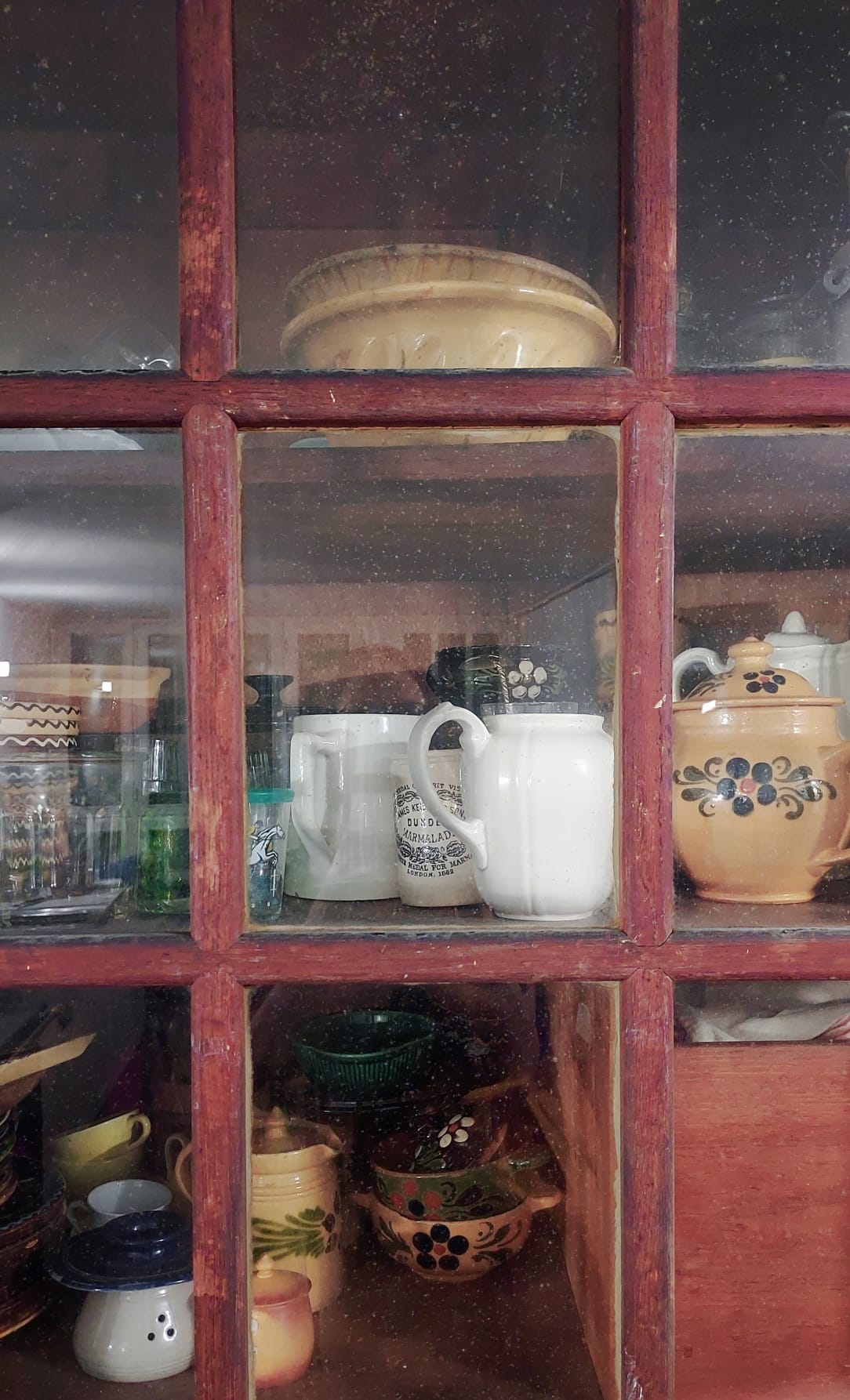
The interior of the house—not at all as enormous as one might expect from what is known of the parties, receptions, and people who stayed there—unfolds into an unsuspected climb-and-descend layout, doors to small rooms leading by staircases to other rooms and narrow corridors on the upper floor, rooms entirely rebuilt in a casual manner by assembling furniture, books, knick-knacks from the Rue Ballu apartment, from the Fontainebleau Conservatory and from brocanteurs or attics of who-knows-who. Overrun by summer cobwebs are the inevitable lamps, rugs on armchairs with worn padding, Larousse illustrés volumes, and everything from different eras and styles, objects whose provenance Nadia’s ownership cannot be certain of—among them stood out for its obscene and functional incongruity a fire extinguisher and a trash can. The almost total absence of photographs, a couple of Nadia with her last pupil, seemed to me the most moving sign of the will not to endure, not even through phantom replicas. And yet the kitchen crockery, souvenir plates with Gargenville written on them, horse-headed jugs, nineteenth-century decorated tureens, opal glass cups with Sixties advertising inscriptions, tin ladles, stacked in the cabinet like relics in a museum’s storeroom, even if dead, told more of her life than any biography.
In a study wardrobe, the death mask of Pugno lay hidden in a cardboard box. Worn walking sticks and straw hats that may have belonged to Nadia, perhaps not. Above a fireplace, a tenderly and disquietingly childlike reproduction, perhaps the work of a pupil, of Manet’s famous painting, The Balcony. It is the only splash of light and color in an otherwise dark room. It strikes me that this painting is here precisely because of the three figures who look while being looked at: we do not see the spectacle they witness, we observe them, their gaze elsewhere, as if the spectacle does not affect them in any way.
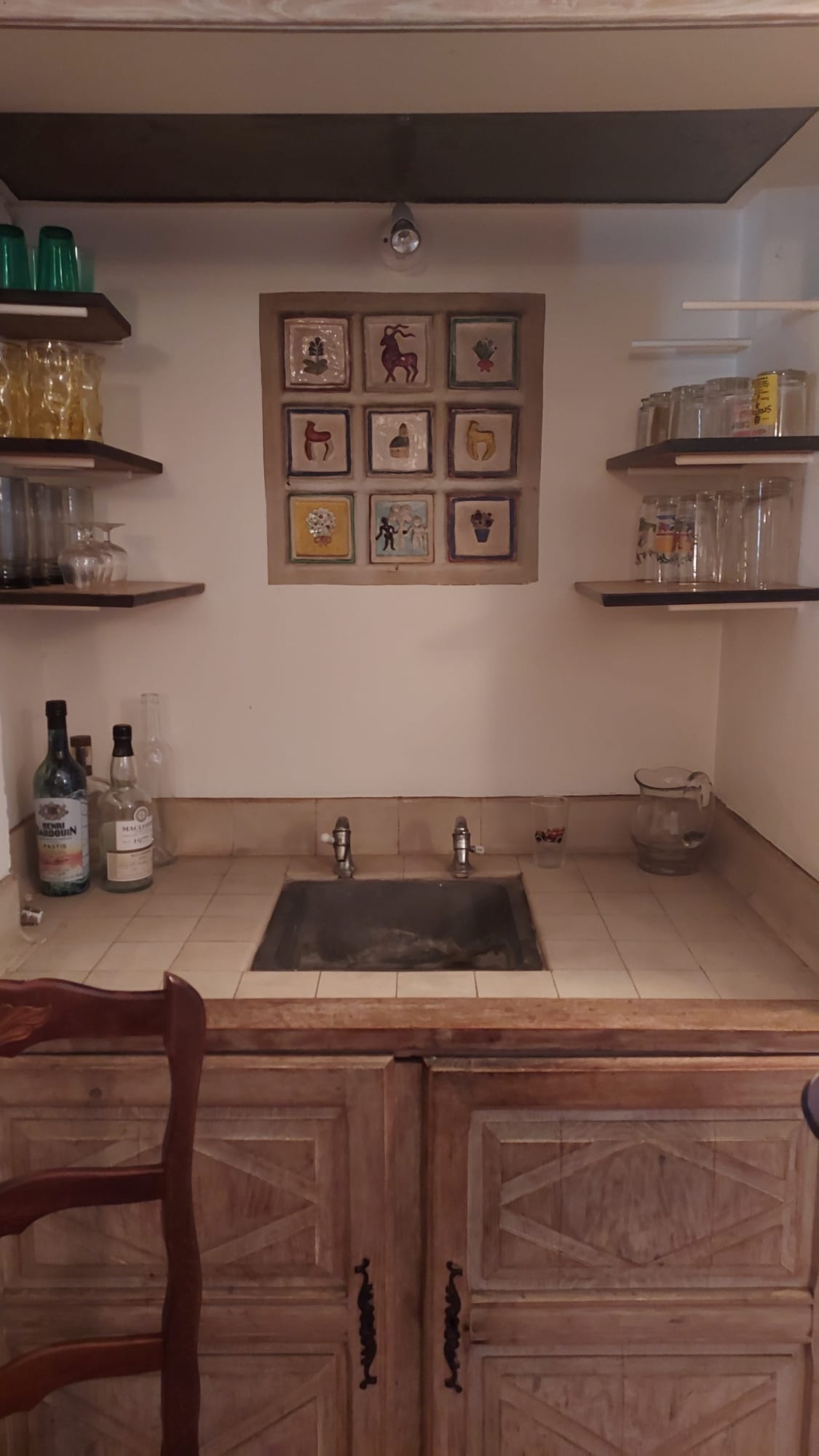
In a small concert room, in an unusual configuration, the Pleyel piano was not Nadia’s, though she had played it, but a gift from Madame Dujarric de la Rivière given after her disappearance. In a niche behind the Pleyel, the “Bar Stravinskij” that Nadia had built for him and at which Igor poured vodka. A small room above the hall was stuffed with scores piled up, roughly sorted by composer; on a chair a pair of used jeans.
The sense of disappearance lived in those rooms. Nadia, having no heirs, left everything to a caretaker who didn’t know what to do with it. Others tried to take care of this property, but in vain, and what lay in Rue Ballu or in the original Maisonnettes is unknown. I had the lucid impression that Nadia’s desire, or more precisely the way she had understood her life and her art—to be but not appear, to be there behind the scenes—had reached its completion with her death; having fulfilled its purpose, it didn’t matter what would happen afterward—to her things, to her memory—and perhaps restoring this house would even be a violation of her will: perhaps it is right that it remains this way, semi-abandoned and in the wild. I had a similar perception that morning with Amalia at the Zattere.
After offering to accompany me back to the station, the councilor asked if I intended to write something about the house, about Mademoiselle Nadia. I thanked him and told him I would think about it, and that I would prefer to walk back to Juziers, if he wouldn’t mind. I bade him farewell and headed in that direction, buttoning up my jacket against the sudden cold coming from the tall cornfields on this early September evening.
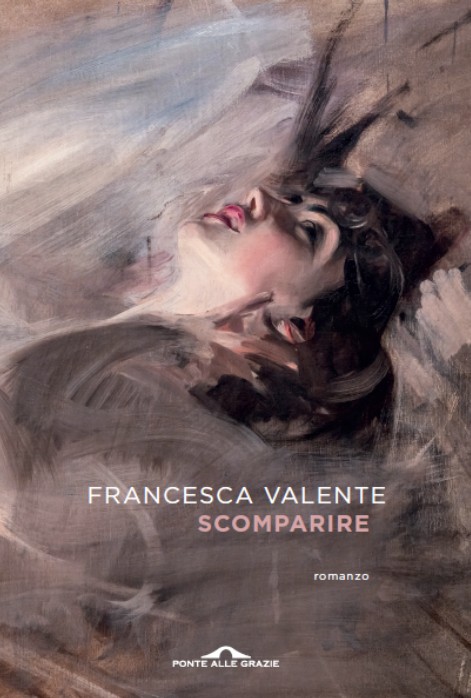
THE AUTHOR AND THE BOOK * – Francesca Valente, born in ’74, works as an advertising copywriter, editor, and ghostwriter. After studies in Japanese art history at Ca’ Foscari University in Venice and in contemporary art at UCLA, she has collaborated with Italian and international publishing houses as a translator and reviewer of essays, novels, and children’s books.
Disappear (Ponte alle grazie) is her third book, preceded by Honey — All the Secrets of Bees (Slow Food, 2010) and the novel Another Nothing to Report (Einaudi, 2022), winner of the Italo Calvino Prize (2021) and the Campiello Opera Prima Prize 2022.
The novel opens on Venezia in 1984. Here, a writer is in search of news about Amalia Falier, a pianist who vanished from the scene at the height of her fame in the 1920s. While the caìgo, the thick Venetian fog that swallows the outlines of things, shrouds the city, the man glimpses the woman’s figure on a bench at the Zattere, facing the lagoon. Here Amalia begins to tell her story, recounting that formidable period for music that was the dawn of the 20th century in Paris, where brilliant composers such as Ravel, Stravinsky, Fauré, Debussy, and masters like Nadia Boulanger shone.
The tale of Amalia continues, among stories of her Venetian childhood, between art and music, crossed by complex family dynamics; the moment arrives to reveal the reasons that drove her to disappear, in a meditation on the meaning of ambition and on the greatness of renunciation.
Valente crafts a polyphonic novel, in which, following five musical movements, sound and listening count more than vision, which does not yield certainties. The voices of the protagonists interweave and illuminate an unseen side of Amalia and her inexorable talent.