
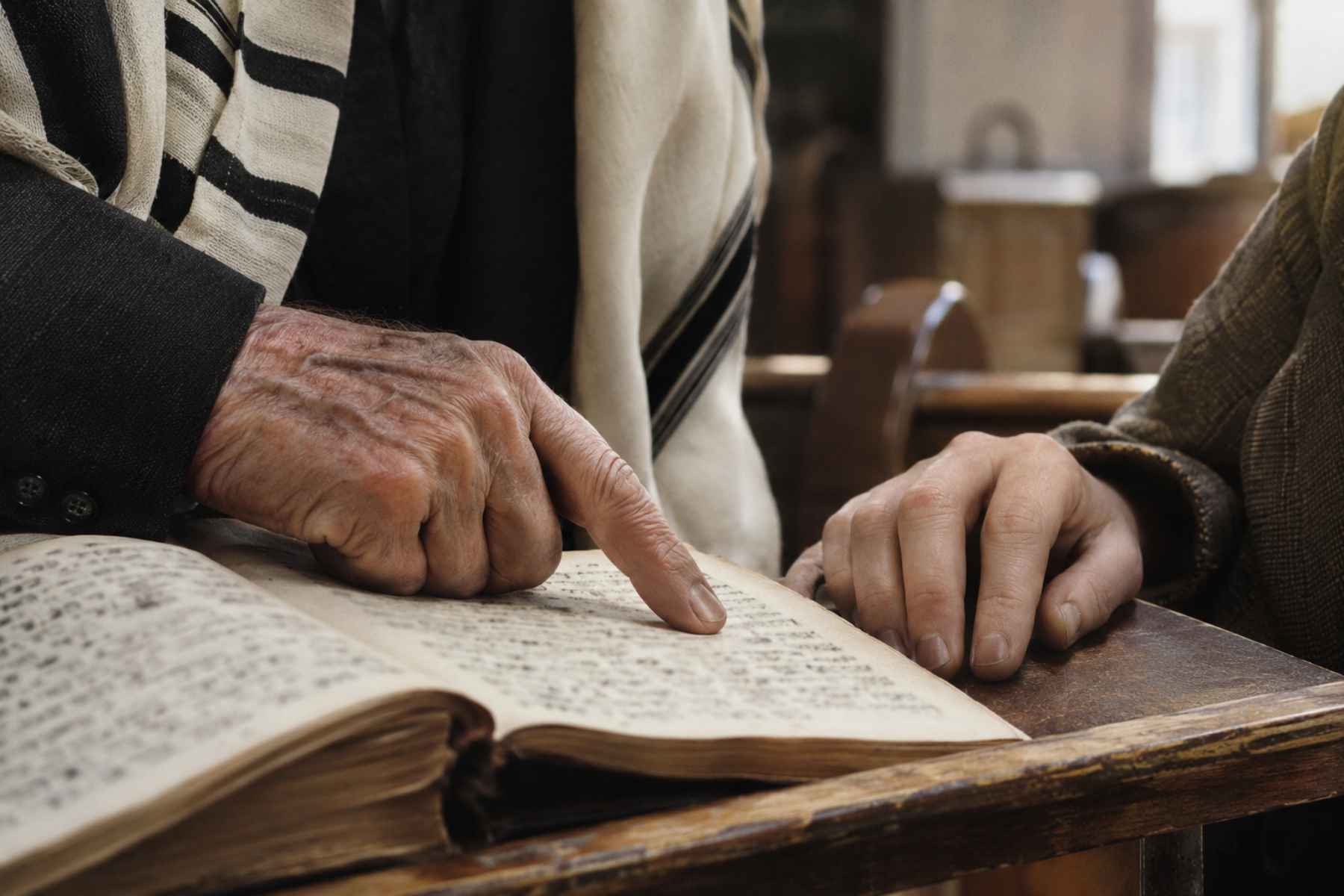
Judit Niran Frigyesi, Writing on Water. The Sound of Jewish Prayer. Labor et Fides, October 14, 2026. 280 pages, €22.
Judit Niran Frigyesi offers us a book that invites us less to watch than to listen. To listen to voices, silences, inflections, and whispers that traverse time and carry with them the memory of generations. Writing on Water. The Sound of Jewish Prayer belongs to these singular works which, beneath the appearances of an ethnomusicological inquiry, gradually become a meditation on identity, memory, spirituality, and transmission.
Budapest, 1976. A young ethnomusicologist embarks on a study devoted to the liturgical chants of the Jewish communities in the capital of Hungary. She meets cantors, frequents prayer spaces, collects testimonies, and seeks to understand the particularities of a musical tradition whose richness progressively exceeds the boundaries of her scientific research. But this inquiry transforms itself. The chants are no longer merely objects of study. They become witnesses to a history, custodians of a memory, and expressions of a tradition whose continuity has been profoundly disrupted. Through the voices encountered, the author discovers something of her own history and of her relationship to Jewish heritage. It is precisely in this meeting between scientific research and personal path that the originality of the work resides.
The Song, a Living Memory
The author reminds us that sung prayer is never simply the juxtaposition of words and melody. It is an embodied experience that engages the voice, breath, body, emotion, and the relationship to a community. The same words can be spoken in different ways. Their meaning does not depend solely on their linguistic or theological content, but also on how they are carried and transmitted. The cantor does not merely perform a score; he gives presence to the prayer and accompanies a congregation in a shared, collective experience. What is said here for the Jewish Tradition is similarly true for the Christian, monastic, and conventual traditions.
This transmission rests on a particular knowledge. It is acquired by listening, imitation, repetition, and regular contact with communities. It partly escapes written rules and theoretical explanations. A portion of the Tradition is inscribed in gestures, vocal habits, and the bodily memory of those who practice it. Judit Niran Frigyesi invites the reader to regard listening as a genuine method of knowing. Understanding a religious tradition requires not only consulting texts, doctrines, and institutions. One must also attend to the sensory practices that give it life. The singing thus becomes a living memory. It connects generations, sustains a continuity, and allows an ancient voice to reappear in the contemporary world.
Budapest, the Wounds of History and the Survival of Voices
The historical dimension lends the book a particular depth. The investigation unfolds in a Hungary still marked by the consequences of the Shoah and by the political transformations that followed the war. A Jewish community that has been nearly decimated. The encountered Jewish communities bear the traces of antisemitic persecutions, deportations, disappearances, and the destruction of numerous family and cultural worlds. Added to these ruptures are the constraints of the communist regime, which altered the conditions of religious practice and the transmission of traditions. It is important to distinguish these distinct historical experiences. The Shoah and the restrictions of the communist regime do not belong to the same realities. They have nevertheless contributed, each in its own way, to weakening the conditions in which Jewish communities could maintain their practices and their memory.
In this context, the chants collected by the author acquire a meaning that goes beyond their musical interest. They bear witness to the persistence of religious and communal life despite the catastrophes. Song does not repair the wounds of history. It does not resurrect the disappeared nor restore the worlds that were destroyed. Yet it prevents disappearance from being followed by definitive erasure. It allows a community to maintain a link with its past and to transmit something of its experience. This resistance is discreet, but essential. It does not necessarily take the form of political engagement or public claim. It may reside in fidelity to a prayer, in the preservation of a melody, or in the will to continue singing together.
Being a Stranger to One’s Own Heritage
One of the most moving aspects of the work is the narrator’s personal journey. Gradually, the researcher understands that her inquiry is probing herself. Behind the discovery of chants and liturgical practices lies a more intimate question. How does one find a place in a tradition to which one feels close, yet one does not always know how to inhabit? This experience of estrangement proves especially fertile. It is possible to be an heir to a history without knowing its codes. One can belong to a culture without having received all the practices that sustain it. One can sense a desire to reconnect with a family or religious memory whose transmission has been interrupted. Identity does not appear as a heritage definitively established. It is also a search, a reconstruction, and sometimes a reconciliation with what precedes us.
By listening to others, the author learns to better understand her own relationship to the tradition. This approach gives the work a universal dimension: it speaks to all who seek to recover a fragmented family, cultural, or spiritual history.
A Spirituality of Listening… and Openness to Interreligious Dialogue
The reflection also carries a significant spiritual weight. Prayer is not treated as a mere recitation of religious texts or as the abstract expression of belief. It involves the whole person. The cantor accompanies the community, gives a tangible form to the words, and helps render the liturgy a shared, collective experience. The voice creates a link between the received text, the one who sings it, and those who listen.
For a Christian reader, this reflection naturally opens a space for dialogue with their own liturgical experience. Without equating Jewish and Christian traditions, nor erasing their theological differences, it becomes possible to recognize a common question: how does a community keep an ancient word alive in the present? The book rightly reminds us that faith is not transmitted solely through doctrinal teaching. It also happens through gestures, rhythms, sung words, and shared experiences. This openness to interreligious dialogue is one of the book’s strengths. It does not aim to reduce Judaism to Christian concerns, but to welcome something from a distinctive tradition and to let this encounter enrich our own understanding of spirituality.
Fragility of All Transmission
The title is especially evocative. Writing on Water is an attempt to fix a trace on a surface that cannot preserve it. The image perfectly expresses the difficulty of the enterprise: how to render in writing a voice that, by its nature, belongs to the moment? The song begins, unfolds, and completes itself. Once the voice is extinguished, it remains only in the memory of those who heard it, in recordings and musical notations, or in the possibility of singing it again. Writing seeks to retain this fugitive experience, but it cannot replace the presence of the cantor, the atmosphere of a synagogue, or the emotion of an assembly. This paradox far exceeds the musical question. It concerns any cultural and religious transmission. A tradition does not survive merely because it is kept in archives. It remains alive when people continue to practice it, to interpret it, and to give it new meaning. Fidelity thus does not consist in mechanically reproducing the past. It involves allowing a heritage to continue to live, sometimes under profoundly different circumstances.
A Singular Work Between Science and Literature
The book’s originality finally lies in its hybrid form, which combines ethnomusicological inquiry, a personal narrative, historical memory, and spiritual meditation. This richness can also present a challenge to readers who might expect a strictly technical study or, conversely, a traditional autobiographical account. There is indeed a risk here of idealizing a traditional religious world that is fragile or lost today. Memory must preserve voices and practices without turning the past into a harmoniously closed universe.
With Writing on Water, Judit Niran Frigyesi offers much more than a study of Jewish liturgical chants. She provides a profound reflection on memory, the wounds of history, identity, and the fragility of any transmission. The book shows that traditions live not only in texts and institutions, but in the voices of those who carry them. A sung prayer thus becomes a site of encounter between generations, between the living and the absent, between collective history and personal journeys. The work also reminds us of a fundamental requirement: to learn to listen before trying to explain, to receive before claiming to possess, and to transmit without locking the heritage into rigid fidelity. What remains is not always what we managed to preserve intact. Sometimes it is what we learned to bring back to life. This work invites us to welcome the fragility of memory while refusing to let silence have the last word.
The article Writing on Water, which collects Jewish chants endangered with extinction, first appeared on Lythrum Press.
