
He toppled the mighty from their thrones
“The children of this world, in fact, are more cunning toward their peers than the children of light” (Luke 16:8). Jesus’ warning remains strikingly relevant today. Throughout history, those who wield power, the so-called “outsiders,” have managed to grasp the subversive power of the Gospel, and to fear it, while believers, for the most part, have anesthetized the sacred text, reabsorbing it into devout piety and liturgies lacking real personal involvement.
If for traditional piety Mary is the Virgin, the Most Holy above all, for the powerful she is a dangerous subversive, a figure “irregular” from the Galilean outskirts who must be kept under tight surveillance. Because of her liberating energy, her song, the Magnificat, she has over the centuries become one of the biblical texts most feared and obstructed by power structures. When the force of the Gospel meets the injustices of the world, Mary’s song reveals all its disruptive potential.
Recent history offers irrefutable proof: in India, during British rule, the public recitation of the canticle was restricted at several celebrations for fear it would feed the population’s thirst for independence. In Guatemala, in the 1980s, under the ruthless military dictatorship of General Ríos Montt, the text was banned. During the most intense phases of repression against indigenous peoples, the press and the distribution of liturgical leaflets bearing the Magnificat were banned or confiscated in rural areas because they were regarded as “subversive propaganda.”
In Argentina, during the years of the military junta, authorities imposed severe restrictions when the Madres de Plaza de Mayo began using Mary’s words to demand the truth about their desaparecidos children. In peripheral parishes and catechesis centers, the use of folk songs inspired by the Magnificat led to searches, intimidation, and the arrest of catechists and priests. In the Philippines, a completely analogous phenomenon occurred during the years of martial law under the Marcos regime, when the political police forbidden the public recitation of the text during peasant demonstrations.
Why are the words of the Mother of God so fearsome to the powerful? The evangelist Luke recounts that, warned by the angel Gabriel of Elizabeth’s unexpected pregnancy, “Mary rose and hurried to the hill country, to a city of Judea” (Luke 1:39). Mary is a very young Galilean girl, between twelve and thirteen years old, who sets out on the journey alone (the text does not mention caravans, nor the protective presence of a father or fiancé). Above all, she acts with complete autonomy, without having sought permission from any male authority: a fact unacceptable in the patriarchal society of the time. Mary reveals herself as a free, independent, autonomous woman, capable of risking her own safety in order to bring relief and life to those in need.
The help that this young Galilean woman brings to her elderly Judean relative then unsettles a precise geographical, political, and theological frame. From Galilee — a border land, a people deemed rough and ever the cradle of anti-government tempers — the Jews did not expect anything good. According to the northern prophetic tradition, monarchy was not an expression of divine blessing, but the result of God’s anger (Hos. 13:11), which had yielded to the people’s claim to have a king like the other nations (1 Sam 8). Thus, while the Galileans held a firm anti-monarchy conviction — certain that Israel’s woes were born precisely with the institution of the kingdom — the Jews remained stubbornly nostalgic for the fallen kingdom of David, clinging to the faded myth of a glorious past.
And indeed, right in the house of religiously conservative relatives tied to the Davidic lineage, the young Galilean explodes with a decidedly anti-monarchical hymn, praising a God who “has toppled the mighty from their thrones, lifted up the humble” (Luke 1:52).
In the Magnificat, Mary does not sing a nostalgic recollection of the past, nor does she seek solace in intimate spiritual consolation. She proclaims the fundamental law of history: the constant and unstoppable action by which God overturns the logics of human power.
To grasp the impact of this proclamation one must look closely at the evangelist’s linguistic choice. The verb Luke uses to describe God’s action (“to overturn/dethrone,” in Greek kathairéō) does not denote a formal change of government, but a vigorous act: literally, to pull down with force, to demolish, to destabilize the structures of oppression. Moreover, the grammar of the text (which employs aorist verbs) does not refer to an episodic event relegated to the past, nor does it project hope into a distant afterlife, but expresses the permanent mode by which God acts in the present of history.
Those who are pulled down are the powerful (Greek dynástai), rulers, tyrants, and oligarchs who exercise coercive domination over others. Those who are raised up are the humble (Greek tapeinoí), a term that translates the Hebrew ’anavim: not a generic, softened modesty of character, but the condition of those who are literally bent and bowed under the weight of injustice, the poor and the marginalized deprived of rights and voice.
The song of Mary is not a pious illusion, but a historical certainty: the empires and tyrannies that believed themselves invincible inevitably fall under the effective action of the light that always conquers every form of darkness (John 1:5). Jesus will indeed ensure that the proclamation of the Gospel by the disciples—called to be the “light of the world” (Matthew 5:14)—will provoke the eclipse of false deities and the subsequent collapse of regimes built upon them.
The power of the Son of Man will dismantle oppressive powers, opening for humanity a progressive and irreversible redemption from what is inhuman to what is profoundly and fully human. But all this will not occur solely through divine intervention: it requires the active collaboration and participation of every believer.

Ugly as Sin
Bernadette
Botte e risposte
Di questi tempi
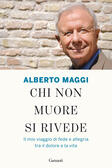
Chi non muore si rivede
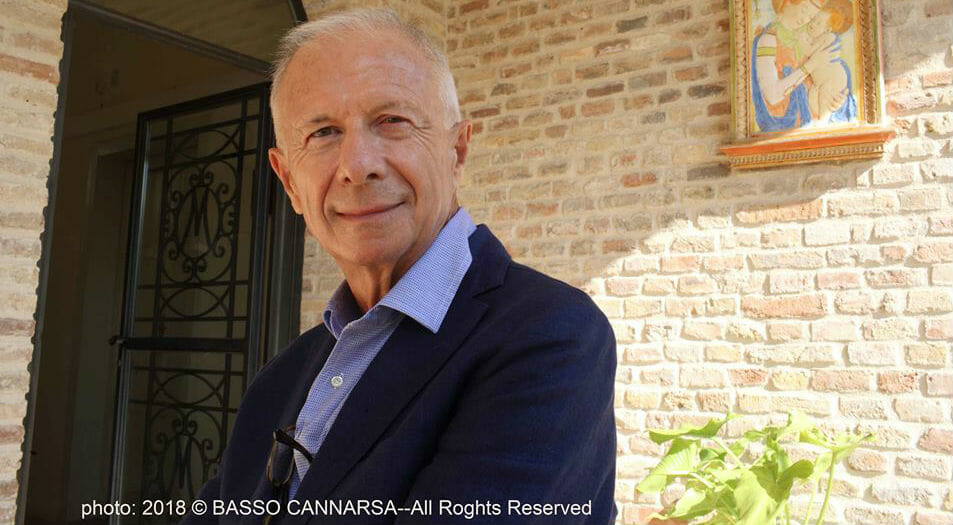
THE AUTHOR – Alberto Maggi (in the large photo by Basso Cannarsa, editor’s note), a friar of the Order of the Servants of Mary, studied at the Marianum Pontifical Theological Faculty and at the Gregorian University in Rome and at the École Biblique et Archéologique française in Jerusalem.
