
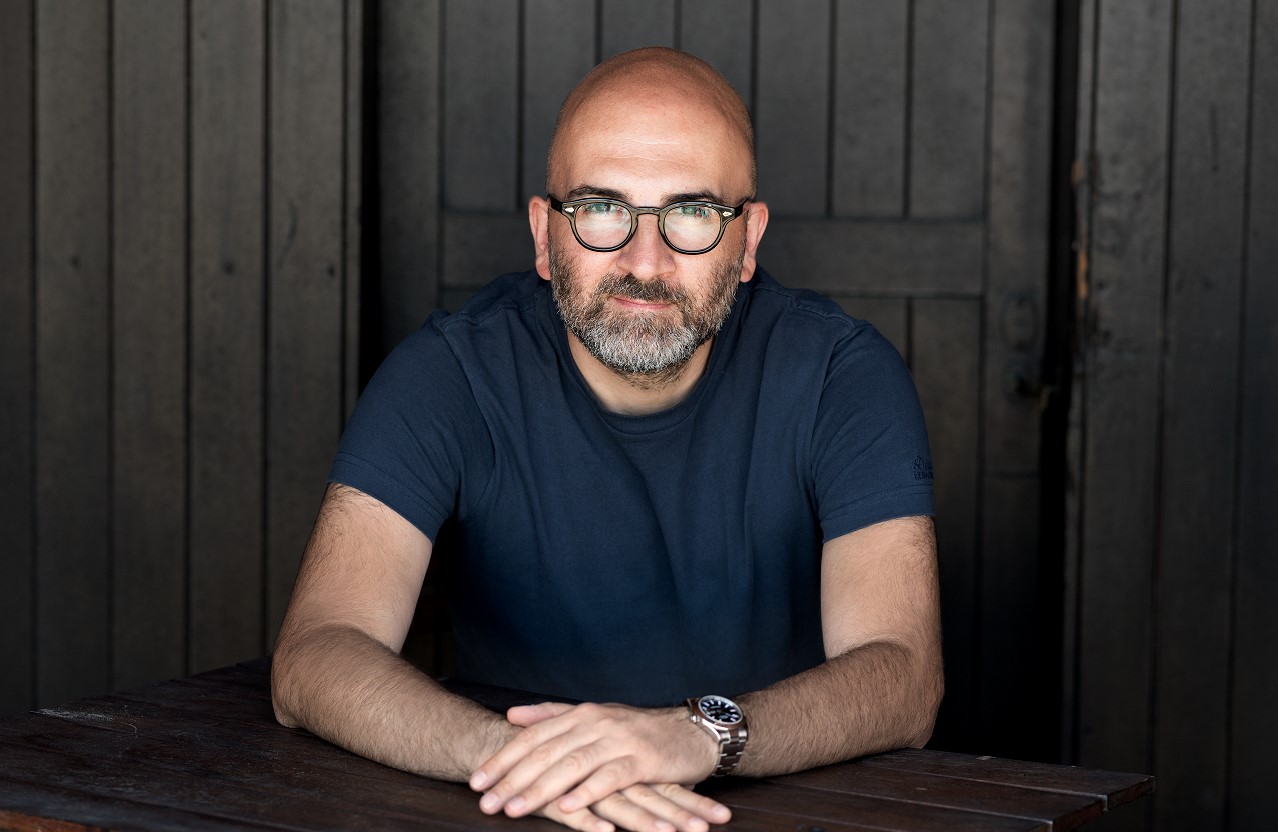
Donato Carrisi, Italy’s most acclaimed thriller author, returns to bookstores: La casa dei respiri, published as always by Longanesi, is the fifth installment in the saga dedicated to Pietro Gerber, a child psychologist and hypnotist who works with traumatized children, one of the best-known characters born from the pen of the writer from Martina Franca.
Gerber, whom we met in La casa delle voci, La casa senza ricordi, La casa delle luci and La casa dei silenzi, is a tormented figure, whose past gradually comes to light across the books; his specialty is hypnosis, through which he delves into the memories of victims, uncovering their most hidden secrets.

Following the bestseller La bugia dell’orchidea, which hit the shelves last November, the new novel by the author and screenwriter from Puglia (here, by the way, our special feature on his books) is among the most anticipated titles from now until Christmas.
The Plot of La casa dei respiri
With this new story we return to the city of Pietro Gerber, Florence. The hypnotist, however, cannot go home: in his studio, there is a boy with a story to tell. And above all, out there, somewhere, lie his friends to save. And time is running out too fast…
When they found him, aboard a local train, Evan looked bewildered, in shock, his face scarred by scratches and his clothes soaked in blood. Blood that wasn’t his. Evan cannot remember where he came from or how, he cannot say to whom that blood belongs. He and his three friends were simply exploring a large abandoned house in the middle of the woods. But, after letting them in, the house did not want to let them out.
Until, for some inscrutable and secret reason, it allowed Evan to escape. Because the house is alive, it breathes, it whispers. The house deceives, flatters, challenges. The house changes, and it changes you. Pietro Gerber has no choice: to reconstruct what happened and to hope to find the boy’s friends before it’s too late, he must resort to deep hypnosis, he must delve into the mind of the young Evan and, with him, return to that house forgotten by men and time. With the risk that he himself may become trapped there, forever…
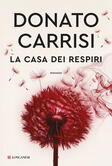
La casa dei respiri
La educazione delle farfalle
La ragazza nella nebbia
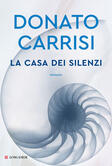
La casa dei silenzi

La bugia dell’orchidea
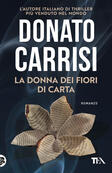
La donna dei fiori di carta
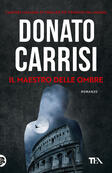
Il maestro delle ombre
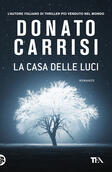
La casa delle luci
Gli enigmi del suggeritore
Io sono l’abisso
La casa senza ricordi

Eva e la sedia vuota-Illustrazioni di Paolo d’Altan
La casa delle voci
Andrà tutto bene
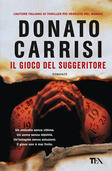
Il gioco del suggeritore
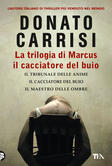
La Trilogia di Marcus, il cacciatore del buio
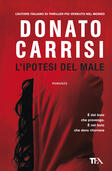
L’ipotesi del male
L’uomo del labirinto
Il cacciatore del buio
Il suggeritore
Il tribunale delle anime
Daniel wasn’t an urban explorer himself, but he knew very well the tricks of the best. He had perfectly absorbed the seven dogmas laid out by Jeff Chapman, the father of urbex. Daniel had decided to teach the dust-bearers those simple yet essential rules so they would treasure them.
First dogma: never go alone.
The web was full of videos of solo urban explorer feats. But those were considered tourist explorers and, as such, spurned by those who regarded urbex as a noble art. The rule requiring always having at least one companion was fundamental to receiving help if needed. Since videos posted online could generate imitators, it was necessary to convey from the outset the importance of avoiding unnecessary risks.
Second dogma: safety.
It was essential to be equipped with good gear. Instead of All Star sneakers, the dust-bearers should wear sturdy, preferably safety-rated shoes to move around among nails, broken glass, rotten floors. Durable gloves to prevent cuts, rust, punctures or bites from animals. Front-facing torches to keep hands free in case of slips or falls. FFP3 masks to avoid inhaling dust, molds, toxic fumes or asbestos. Tough clothing with long sleeves to prevent scratches that could cause infections. A protective helmet and a whistle to raise the alarm if needed. A compact, lightweight backpack containing a spare shirt, a windbreaker, a water bottle, a few protein bars, a power bank to recharge torches, phones, GPS or other electronics. A first-aid kit. Waterproof and sealable bags for organic waste to avoid littering. A multi-use knife.
Evan, Rudi and Aki certainly did not have the means to afford a gear set of that level. They were embarrassed to admit it to Daniel. But he had lifted them from any trouble, offering to fund the channel and ensuring he would recover the expenses with ad revenue or subscriptions. He had great faith in the project’s success. And he had also given them a high-end smartphone.
« In the end I owe you, since you welcomed me aboard. » And to them it didn’t seem real that he felt even in debt.
Third dogma: invisibility.
Every respected urban explorer had to go unnoticed. To enter discreetly or avoid being noticed from outside, one had to dress in dark colors. No noisy fabrics, nothing synthetic. The ideal outfit was black jeans and a black hooded sweatshirt to pull up when needed.
Fourth dogma: only open doors.
In the chosen building you entered only if there were no locked shutters, padlocks, chains or bolts. No breaking in; for urbexers it was essential to distinguish themselves from thieves or vandals. Getting into abandoned properties, even just to peek around, was still illegal but not equivalent to a real crime, aside from trespass. At most, one could incur an administrative penalty. The urbex ethic was very strict in this sense.
From this also followed the fifth dogma: take nothing but pictures, leave nothing but footprints.
You were equipped with appropriate recording devices. An action camera to wear with a vest, typically positioned at chest height and connected via Bluetooth to a dedicated app on smartphones.
It was strictly forbidden to take memorabilia or souvenirs, especially from deserted houses, including valuable items forgotten by former occupants. Even moving objects was deemed deplorable. If it happened, everything had to be returned to its original place and handed back to the sole master of the place. Time.
S sixth dogma: in videos you should never reveal the locations of the explored sites.
This was to prevent thieves and vandals from arriving and to ensure that the places remained uncontaminated.
Finally, there was the seventh dogma, the most important. Never at night.
The last rule tied back to safety. Daylight provides a number of important assurances in this sense. Most importantly regarding the corollary: if something during the exploration doesn’t feel right, you turn back.
But there was another reason, unspoken.
The mission of the urban explorer was to reveal the secret life of objects left alone after humans had gone away forever. Bear witness to the silent apocalypse that strikes certain places, imprisoning them in a spell of time. Waking them from their slumber, only to let them fall asleep again after the brief passage of visitors. It was a new form of archaeology that concerned the most recent past. But there was an additional reason why practicing urbex after sunset was strongly discouraged.
At night the abandoned places changed.
Longanesi & C. © 2026 – Milan
Gruppo editoriale Mauri Spagnol
(continues in bookstores…)
THE FIRST APPOINTMENTS – Donato Carrisi signs copies of his new novel on Tuesday, November 3, at 6 p.m., at the Mondadori Duomo bookstore in Milan. On Saturday, November 7, at 12 p.m., he will be in Rome at the Libreria Nuova Europa I Granaim and on Sunday, November 8, at 5:30 p.m., in Orvieto, at the Sala dei Quattrocento; on Tuesday, November 10, at 6:30 p.m., the author will be in Savona at the Sala Rossa del Comune, while on November 11, at 9 p.m., he will present the title at the Teatro Ariston in Acqui Terme (Alessandria).
Friday, November 13 he will meet the public in Vignola (Modena), at the Teatro Ermanno Fabbri, at 9 p.m.; on Saturday the 14th, at 7:30 p.m., he will be in Bologna at the Biblioteca Salaborsa; subsequently, on November 17, at 8:45 p.m., Carrisi will be in Treviglio (Bergamo), at the Teatro Nuovo, and on Thursday the 19th, at 6:30 p.m., he will be in San Donà di Piave, at the Libreria Moderna.
Friday, November 20 he will present La casa dei respiri in Villorba (Treviso), in the Aula Magna della Scuola Giuseppe Scarpa, at 8:30 p.m.; Tuesday, November 24, at 6 p.m., he will be in Pontedera, at the Museo Piaggio, and on November 25, at the Giunti Odeon of Florence, at 6:30 p.m. On the occasion of Bookcity, the author will meet the public on Sunday, November 29, at the Salone d’Onore della Triennale in Milano.
