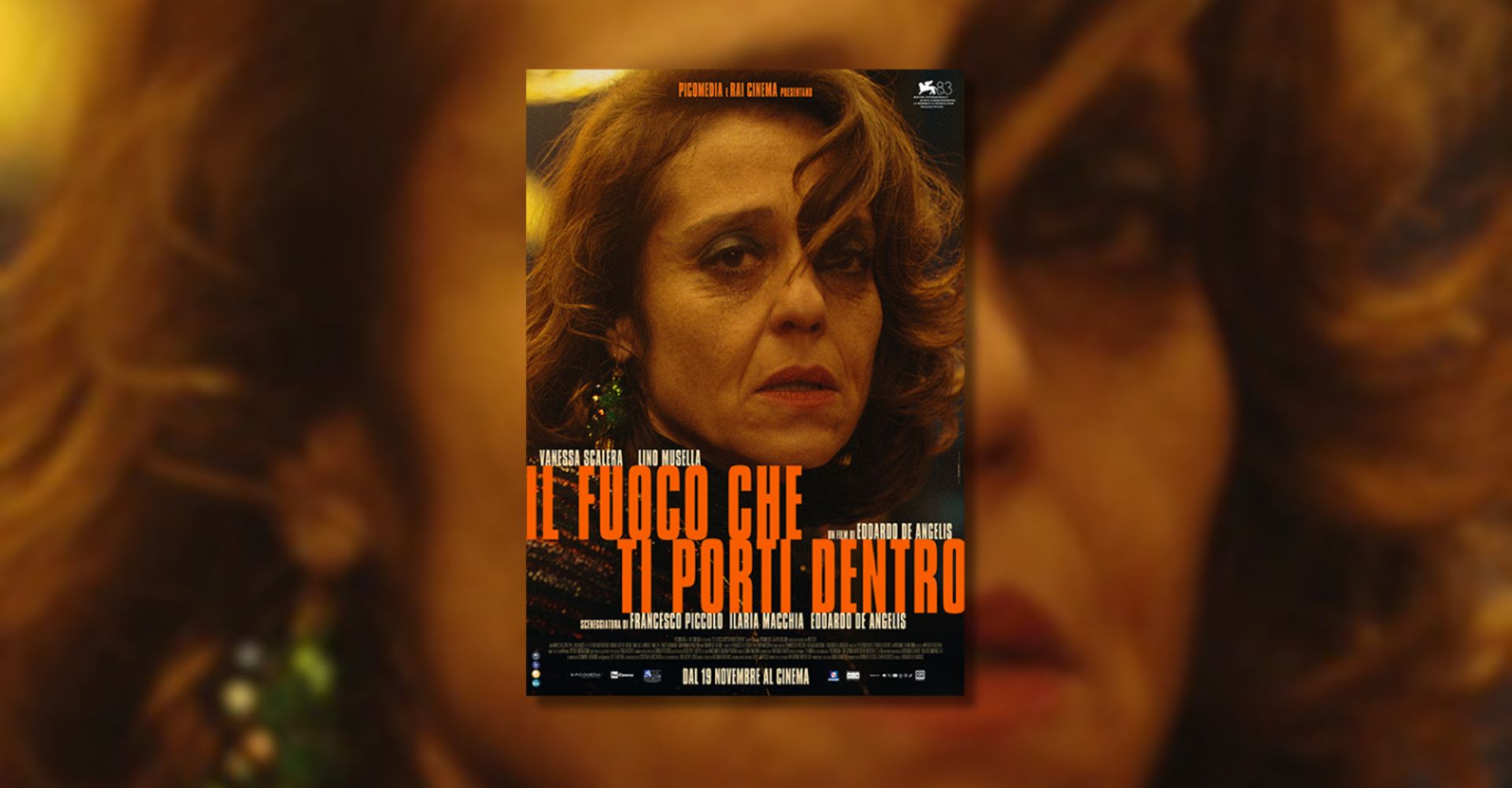
As we had foreseen, Italian cinemas opened to a season rich in titles that originate as adaptations of books, many drawn from the latest edition of the Venice Film Festival.
The film Il fuoco che ti porti dentro, taken from the eponymous autobiographical novel by Neapolitan writer and editor Antonio Franchini, published in 2024 by Marsilio and winner of several prizes, such as the Napoli Prize, the Mondello Prize – Special President Prize, and a finalist at Campiello.
The Fire You Carry Inside, the Book’s Plot

“I have hated it forever, ever since my life began to drift away from hers.”
These words belong to a hard book (we wrote about it here), in which the author sketches a decidedly unflattering portrait of Angela, the mother.
“The novel is the story of an interrogation, an interrogation wider than the mother-child relationship,” the author explained, born in 1958, who has been the editorial director of Giunti since 2015, in an interview with Sky TG24.
“The question I kept asking myself most was how much the figure of this woman, who— as people used to say—was ‘by chance’ also my mother, embodied Italian ills so radically and deeply, and, in some sense, the ills of the South as well,” he added.
At the center of the book, which arrives in cinemas on November 19, is Angela, a woman “who emblematic ally embodies all the horrors of Italy.” The novel delves into the woman’s life and advances an inquiry into her passions and her deep-seated hatred, seeking an origin and a motivation behind such profound feelings. A comedy that contains a tragedy, it explores the reasons behind her fury.
From the Book to the Film
Presented in competition at the 83rd edition of the Venice Film Festival, the cinematic adaptation is directed by the Neapolitan filmmaker Edoardo De Angelis (among his latest works are Comandante, currently in theaters, and the small-screen adaptation of Elena Ferrante’s novel, The Liar’s Life of Adults).
The screenplay is written by Ilaria Macchia, Francesco Piccolo, and the director himself, Edoardo De Angelis.
The film concentrates all tension in the Christmas dinner scene where Angela, played by Vanessa Scalera (whom we have recently seen on the big screen in The Common Good and Diamonds, among others, and who stars as Imma Tataranni in the eponymous TV series), takes center stage (literally and figuratively). The Apulian actress is supported by an exceptional cast: Lino Musella, Elena Radonicich, Ivana Lotito, and Nicole Malaj, among others.
Angela has joined her son Antonio in Milan, where he has built a successful career, far from her. The dinner, with a capon that refuses to end up in the pot, a daughter whose arrival remains uncertain, and an illustrious unexpected guest, turns into the final showdown between mother and son.
For the director, “Angela is a character who attracts and repels me, as with everything that really matters to me. I hang on her lips, I depend on her gaze, I am very careful about what I say and what I do: I tread on eggshells. The fire she carries inside makes me crave her.”
“I Trusted It, and the Result Seems Faithful to the Spirit of What I Wrote”
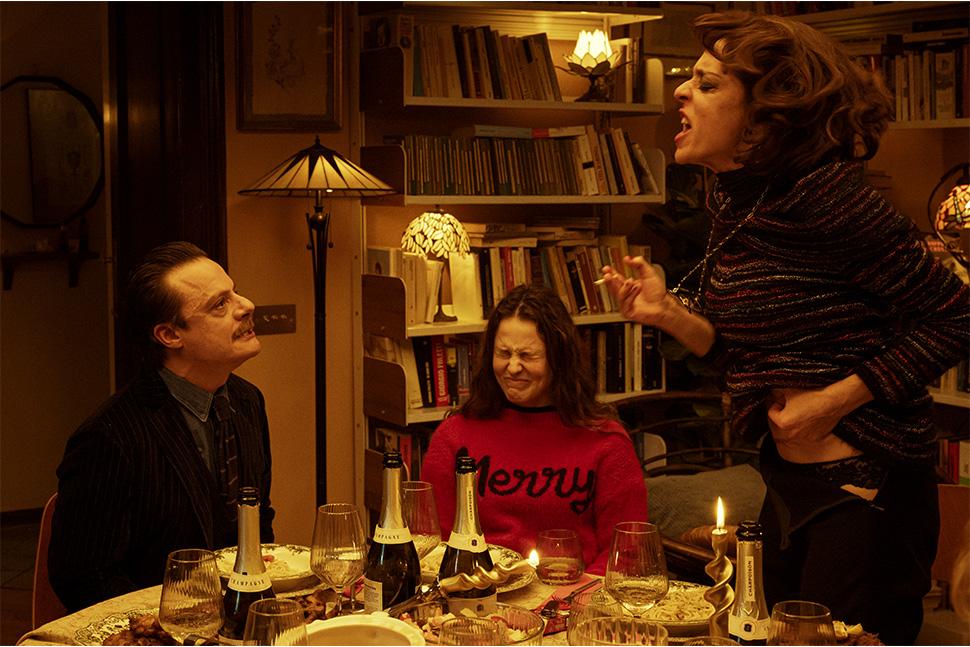
In a two-person interview with the author and the director (published in Robinson, the Sunday supplement of La Repubblica), the author commented on the fear that the adaptation might “betray” the book’s sense: “A writer speaks through words, a director through images. And he must be free to do so. Francesco Piccolo and Ilaria Macchia have given the story a unity of time and place that the book did not have. I trusted them, and the result seems faithful to the spirit of what I wrote.”
The two underscored the unity of intent between book and film, which gives birth to an archetype: “Who has experienced a proper emotional education looks at these beings as if facing a horror film. Who has lived war at home feels at ease,” the director pointed out, adding: “I get goosebumps discovering once again how the story of Antonio is, deep down, also mine.”