

The first day of school, this year, we brought all the students into one room.
In turn, we teachers had the task of explaining something about the school, the rules, the projects.
I was given the task of closing the proceedings with a small motivational speech.
Ouch, I hadn’t prepared anything.
So I thought the best thing would be… not to give speeches. To listen to them, try to see if they had something to say. And so I did a question, one I always ask:
“Do you have a dream, you all?”
Silence. People looking at each other. Eyes saying: what does he want?
Then a few timid hands went up. First one, then two. In the end there were about fifteen.
Not many, damn it. Not a good sign. Not at all.
And that’s where he arrived.
A big, burly kid. One of those who know everyone, and certainly not for being the calmest and most peaceful in the school.
He comes up beside me, with a springy step. And then in front of everyone, he says:
“I want to become rich!”
Roar. Laughter. Applause.
I watch my colleagues raise an eyebrow, sigh, and for a moment I too see my arms fall to the ground in dismay.
Since it’s not the first time someone answers like that, I ask him how much money it would take, for him, to be rich.
“One million euros, no, let’s make it ten!”
“And what would you do with them when you have them?”
The question catches him completely off guard.
“Well, uh, I don’t know!”
Laughter. Slaps on the back. Applause.
I press him again, and keep pressing until something comes out:
“Well, cars. Houses. A house with a pool, come on. Actually two!”
And he goes back to his place, all proud.
What lies behind those kids who smash shop windows?
I’ve thought about him, these days.
Him and several other boys from my school, in one of the municipalities with the lowest per-capita GDP in my region, and with a very high incidence of first- and second-generation foreign students. And I thought about it because, if I look at what happened in Milan, I’m fairly sure that at least two or three of those kids could have easily been there, among those who were entering Foot Locker to steal sneakers.
If they were born there, raised there, if they had also received the messages in the groups where they were urged to go out hooded, at least two or three of the students from my school might have written: I’m coming.
And I know it because I can see the defeat in their eyes even before the game starts.
I see it in their faces how they already feel excluded from a world that seems made for others and not for them.
I breathe in, this lack of dreams, which starts when you’re still in the cradle and grows around you in the money-tight discount shopping, in your parents’ brutal work shifts, in the zero books at home, in the junk food one day yes and the next, in endless afternoons when you’re left in front of a cellphone, in the counterfeit Gucci belt worn with pride.
I touch it with my hand, this absence of prospects, of a future, that makes you lose the desire to believe, to understand if you have something special in you too, and convinces you that in life, at best, you’ll scrape by as a worker earning about fifteen hundred a month.
The generation we have left without dreams
I fight against this every morning, against the feeling of already being a loser, this repulsion for school “that’s good for nothing,” this outsized admiration for those who make easy money, that exultant shout of “Aura!” in front of Sfera Ebbasta at the stadium, followed by a throng of ten models paid to be around him.
And none of those kids think about the fact that they are saying “Aura!” to someone who has to pay to have women near him.
It is here that you see who wants to understand, and who instead just wants to hear “Those bad guys who destroyed everything.”
Those who demand unconditional condemnation, usually, never speak to those kids. They do not know what it feels like to feel like a piece of crap since you were small. They do not know what it means not to have dreams, because the world has told you that you can only dream them.
Have you all seen the twelve-year-old boy, with the bandana over his mouth. Those eyes still childlike, throwing a bin and then leaving the store full of stuff. What was a boy who until yesterday went to elementary school doing there in the middle?
How can one even think it’s normal, such a thing, that doesn’t scream something at us? How can you point the finger at him, or his family, without realizing everything that’s behind it.
How can you be so blind as not to see that those broken windows are the product of something, the consequence of something that starts a long way off.
As usual, the only answer we’ve been able to give: increase penalties. Limit freedom.
But until we give these kids something to believe in, and above all someone who believes in them, things will not change.
Until we understand what we’re doing to their future, a future we can forget.
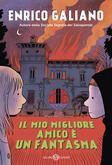
My Best Friend Is a Ghost
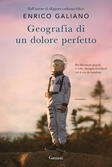
Geography of a Perfect Pain

The Heart Doesn’t Sleep
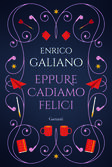
Yet We Fall Happily
L’AUTORE – Enrico Galiano, insegnante e scrittore friulano classe ’77, in classe come sui social, dove è molto seguito, sa come parlare ai ragazzi.
Dopo il successo di romanzi (tutti usciti per Garzanti) come Eppure cadiamo felici, Tutta la vita che vuoi, Felici contro il mondo, e Più forte di ogni addio, ha pubblicato un libro particolare, Basta un attimo per tornare bambini, illustrato da Sara Di Francescantonio. È poi tornato al romanzo con Dormi stanotte sul mio cuore, e sempre per Garzanti è uscito il suo primo saggio, L’arte di sbagliare alla grande. Con Salani, Galiano ha quindi pubblicato la sua prima storia per ragazzi, La società segreta dei salvaparole. Ed è poi uscito, ancora per Garzanti, il suo secondo saggio, Scuola di felicità per eterni ripetenti.
Dopo il romanzo Geografia di un dolore perfetto, è tornato in libreria con Una vita non basta, e ha poi pubblicato, sempre con Salani, il secondo libro per ragazzi, L’incredibile avventura di un super-errore. Con Garzanti nel 2025 è poi uscito il romanzo Quel posto che chiami casa, e con Einaudi Stile Libero, nel 2026, Il cuore non va a dormire.
Il suo nuovo libro è Il mio migliore amico è un fantasma (Salani).
Qui è possibile leggere tutti gli articoli scritti da Galiano per il nostro sito, con cui collabora con costanza da diversi anni (anche con dei video per Instagram e TikTok).
