
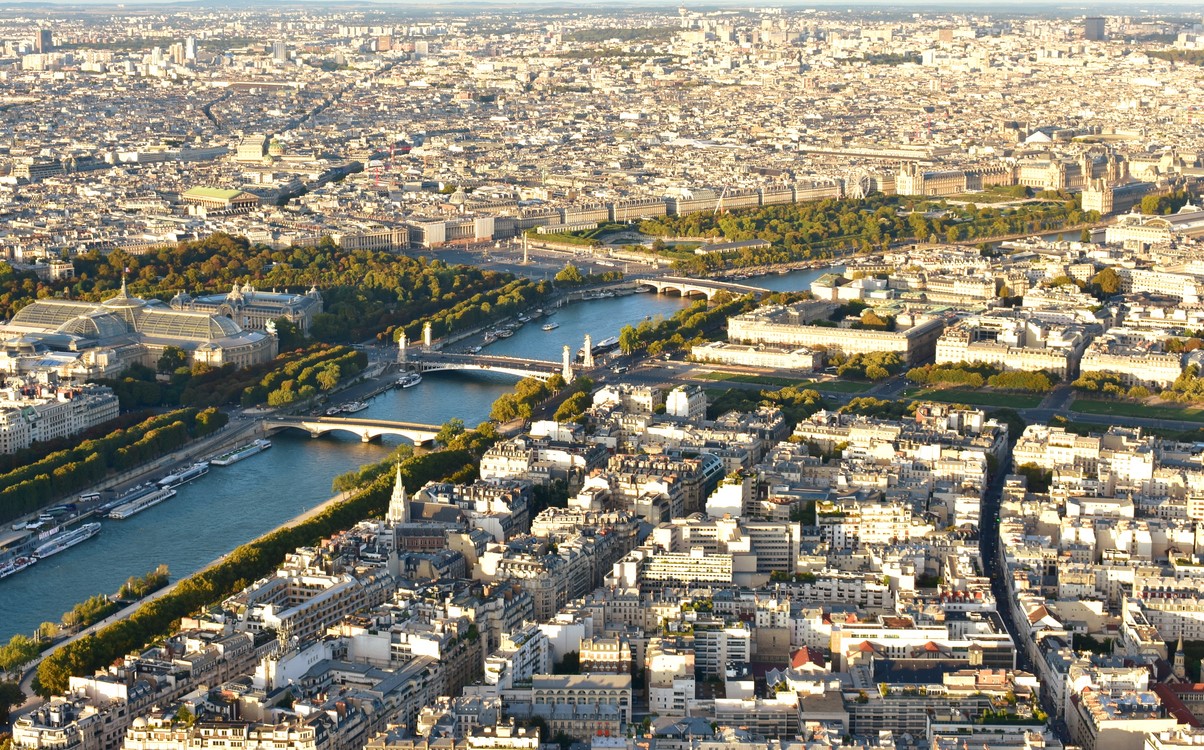
“If one must die of hunger, Paris is better than London”: the rather categorical assertion of Wyndham Lewis, a painter of Vorticism and a most refined writer, is not merely a witticism – for example even Orwell, while working as a drudge along the Seine, essentially agreed with him.
The magnet for artists and writers from all over the world
Paris, the Paris between the wars, was the magnet for artists, writers, and intellectuals from around the world – French people included, of course. They were young, rebellious, original, unbindable, largely devoted to sex, alcohol, and drugs – and to imagining other worlds; they lived unforgettable lives that, like shadows, lingered in houses, in bistros, in the very architecture of the city.
Giuseppe Scaraffia, and this is the second time, has gone to awaken them, not as a ghost-hunter but as a somewhat dandy pilgrim: and with nostalgia. His book devoted to the Fifth and partly to the Sixth arrondissement, namely the Latin Quarter, just published by Neri Pozza, is therefore titled (and perhaps there could be no other) Nostalgia for Paris.
A geographical map of ideas and an engaged gaze

L’autore lo presenta come una cartografia, una mappa, ma naturalmente è molto di più, è una geografia intellettuale e soprattutto uno sguardo partecipe, commosso (nonché ironico) su un passato irrimediabile che chiede ancora di essere ascoltato, di vivere appunto nella nostalgia del ricordo: attivato però con una enorme ricerca.
I personaggi di cui Scaraffia ricostruisce anche solo piccoli cammei, e a volte lunghe scene come narrate da un testimone oculare, sono infatti innumerevoli: centinaia, da Gide a Joyce a Hemingway a Gertrude Stein alla prorompente comunità saffica, tra Djuna Barnes e Natalie Barney, regina di un salotto in rue Jacob, o le libraie Adrienne Monnier e Sylvia Beach che aprì la mitica Shakespeare and Company e stampò l’Ulisse; o ancora Boris Pasternak che fu spedito in tutta fretta da Stalin a un convegno dove venne rivestito alla meglio da André Malraux perché se ne era arrivato con “una levita da rabbino”, e per timore degli agenti di destra e di sinistra e delle ire del dittatore sovietico invitò gli astanti, fra cui Heinrich Mann e E.M. Forster, ad andare in campagna e raccogliere fiori.
È come un’autobiografia del Quartiere latino che si racconta attraverso i suoi muri: strada per strada, hotel per hotel, dal lussuoso Lutetia (dove sbarcò a 23 anni dall’America lo scrittore e sceneggiatore Nathanael West, per poi scoprire che era troppo caro) alle più tetre stamberghe, dove per esempio cercavano di tirare avanti un Hemingway particolarmente squattrinato, la moglie e il loro piccolo Bumby, bambino che non dava il minimo fastidio.
Lo scrittore se lo portava a spasso in carrozzina ai giardini del Luxembourg, e con qualche briciola di pane, appena i custodi si distraevano o risultavano abbastanza lontani, attirava i piccioni; ne catturava il più grasso e lo portava a casa, stecchito, sotto le coperte del figlio: per metterlo, ovviamente, in padella.
The role of Gertrude Stein (and the salons)
Not all residents of the Latin Quarter were poor. There were also the rich, especially Americans thanks to the advantageous exchange rate. They were generous, and a little willful, like Gertrude Stein, about whom (almost as if inserted into a story embedded in the book) one learns not only of her ménage with Alice Toklas but also of the salon where Picasso’s star shone, managed with a certain severity. For example, she “could not bear that anyone spoke in a hurried way within a few meters of her.”
Not only that: she detested Joyce, and certain guests got on her nerves, one above all Pound: “I don’t want to see Ezra again. He only has to come in and sit here for half an hour and when he leaves, everything is broken: the chair, the lamp… Ez agrees with me, but I can’t afford the luxury of having him in the house, that’s all.”
As is known, she coined the label Lost Generation for the young writers of that era. Perhaps it wasn’t a compliment. After all, it was dreaded: “An ostentatious masculinity in manner and voice – Scaraffia writes – made her formidable bulk seem aggressive.” The famous line: “I am a genius and I thank God I was not born a girl.”
The cafés, for idling and for writing
But beyond the salons where one had to pay a price, there were the cafes, for idling and writing – in that case a secret place – or for discussion, and in that case they were places that had become famous like La Closerie de Lilas or La Rotonde, where powerful erotic adventures were lived, or begun; and there were complaints about tourists who were beginning to be too numerous.
There were places where monumental brawls erupted, for example between communists and surrealists (Breton was adept at instigating them), and others, like the Hotel American on Rue Brea, where doomed poets such as the young René Daumal played Russian roulette.
There was Rachilde’s salon (pseudonym of Marguerite Eymery, famous for scandalous books) where the writer received guests dressed in purple, with two white rats strolling on her knees – but as for the rats even Kiki de Montparnasse, the Bohemia’s star, carried one on a leash around her wrist. Famous line: “Life, after all, is so limited, so devoid of new sins, so diabolical that you must have a rat, a white mouse, to carry around among cocktails and tea.”
Encyclopedic Nostalgia
One could go on and on, in this sort of encyclopedic nostalgia, for example moving to the ninth on Quai Malaquais, where at the top of a spiral staircase the twenty-year-old Antoine de Saint-Exupéry “made his first literary attempts writing in his dressing gown on the bed” (just as Proust is portrayed in some famous engravings).
Obviously this would be impossible: one would end up recopying the whole thing like Borges’ character, the symbolist Pierre Menard, who rewrites Don Quixote word for word.
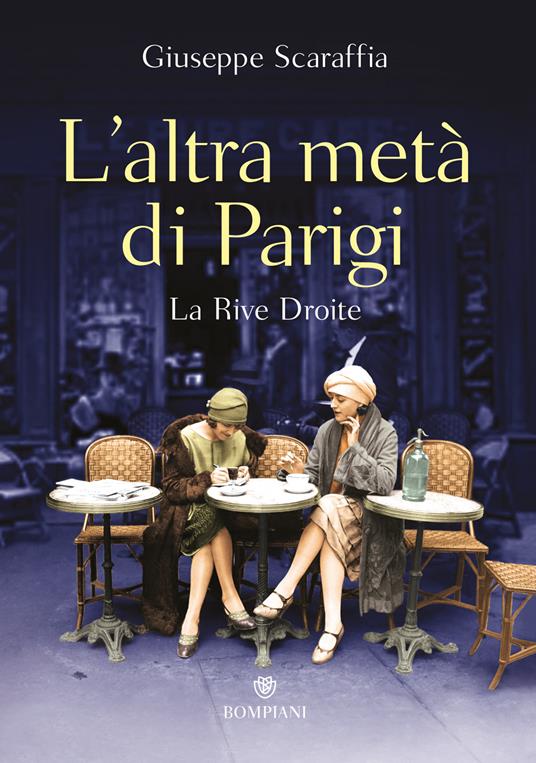
Thus, the rest is up to the reader. It should be noted, cartographically speaking, that Scaraffia has already dedicated another equally beautiful book to the Right Bank, The Other Half of Paris, where nostalgia had not yet found its footing, as if the long stroll through Paris had left unanswered questions about its meaning, and about the meaning of the city. Now he has found the answer to his wandering.
