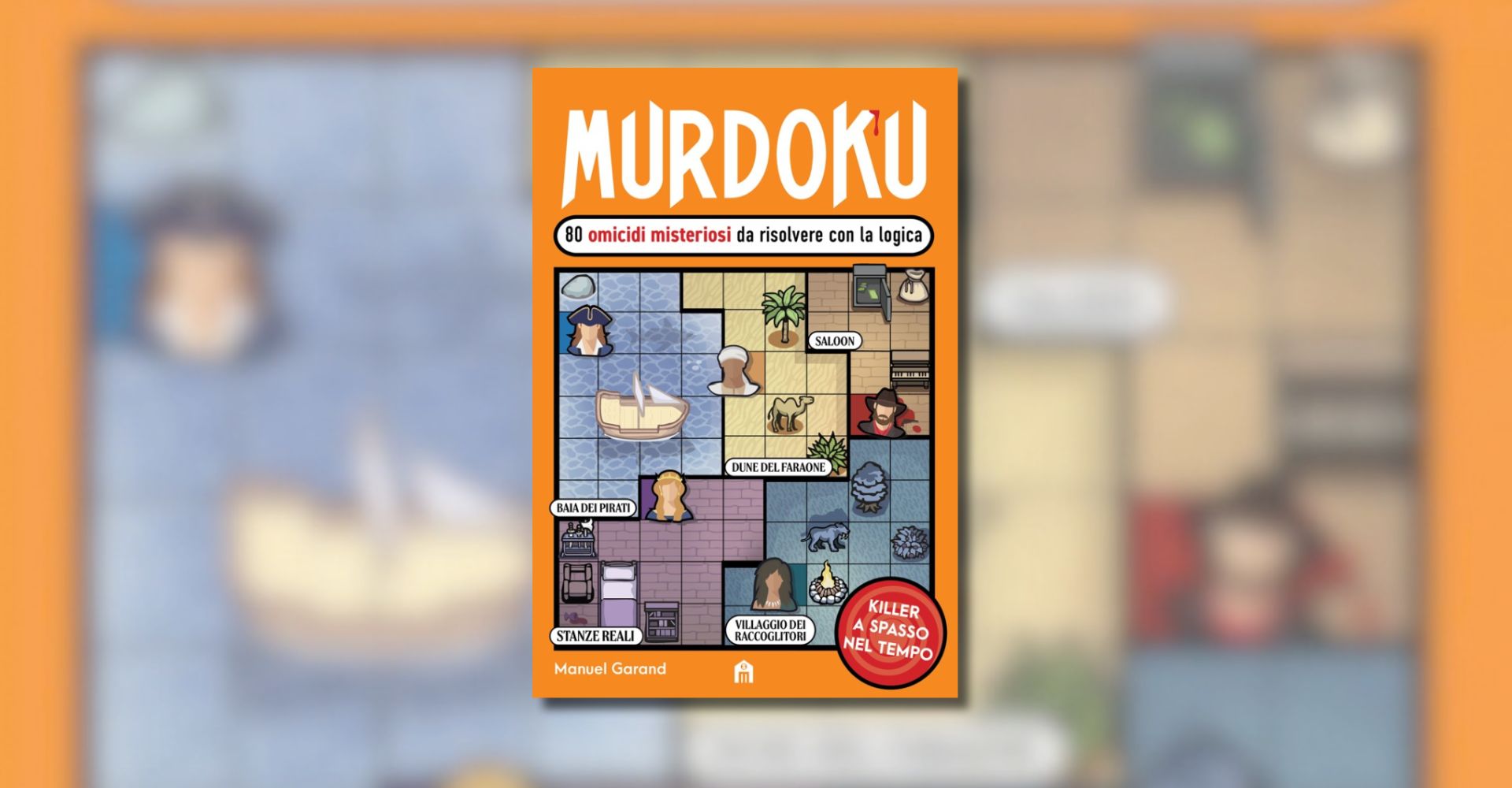
Blending a passion for puzzles with a love of mysteries. After all, it’s always about enigmas to solve, clues to search for, traces to follow… This must be the reasoning that propelled Manuel Garand, the creator of Murdoku – the book-game that combines the classic rules of Sudoku with the solving of murder cases – which arrives in bookstores on October 13 with a second volume, Murdoku 2 – Killer Through Time, published once again by Magazzini Salani.
Murdoku 2 – Killer Through Time
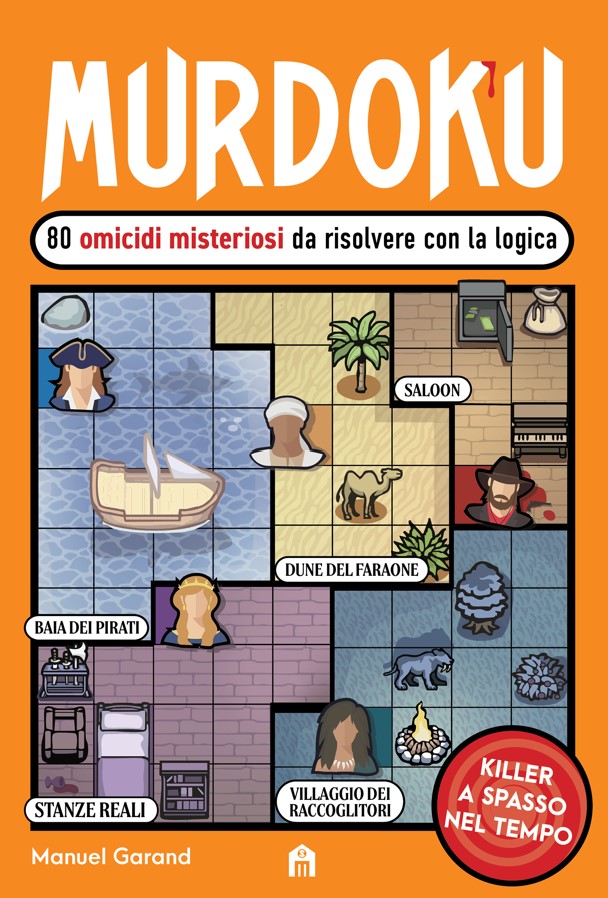
The release follows the overwhelming success of the first Murdoku, which to date stands as the best-selling book in Italy in 2026. A true “Murdoku Mania,” therefore, documented by countless photos of readers who spent their summer solving Garand’s brain-teasers, the Montreal-born author and puzzle designer (whose work has also appeared in the Financial Times).
As emphasised by Marco Figini, editorial director of Magazzini Salani, “Murdoku has established worldwide a publishing genre that, like manga and the new romance, is carving out a stable place on bookshelves. These are next-generation books that blend play, storytelling, and logic, inviting readers to rediscover the pleasure of turning off their phones and challenging themselves.”
The New Features of the Second Volume of Murdoku
The rules for solving the 80 new cases presented in the second volume remain identical to the first: by mixing logic and ingenuity, one must unravel the riddle presented in each instance. The book provides a lineup of suspects and a grid to complete, drawing on all the elements introduced, such as furniture, animals, objects, and more…
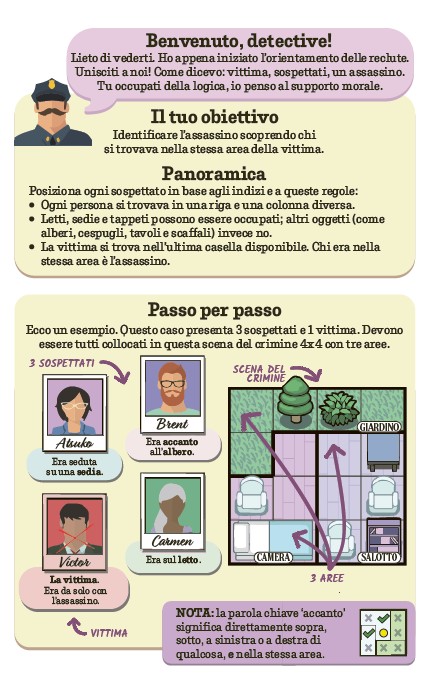
These elements must thus be placed inside the grid, following the classic Sudoku rules: in each row and column there can be only one character.
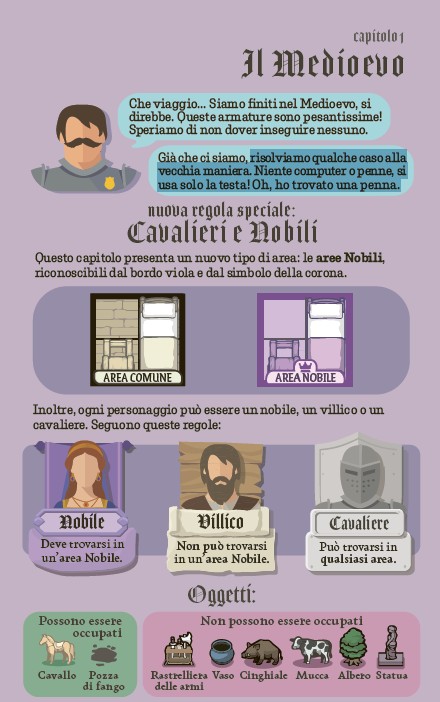
Yet in Murdoku 2 the challenge expands: the 80 new cases are set across five distinct eras: the Middle Ages, the Wild West, the Age of Pirates, the Stone Age, and Ancient Egypt. New atmospheres, indeed, but also many era-themed characters and special rules to apply to each chapter, in a sequence of investigations with progressively increasing difficulty, suitable even for beginners.
Readers will thus have to navigate castles, galleons, saloons, sabre-toothed tigers, and imposing pyramids, amid vibrant pages and era-themed settings.
So there remains only one thing to do: pull out the pencil and, as the knight-protagonist of the Medieval section suggests, solve a few cases “the old-fashioned way. No computers or pens, you use only your head!”