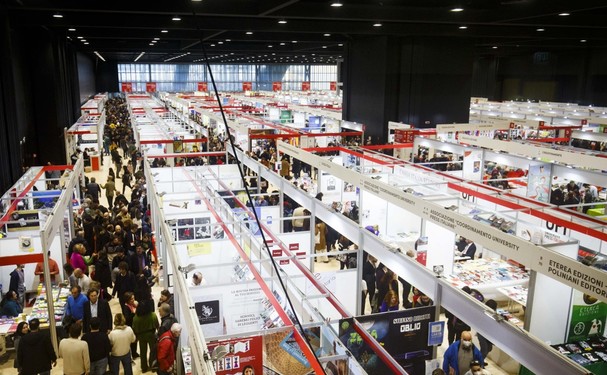
From December 4 to 8, 2026, at the Nuvola in EUR, Rome, will host Più libri più liberi 2026: the National Fair of Small and Medium Publishing celebrates its 25th edition with 650 events—meetings, debates, lectures and workshops—that in five days will see the participation of 474 publishers.
“Twenty-five years alongside Italian small and medium publishing, with a commitment to valorize its plurality and cultural vitality, to illuminate the constant search for new voices and visions, to offer readers paths and diverse genres, to identify alternative routes,” underline the organizers.
The event, promoted and organized by the Italian Publishers Association, was inaugurated in the presence of the Culture Minister Alessandro Giuli, the President of the Lazio Region Francesco Rocca, and the Mayor of Rome Roberto Gualtieri.
“If you look more closely at what you see?”: the question at the heart of Più libri’s 25th edition
“If you look more closely at what you see?” is the question around which this edition’s program revolves: “an invitation to observe the present with more attentive eyes, to decipher a changing and complex reality by trying to shift perspective and not overlook details.” Reading, in this sense, is “to look deeply and intensely at what surrounds us, at others; to interpret their stories, their ideas.”

A chance to take stock and relaunch for the Rome fair
After years in which controversies have not been lacking, for the organizers the twenty-fifth year of Più libri più liberi is thus “a chance to take stock and to relaunch.” The new edition arises from a commitment to make editors even more prominent, who, in years of transformations and economic difficulties, “have tenaciously defended their vision and identity.” The program of this edition “has been shaped in the spirit of dialogue and greater involvement of exhibitors, which will also be visible in the construction of two new rooms among the ground-floor stands”: the Sala Andromeda and the Piazza degli Editori, an open space essentially dedicated to discussions and debates.
A bibliography for all thematic meetings
There are also new features: for all thematic meetings and dialogues with figures from the culture and entertainment world the public will be given a bibliography comprising titles selected from the publishers’ catalogs at the fair: a invitation to deepen the themes.
Each day, moreover, will host a resident magazine at the fair: five different editorial teams of cultural magazines have been invited to tell, in their own way, what is happening at the Nuvola and to share it with visitors, live and via social channels. December 4 will be the day of Scomodo, an independent investigative magazine focused on social in-depth reporting produced by under-30s, December 5 will feature Teatro e Critica, a publication dedicated to theatre and performing arts. The sequence will continue with Ultimo Uomo, a magazine for sports and cultural analysis, Il Tascabile, a cultural dissemination and in-depth magazine, and La fine del mondo, a magazine devoted to the world of comics.
Proposals for young people
There is also a broad offering for young people, represented by independent publishers’ catalogs with globally recognized quality, translated into the fair through lectures, workshops, theatrical performances, and read-aloud sessions.
More generally, visitor involvement will be intensified through “immersive and eccentric experiences”: recitals, flash mobs, readings and three “Question Time” sessions (on being a teenager today, on artificial intelligence and on the absence of women in the literary canon) in which the encounter will be shaped exclusively by the audience’s questions.
Opening lecture by Francesca Mannocchi
The 25th edition will open with the lectio by journalist and writer Francesca Mannocchi. Her interpretation of the edition’s title question—“If you look more closely at what you see?”—is an invitation to overcome prejudices, an exercise in attention “closer to waiting than grasping. And literature may be the oldest such practice.”
On the closing day, the singer-songwriter Niccolò Fabi, starting from the title of one of his songs, Libertà negli occhi, will reflect on the possibilities of vision, on life that goes where the gaze goes.
Italian and international guests
Among the guests at the Nuvola are authors and writers at the forefront of the Italian publishing and cultural scene such as Zerocalcare, Dacia Maraini, Donatella Di Pietrantonio, Melania Mazzucco, Sandro Veronesi, Ermanno Cavazzoni, Nicola Lagioia, Rosella Postorino, Diego De Silva, Giancarlo De Cataldo, Stefano Faravelli and on the international scene including Pulitzer Prize for fiction Daniel Kraus, Alicia Giménez Bartlett, Kader Abdolah, Helen Oyeyemi, Didier Eribon, Tiya Miles, CJ Leede, Patrick Green and Jonathan Stroud.
Figures from music and show business such as Claudio Baglioni with Michele Caccamo, Carl Brave, Laura Morante, Alba Rohrwacher, Fabrizio Gifuni, Gabriele Mainetti, Francesca Comencini, Ascanio Celestini, Massimo Popolizio, Daria Deflorian, Marco Baliani and Liv Ferracchiati.
To reflect on geopolitical turbulence and current affairs, protagonists of the information world such as Corrado Formigli, Emiliano Fittipaldi, Marianna Aprile, Fiorenza Sarzanini, Marco Damilano, Annalisa Camilli, Carlo Bonini, Gianni Riotta, Valerio Nicolosi, Michela Ponzani. And also Samantha Cristoforetti, Diego Bianchi, Zuzu, Anna Foa, Emilio Gentile, Franco Cardini, Vera Gheno, Maurizio Ferraris, Massimo Ammaniti, Michela Marzano, Stefano Bollani, Massimiliano Rosolino, and Umberto Guidoni.
A new curatorial team
The 2026 edition of Più libri più liberi (led by Annamaria Malato and directed by Fabio Del Giudice) is signed by a new curatorial team coordinated by Paolo Di Paolo, with Licia Troisi, Nadeesha Uyangoda and Giorgio Zanchini.
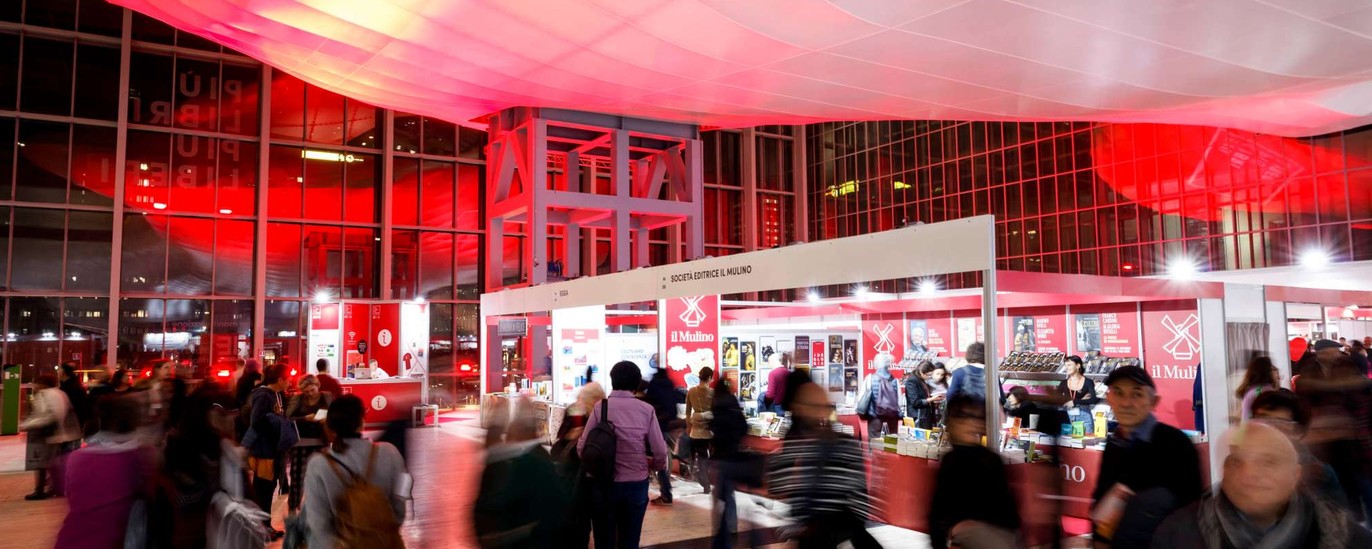
The Più libri più liberi 2026 program
For this 25th edition the program, available on the event’s website, has been reconfigured in its structure, also reflected in a comprehensive rethinking of the layout of the printed version. To better guide visitors, wide pathways based on the expression “If you look closer” will be visible, and on key concepts that complete it: the others, the present, the possible, the margins. The opportunity to choose day by day among about 650 total events will be facilitated by a series of thematic filters, which bring the reader-visitor closer to their areas of interest in terms of editorial genres, interests (literature, essays, music, sport, etc.), and pressing issues of our time (AI, emotional intelligence, dialogue between generations, environment and climate change).
Se guardi meglio gli altri…
The contemplation of the other—human, animal, plant, place—can become a true celebration of seeing, of seeing-recognizing.
“Never lose sight of the reality of the other,” Natalia Ginzburg wrote, and it is an ethical and existential program that demands effort. The question guiding the edition will offer many opportunities to reflect on our relationship with the world, and with the reality of others. But an imaginative effort is required, as Dacia Maraini will recall, in dialogue with Rosella Postorino.
Or a “harmony” effort: in the case of the relationship between adults and adolescents. It will be discussed with Michela Marzano, guest of the new format “Question Time”: the encounter will be entirely shaped by the questions from the audience present.
Crucial in this semantic field is the word “care”: it will be at the center of the meeting between oncologist Fabio Calabrò, Diego De Silva and Stefano Bartezzaghi.
The other not always being “near”: “Will we talk to animals, machines, extraterrestrials? Old frontiers and new explorations” is the question of the dialogue between Alessandro Fusacchia, the ESA astronaut Samantha Cristoforetti, Carmen Gallo and Eva Giovannini.
Writing as a representation of bonds is the focus of “The words of the novels” with Donatella Di Pietrantonio and Valeria Della Valle.
Finally, the events of Paolo Di Paolo in dialogue with the singer-songwriter Niccolò Fabi “Libertà negli occhi. Dialogue about the gaze”; with Zerocalcare, the subject of a monologue followed by a two-person conversation; and then with Diego Bianchi on these last twenty-five years of radical transformations: how are others’ stories told in such an indecipherable landscape?
Se guardi meglio il presente…
In a period of international political upheavals and global tensions, small and medium publishing “confirms its vocation to reflect on the present, to become a meeting place and a forum for discussion on complex topics such as wars and conflicts.”
Giorgio Zanchini will guide the reflections of “If you look closer at the present” focusing on current affairs, geopolitics, and the challenges of information.
The printed press, how can newspapers reshape themselves? Emiliano Fittipaldi and Fiorenza Sarzanini will discuss. On the audiovisual sector, Riccardo Iacona and Marianna Aprile will speak; on freedom of information Zanchini will debate Corrado Formigli.
“The age of arrogance, between Trump and Putin” will be analyzed by Goffredo Buccini, Piero Benassi and Alessandra Sardoni, and a look at Israel’s political situation after the elections will be guided by the reflections of Anna Foa, Roberto Della Seta and Gadi Luzzatto.
Carlo Salvemini, with Marco Damilano, will tell “Italy that we do not see”; Valerio Nicolosi will address the climate emergency with Ecoguerra, and Isabella De Silvestro, author of the podcast Gattabuia, with Luigi Manconi will speak about prison.
Alessandro Messina, former director of Banca Etica, and Agnese Trocchi will reflect on freedom of expression, from “Autistici/Inventati to social finance,” while Fabrizia Ferrazzoli, Giordano Gasperini and Livia Viganò, with Alberto Emilietti, explore new ways of telling the present in collaboration with Factanza.
There will also be dialogues with figures from the political and institutional world, from Nichi Vendola, accompanied by Fabrizio Barca and Anna Foa, to discuss the “vice of ferocity” of many leaders on the national and international stage.
Among the guests is also the secretary of the Democratic Party Elly Schlein, for an event starting from the graphic novel that tells Tina Anselmi’s life; Environment and Energy Security Minister Gilberto Pichetto Fratin, the mayor of Rome Roberto Gualtieri, Daniele Capezzone and Gennaro Sangiuliano in dialogue on Benedetto Croce, Pietro Grasso, Roberto Speranza and others.
The changes of Europe’s right in the 21st century will be analyzed by Leonardo Rapone, Gianni Cuperlo and Tonia Mastrobuoni; the theme of “truth besieged” by Luigi Marinelli and Wlodek Goldkorn; the possibility of disarming words in a time of global tension will be explored by Nico Piro.
On the rise, decline, and rebirth of nuclear energy will be discussed by Marco Visscher; Andrea Pauletto, author of Furgonauta, will converse with Christian Raimo about his experience as a writer and night trucker.
Javier Gil will reflect on the housing crisis with Generazione inquilina. Housing inequality will also be addressed in a debate starting from Costruire dignità by Lodovica Clavarino and from Cemento rosso by Luca Scornaienchi and Irene Carbone.
Se guardi meglio il possibile…
Licia Troisi will lead a reflection on the “possible”, on horizons of reading reality beyond reality: how storytelling, imagination, invention, utopia. More specifically on the “fantastic,” she will help explore the evolution of the genre and the various modes of consumption that have made it central in the last twenty-five years. With Fiore Manni and Michele Monteleone together with Maria Agostinelli, they will retrace the history of fantasy; with Jonathan Stroud and Chiara Codecà the fans’ perspective will be told.
Also: “If you look closer at the fantasy: Ursula K. Le Guin” with Serena Daniele; “If you look closer at the fantastic. Macabre, unsettling and minority narratives” with author C. J. Leede and Ivan Cenzi.
There will also be a look at the fantastical world of science, such as Barbascura X for a dialogue on the theme “If you look at science badly, what do you see?”
The perspective across the diverse possibilities of the world around us will also be a theme of the AI encounters such as “What will we be useful for tomorrow? – Work, creativity and new intelligences” with authors Alex Braga and Filippo Lubrano accompanied by Francesco D’Isa, “Artificial intelligence: the European way” by Paolo Massimo Buscema, while Loretta Napoleoni, author of Tecnocapitalismo, and Frediano Finucci will question the digital future and Ivano Dionigi will ask Will we still need us, drawing on the words of the classics.
Other questions about future possibilities: “How will we communicate in 10 years?” with Alberto Mattiacci, Carlotta Ventura and they will discuss with Francesco Oggiano.
A journey through visions of the fantastic and possible between earth and space will be offered by the session on Ascensore per Marte, with Umberto Guidoni, and the presentation of the anthology Fantastike with Michela Dentamaro and Valerio Millefoglie, the presentation of 100 years over the North Pole – Cent’anni di esplorazione polare: visioni, scienza e futuro, and finally an exploration of the imagination in the encounter with Valerio Magrelli starting from .
Se guardi meglio i margini…
Nadeesha Uyangoda, winner of the Campiello Opera Prima, will focus on what receives less attention: the margin, the space that remains isolated, the island as a symbolic and real place.
In the fair there will be space for debates such as “Insularity – The god half-woman” with Perumal Murugan; “Islands found again – The directors of silent cinema” with Melania Mazzucco; “Festival by islanders”, with Francesca Casula and Loredana Lipperini, hosted by Simonetta Bitasi; and “Più libri più liberi’s Literary Café. 25 years later”, with Dario De Cristofaro, Eugenia Dubini, Eva Ferri and Gerardo Masuccio, to compare experiences in independent publishing.
There will also be a focus on female authors of the past, a richly dense archipelago re-read by contemporary Italian women writers with panels “Islands found again – Stories of women writers”: Grazia Deledda will be told by Maura Gancitano, Laudomia Bonanni by Emanuela Anechoum, Fabrizia Ramondino by Nadia Terranova, Anna Maria Ortese by Giulia Della Cioppa and Carla Lonzi by Annalisa Camilli.
There will also be a look at Gaza, such as the meeting “Islands of Politics – Looking at Gaza” with Tomaso Montanari, Alae al Said and Elena Testi.
Following will be a dialogue with Ruwaida Kamal Amer based on Gaza City – Human Landscapes and the Geography of Pain or the meeting If we live another night with Vanni Bianconi and Valerio Magrelli, the reading based on Samar Yazbek’s Your Presence is a Danger to Your Lives. Voices from Gaza with Damal Suleyman and Gianmarco Saurino.
There will also be testimonies from humanitarian workers such as Mattia Bidoli, who will meet readers with his diary Mi Gaza es Tu Gaza, as well as those recounted by cartoonists in the volume Gaza, un giorno ancora, or in the illustrated reportage Un diavolo muto – Storie da Gaza by Marco Rizzo in collaboration with Emergency. Moni Ovadia will read excerpts from Il pianto di Abramo – Israele e Palestina: illusioni di pace by Giuseppe Romeo, then the discussion on “Palestinian cinema” with Samuel Antichi, and finally the memory of activist Vittorio Arrigoni, starting from the book Caro Vik ti scrivo and the podcast Palestina-Israele by Anna Maria Selini.
There will also be a reflection on the relationship between colonialism, environment and the rights of peoples with the panel Terricidio based on Moira Millán’s book, with Igiaba Scego and Grazia Battiato, and a dialogue on the political role of motherhood based on The Power of Mothers. For a New Revolutionary Subject by Fatima Ouassak with Ouidad Bakkali.
Events for girls and boys
A closer look at young readers will be central at Più libri più liberi with a series of meetings designed for the new generations “and for those who believe in the power of reading as a great tool for growth.” It will begin on the first day, December 4, with ample focus on literature for Under 25.
Many events are on the calendar: the meeting “Face to face with @nicopuntoit” with Nicholas Ori, Lorenzo Baglioni and Giulia Perninotte, the presentation of Residenza Paradiso with Giuliana Facchini and Ida Antonella Passarelli, Sono il mare aperto with Giovanni Gastaldi and Makan Keita; Kento and Aladin Hussain Al Baraduni will talk about Con una pistola alla tempia, while “News or Fake News?” will be discussed with Silvia Bencivelli; the meeting on the wonderful fairy tales of the Brothers Grimm “Nel mondo dei Grimm” with Camilla Miglio, Luca Baruffa, Fabian Negrin, Cosima Centurioni and Giuseppe Cederna; Stolen Years with the curators Marco Caviglia and Miriam Spizzichino; We are the flowers in the desert with Fabrizio Altieri and Timișoara Pinto; Bomber and Mr. Franco. One more game with Mimmo Cacciuni Angelone; the monologue “The decisive day / Beyond the obstacle” with Giuseppe Pastore; “Perditempo. We draw the time that makes us feel good” with Arianna Papini, “And you, what Pinocchio do you see?” with Giusi Quarenghi, Nicoletta Costa and Angela Catrani; From the dark I am not afraid with SILvia Vecchini, Sualzo and Claudia Ianniciello, “Is it for girls, and so? Is it for boys, and so?” with Giorgia Vezzoli and Lorenzo Gasparrini.
Internazionale Kids will be involved in two sessions: “How a newspaper is born” with Martina Recchiuti and Alberto Emiletti and “Every child has the right to peace” with Elena Gentili and Alberto Emiletti.
Finally, the dialogue on Ronzinante by Stefano Bidetti and “The infinite in the smallest – I tell you Christmas” an interactive workshop starting from Cardinal Matteo Maria Zuppi’s book with illustrations by Silvio Boselli, plus the workshop “Without a party it doesn’t count” with Anna Maria Prassler.
The network of Rome’s Libraries
Again this year the network of Rome’s Libraries, celebrating its 30th anniversary, will be present with a dedicated stand, confirming the central role libraries play in promoting reading, spreading culture and building a more aware society. The program will be rich with exhibitions, meetings with authors, workshops and numerous activities for children, youths and reading circles, with particular attention to accessibility and inclusion.
Authors from abroad
The fair will host a strong presence of international voices. Many authors present at Più libri più liberi, ready to tell stories, visions and sensibilities, such as the Pulitzer Prize winner Daniel Kraus, the Iranian-born Dutch Kader Abdolah with his new novel Parla Zarathustra, the British Helen Oyeyemi, the Franco-Moroccan writer-activist Fatima Ouassak, who has long told about French suburbs and youth revolts.
There will also be philosophy and contemporary thought with the French Didier Eribon and Geoffroy de Lagasnerie, while the writer Serge Quadruppani will dialog with Giancarlo De Cataldo about his new novel L’equivoco.
Among the events, the presentation of Headlights, the new novel by American CJ Leede; Joanna Bator with her Nuvolandia; Elogio della malinconia with László F. Földényi; the meeting with Laia Jufresa, who returns to the fair with her new book Wishbone; Il sacco di Ashley with author Tiya Miles; “Delicacy and Imperfection (in five great stories)” with Thomas Morris, author of Open, and Giulio Somazzi; then Lukas Bärfuss, author of The Queen of the Night. A short book about my mother; Persempre with author Sophie Mackintosh and Valentina Barengo; A life against the wind, from Pinochet’s Chile to Rome: the story of Alfonso Molina with Alfonso Molina, accompanied by Roberto Fantini; Marijana Dokoza, author of Sua moglie in dialogue about domestic violence with Ljiljana Dzalto; Dall’altra parte with Spanish author Bernardo Atxaga and Simonetta Bitasi; “Where does patriarchy end” with author Antje Rávik Strubel, meetings with authors Şeyda Kurt who will present Tenerezza Radicale with Nico Isa Borrelli, Louisa Young author of Le ore d’oro in dialogue with Laura Pezzino and the one with poet Anna Adamowicz with Nebula/Animalia.
Among the most anticipated guests is also the Spanish Alicia Giménez Bartlett, in dialogue with Loredana Lipperini.
Finally, to celebrate the Nobel Prize in Literature awarded to Anne Carson and the Booker Prize to M. John Harrison, both present in the independent publishing catalogs, their profiles will be explored in a Piazza degli Editori event.
Anniversaries
Among the anniversaries celebrated by the fair, the centenary of the Nobel Prize awarded to Grazia Deledda, the first and only Italian writer to receive the prestigious award in 1926, stands out. Several events will be dedicated to her: from “Deledda yesterday and today” with Rossana Dedola and Marialaura Simeone, to a literary concert with Neria De Giovanni and the transverse flute of Elisa Ceravola, up to “Irrimediabile Mondo / sonata for a Nobel-winning writer and wind landscapes” with texts and interpretation by Maria Luisa Usai and sounds and music by Alessandro Olla.
Two hundred years since the birth of Carlo Collodi are also remembered, with events including the presentation of “Il mio Pinocchio” by Giusi Quarenghi; a dialogue on the new illustrated edition of the masterpiece with Vanessa Regina, Claudio Sagliocco and Antonio Soldi. And another Pinocchio-focused event with Melania Mazzucco, Fabio Stassi and Remo Rapino.
At a hundred years since the birth of Ingeborg Bachmann, “Writing to Exist” with Rita Svandrlik and Ilaria Gaspari retraces her life and works based on Svandrlik’s book. The celebrations for the seventy-year anniversary of the birth of Andrea Pazienza also conclude with a session dedicated to the artist with Stefano Cristante, , Cinzia Leone and Luca Raffaelli.
Then there will be a session dedicated to Hanya Yanagihara “Ten years of A Little Life” with Luca Briasco, Mattia Carratello, Andrea Geloni and Giulia Paganelli and “Edizioni di Torino. Storia di una casa editrice” with the screening of the documentary by Luca Schilirò with Claudia Peruccio and Sergio Bestente and moderated by Sabina Minardi.
A cycle of events will finally be dedicated to the Genoa G8 remembrance: “Nessun rimorso, Venticinque anni dopo – Bolzaneto e il G8, cosa resta” with Vitt Moretta and Zerocalcare, illustrators of the collective work Nessun rimorso Reloaded and Francesca Zanni, author of the podcast La sospensione: Bolzaneto e il G8 25 anni dopo with Fabrizio Crasso and Riccardo Noury; the meeting with Vittorio Agnoletto, author of Il G8 di Genova. Ieri, oggi, domani; and the panel “G8 and security” with Carlo Bonini, Annalisa Camilli, Franco Gabrielli and Gianpaolo Trevisi.
Narrative
A major showcase of Italian writers will begin with the presentation of Io sono felice by Vito Bruno in dialogue with Filippo La Porta and Francesco Piccolo, of TAU. In segno d’amore by Claudio Baglioni with Michele Caccamo, then the Strega Prize finalist Elena Rui, author of Le vedove di Camus, Un mondo soltanto with author Giulia Baldelli and Aritmie with Damiano Ficoneri, who will present the novel in a dialogue with Enrico Mentana.
Then will come the counsel of Vanni Santoni with the lectio “If I’m not mistaken” on writing a book.
And again, Il collezionista di tempo by Marino Magliani, La cabala dell’ora with Marcantonio Lucidi and comedian Claudio Greg Gregori; “A dialogue on the margins” with Remo Rapino, Stefano Redaelli and Daniele Mencarelli; Killergarten by Nicola Brunialti who will dialog with Paolo Bonolis; Umberto Piersanti will appear with his latest work Olimpo; “20-something: a new look” with Ilaria Camilletti and Matteo B. Bianchi; Virginia de Leyva. La monaca di Monza with historian Lisa Roscioni and Melania Mazzucco and finally Alla corte di Pipandro il folle with author Monica Magnani aka @vabeeraga and Giulio Armeni aka @filosofia_coatta. Also eagerly anticipated is Ermanno Cavazzoni’s reading from his Storia di un’amicizia.
Attention also to debuts, with La nostra giovinezza by Andrea Oriente in dialogue with Irene Graziosi, Di quasi nulla resta traccia by Alessia Marzano with Emanuele Bosso, Federica Lombardi for Linea d’inverno, Crunco by Mauro Colarieti with Beatrice Sciarrillo, Le sussurratrici by Giulia Paganelli, who will be in dialogue with Simonetta Sciandivasci.
Non-fiction at Più libri 2026
Between reflections, memories and new visions, the fair will turn the spotlight on the major topics of our time through a wealth of non-fiction titles displayed at the stands.
From history to current affairs, from cinema to music, with a journey into ideas that illuminate the present through the voices of the leading Italian experts. There will be talk about Gender with Vera Gheno; about The Straub’s Tail – From miraculous care to global threat: opium and the fentanyl era with Stefano Massarelli, winner of the Galileo literary award for scientific dissemination 2026; about Emilio Gentile and his autobiographical fragments in Emilio Gentile: l’arte di uno storico; while Geoffroy de Lagasnerie, author of L’anima nera della democrazia, will reflect on the health of democracy and its limits.
The Minister of Environment and Energy Security Gilberto Pichetto Fratin will speak in “Nuclear energy in the energy puzzle” with Chicco Testa and Giuseppe Zollino, while Luigi De Magistris and Ludovica Ciriello will talk about Un altro Sud; Stefano Polli, author of Faccia a faccia con Putin, will converse with Marino Sinibaldi and Roberto Sommella; then the session “Against censorship” with Giancristiano Desiderio, Francesco Giubilei, Giampiero Cannella and Alessandro Gnocchi; and a dialogue based on Paradosso americano. Stati Uniti: una storia di contraddizioni by Alessia Gasparini with Sacha Biazzi and Eric Gad. Added to these are the volumes: Corpi dolenti, voci resistenti. Endometriosi e vulvodinia patologie invisibilizzate curated by Federica Manfredi and Raffaella Ferrero Camoletto; Il falso perfetto by Emilio d’Angelo; Creare il lettore a(r)mato by Michele Spinicci.
There will also be a focus on ancient topics, with a dialogue on images starting from Il tempo della meraviglia by Mauro Bonazzi, with Matteo Nucci, and Daniele Michienzi and his Latin Lover dedicated to Latin.
Music and imagery are at the heart of a series of encounters: Mozart contre Mozart by Franco Cardini; Il capitale musicale by Alberto Bebo Guidetti, with journalist Marta Fana and Amedeo Ciaccheri; Atlante della musica in Italia with Antonio Ranalli and Luca De Gennaro; “San Francesco d’Assisi nella musica” with Paola Maurizi and Nicola Piovani; with PentaDrammi. Vite semiminime di musicisti with author Stefano Torossi; finally the event to remember Maestrone “Guccini Ritrovato” featuring Francesco Aliberti, Beppe Carletti and Gessica Allegni.
There will also be space for the world of emotions: Il coraggio di essere timidi with Massimo Ammaniti, Neuroscience in love with Antonio Cerasa and Maternità. La scelta di diventare madre da sola with author Paola Tommasi and Barbara Palombelli, La grammatica della menzogna by Raffaella Scarpa; Parole e potere tra le mura di casa. Dieci racconti linguistici per leggere le relazioni, with author Laura Nacci and Lorenzo Gasparrini; among literature, memories and desire: Se amore comanda by Nadia Fusini, in dialogue with Luca Briasco, and a homage to Kundera with a dialogue based on Kundera without Kundera curated by Alessandro Catalano and Alessandro Metlica.
On new generations and education, Difendersi dagli adulti with Michele Arena; Maneggiare con cura, sono schermi with Simone Lanza, author of Un attimo e arrivo! with Anna Dalton and Il mestiere di educare. Voci e storie di periferie, di scuole e di comunità with Francesco Erbani. Then the curious L’alfabeto muto dei Tarocchi with Ernesto Fazioli, Morena Poltronieri and Maura Gancitano; the volume Governare l’immaginario with Giulia Silvia Ghia, Gianni Letta and Claudio Strinati, plus essays on politics Strategia politica nei processi with Franco Garofalo and Bobo Craxi, Ludwig, la rete nera with Roberto Taddeo and Leonardo Colombati.
Finally a reflection on “What year has 2026 been?” with Stefano Salis, curator of Treccani’s Book of the Year and Marino Sinibaldi.
Two sessions will be devoted to Giacomo Leopardi: readings by Antonio Moresco, Andrea Cortellessa, Letizia Muratori and others from the new edition of the Zibaldone, and a dialogue on the poet’s last days based on Carlo Di Lieto’s book.
“The boundaries of ideas”
In the new Piazza degli Editori, between the ground-floor stands, daily events titled “The boundaries of ideas” will unfold, dialogues about the health of public discourse in Italy and around the world, about possibilities and limits of ideological conflict. An agora at the heart of the fair, a moment of exchange, an open space that will host several events introduced by Paolo Di Paolo.
We begin with “Publishers in conversation,” a moment of dialogue with the publishers themselves, protagonists of the fair. It continues with “What does it mean to build an antifascist alternative?”, with Carlos Greppi, Giulio Calella and Mattia Tombolini. Giampiero Mughini and Simona Ruffino will ask whether there exists an acceptable censorship.
In closing, “Geography of the freedom to write”: organized with PEN Rome and Amnesty International Italy, Sandro Veronesi, Riccardo Noury and Irina Turcanu will discuss the state of writers’ freedom around the world.
Space devoted to graphic novels
Più libri più liberi also features a dedicated graphic novel space with several events, including the presentation of Investigators with author John Patrick Green, Giorni felici with Zuzu in dialogue with Licia Troisi, and Figli della foresta with Igiaba Scego and Chiara Abastanotti.
Memory and civic engagement look to Tina Anselmi by Chiarastella Campanelli, in dialogue with Marica Di Pierri, Luigi Politano and Elly Schlein.
Very anticipated is the meeting with Maicol e Mirko, in addition to the presentations of Le avventure di un iraniano con i baffi e di un transgender senza i baffi by authors Ehsan Mehrbakhsh and Liv Ferracchiati, and Abbecedario di un manipolatore by Kalina Muhova in dialogue with Greta Olivo. Fabian Negrin and Fausta Orecchio will present Che spreco capire le capre, Isotta Santinelli will bring her parody of the Winx, Caro diario… sono una fata!, and Chiara Rapaccini (Rap) will present L’uovo o la gallina, illustrated and written with the late Giorgio Faletti.
Sport at the fair
Sport will be narrated at the fair from diverse and often unexpected perspectives.
There will be talk of the poetry of swimming with Massimiliano Rosolino based on the book Il nuoto di Massimiliano Rosolino; tennis from Tennis paradise by Francesco Longo and L’anno della Davis – Il 1976 e l’Italia che cambia by Eliana Di Caro in a panel with the participation of Giuliano Amato; fan culture and politics with Stefano Sicignano, author of Blue Bar Osman. Storie di strada, cause perse e vittorie leggendarie di un laziale antifascist, exploring exploration with Quel demone di Walter Bonatti – Alpinismo ed esplorazione interiore by Nicolò Rubbi; while Fuorigioco finanziario by Paolo Bedin, Jacopo Carmassi and Vincenzo Loi will extend the discussion to the relationship between sport, money and financial policies.
Eleonora Carrer will present Il coach è lei, la mia storia di allenatrice nel basket dei maschi with Carolina Morace and the participation of Mimmo Cacciuni Angelone in “Bomber and Mister Franco” — a section that shows how sport is also a lens to read society. Finally the panel bridging Greece and football: “Omero dèi ed eroi: at the head of a revolution or in a football field” featuring Giuseppe A. Samonà, author of Gli anni dell’eroe bambino, Odissea, Iliade, Mediterraneo alongside Filippo La Porta.
City-focused events and storytelling
Many events dedicated to cities and their storytelling begin with the encounter A Roma con Marcello Mastroianni with Chiara Rapaccini (Rap), Laura Morante and Giorgio Nisini; the mayor of Rome Roberto Gualtieri will be the protagonist of the panel “Rome 1944-2000: The city that changes” with Michele Colucci, Francesco Giasi and Roberta Serdoz.
There will also be the presentation of the new issue of Romarivista, the cultural magazine of Rome’s capital promoted and supported by the Department of Culture; with Stefano Ciavatta and Luca Galofaro addressing the theme “Can one still enter Rome?”; Parioli, topography of a bourgeois dream with Filippo La Porta, Camilla Baresani and Andrea Di Consoli. Also on Rome, there will be a reading from Roman Beat Generation with Davide Brullo, Fabrizia Sabbatini and Edoardo Piazza. Notes from the Floating World will be the meeting with Stefano Faravelli and Rosa Polacco. A sober tale of benders brings Graziano Graziani, together with Edoardo Camurri, to improbable worlds of cultural resistance.
Then Carlo Coronati will bring unknown Rome to the capital with Rome, a wandering guide to hidden beauty, Veronique Brindeau in Japan with The Trees of Nagasaki and finally a thematic dialogue starting from the book San Vittore Auschwitz Timisoara and the presentation of eSwatini, the upside-down of the world with author Vittorio Aimati, together with Giorgio Colangeli and Luciano Lanna.
Music, cinema, theatre, performance
Music, theatre and cinema will be central to the 25th edition of the fair, starting with the special screening of the Netflix animated film “A ondate” based on the graphic novel of the same name, preceded by a conversation between A.J. Dungo, connected remotely, and Zerocalcare; the show “War as a disease of the species” by Nicola Lagioia; then Andy Bluvertigo will accompany with soundtracks the encounter with James Briggs on David Bowie on a bicycle with contributions from Susanna Maggioni and John Vignola.
Carl Brave will discuss the “Words of music” with Alice Urciuolo, followed by the live show “Crush.”
Occasional attempts to remake love” with Gioia Salvatori (Cuoro) featuring guest Michela Ponzani; Paola Minaccioni will read Le mani che ci hanno lasciato interi by Marco Voleri; two meetings produced in collaboration with the Centro Sperimentale di Cinematografia: Alba Rohrwacher and Francesca Comencini for “Midsummer Night Dream” and “The world as it is not bearable” with Eljana Popova, Valeria Benedetti Michelangeli, Celeste Dalla Porta and Elia Nuzzolo in a session on Chekhov, Dostoevsky, Kafka and Camus and the open rehearsals in film exercises. Also in cinema the Fair will host Gabriele Mainetti discussing “The words of cinema,” while Stefano Bollani, Chiara Tagliaferri and Alex Infascelli will converse with John Higgs from his latest essay Lynchian; From radio to stage: the impossible interviews at Tordinona with Laura De Luca, Idalberto Fei and Renato Giordano; finally there will be an event dedicated to Crash into me, Inside Greta Gerwig’s cinema by Cecilia Strazza; Fallen angels, unlucky films, misunderstood and forgotten by Emanuele Rauco in dialogue with Chiara Guida and Federica Aliano and the dialogue of Elisa Corsi with Vittorio Emanuele Parsi starting from AmericanA. Route 66 between TV series and timeless icons.
Awards
Every year Più libri più liberi hosts nationally significant prizes. The Strega Ragazze e Ragazzi Prize is awarded to narrative books for children and teenagers published in Italy, including in translation, and is promoted by the Maria e Goffredo Bellonci Foundation and by Strega Alberti Benevento. For the final of the eleventh edition of the Strega Ragazze e Ragazzi Prize, finalists in the 6+, 8+ and 11+ categories will participate in the fair, hosted by Alessandro Barbaglia and Simonetta Bitasi.
The winners of the second edition of the Magis BANCOMAT Literature Prize and of the Magis BANCOMAT Debut Prize will be announced during Più libri più liberi. At the awards event will be present some jurors, the five finalists in the main section and the three finalists in the debut section, together with the heads of humanitarian organizations selected by the Prize.
Winners of the XI edition 2026 of the Bridge Literary Prize will also be announced.
This year, for the first time, the Inge Feltrinelli Prize will be included in a session titled “Anatomies of power. The bodies of women, between control and resistance” and the announcement of the five finalists with a dialogue between Sediqa Mushtaq, an Afghan midwife now a refugee in Italy, and Costanza Spocci, a journalist and author of Radio3’s podcast The Return – Afghanistan, five years later.
This year too the Spazio Rai will host the proclamation of Fahrenheit’s Book of the Year, the novel most voted by a jury of listeners.
Professional encounters
Più libri più liberi has long centered a professional hub: the Business Centre, a 500-square-meter area dedicated to book industry professions, conceived and run directly by the Italian Publishers Association.
The Business Centre is located on the Forum Floor of the Nuvola: in the Aldus Hall and in the Aurora Hall will host most of the professional meetings; in the Club B2B service companies will meet publishers; the Lounge is dedicated to informal meetings.
The program includes a total of 24 professional meetings—debates, surveys of the sector, exchanges that place small and medium publishing at the center, its evolution, and future challenges.
The Rights Centre, though always part of the Business Centre, is located on Levels N4 and N5 and will host in the first two days of the event meetings with international operators for rights exchanges and will be preceded, as usual, by a Fellowship Programme this year dedicated to publishing in Brazil and Portugal.
The Rights Centre and the Fellowship Programme are run with the support of ICE—Agency for promotion abroad and internationalization of Italian companies and of the Region Lazio via Lazio Innova, with funds from the PR FESR LAZIO 2021-2027 and the Chamber of Commerce of Rome, and with contributions from the Swiss cultural foundation Pro Helvetia and Bologna Children’s Book Fair and BolognaBookPlus – BolognaFiere.
To open the professional program, the December 4 appointment The book market in the first 10 months of 2026: a year with two faces? (Aldus Hall, 12.00-12.50): a comparison of market performance in light of the restoration of the libraries fund and its specific impact on small and medium publishing.
Internationalization will be at the heart of the Saturday, December 5th session with From Frankfurt to Guadalajara, AIE’s publishing data on Italian publishing worldwide (Aldus Hall, 11.30-12.20), where new data from the AIE Observatory on right exchanges will be presented, while How important is being small? Publishing in Italy and the UK (Aldus Hall, 16.30-17.20) will compare the challenges facing Italian and British publishers, from distribution to sales channels, from public support to relations with libraries.
The library fund will also be discussed on December 5 in the event The AIB survey on the MIC 2025-2026 fund of books – The word to libraries (Aldus Hall, 15.30-16.20).
Sunday, December 6’s program will begin with Who’s afraid of slop? Trash books made with AI vs the editorial responsibility (Aldus Hall, 11.30-12.20).
The relationship between books and audiovisual media will be at the center of Netflix Effect – Small publishing on the small screen (Aldus Hall, 14.30-15.20). The day will continue with Children’s books, a spring in a demographic winter (Aldus Hall, 16.30-17.20), focusing on the resilience of the sector despite falling birth rates.
Reading and strategies to promote it will open Monday, December 7, with Reading in Italy – New AIE data and strategies to grow it (Aldus Hall, 11.30-12.20): the findings of the Observatory will be the starting point.
In the afternoon the relationship between artificial intelligence, learning and autonomous judgment will be at the center of the session on academic publishing (Aldus Hall, 14.30-15.20) If AI studies instead of us, what happens to critical thinking?, followed by Artificial intelligence: the readers’ point of view (Aldus Hall, 15.30-16.20): a discussion, starting from the reading Observatory data, on readers’ perspectives about AI’s presence in books and its possible consequences on their choices.
Media partners
The Republic will participate in the fair with its own Arena La Repubblica – Robinson hosting meetings with names from journalism, culture and entertainment, both Italian and international, including director Stefano Cappellini, as well as Ruwaida Kamal Amer, Diego Bianchi “Zoro”, Lucio Caracciolo, Paolo Di Paolo, Anna Foa, Maura Gancitano, Massimo Giannini, Alicia Giménez Bartlett, Laika, Luigi Manconi, Ezio Mauro, Francesco Piccolo, Kasia Smutniak, Paolo Strippoli, Daniele Vicari and many others. A new feature this edition is the daily appointment by the outlet Huffington Post, with debates and guests interviewed by editor Annalisa Cuzzocrea. The daily school program is confirmed, with Rome’s schools attending journalism lessons delivered by the paper’s reporters each morning.
As a novelty this year, the fair will also host a special issue of Finzioni of the newspaper Domani and a stand of the newspaper La Stampa.
Again this year Rai is the Main Media Partner of Più libri, with a commitment spanning the entire event and fueling a dedicated space to host events and provide in-depth sessions with the fair’s protagonists.
Institutions at the fair
The support from major national and local institutions for Più libri is confirmed and strengthened “as a testament to the strategic role of the event for the entire publishing chain.” The Centre for Books and Reading, an autonomous institute of the Ministry of Culture, renews its support with a dedicated stand and a calendar of events.
The Region Lazio reaffirm its commitment alongside the event, promoting a varied program of meetings and initiatives open to all, in addition to the “Buono libro” for students and under 30.
Rome City, through the Institute of Libraries of Rome, consolidates its presence with a dense schedule of activities, readings, workshops and exhibitions hosted in its Arena and in the Kids’ Space.
The contribution of the Chamber of Commerce of Rome is decisive as it again supports the local publishing fabric with a space dedicated to Lazio publishers.
Also contributing to the cultural program are the Institut Français, the Goethe-Institut, the Polish Institute of Rome, the Academy of Hungary, the Netherlands Letterenfonds, and the Ambassador and Consulate General of the Kingdom of the Netherlands.
The stands of regional collectives — Basilicata, Emilia-Romagna, Friuli Venezia Giulia, Piemonte, Puglia, Sardegna, Veneto — and partners such as Asmodee, Desk Europa Creativa, Biblioteca Paolo Baffi of the Bank of Italy, CRIC, MAXXI, Modern Police, Treccani and UELCI are also confirmed.