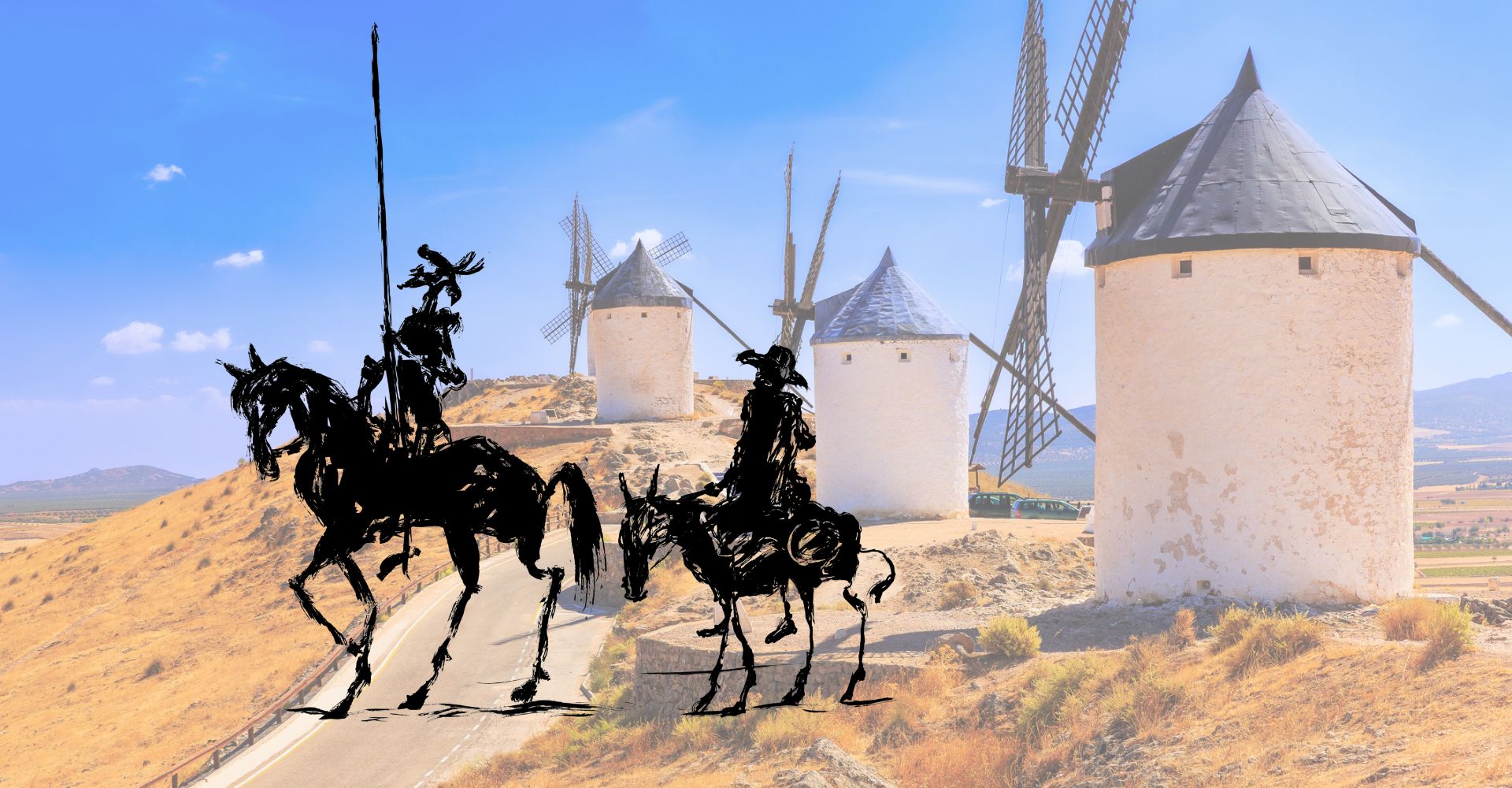
Considered the first modern European novel and published in two parts between 1605 and 1615, Don Quixote of La Mancha is the most famous work not only of its author—the great writer, poet, and playwright Miguel de Cervantes Saavedra (1547-1616)—but of Spanish literature of all time.
An opus-world, polyphonic and layered, among the most studied in academic circles, debated by critics and taken up by writers, artists, singers, philosophers, and directors.
And also one of those most often quoted in everyday conversations—think of the fame of expressions like “tilting at windmills,” the adjective “donquixotic,” or the figure of Sancho Panza, which for centuries has stood as a symbol of folk wisdom in antonomasia.
Don Quixote of La Mancha: how to navigate reading it?
Yet, if we needed to specify in more detail what Don Quixote of La Mancha is about, we might struggle to go beyond a few scolar reminiscences or personal readings: surely the theme of madness is central, together with a revival of ancient chivalric deeds and a strong dose of irony, but… what else?
What miraculously precise combination of form, content, and allusions has given the novel such depth as one of the most acclaimed and engaging works of all time, alternating the fantastic and the realistic, the parodic and the mystical, the picaresque and the heroic?
Acknowledging that providing a full answer could be a challenge even for the most seasoned readers, in particular due to the numerous references scattered throughout the book, which are not always easy to grasp, we offer below a guide designed precisely to help you familiarize yourself with the most fascinating and intricate aspects of this landmark of the Western canon.
An opportunity to (re)discover it and orient yourself within its 126 chapters, looking more closely at the plot, the characters, and the meanings — from Cervantes’s poetic approach to the Don Quixote’s impact on the imagination of subsequent centuries.
And for those who love Miguel de Cervantes and Don Quixote, or who want to know more about it, here are some other pieces on the topic:
- Shakespeare and Cervantes: a comparison of authors
- A new “Don Quixote” for young readers ready to thrill children and adults alike
- “Trial of Don Quixote”: was Cervantes’s character truly mad?
- Don Quixote as emblem of modern alienation: Dorfles revisits Cervantes 400 years later
- Exploring Salman Rushdie’s boundless Quichotte
- “Chisciotte”: Antonio Moresco and Cervantes’s hero
Table of Contents
- 1. The Rocambolesque Life of an Immortal Author
- 2. The Origins of Cervantes’s Masterpiece
- 3. Don Quixote of La Mancha: The Complete Plot
- 3.1 First Part
- 3.2 Second Part
- 4. The System of Characters
- 4.1 Alonso/Don Quixote: from hidalgo to demiurge
- 4.2 Sancho Panza and Dulcinea, two opposites
- 4.3 An altered realism
- 5. Themes and Meanings of Don Quixote
- 5.1 Literature as a reaction to reality
- 5.2 The immorality of spaces and bodies
- 5.3 The madness paid for with death
- 6. From “the” Don Quixote to “a” Don Quixote among many
- 6.1 Between rewritings and rereadings
- 6.2 Don Quixote Lives
1. The Rocambolesque Life of an Immortal Author
Né in the town of Alcalá de Henares in 1547, from a family of modest origins, Miguel de Cervantes Saavedra lived a bold and often troubled life, which in turn fed his literary output.
After numerous moves prompted by his father’s meager earnings, he attended the college in Madrid, then left Spain for Italy. In 1571 he took part in the battle of Lepanto and lost the use of his left hand; in 1575, he was captured by Barbary pirates and spent five years of captivity in Algiers, making four attempts to escape before being released upon payment of a ransom.
Back home, he embarked on a surprisingly heterogeneous production: in addition to Don Quixote, he composed several poems (though with a wry note that he was no favorite of the Muses) and many comedies and interludes. With La Galatea (1585) he even ventured into the pastoral novel, while in the Novelas ejemplares (1613) he recounted the contradictions of his time.
Formed at the twilight of the 1500s and the dawn of the 1600s, Cervantes embodied the transition from the Renaissance to the Baroque that would define the Siglo de Oro (a period during which arts and literature experienced extraordinary growth). His aim to probe illusions, madness, and the impulse to understand human consciousness, and his desire to emancipate from the constraints imposed by society, all mark this shift.
A great admirer of Greco-Roman culture—especially of Plato, Aristotle, and Horace—and a keen reader of his contemporaries, he mostly adhered to the humanist canons of the sixteenth century, while pursuing a highly personal and unconstrained stylistic search. Not for nothing does his writing alternate between elaborate and symmetrical sentences and more direct and almost colloquial passages, reflecting a style in which formal rigor yields to an irreducible inventive freedom.
Traditionally Cervantes is thought to have died in Madrid in 1616, on the very day that William Shakespeare (1564-1616) passed away in Stratford-upon-Avon—that is, April 23, a date associated since 1996 with UNESCO’s World Book and Copyright Day. More credible sources, however, indicate he died on April 22, and was buried the following day in the convent of the Trinitarian monks of the capital.
2. The Origins of Cervantes’s Masterpiece
“In a village in La Mancha”, the name of which I do not care to recall, there lived a knight with a lance in his rack, an old shield, a lean nag, and a running greyhound…
The idea of Don Quixote likely matured during the bleakest years of the author’s own life: according to some, the first sketch of the work may have even gestated in prison, where Cervantes was imprisoned several times for debt and mismanagement of accounts stemming from his time as a tax official.
Thus it was in a condition of privation and isolation that the project of a satire of chivalric romances took shape—a genre then enormously popular but already perceived by the more moralistic scholars as harmful, trivial and morally instructive-absent.
The initial intention seems to have been to create a novella, which over time expanded into a vast novel: the first part was published in Madrid in 1605 by the publisher Francisco de Robles and enjoyed extraordinary success, being reprinted several times within a few months and quickly reaching beyond Spain.
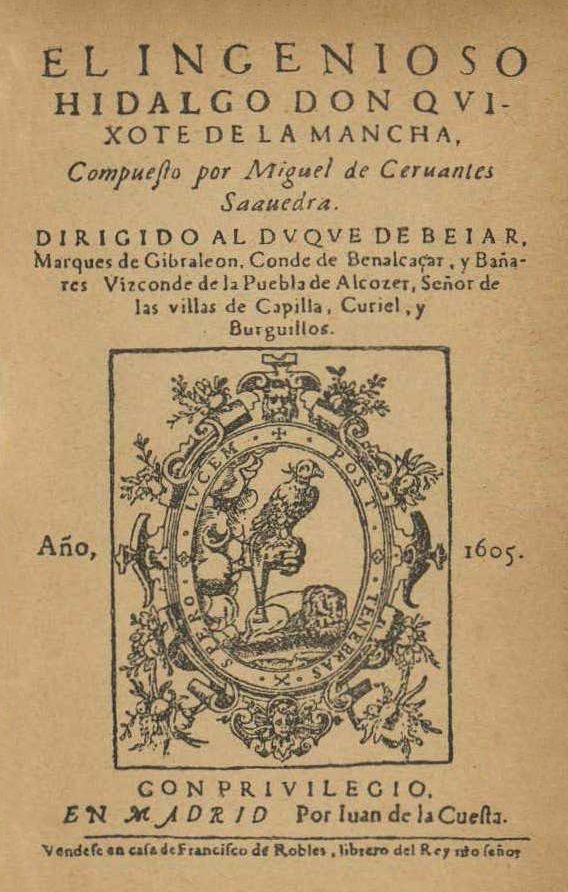
However, Cervantes did not strike a favorable deal regarding financial rights, and the commercial triumph of the work did little to improve his finances. Nevertheless, the text continued to circulate widely and established his name across Europe—not to mention that his writing began to shape Castilian in such a way that he would later be regarded as the father of the Spanish language.
Meanwhile, in 1614, a Don Quixote apocryphal work appeared, signed under the pseudonym of Alonso Fernández de Avellaneda, which likely spurred Cervantes to rush the second part of his own work, published in 1615.
In the spurious version—which chose a satirical but self-aware approach, and whose author’s identity has never been conclusively proven—the famous knight had renounced Dulcinea and become known as the unwed knight, traveling to Saragoza to take part in the city’s famed tournaments, and eventually reaching Alcalá and Madrid before being confined in a Toledo insane asylum.
A credible continuation that Cervantes read meticulously, yet it prompted him to plan a course correction to reassert the authenticity of his own creation: his second volume would have a markedly different plot and trajectory, would quote Avellaneda repeatedly to mock it, and would include a meeting between the protagonist and the “fake” Don Quixote, to refute him in every respect.
3. Don Quixote of La Mancha: The Complete Plot
May God grant that your lordship becomes a most adventurous knight and that fortune attends him in his battles…
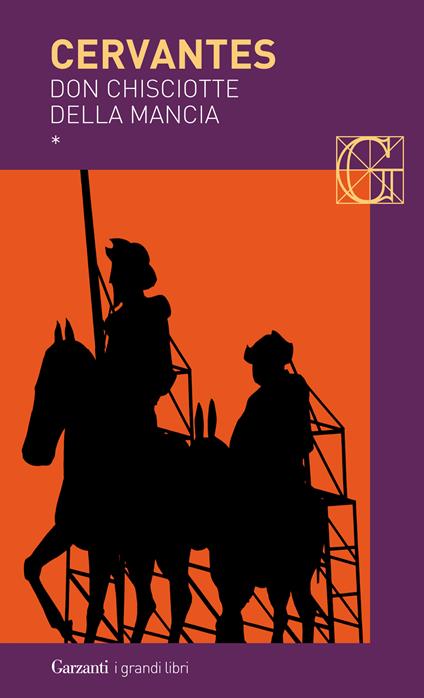
Don Quixote of La Mancha (which we recommend reading in the Garzanti edition translated by Letizia Falzone) opens with an unconventional prologue, in which the author pretends to lament to an imaginary friend about the difficulty of supplying his book with learned references to the classics, receiving in return the suggestion to append them at random, since no one would bother to verify them one by one.
In addition to ridiculing the pedantry of scholars of his time, he dismantles the conventions and, from the very first lines, forges a tacit agreement of sardonic complicity with the reader, by presenting himself—as a device of feigned modesty—not as the author of the work, but as a mere guardian of it.
The question of authorship is teased out further in the eighth chapter, with the introduction of one of the most celebrated metanarrative stratagems in world literature: it is revealed here that the novel (apparently based on historical facts) is nothing more than the translation of an Arabic manuscript signed by a certain Cide Hamete Benengeli and found by chance in a Toledo market.
Presenting himself as a simple intermediary of another’s story, Cervantes can cleverly multiply the gap between author and narrator, keeping at bay any unseemly scenes and winning the audience’s trust with a brilliant captatio benevolentiae, after which the real narrative takes hold (which we summarize below for space and to avoid spoiling too many subplots and syncretic elements for future readers).
3.1 First Part
The main character is Alonso Quijano, a middle-aged country gentleman whose fortune and health have been consumed by reading so many geste cavalleresche that he has lost his senses: convinced he is a wandering knight, he renames himself Don Quixote of La Mancha, digs out a rusty old armor and calls his aged horse Rosinante, and leaves home to seek adventures.
He allows himself to be named a knight in an inn he mistaken for a castle, then urges his humble Sancho Panza to follow him as his squire, promising him the governorship of an island that they will conquer together. He selects as his ideal lady the farmer Aldonza Lorenzo—whom his imagination transfigures into the noble Dulcinea del Toboso—and finally launches his glorious exploits, including the famous windmills he fights as if they were giants, in which he suffers a resounding defeat.
Equally famous is the episode in which he steals a copper basin from a traveling barber, believing it to be the legendary golden helmet of Mambrino, and places it on his head with all the ceremonial gravity of the moment.
Meanwhile, the village priest and the barber, with the help of Alonso’s niece and a household servant, have almost burned down his library, suspecting that the chivalric novels are the root of his madness, and hatch a plan to lead him back home by convincing him he is under a spell and confining him in a wagon cage. And so we reach the end of his feats and the first part of the story.
3.2 Second Part
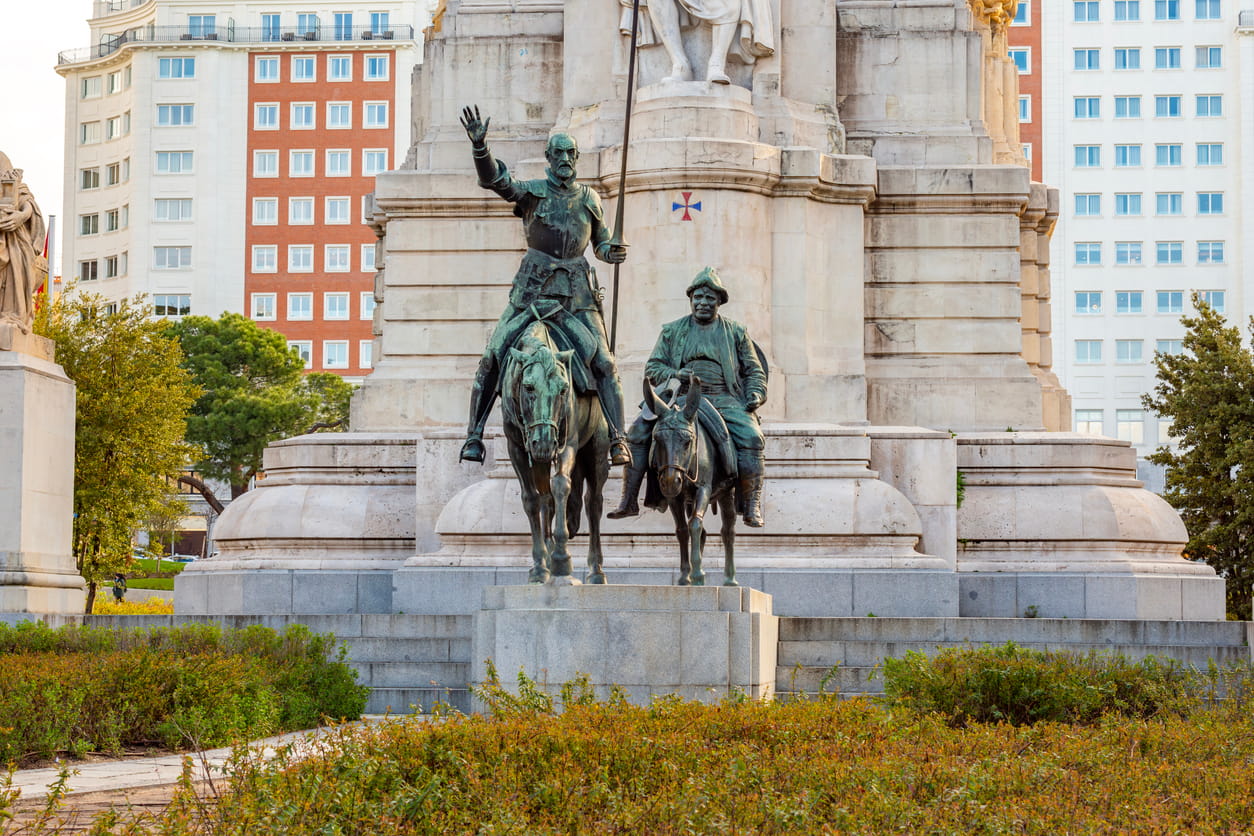
In the second part, the narrative mechanism becomes more sophisticated and less carefree. Now the characters of the work know they have become famous thanks to a novel by Cervantes entirely devoted to them, claim to have read the literary adaptation in question, and within a dizzying metanarrative frame must contend with a bored duke and duchess who, after discovering their existence, decide to play tricks on Don Quixote and Sancho, staging a series of taunts at their expense.
They simulate spells, staging and false misadventures, turning Don Quixote’s madness into a spectacle designed only to amuse them, and appoint the poor Sancho governor of the island of Barataria— an imaginary place, but in ruling it the squire proves to be surprisingly astute, equaling his master in common sense.
Ultimately, after the descent into Montesinos’ cave (where Don Quixote says he met enchanted knights and court ladies in a subterranean world visible only to him), the valiant protagonist is defeated in a duel by the Knight of the White Moon— Sanson Carrasco, a village scholar disguised as a paladin. And, as he had promised his foe in case of defeat, he must, reluctantly, renounce for a year the knightly life.
He returns home, defeated and exhausted, and ends up falling ill, regaining lucidity only on his deathbed: just in time to recognize himself again as Alonso Quijano, condemn the novels he had loved so much, and give up forever the visionary grandeur that had allowed him to resist the ugliness of existence (while discouraging further apocryphal tellings of his adventures)…
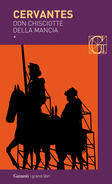
Don Quixote of La Mancha
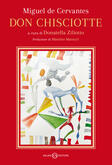
Don Quixote
4. The System of Characters
Having given his horse a name, he also decided to give himself a name, and after eight more days of searching, he resolved to call himself… “Don Quixote of La Mancha,” and with that he felt he had clearly revealed his lineage and homeland, and honored it by taking the surname from it.
If we want to delve into the boundless universe of signs in Don Quixote, a good starting point is first to look at who lives there: how did the author design the character system? What traits do they share, and what relationships do they develop among themselves?
These are questions worth asking to better frame the most peculiar aspects of the work and Cervantes’s avant-garde devices, whose answers already tell us a lot about his view of literature…
4.1 Alonso/Don Quixote: from hidalgo to demiurge
Let us begin with Alonso Quijano, whom Cervantes presents as an “ingenious hidalgo.” And indeed: the word hidalgo comes from hijo de algo, meaning “son of someone” or “of noble origins”; yet Alonso does not care to be the son of anyone, and what drives him is not a desire to descend but to generate.
Rather than an “alpha male” of his time, he prefers to be a reader—a truly ingenious reader—who, instead of conquering the world with strength, recreates it through imagination: a hero and at the same time a anti-hero, at least by the standards of the era.
The madness of Alonso is thus to be understood as a creative act—almost blasphemous in its proximity to the work of the Creator: abandoning his social role and choosing to call himself Don Quixote, the protagonist becomes a true demiurge of an alternate world he sets out to shape. He spends entire days, just as God did in Genesis, naming his horse, his beloved, allies, and enemies, crafting a reality not to be interpreted in a chivalric key but to be treated as such to its core, and within it Don Quixote will act accordingly.
In this way, Cervantes gives his reader-figure a power beyond the ordinary, letting it be exclusively his (and not the novel’s author) to proliferate meanings and personal identities around which the text will revolve. It is therefore from his point of view that we will now observe the other characters in the story.
4.2 Sancho Panza and Dulcinea, two opposites
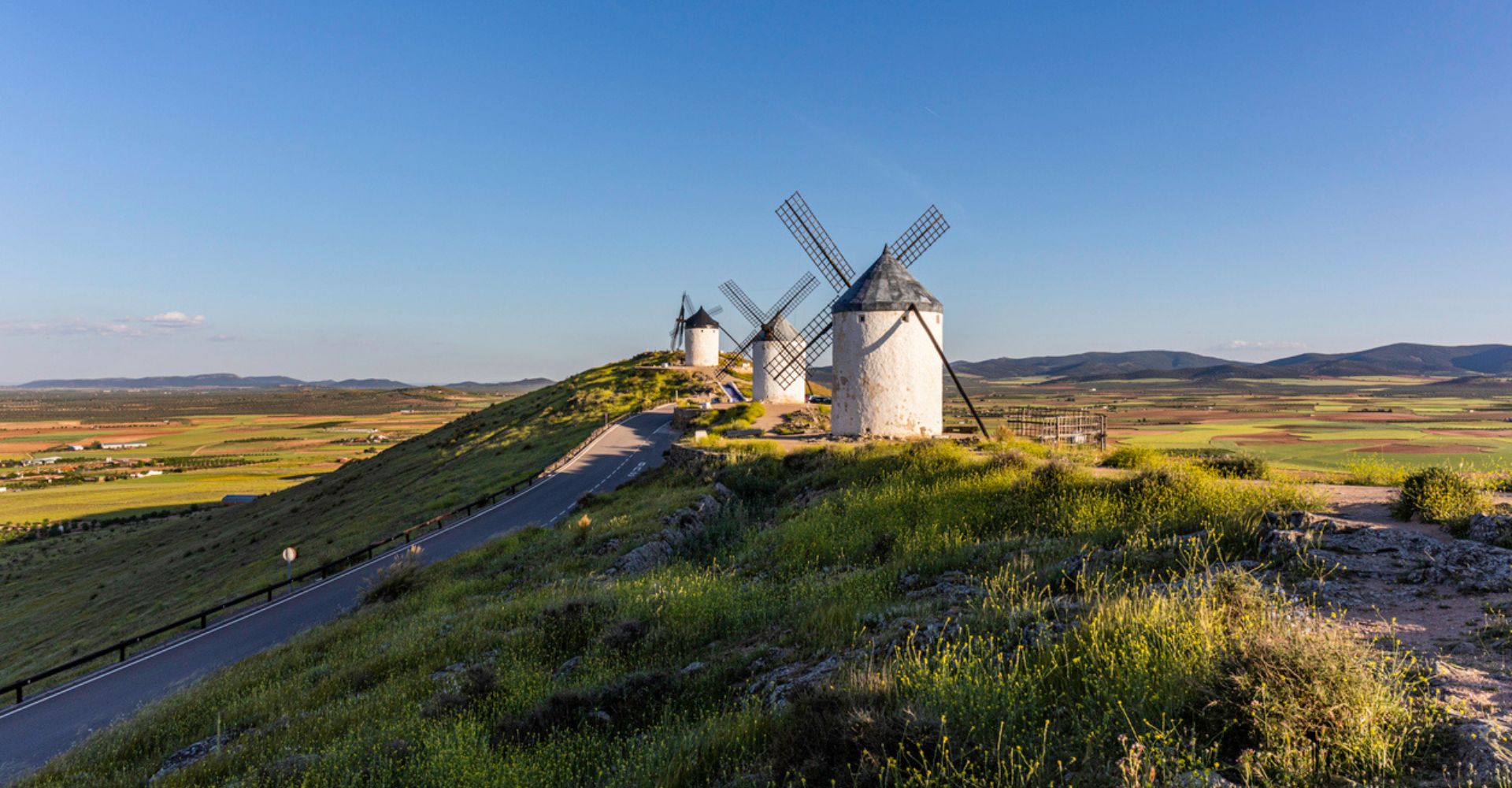
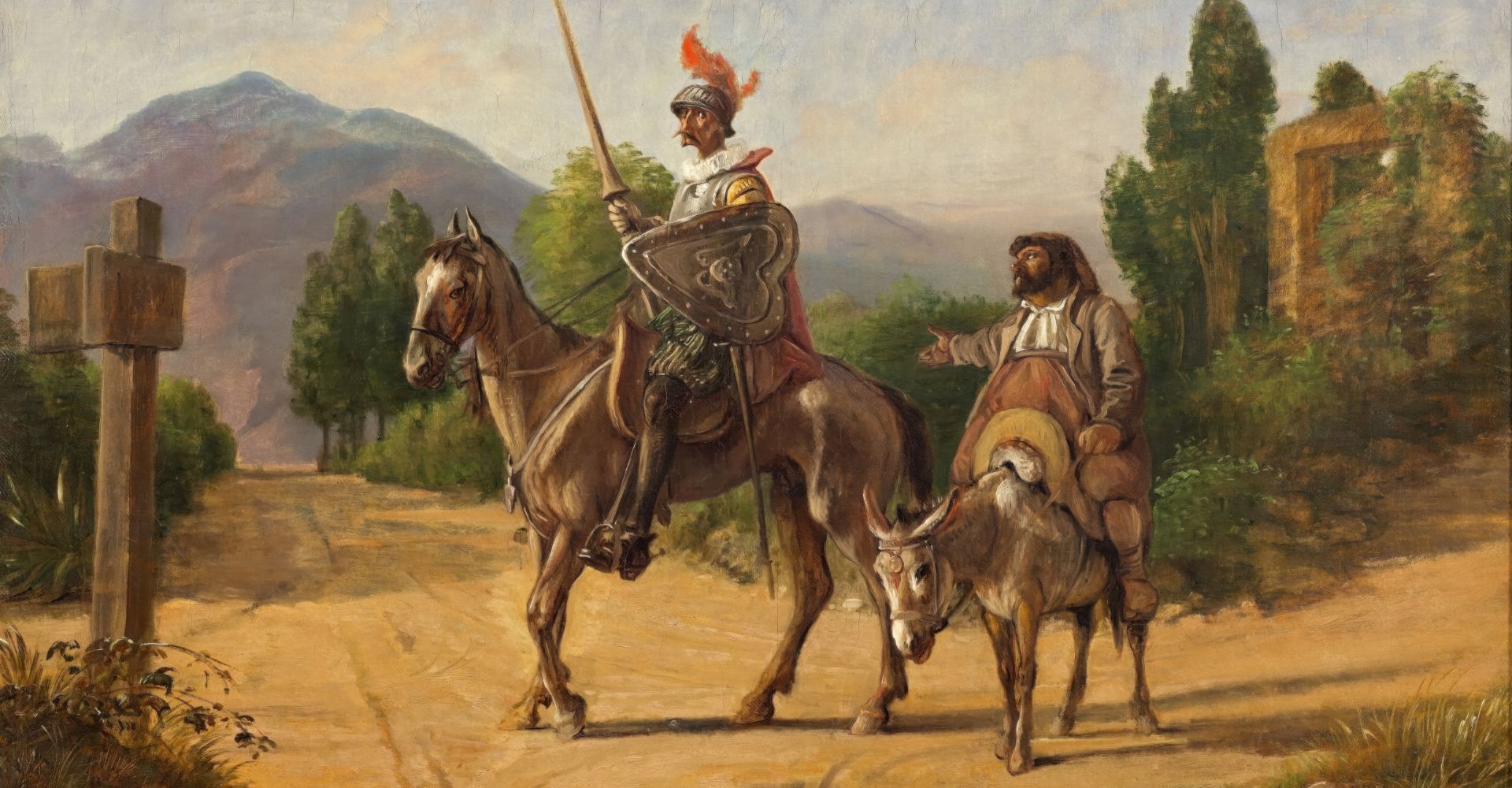
If Don Quixote is the demiurge of the situation, Sancho Panza is the skeptic. Straightforward, pragmatic, and not given to indulging his master’s whims (yet loyal and always ready to follow him), he instantly forges a friendship with the protagonist based on a permanent and polite disagreement— where Sancho leans toward the mundane worldly reality and Don Quixote toward the pure ideal, while the plot feeds on their tension.
But with each adventure, something is destined to change: Sancho begins to absorb his master’s vision, reasoning like him and borrowing his quirky ingenuity. He slowly becomes a bit “donquixottized,” moving from a confusing pity to a growing, affectionate admiration. This leads us to think that the madness of the “knight of the sad figure” (as Sancho will nickname him) is contagious, prompting those around him to also alter their view of the world.
Opposite Sancho stands Dulcinea, who exists only in Don Quixote’s mind: she can be called upon and desired, but is almost never present in her “real” form as a peasant, much less as a noblewoman. After all, we should not think of her as a character, but rather as a narrative function of elevation, partly reminiscent of the angelic women of the stilnovist poets.
Every wandering knight indeed needs a lady to dedicate his deeds to, and Don Quixote is no exception. Dulcinea exists because the script requires it, not because she has a particular significance of her own—and that is why, when Sancho must describe her or interact with her, he won’t know quite what to do: outside the lover’s imagination, Dulcinea is necessarily insubstantial.
4.3 An Altered Realism
Around them revolve dozens of secondary figures to whom Cervantes assigns a notice that is perhaps atypical for the seventeenth century, but certainly not for Don Quixote. Shepherds, prostitutes, innkeepers, peasant women: in his eyes, all of them possess a dignity both literary (pastoral and almost classical) and social, even though they belong to a very low social stratum and do not shine with what would normally be called “good manners.”
The result is a significant praise of the marginal, through which the more peripheral political and moral figures are taken seriously by the protagonist, generating in him a respect and an emotional involvement that would otherwise be unimaginable.
Thus we encounter a form of altered realism, which shows the world as it is, but after Don Quixote’s entrance forces us and everyone around him to humor his madness— and to judge the value of his interlocutors from a perspective that is at once revolutionary.
5. Themes and Meanings of Don Quixote
In truth, he absorbed so much in those readings that he spent nights, from dusk until dawn, reading; and so, through little sleep and much reading, his brain withered away to the point of losing his wits.
Now that we have become familiar with some of the characters of the novel, we can widen the discussion to the themes that Cervantes threads around them and the Spain of the early seventeenth century, painted as a country in transformation and in many ways in crisis.
The protagonists move through a landscape in which rural areas are depopulated, the minor nobility grows progressively poorer, and the chivalric values and codes of justice on which an entire civilization had been founded seem to be emptied of meaning. Only Don Quixote, with his stubborn loyalty to a world that no longer exists, seems to resist the general disorientation—but more on that below.
5.1 Literature as a Reaction to Reality
One of the first themes that emerges from the work is the Don Quixote’s relation to the chivalric tradition, which Cervantes intends to parody for its excesses and its undeniable distance from the problems of his era, but which he deeply loves (he even quotes its most authoritative texts from memory, only to reuse or invert the rules at will).
Far from declaring its death (an outcome those “bad morals” censors would have us believe), the author uses Alonso Quijano’s adventures as a device to revive the tradition, emulating the authors of the knightly romance in the same way his protagonist imitates the wandering knights.
At the same time, however, Cervantes’s masterpiece also serves as a theater in which the most controversial phenomena and events of the sixteenth century are evoked: the Inquisition, banditry, piracy, the expulsion of the Moors, the Turkish-Venetian wars, the Protestant Reformation… In such a climate of uncertainty, it seems inevitable that the only avenue of escape is literature.
In a context increasingly lacking in lofty aspirations, welfare and ethical pillars in which Don Quixote must move, only by rejecting reality and transcending fiction can he still glimpse a world worthy of his ideals, where nobility—no longer rooted in birth but in spirit—is not yet completely extinguished.
5.2 The Immorality of Spaces and Bodies
From here we reach another central theme: the interdependence of space and morality. To grasp this, one must start from the premise that in Cervantes’s Spain bodies—especially female bodies—are kept under control within enclosed spaces (houses, churches, administrative rooms, taverns, public baths…), where it is easier to transmit and monitor certain customs tied to the austerity of manners and religious observance.
Who ventures into an open space without a defined and justified purpose tends to withdraw. And the more they depart from it, the more subversive they become—just as happens with Don Quixote and Sancho Panza, whose movement freedom grows in tandem with a progressive deviation from a pre-set code of conduct.
QUIZ – HOW MUCH DO YOU KNOW SPANISH LITERATURE?
As if that weren’t enough, the rebellious attitude of the characters (already glimpsed in their care for the most mistreated or ridiculed by the community) also passes through the assertion and the display of a body that is often fragile and imperfect—and we refer, in particular, to our hero’s body, perhaps the most slender, battered, and weathered we encounter.
Whereas in a more conventional work the protagonist would have a youthful, athletic appearance, here the choice to present a Don Quixote who is awkward and out of date—but which also yields a certain “opposite sentiment”, as the Nobel Prize-winning writer Luigi Pirandello (1867-1936) would call it in the twentieth century—serves to reaffirm the freedom to exist in one’s own way, occupying a place far from society’s assignment.
5.3 The Madness That Is Lived Through in Death
Yet such an exaggerated freedom inevitably carries a cost. It may give rise to a world that is more good and just, even convincing us that Don Quixote’s madness is more of an utopia than a mental illness, but the problem arises when that freedom is betrayingly taken away along with any possibility of reclaiming it.
Dragged back into the grey, narrow space of ordinary life, the protagonist progressively falls ill from “too much reality,” compressed into a hollow, discontented existence that, without the nourishment of literature, fantasy, and hope, slowly drains him from the inside.
To be revived is therefore not a synonym for recovery, but for an irrevocable condemnation. And this explains why, in the epilogue, his character dies physically as well: confined once again within the four walls from which he started, he can assume the persona of Alonso Quijano, but at the same time loses all that had transformed him into a singular and unforgettable man.
Thus death becomes the price to pay for attempting to survive by overturning the status quo—a death that arrives when Don Quixote finally abandons his project of redemption. For after all, as the philologist and professor from Turin Corrado Bologna stated in an interview with Linkiesta about Cervantes’s masterwork: “If it’s true that one cannot live on utopias alone, it is also true that one cannot live without them…“
6. From “the” Don Quixote to “a” Don Quixote Among Many
Do not die, sir master, do not die. Take my advice, and live many years, for the greatest madness a man can commit in this life is to let himself die thus without a motive, without anyone killing him, worn out by sorrows and humiliation. Come, don’t act lazy, rise from this bed, and let us go to the countryside dressed as shepherds as you have proclaimed, and who knows what enchantment might lie beyond some hedge—perhaps Lady Dulcinea disenchanting herself, a sight to behold.
Against the backdrop of the aspects we have examined, it is no surprise that Don Quixote’s popularity was immediate and overwhelming—the first Italian translation, by the lexicographer and grammarian Lorenzo Franciosini, appeared between 1622 and 1625, just a few years after the Spanish edition, testifying to the novel’s impact on contemporaries.
An early yet profound impact that would spark a process that continues today, in which we confront not only Cervantes’s Don Quixote but countless others, shaped by those who have reinvented an ever-new Don Quixote according to their own sensibilities, making him an open archetype capable of multiplying without ever exhausting itself.
6.1 Between Rewritings and Re-readings
To explain the immortal fortune of the work, according to Treccani Encyclopedia, lies largely in Cervantes’s extraordinary range of narrative devices, which over time have made his text a model indispensable for writers such as Henry Fielding (1707-1754), Laurence Sterne (1713-1768), Charlotte Lennox (1730-1804), Gustave Flaubert (1821-1880), Alexandre Dumas fils (1802-1870), Fyodor Dostoevsky (1821-1881), Benito Perez Galdós (1843-1920), John Steinbeck (1902-1968) and Graham Greene (1904-1991), to name but a few.
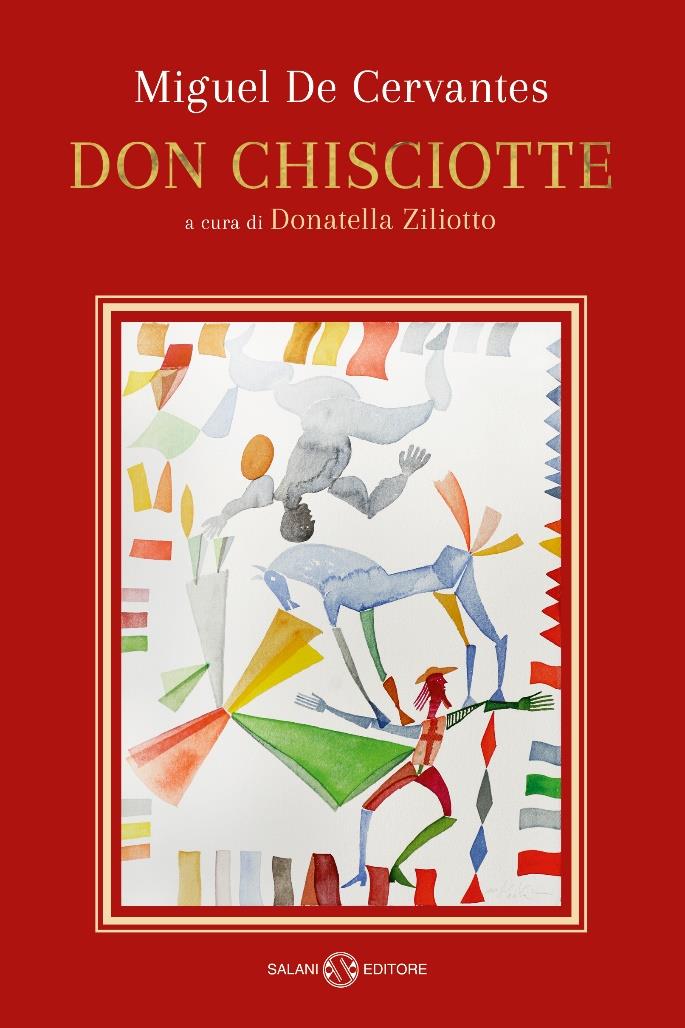
Then come the nineteenth- and twenty-first-century rewritings and re-readings of the Quixote, including The Endless Journey (VandA, translated by Deborah Ardilli) by poet and activist Monique Wittig (1935-2003), Quichotte (Mondadori, translated by Gianni Pannofino) by novelist and essayist of Indian origin naturalized as British, Salman Rushdie (born 1947), the children’s adaptation of Don Quixote by Donatella Ziliotto (founder of Salani’s “Gl’Istrici” series), and Chisciotte (SEM) by cult author Antonio Moresco (Mantua, 1947), a finalist for the Strega Prize in 2016 (for L’addio, Giunti).
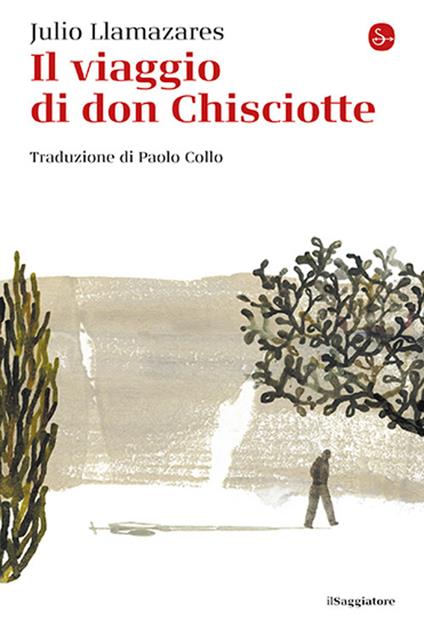
And what about the recent work by Julio Llamazares, titled The Journey of Don Quixotte (Il Saggiatore, translated by Paolo Collo), which has traced the gallant hidalgo not only in metaphor and literature but also, above all, geographically? With a playful yet precise and informed tone, the author has produced a faithful and enjoyable reconstruction of the main movements of the characters, using maps, illustrations, and thematic boxes that allow us to (re)discover up close the most iconic places in the novel.
But that’s not all: confronting Don Quixote does not mean simply drawing inspiration from his reservoir of possibilities, but also re-reading him to question him in an interpretive sense.
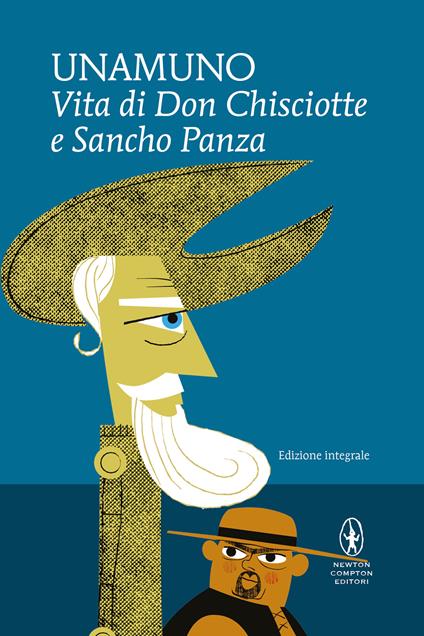
Intellectuals such as Miguel de Unamuno (1864-1936) did indeed engage with the matter, proposing an existential and spiritual interpretation of the novel in Life of Don Quixote and Sancho Panza (Newton Compton, translated by Clara Serretta), sometimes in open polemic with Cervantes himself; as did José Ortega y Gasset (1883-1955) in Meditations on Don Quixote (Mimesis, edited by Armando Savignano), who developed a reflection on Spanish identity and the binary of ideal vs. reality; and Jorge Luis Borges (1899-1986), who in the tale Pierre Menard, Author of the Quixote (in Ficciones, Adelphi, edited by Antonio Melis) explored the paradox of an eternal text whose meaning shifts with every act of reinterpretation.
Not to mention Franz Kafka (1883-1924), who in Sancho Panza’s Truth (in All the Stories, Newton Compton, Giulio Raio trans.) inverted the viewpoint, turning the sidekick into the true protagonist, and making Don Quixote into his projection. Or Milan Kundera (1929-2023), who devoted significant space to Cervantes in The Art of the Novel (Adelphi, Ena Marchi trans.), highlighting him as the first to explore the ambiguity of reality and humanity through fiction, and Michel Foucault (1926-1984), who in the essay The Order of Things described Don Quixote as an epistemic watershed.
According to these voices, language in the work begins to fail to reflect the world, and the words (i.e., the knightly books housed in Alonso’s mind) can no longer accurately portray reality: the protagonist thus becomes the emblematic figure of a crisis of meaning, both personal and historical.
6.2 Don Quixote Lives

In parallel, for his part, the Knight of La Mancha did not hesitate to cross the borders of literature: in the field of art, Gustave Doré (1832-1883) illustrated his adventures in a series of elaborate plates in 1861, followed by Pablo Picasso (1881-1973) and Salvador Dalí (1904-1989), who portrayed him in their unmistakable styles—while in theatre he inspired multiple dramatic adaptations and ballets (notably the 1869 score by Aloisius Ludwig Minkus, still performed worldwide), as well as operas and symphonic works.
In the silent cinema, he also had a long pursuit, and since 1903 there have been more than 35 major adaptations, including Orson Welles’s unfinished film (1903-1985), later resumed and completed in 1992 by Jesus Franco, and Terry Gilliam’s The Man Who Killed Don Quixote (2018), in which Cervantes’s character reaffirmed his inexhaustible polyhedral nature.
Comics and manga have not been left behind either—from Asterix in Iberia (1969) by René Goscinny (1926-1977) and Albert Uderzo (1927-2020), which places Sancho Panza and Don Quixote in the real world of Gallic warriors, to Japan’s Eiichirō Oda (Kumamoto, 1975), the creator of One Piece, who paid homage to the novel by naming one of the strongest families in the manga “Donquixote”, and naming Rosinante one of its members.
Let us not forget the singers and bands of both Italian and international light music who have mentioned Don Quixote in their songs. From Ivano Fossati and Anna Lamberti-Bocconi to Roberto Vecchioni, from the Modena City Ramblers to Marlene Kuntz, from Carmen Consoli to Coldplay, from Nik Kershaw to Seventeen, and of course to Francesco Guccini, who in 2000 celebrated in his famous Don Quixote the idealist who knows he fights an impossible but necessary battle.
He would intone a broad, Lehrer-like hymn, imagining a dialogue between the protagonist and his squire:
In a world where evil resides and has always triumphed,
where capital rules, today more mercilessly,
will this fool and his useless squire
ever foil Power and save the whole world?Tell me, dear Sancho, should I retreat
because Evil and Power wear such a bleak face?
Should I also renounce a bit of dignity,
humble myself and accept this as reality?
Two stanzas that affirm the timeliness of Cervantes’s masterpiece—or more precisely, its universality—reminding us that Alonso Quijano may have breathed his last breath, but he did not drag his alter ego down with him.
The knight of the sad figure, indeed, continues stubbornly to appear and reappear before our eyes, acting as a fixed point of the collective imagination and refusing to belong exclusively to his author so that he could belong to everyone.
Sure, he daily clashes with the distance between the world he dreams of inhabiting and the one in which he truly moves, and yet he neither gives up nor exaggerates his own tragedy. At least as long as we continue to believe in his potential, repeating to ourselves that—despite the dark times we may find ourselves in—Don Quixote lives and will continue to do so through us, more mad and exuberant than ever…