
Jean-Philippe Rey, Antoine Barnave. The Royalist Revolutionary, Passés Composés, 08/10/2026, 310 pages, 23€
On 9 Frimaire of Year II (November 29, 1793), a cart rumbles through the streets of Paris. On the uneven pavements, the condemned are led toward the guillotine. At the end of this journey, Antoine Barnave, former deputy of Dauphiné in the Constituent Assembly, will pay with his life for a political fidelity that has become suspect: that of a convinced revolutionary who believed liberty could be reconciled with a constitutional monarchy.
We think we know the principal actors of the French Revolution, since Danton, Robespierre or Desmoulins have left an indelible mark on history. This reductive view hides essential figures who, in the heat of the upheaval, tried to steer events. Many gave their eloquence, their intelligence and their energy to the service of a new order before being cast aside by the radicalization of the movement they helped to unleash. Barnave is among them.
The historian Jean-Philippe Rey, a specialist in the Revolution and the Empire, undertakes to bring one of the most influential figures of the early revolutionary years back from oblivion. With precise writing and a sustained attention to the contradictions of his subject, he pieces together the fate of an ambitious reformer, a remarkable orator, but gradually surpassed by the momentum of events.
A Dauphiné Bourgeois Nourished by the Enlightenment
Born in Grenoble into a family of Protestant bourgeoisie, Antoine Barnave set his sights, like his father, on the profession of lawyer. His milieu provides him with the intellectual and social resources necessary for his ascent. Trained in legal culture, sensitive to Enlightenment ideas and to debates on the separation of powers, he develops very early a demanding conception of political representation.
When Louis XVI convenes the Estates-General, amid financial and institutional crisis, Barnave engages with fervor. Elected as the Third Estate deputy for the Dauphiné in 1789, he goes to Versailles convinced that reforming the monarchy could open a new political era.
The Birth of a Political Vocation
In Versailles, the young lawyer is notably active. His ease in public speaking, the strength of his reasoning and his reformist zeal quickly win him a considerable audience. Within the Constituent National Assembly, he stands among the voices aiming to transform the institutions without necessarily abolishing the monarchy. He takes part in the project of political and legal refounding launched in 1789. Yet his position remains exposed. The speeches delivered in the enthusiasm of the early hours, the shifting alliances and the changes in the balance of power become as many pieces that can be turned against him.
The Revolution and Its Contradictions
On June 4, 1789, the Dauphin Louis-Joseph, Louis XVI’s eldest son, dies at seven years old. A few weeks later, on July 14, the capture of the Bastille pushes the political crisis into a new dimension. Barnave advocates a profound transformation of the kingdom, while condemning certain violences and seeking an institutional balance.
The man wants to be both revolutionary and monarchist. Nothing is incompatible in his eyes: national sovereignty, representation and the limitation of royal authority must be joined within a constitution. But political clashes intensify. Compromises become suspect, and intermediate positions become harder to hold.
Varennes: The Turning Point
In the night of June 20 to 21, 1791, Louis XVI, Marie-Antoinette and their children leave Paris. Recognized and then arrested at Varennes, they are brought back to the capital. Barnave is among the deputies charged with accompanying them. The contact with the royal family redirects his political trajectory: he moves closer to the Court and more resolutely defends the constitutional solution.
A confidential correspondence is established with Marie-Antoinette. The romantic temptation would be to see in it evidence of a burning passion; history documents first a political dialogue, forged in a climate of mistrust and urgency. This distinction does not take away from the dramatic power of the narrative: Barnave believes he can save the monarchy by helping to reconcile it with the Revolution.
The Impossible Reconciliation
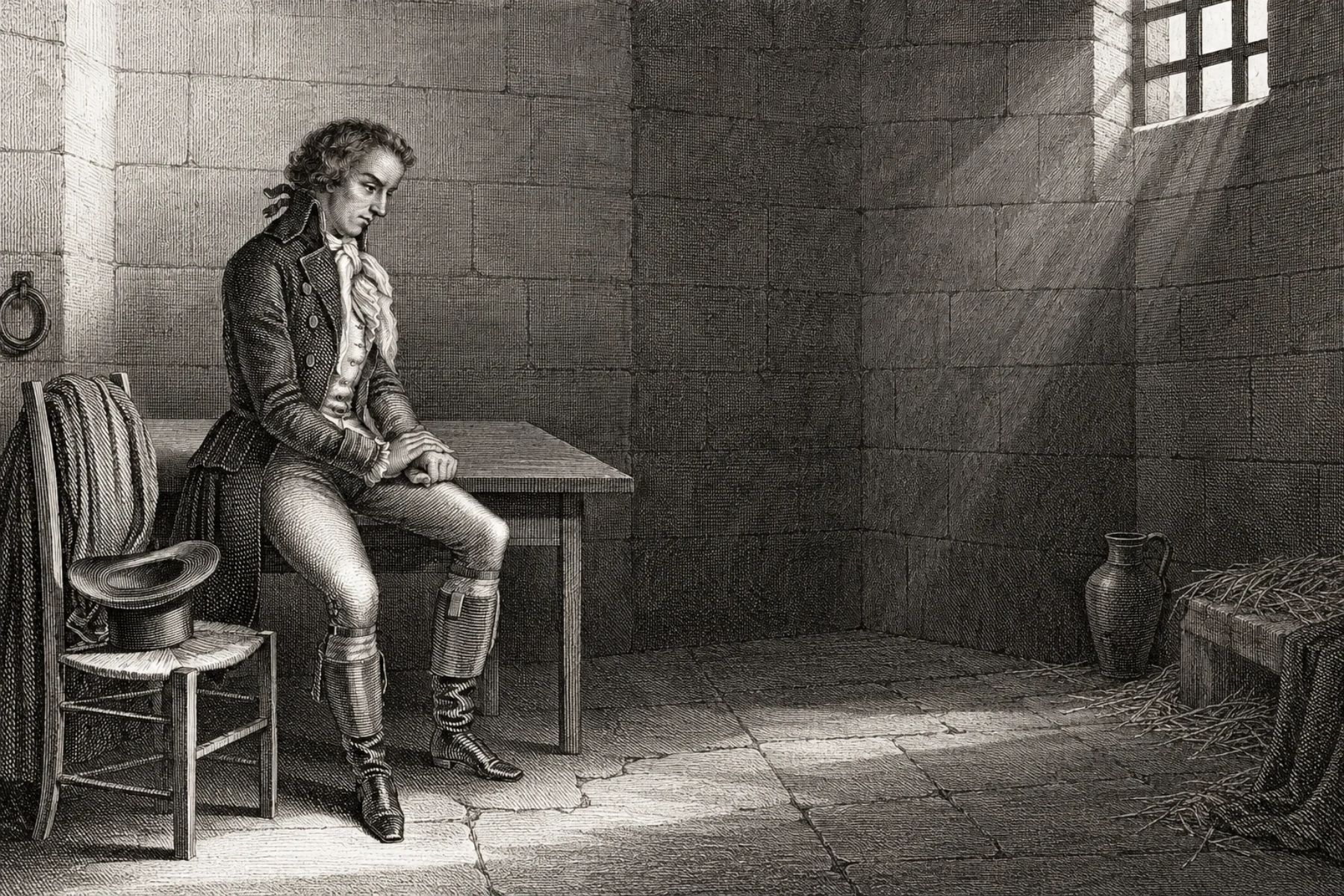
As opposition grows harsher, his influence wanes. After the Constituent body completes its work, he returns to Grenoble. The seizure of the Tuileries on August 10, 1792, followed by the discovery of compromising documents highlighting his ties to the Court hastens his downfall. Arrested in August 1792, he remains imprisoned for a long time before being transferred to Paris.
In November 1793, while Louis XVI and Marie-Antoinette have already been executed, Barnave appears before the Revolutionary Tribunal. Condemned to death, he is guillotined on November 29. He is thirty-two years old.
This biography powerfully conveys the fertile and tragic ambiguity of his trajectory. Barnave is neither a simple royalist lost among the revolutionaries, nor an unimpeachable hero. He embodies the hope of a Revolution tempered by the law, then the collapse of that horizon. Jean-Philippe Rey restores to this actor, too often relegated to the background, a genuine political and human depth. A book that reminds us that history is not written only with victors, but also with those whose plans were defeated.
The article Antoine Barnave. The Royalist Revolutionary first appeared on Lythrum Press.
