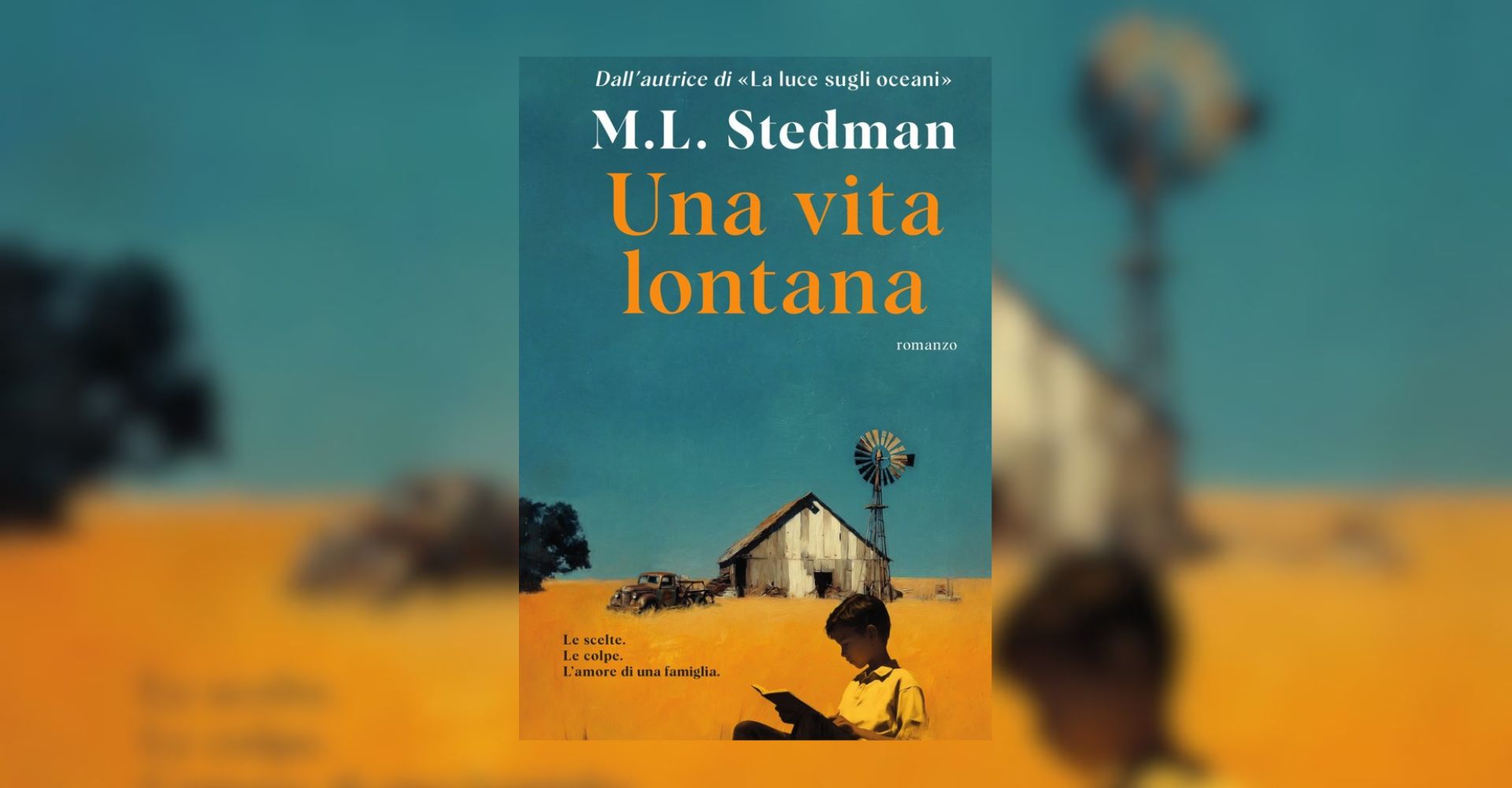
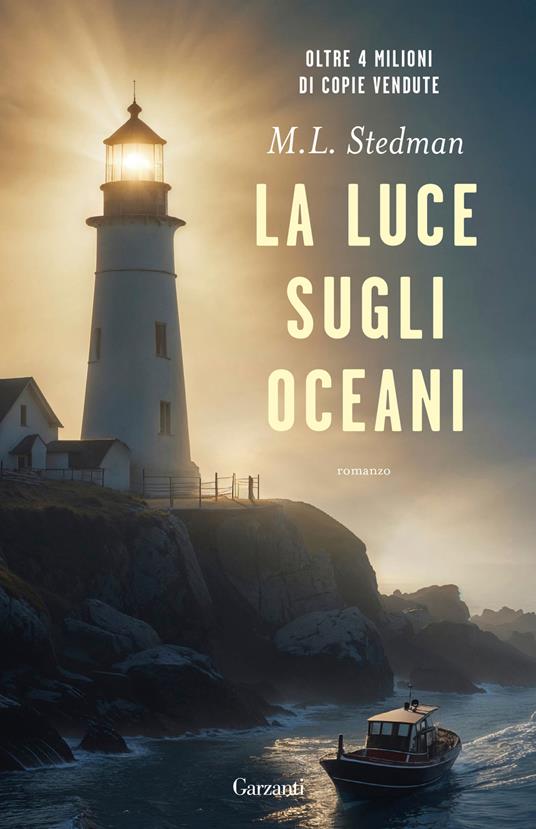
A sky colored with a deep blue and a land sketched in red dust. With this stark contrast, M.L. Stedman returns to Italian bookshelves after a full fourteen years since her debut, The Light Between Oceans (published by Garzanti), which had become a publishing phenomenon and from which a film was made starring Michael Fassbender, Alicia Vikander, and Rachel Weisz.
With A Life Far Away (also Garzanti, translated by Maria Giulia Castagnone), the author returns to the theme of isolated places in Western Australia (in her debut the events opened with the beacon of a remote Australian island), delivering a family saga, an ensemble novel that opens in 1958.

The MacBride Family
Stedman, herself a native of these places (she was born in Perth in 1971), tells the story of the MacBride family, weaving moral questions, guilt, and the concept of “forgetment” — “forgetment” in the original — a term she coined to denote “what you forget.”
“If the thing you remember is called a memory, what is the word that indicates what you forget?”
“Yes, I think there should be a word. Forgetting, for example. A forgetting is the opposite of a memory.”
“In the end everything becomes forgetting… It’s sad.”
“Maybe,” said Matt. “Sometimes not.”
For the MacBrides, a family of sheep farmers, the land is both home and condemnation. For generations they have lived in dust, the red dust contrasting with the sky, fighting against sudden storms and the wild nature that threatens them.
The Family’s Equilibria Are Upended
But the course of the family’s life takes a sharp turn after a tragedy in which only the mother, Lorna, and two children, Rose and Matt, survive. Without the strong arms of the father and the elder brother, the family’s equilibria are compromised. And each of them must come to terms with what remains.
They cope in different ways: Rose, for instance, writes her thoughts on a page and burns them in the shade of the tall eucalyptus, reciting the word “via” backwards; Lorna, instead, concentrates with determination on keeping the house going; finally there’s Matt, who struggles to remember what happened: there it is, the “forgetting.”
Speaking about this concept, Stedman told Good Reading Magazine: “Our lives are shaped by what we can or cannot remember, and by what we can or cannot forget. I am fascinated by how the ‘known present’ becomes the ‘lost past’.”
A Life Far Away
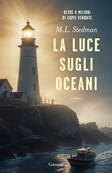
The Light Between Oceans
“What Determines Our Notion of Right and Wrong”
As noted by the Guardian, the writer follows the MacBridge story, shepherds at the head of Meredith Downs, a five-thousand-hectare farm, questioning “what determines our notion of right and wrong, as well as how we define our sense of family and identity.”
As in her debut novel, which followed the story of a couple who found a newborn survivor after a shipwreck and chose to keep her.
Against the backdrop of these events unfolds a wild land and its many animals, a land that Stedman, who now lives in London, looks at with nostalgia.
Speaking about the setting of her novels in isolated places, the author said: “Isolation intensifies the conflict. It focuses attention—like sunlight through a magnifying glass—burning those involved. Without distractions or physical escape routes, the issues are reduced to the essentials.”
Again, for the author, “physical isolation mirrors the interior of the characters, trapped in their own dilemmas and unable to confide, because doing so would hurt an innocent part. In tightly knit communities there is no way to hide, there is no refuge in anonymity, which raises the stakes.”
“I Spent a Lot of Time in Archives”
To tell the MacBride story, which closes in the early 2000s, Stedman conducted extensive research, revealing that this aspect is precisely one of the ones she most enjoys when writing: “I spent a lot of time in archives, consulting documents that left my fingers covered in the red dust that coated the pages. I was fortunate to speak with shepherds, geologists, and others belonging to the generation on which the Australian economy stood on the sheep industry; they shared their stories with me and guided my research.”