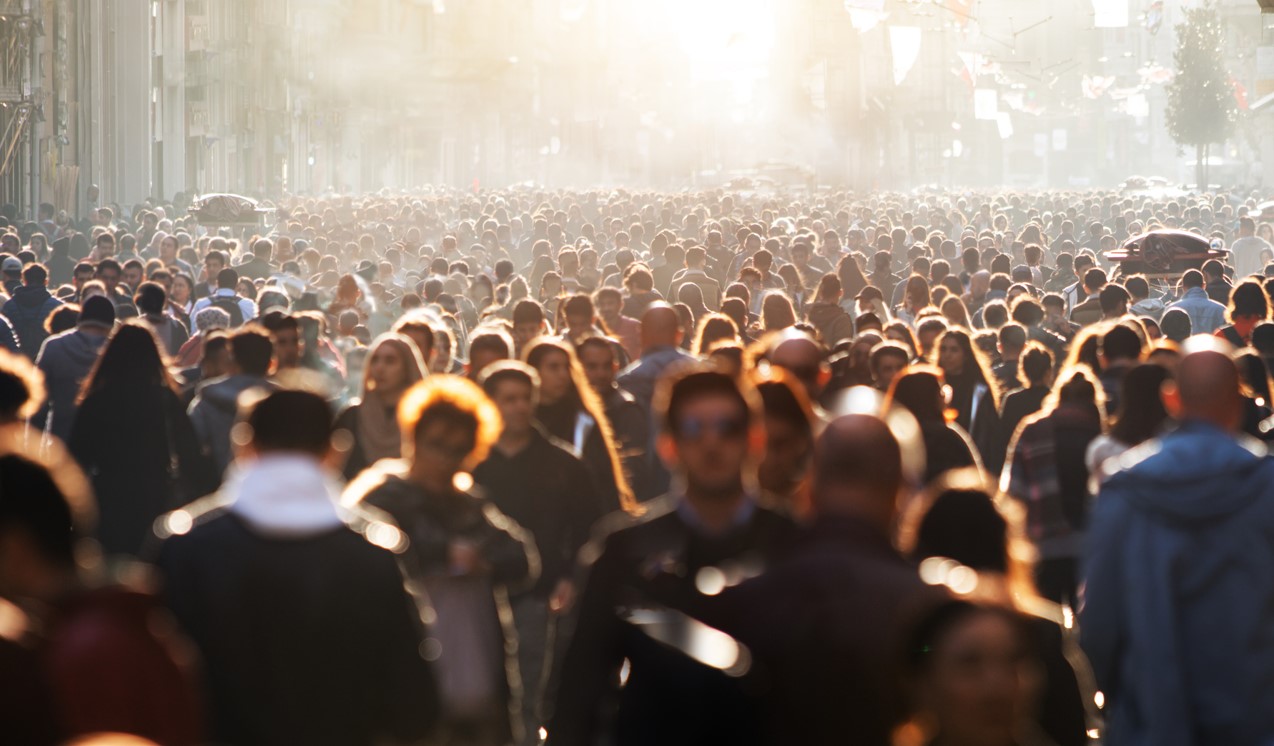
We baby boomers are many. Let’s start from here, because denying it would be difficult, and above all unnecessary. We are the born, according to the conventional definition, between 1946 and 1964: nineteen birth cohorts born into the extraordinary postwar demographic surge that followed World War II. We still represent a substantial slice of the Western population and possess a sizable share of its wealth.
Being this numerous, curiously, has seemed to become one of our faults. It’s said about us that we occupied too many jobs, bought houses when they were cheaper (and you know, that’s relative), stayed too long in universities, in professions, in companies, in politics. We consumed, polluted, prospered. Now we even have the audacity to age all at once and to demand a pension, putting under pressure pension systems already strained by low birth rates.
All true, at least in part…
All true, at least in part. But, to our defense, I’d like to present a mitigating circumstance: we did not decide to be born. We did not clandestinely gather in 1945 to determine to come into the world in numbers sufficient to create pension problems eighty years later. It was our parents who brought us into being, because, having emerged from the war, they had begun to believe in the future again.
The baby boom was also this, a gigantic declaration of trust. After the bombs, the ration books, the ruined cities and the dead, millions of men and women thought it was worth once more bringing children into the world, and that their offspring should not be merely hands for the fields or for the shop. They should study, live better, climb a few steps relative to their parents. In short, they would become the first fully modern generation.
And here we are.
We were the children of television and appliances, of mass vaccinations, of the family car, of high schools that filled up and universities that slowly ceased to be reserved for a small elite. We were the generation of the pill, the miniskirt, the Beatles and the protests, of girls who began to see marriage as a possibility and not a destiny.
We’re often told we found the road paved…
We’re often told that we found the road paved, but this is true only partly. We certainly knew a world that grew economically much more than the one in which many young people today come of age; we grew up in the legendary Sixties, when everything seemed a “boom.” To deny it would be foolish and unfair, but from there to turning an entire generation into a bunch of lucky predators and moochers is a stretch, especially because there’s a charge we simply cannot accept: the charge of not having had to fight for anything.
We fought very hard
On the contrary, we fought a lot.
Not in the trenches of our fathers and grandfathers, fortunately, but in the squares indeed. The generation that came of age in the Sixties and Seventies filled universities and streets, challenged wars and authorities, participated in civil rights movements, questioned hierarchies that seemed natural only because they had existed for centuries. The ’68 of our elder brothers – I’m more of a Seventies person – marked the political and cultural entry of the baby-boom generation into adulthood.
And what about the women? They had to explain that having a husband was not a profession, that the female body belonged first and foremost to the woman (“Who remembers I am mine?), that working did not mean neglecting the family, and that one could even advance the exorbitant demand for equality. Divorce, women’s emancipation, civil rights, sexual freedom, new family arrangements: none of this fell from the sky. Behind these achievements that now seem obvious were people who marched, went on strike, occupied, gathered signatures, challenged conventions and sometimes even took baton blows to the head.
Of course not all of us were there: a generation is not a political party. There were protesters and conservatives, feminists and men who would have preferred to send women back to the kitchen, pacifists and warmongers. Just look at who belongs to the baby-boomer generation to find everything and its opposite. Donald Trump, Bill Clinton, and George W. Bush were all born in 1946, the inaugural year of the baby boom. Ursula von der Leyen, born in 1958, chairs the European Commission; Christine Lagarde, 1956, presides (for a few more weeks, ed.) the European Central Bank. Mario Draghi, born in 1947, has been president of the ECB and president of the Council;
In short, the boomers have not gone away yet.
Let’s not give way to the young…
And here’s another accusation: we don’t leave room for the young.
But what does “leaving the seat” mean? A society is not a bus where, upon reaching sixty-five, you must politely rise and say: “Please, go ahead.” If a person is still capable of writing, teaching, leading, inventing, administering, doing research or business at seventy or eighty, why should they stop?
The problem is not that the elderly continue to exist socially. It is to build a society in which the presence of the elderly does not block the entry of the young.
As for the pensions, when such a large generation stops working the pressure on the system is inevitable, and yet those who receive a pension – after having worked and paid contributions for decades – are not committing an act of hostility against a twenty-something. The problem is structural: low birth rates, the ratio of employed to retirees, wages, precariousness, productivity and pension policies. Blaming the boomers for growing old is a bit like blaming a storm for having too many raindrops.
An enormous family transfer
And then allow us a small observation: who has been supporting them, until now, these children? And, often, these grandchildren? Behind the statistics about the supposed wealth of the boomers lies a gigantic family transfer: parents who assist adult children with rent or buying a home, look after grandchildren because two salaries are indispensable, become social safety nets where the State is late or does not arrive at all. Maybe we were lucky, but we also worked; maybe we received a lot, but we also handed over something.
And we definitely encountered competition, precisely because we were so many: at school, at exams, at teaching appointments and in public administrations, in the job hunt. The baby boom did not produce only a generation that still today “occupies posts”; it produced millions of people who those posts had to contend for.
Perhaps having more siblings taught us something after all. Personally I’m the oldest of four – the baby boom really worked at home – and we had to share the room, our parents’ attention, the toys and sometimes even the best slice of the cake. Without turning large families into an educational paradise (anyone with siblings knows how insufferable they can be, sometimes… perhaps kindly, but insufferable), that cohabitation taught a very useful thing quickly, that the world had not been organized around us.
The condescending “Ok, boomer” makes us smile. We too have had unflattering expressions for those who came before and after. Every generation holds the previous one responsible for the world it received and, the next, incomprehensible and ungrateful.
Let us then rewrite the matter.
We have made many mistakes and we have also changed a lot
Youth are right when they demand less precarious work, affordable homes, decent wages, the possibility of having children without turning motherhood or fatherhood into a luxury; when they demand not to receive debts, inequalities and a mistreated planet as an inheritance. But we boomers have the right to reject the caricature of a selfish generation that would have spent its life merrily plundering the future.
We have made many mistakes and we have also changed a lot. And we still possess something worth handing down: hope.
Not that naive “everything will be fine” hope, which we lost fairly early. I mean the hope of those who grew up believing that tomorrow could be better than today and that precisely for this reason it was worth protesting, fighting, changing things.
Perhaps this is the best legacy we can leave to future generations, alongside houses, pensions, debts, mistakes and achievements.
There’s no need for the boomers to step aside. What is needed is that they make space. And there’s no need for the young to wait for the boomers to disappear to build their own world.
We can stay in it together.

The Last Summer in Town
The Women of Montebello Calabri
The Sister of Schopenhauer Was an Escort (The)
THE AUTHOR – Simonetta Tassinari has taught history and philosophy in high schools and in the Philosophy Teaching Laboratory of the University of Molise. For years she has cultivated relational psychology, developmental psychology, philosophical counseling and disseminates philosophy among children and adolescents. She animates participatory philosophical cafés and gives lectures all over Italy and abroad. She collaborates with the Quid+ foundation and with Treccani Futura.
She has published novels, writings on historical and philosophical topics (including for Einaudi Scuola) and the “brilliant” essay – on teaching philosophy in schools – The Sister of Schopenhauer Was an Escort (Corbaccio). With Corbaccio she has also published Donna Fortuna and Her Loves, The House of All Wars, The Women of Montebello Calabri and The Last Summer in Town.
For Feltrinelli she published in 2019 The Philosopher Who Is Inside You; S.O.S. Philosophy. The philosophers’ answers to teens to face life’s emergencies, aimed at adolescents; The Influencer Philosopher. Remove your blinders and think with your own head (2020); for Gribaudo Instant Philosophy (2020) and The 40 Words of Philosophy (2021) and The Pink Book of Philosophy – From Aspasia to Luce Irigaray, the Untold History of Women’s Thought (2024). After publishing in 2025 The Beauty Among the Cracks – A Manual for Repairing Daily Life, at the start of 2026 a Gribaudo release The Sublime Art of Disorder – Philosophy of Mismatched Socks.