
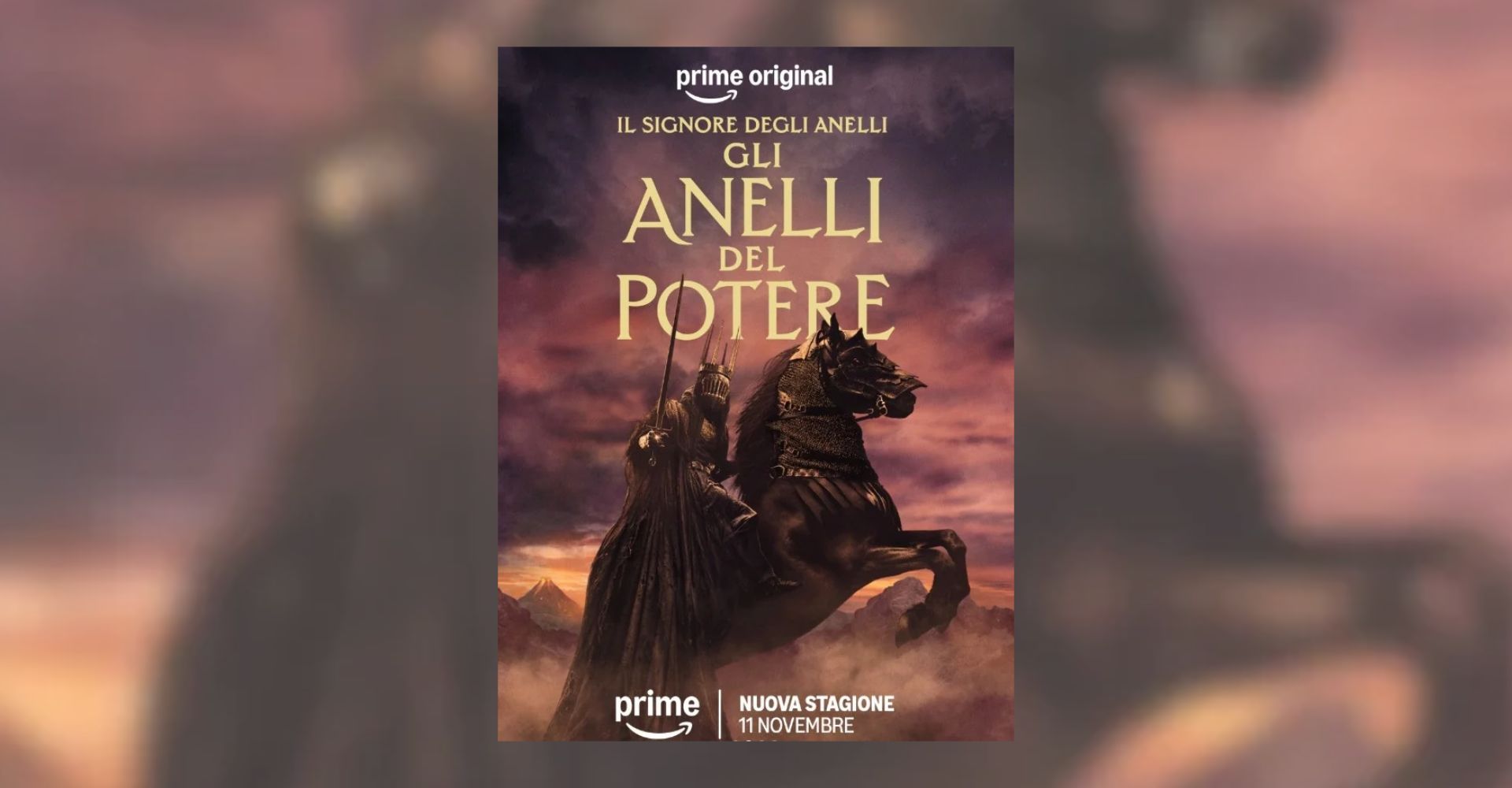
It was in the 1950s when the first volume of The Lord of the Rings appeared in the United Kingdom, the famous trilogy written by J.R.R. Tolkien (in Italy published by Bompiani), from which, over time, numerous animated and live-action films have been derived.
In recent years, the TV series The Lord of the Rings: The Rings of Power has joined the picture, taking place thousands of years before the events recounted in the trilogy and in The Hobbit (Bompiani, translation by Caterina Ciuferri). For the first time, it tells the legends of the Second Age of Middle-earth, an era partially explored by the author in the volume The Silmarillion (which was also published by Bompiani, but in the translation by Francesco Saba Sardi).
The collaboration with Tolkien scholars and with the Tolkien Estate
In fact, as stated on the website of the Italian Association of Tolkien Studies, JD Payne and Patrick McKay, the creators of the series, declared: “We have rights exclusively to The Fellowship of the Ring, The Two Towers, The Return of the King, the Appendices and The Hobbit. And that’s all. We do not have rights to The Silmarillion, to The Unfinished Tales, The History of Middle-earth (Storia della Terra di Mezzo) or any of those other books.” And thus, for their project, they had to rely exclusively on the appendices and on clues contained in the other works.
“We worked in collaboration with world-renowned Tolkien scholars and with the Tolkien Estate to ensure that the ways we linked the gaps were ‘tolkienian’,” Payne emphasized.
The imagined universe of Middle-earth
At the end of The Return of the King (the third novel in the The Lord of the Rings trilogy) lie the so-called appendices, which offer a deep dive into the history, customs, and manners of the civilizations encountered. Tolkien provides here the precise chronology of the Second and Third Ages, the genealogies of the various families, and even an account of the exact pronunciation of individual words.

It would be a mistake to think that the works set in Middle-earth are limited to the trilogy, to The Hobbit, or to The Silmarillion: the author designed and built a geography so precise for this imaginary land that one could imagine the features of each character, even the minor ones.
After his death, which occurred in 1973, his son, Christopher Tolkien, organized, selected, and published other works by his father, set precisely in Middle-earth: as explained on the dedicated site, it was him who oversaw The Unfinished Tales of Númenor and Middle-Earth (1980), a collection of fragmentary material related to the Silmarillion cycle, and the 12 volumes of The History of Middle-Earth (1983–1996), which gather all the manuscripts related to the cycle Tolkien had long awaited throughout his life.
The plot of the third season of The Lord of the Rings: The Rings of Power
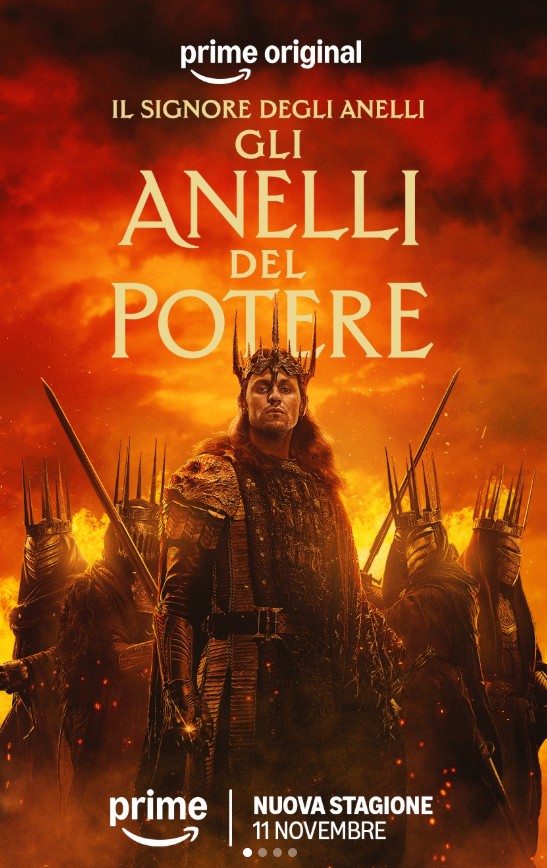
The first season of the series was released on Prime Video in 2022, followed by the second in 2024 and the third in the autumn of 2026. Starting from November 11, the first four episodes are available on the platform, with the fifth and sixth on the 18th and the seventh and eighth on the 25th.
In this new season, Sauron (played by Charlie Vickers), the main antagonist, has a new goal: the creation of the One Ring, which would allow him to subjugate others. Five years have passed since the events narrated in the second season, and Galadriel, portrayed by Morfydd Clark, must come to terms with the consequences of her choices and with the power that is continually rising in Sauron.
Beside her is Elrond, portrayed by Robert Aramayo, who finds himself leading the others through an increasingly perilous phase. Among the new season’s additions is the presence in the cast of Jamie Campbell Bower (also known for his role as Vecna in Stranger Things), who plays Galadriel’s husband, who had been distant from her for a long time.
