

The end of the year is approaching, and among readers, critics, and industry professionals, aided by the numerous themed lists published by outlets of varying renown and authority, one asks what were the “best” new titles of the year, which novels, essays, and poetry and short story collections of 2026 are “not to be missed,” what new releases to gift or to treat oneself to, and which “latest releases” will continue to be talked about in the months to come.
Discover the books we’ve suggested over the years:
- Recommended books of 2025
- Recommended books of 2024
- Recommended books of 2023
- Recommended books of 2022
- Recommended books of 2021
What follows here, then, is not intended in any way to be a ranking of the “best” books of the year in our view. Not without some difficulty, each contributor was asked to choose only one among the 2026 titles that they read and appreciated. The request was to send a suggestion guided by personal tastes and individual experiences. It would have been easier, of course, to offer the opportunity to suggest three, four or five titles, but after all ours is also a game.
Among the recommended books released in 2026 (presented NOT in order of “importance”), as you will see, there is room for works of every kind. There are bestsellers, as well as literary works that have drawn a lot of attention, but there are also titles that received less visibility and niche works; there are novels and essays by established Italian and international authors, and there are new voices as well, with space for graphic novels and collections of poetry.
Ultimately our goal is simple: to inspire your upcoming reads through sharing the emotions that reading special books has sparked in us.
And now here are our recommended books of 2026. And as always, happy reading!
Things in Nature Simply Grow

To tell something that would require a new alphabet, using the old, worn language at our disposal: this is the impossible task that Yiyun Li tackles in Things in Nature Simply Grow (NN, translated by Laura Noulian – here is the book review, winner of the Pulitzer Prize 2026 in the memoir/autobiography category and finalist for the National Book Award for non-fiction, editor’s note). After losing both children, Vincent and James, to suicide, the writer searches in the logic and precision of facts for a way to inhabit an abyss. It is primarily James, a taciturn boy with a mathematician’s mind, to whom this memoir is dedicated, questioning the limits of literature, the passage of time, and the possibility of accepting what cannot be changed. Far from any rhetoric of healing, Li does not seek meaning in tragedy nor redemption in writing. What emerges is an extraordinarily lucid meditation on motherhood, on loss, and the need to continue living, in which pain becomes more acute the more language stays controlled, dry, almost impassive. (Giuliana Altamura)
Note: this book description references the original review and context from our source.
The Things We Don’t Say
Elizabeth Strout, with her formidable talent for sketching the most hidden folds of the human psyche, in The Things We Don’t Say (Einaudi, translated by Susanna Basso – shortlisted for the 2026 Booker Prize) recounts a moment of crisis in the life of Artie Dam, a fifty-seven-year-old high school history teacher in Massachusetts. Loved by his students and seen as predictable by his wife Evie and son Rob, Artie no longer wants to live. The burning loneliness of being among others without truly being understood or listened to, a school undergoing changes in a 2024 that deeply worries a democratic spirit like Artie, are only some of the many causes of his profound dissatisfaction. Strout never adds an extra word and knows how to reconstruct an interior world by showing the cracks of an apparently calm everyday life. The calm of a quiet despair. Beatrice Sciarrillo)
Note: the translation renders the same themes and emotional tone as the original, with emphasis on the inner life and social dynamics.
Three Names
A line from the Apocalypse promises a new name, the true name, capable of revealing who we are. As if, after death, our deepest essence would finally be disclosed. The Three Names (Garzanti, translated by Federica Merati) seems to begin with this suggestion and weaves it into a what if scenario that unfolds across three narrative strands, focusing on the choice of a name and how it can define the existence of a person and those around them. Is a name just a name? Not for Florence Knapp, who with this debut novel has become a publishing sensation in Italy as well. Through three possible versions of the same story, the narration moves forward in fragments, time jumps, and painful returns, blending suspense with a dreamlike dimension. The nagging question remains that cuts through every life: are we guided by fate or do we determine it? Perhaps both. Perhaps we are only partly free, yet we still have a duty to try to be happy. (Jolanda Di Virgilio)
The Lázárs
Much more than a global publishing phenomenon, The Lazárs by Nelio Biedermann (in Italy published by Guanda, translated by Leonella Basiglini) follows the fate of the Lázár family across the 20th century. The book stands out for its originality (here is our review): moving away from autofiction territory to traverse the family saga and the gothic atmosphere, with elements of magical realism and historical drama (from the SS invasion to the Soviet occupation of Hungary), the 23-year-old Swiss author, a student of German studies, manages to dialogue with the roots of Central European literature (Mann, Schnitzler, Roth, Márai) and returns a novel that already has the taste of a modern classic. In The Lázárs, secrets, erotic impulses, and neuroses characterize the characters and the Weltschmerz, the pain of a world in collapse, translates into an intellectual journey to understand one’s origins. (Micael Chimienti)
Ghost Stories – Letters to Miles by Paul Auster
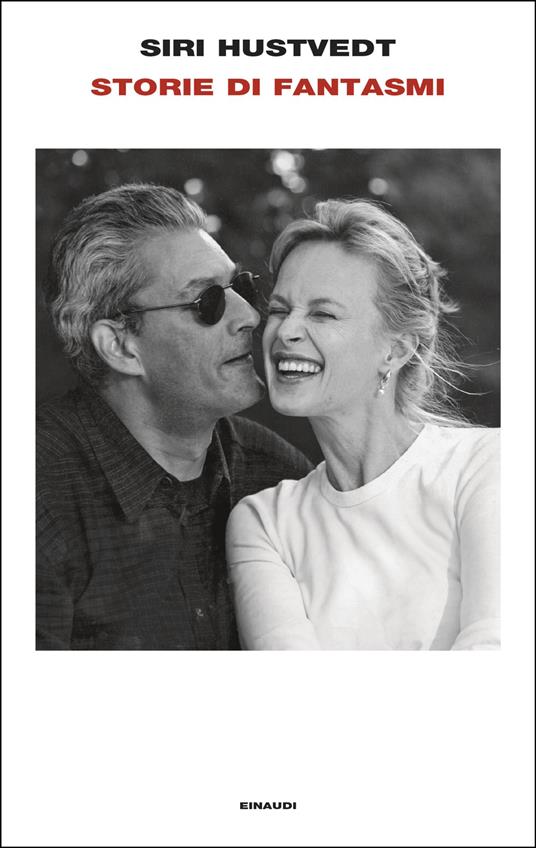
On April 30, 2024, at the age of 77, Paul Auster died. In the library of his brownstone in Park Slope—an upscale Brooklyn neighborhood—one of the great figures of contemporary literature left us. Two years later—on May 5, 2026—Hustvedt’s Ghost Stories arrived in the United States, released in Italy as Ghost Stories – Letters to Miles by Paul Auster (Einaudi, translated by Gioia Guerzoni and Cristiana Mennella). Siri Hustvedt—writer and essayist—was Auster’s partner for forty-three years. In her memoir, she tells of the void, the silences, the missed acts, and the mind’s deceptions that inhabit the space left by the death of a love. Yet, together, she also tells of gratitude, care, and memories gathered over a lifetime that continue to endure. And then Ghost Stories contains a gift: seven letters that Paul Auster had written to Miles, his grandson born a few weeks before his death. (Giulia Ceirano)
And It Is a Little Night and a Little Dawn
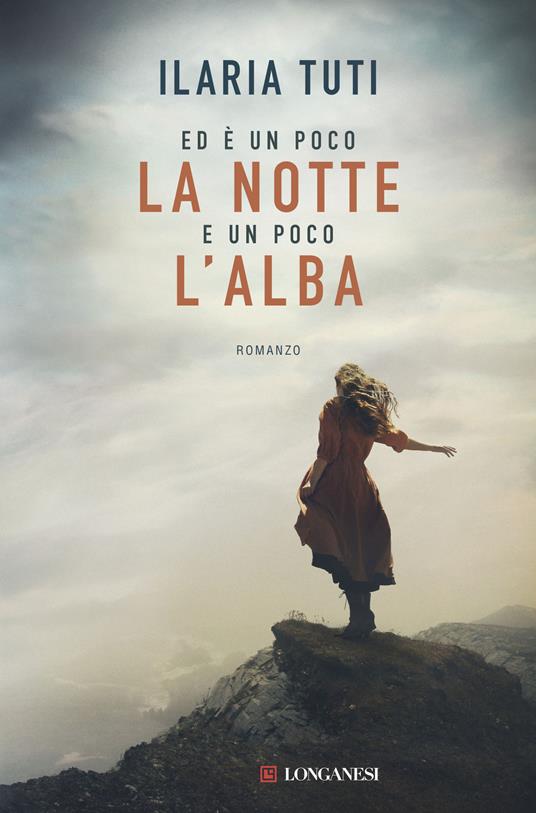
Between the children of Friuli, with grandparents who could recall World War II, there is not one who has not heard, at least once, stories about the cosacks and the period in which they lived among the mountains of Carniola. Over time, tales passed down from valley to valley have taken on the shapes of myth and legend, fading slowly. Ilaria Tuti digs back into the collective memory and rewrites those stories, bringing them to light: And It Is a Little Night and a Little Dawn (Longanesi – here is our review), among the recommended books of 2026, narrates a chapter of History often forgotten, resisting the logic of war as a simple tale of good and evil, white and black, as told by those who did not experience it. The novel, like the grandmother’s tales, is multifaceted, at times heartbreaking and profoundly human, dotted with those female characters, so unruly and irreverent, who cannot be missing from the author’s books. (Elena Asquini)
The Years in Black and White
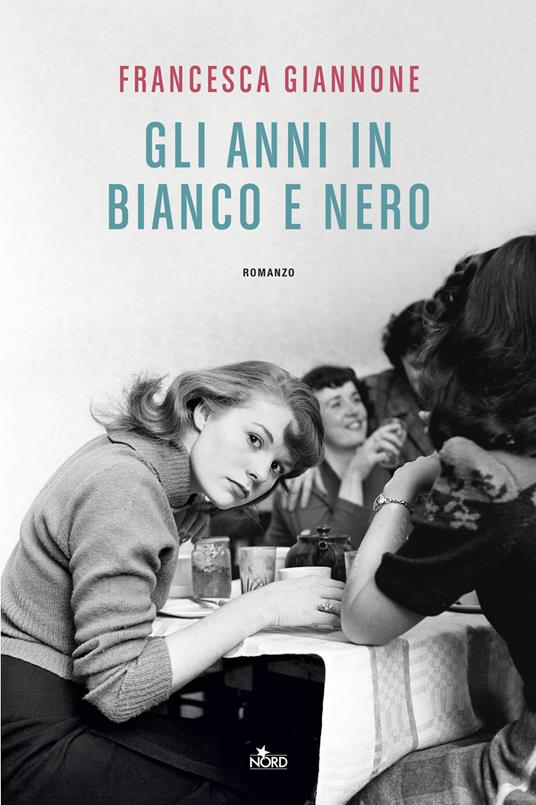
Four sisters, a father convinced that cinema plants strange ideas in the minds of girls, and a town in the heart of Salento, a theater of ambition, emancipation, growth, and relationships of solidarity and empathy among women: among the recommended books of 2026, The Years in Black and White by Francesca Giannone (a novel we explored here) cannot be missing. The protagonists are Maria, Ada, Giovanna, and Mimì, each with a passion and a driving force that pushes them to pursue it. They dream of a workshop in central Lecce, full independence for women, making cinema from behind the camera, not sitting in a chair watching it. Their dreams intertwine with the first factory uprisings, the student protests, and the longing to experience love stories that are not totalizing nor restricting. A small daily battle after another, the Elia sisters grow by biting into a life they intend to rewrite. Following the great success of The Postwoman (2023) and Tomorrow, Tomorrow (2024), the author’s latest novel, published by Nord, pays homage to and celebrates women in their greatest tenacity: the sense of belonging, clinging to life like the roots of an ancient olive tree. (Gaia Pavone)
A Marriage Open to the Sea – The True Story of Maurice and Maraylin
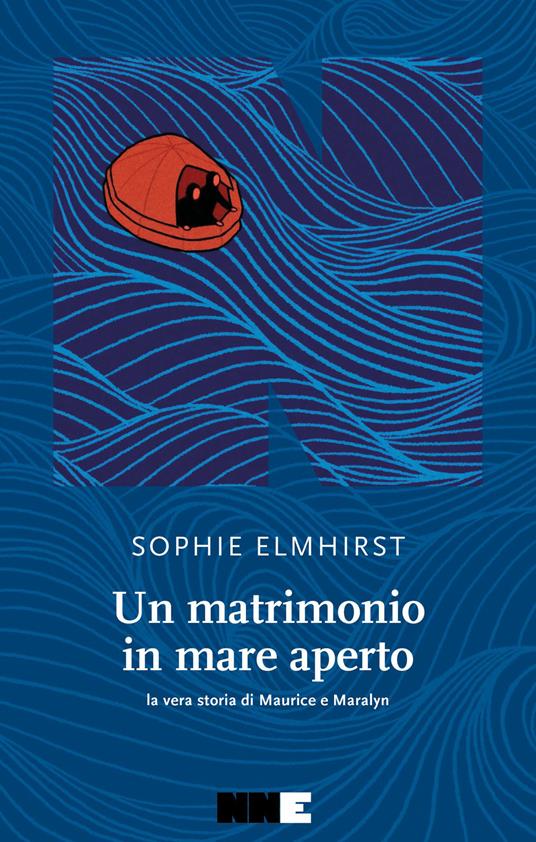
“Imagine if we sold the house, bought a boat, and lived aboard,” says Maraylin to Maurice. It’s 1973 when the two Bailey spouses decide to do just that. They sell everything, build a nine-and-a-half-meter boat, set sail, are shipwrecked after colliding with a whale (all true!), drift on a rubber dinghy for 118 days, and are found half-dead in the Pacific Ocean. Yet, even after almost dying of thirst, hunger, and infections, and even after being brought ashore and in their subsequent life, the two never lose that part of themselves that allowed them to recognize and fall in love for the first time, a sentiment difficult to put into words. Sophie Elmhirst describes it well, but the truth is that only someone who has felt it inside can truly understand. It could be defined as the visceral impulse toward freedom, the hunger for authenticity, the desire for movement and new horizons. And even love—genuine, sober, frank—for the ocean and for a woman. In any case, what is certain is that in A Marriage Open to the Sea – The True Story of Maurice and Maraylin (NN, translated by Alessandra Castellazzi – here is our review) you can feel it on every page. (Ilaria Prazzoli)
Life, Always
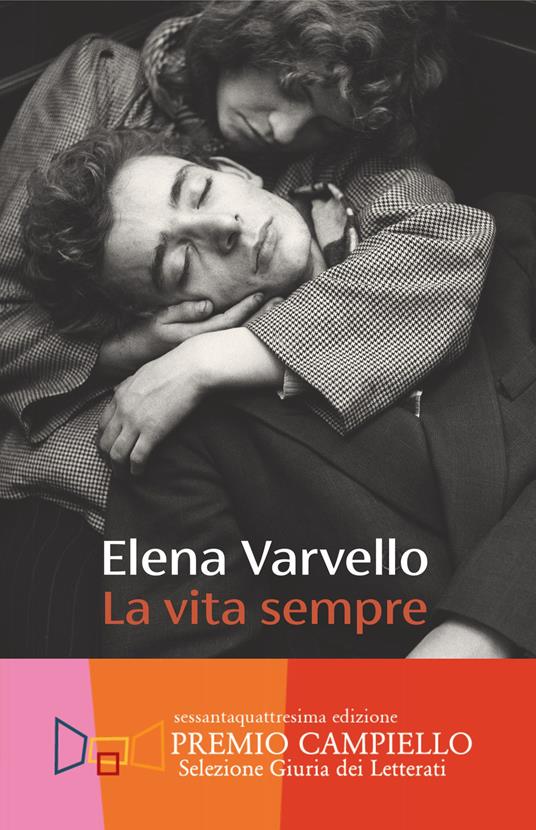
Lives that intersect in a courtyard in Alba deserve to be cherished and told, because they quietly contain all of History. Elena Varvello follows Francesco and Teresa—between fascism and World War II: him restless and rebellious, her determined and calm. Two souls drawn together by a love that traverses the misery and violence of History, in a world adrift. Life, Always (Guanda, shortlisted for the 2026 Campiello Prize – here is our review) is the novel of ordinary lives, those of yellowed photos, memories faded over the years, families denied a future, and fragments left behind. With a poignant reconstruction, Varvello fills the gaps of a family history, gathers the few remaining pieces of memory, and gives a voice to those who lived and loved without noise, disappearing in the echo of History that resounds far away. Because every life deserves to be remembered. (Francesca Cingoli)
The Dawn of the Lions
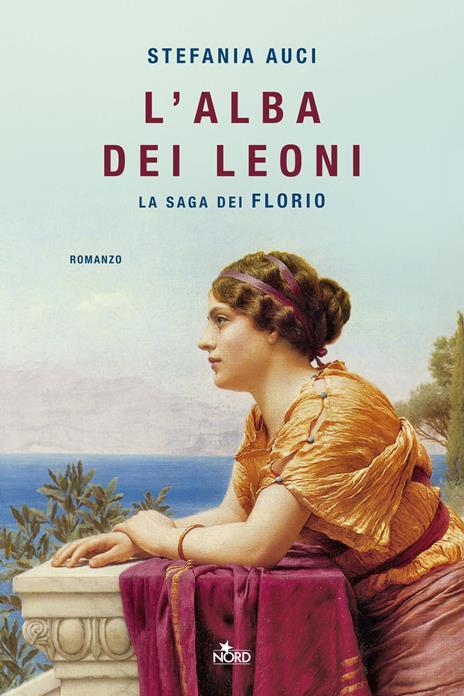
This is the beginning of a timeless saga: set in Bagnara Calabra in 1772, The Dawn of the Lions by Stefania Auci (Nord – here is our review) tells the origins of the Florio dynasty, when the entrepreneurial dream was far from realization, but already in the furnace of progenitor Vincenzo burned the spark of an unexpected destiny. We, who know the final chapter (it concluded in 2021 with the third volume The Winter of the Lions, successor to The Lions of Sicily), flip through this prequel as if it were a family album; and as we watch the young Paolo and Ignazio arrive in Palermo with the despair of having lost everything (even their home, after an earthquake that upended their lives), we can only tremble for the brothers’ near future. The two will, from a pile of rubble, forge the greatest economic empire—and today a publishing phenomenon—in all of Southern Italy. (Stefano Risso)
The Idiot of the Family
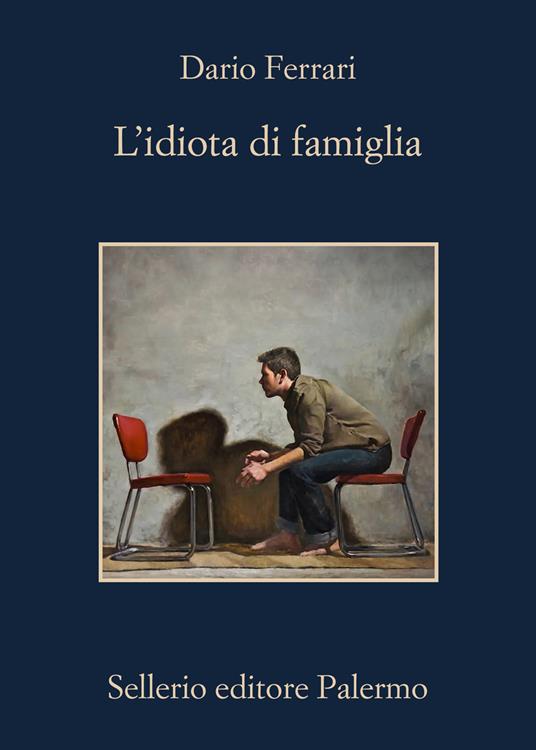
Dario Ferrari, born in ’82, from Viareggio, is among the most capable Italian authors of his generation. He has proven this with two of the most successful novels of recent years: The Rehearsal is Over (2023) and The Idiot of the Family (2026 – here is our review), published by Sellerio. In Ferrari’s books there is no lack of (auto)irony (a rarity in today’s literary landscape). And with lively plots, sustained by a rhythmic prose that is never taken for granted, Ferrari manages to touch even the more delicate themes, going in depth without drawing attention to it. While some readers who greatly appreciated The Rehearsal is Over felt that The Idiot of the Family rehashed too much of the elements that made that novel compelling—the story of Igor Nieri, a translator returning to Viareggio from Rome (where the bond with his partner Marta seems to have broken) to assist his aging father, Herr Professor, while reconnecting with the complicated sister Ester and gradually discovering the equally complicated nephew—ultimately the new book surpasses the previous one in its variety of human portraits and its capacity to reveal their contradictions. In any case, it is a writer in a state of grace, who for now prefers to stay out of the big prizes. We hope the grace lasts, because public acclaim—numbers in hand—has already arrived, and deservedly. (Antonio Prudenzano)
Universality

In the last year there has been much talk of culture wars and of woke. The novel Universality by Natasha Brown (NN, translated by Martina Testa; here is our review) intelligently and critically explores these themes, placing center stage two protagonists fighting for social recognition within a ruthless neoliberal system. The themes addressed in Universality are of crucial importance for Millennials and Gen Z. Generations for whom the myth of self-actualization has long been imposed, pushing them into the whirlpool of chasing social capital at the expense of economic stability. These themes are now resurfacing worldwide as a significant fracture in the social fabric. (Francesca Coraglia)
Men in Love – The Return of Trainspotting
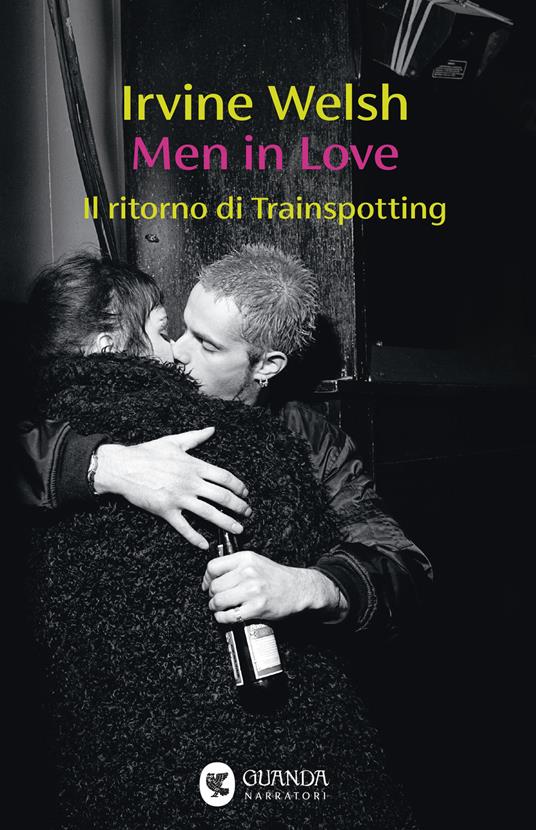
Men in Love (Guanda, translated by Massimo Bocchiola) brings back the protagonists of Trainspotting, transforming the raw, irreverent portrait of a generation into a meditation on love, friendship, and the possibility of change. More than thirty years after the book that made him famous, Irvine Welsh returns to tell the lives of Renton, Sick Boy, Spud, and Begbie, grappling with the consequences of past betrayals and the difficult task of imagining a different future. Through irreverent and ruthless prose, the Scottish writer examines the contradictions of adulthood, addiction, and bonds that endure even when they seem irretrievably broken. In a world where social discomfort takes new forms and old communities give way to the dispersive realm of the digital, the search for love becomes a chance for redemption. Because, as Welsh himself suggests, if there is still hope, it resides in the lovers. (Enrico Montanari)
Interior Indian
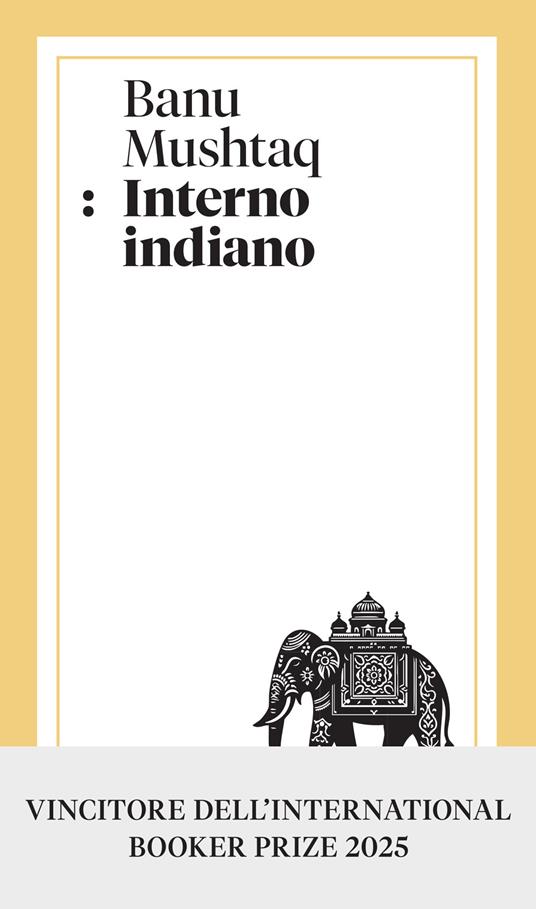
“Beautiful, intense and alive stories”: so Max Porter, chair of the International Booker Prize 2025, described Heart Lamp by Banu Mushtaq, the winning short-story collection of 2025, published in Italy by Frassinelli under the title Interior Indian, translated by Tiziana Lo Porto. As a reader always attentive to women’s writing, I found these texts not only beautiful but also extraordinarily important sociolinguistically. Composed between 1990 and 2023 in Kannada, the mother tongue of Mushtaq, the twelve stories stage the everyday lives of girls, adult women, and elderly women within the Muslim communities of South India. A book that struck me for its authentic narration, free from any attempt to sensationalize suffering, and that allowed me to reflect on the plurality of forms through which the patriarchal system disempowers and silences women. (Beatrice Sciarrillo)
The Solitude of Sonia and Sunny
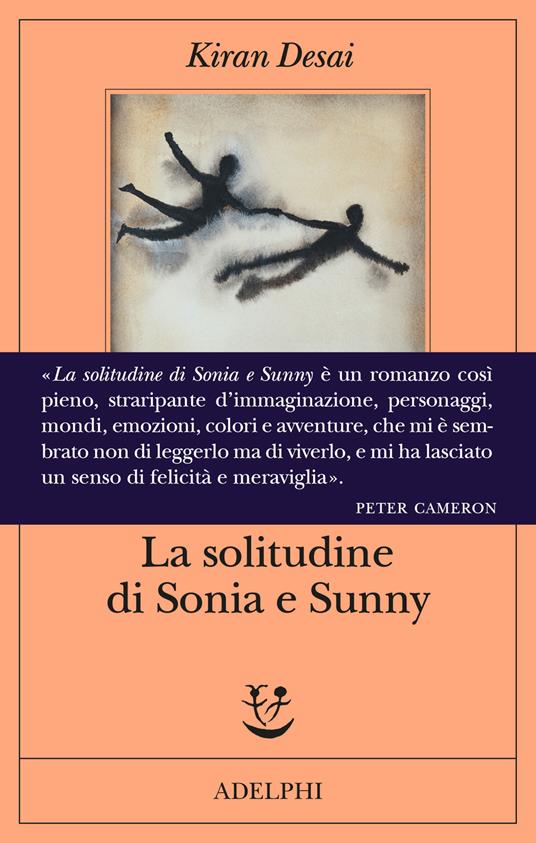
With its over 700 pages, The Solitude of Sonia and Sunny (Adelphi – here is our interview with the author) marks Kiran Desai’s return after winning the Booker Prize in 2006 with Inheritance (Adelphi, 2007). A world-spanning novel that follows two modern offspring of the diaspora, Sonia and Sunny, as they traverse between the United States and India. Alongside the protagonists, readers’ attention is drawn to parents, grandparents, uncles, and extensively present, complex families, through which we can follow the trajectories of three generations, voices of a larger story. The novel moves along the ongoing tension between East and West, tradition and modernity, spirituality and worldly values, yet its scale should not intimidate. Desai is an experienced storyteller, and in Giuseppina Oneto’s translation, The Solitude of Sonia and Sunny is a continuous play of stories and dialogues that will not leave readers unsatisfied. (Matilde Quarti)
All the Colors of Darkness
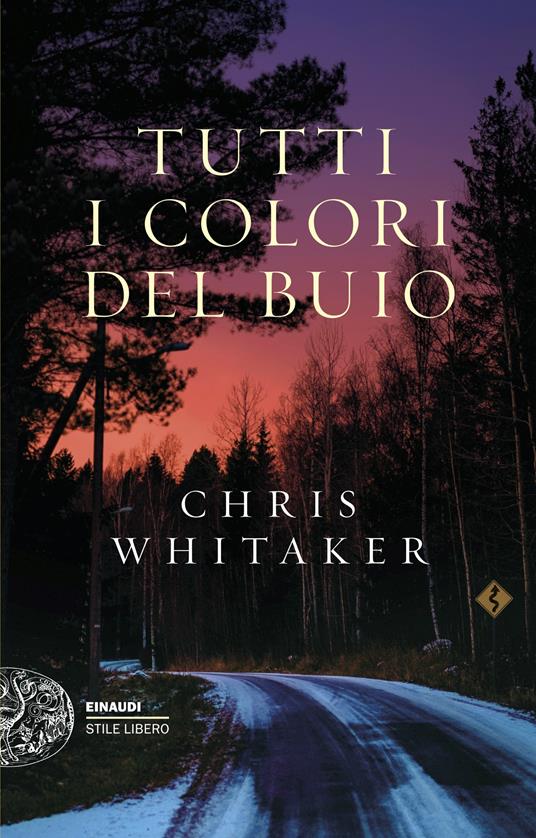
Patch is just a boy when he saves a girl his own age, a moment that will mark him for life. Locked in the dark for months, he meets Grace, who saves his life in turn. Patch the restless, Patch the pirate, Patch the hopeless case, Patch the survivor: the wandering that will accompany him for nearly thirty years from that experience will shape his actions and his search for Grace, that presence so important that he will need it forever and will harbor an obsessive longing. Each time Patch faces life as a lost cause, life returns something unexpected. For this reason, All the Colors of Darkness by Chris Whitaker (Edizioni Einaudi Stile Libero, translated by Alfredo Colitto) is not just a ghost story and a friendship tale. It is also a crime story. It is a novel about the search for the origins of one’s restlessness and one’s ghosts, in which fate is shaped in childhood, where our obsessions are born. (Elena Marinelli)
Shine
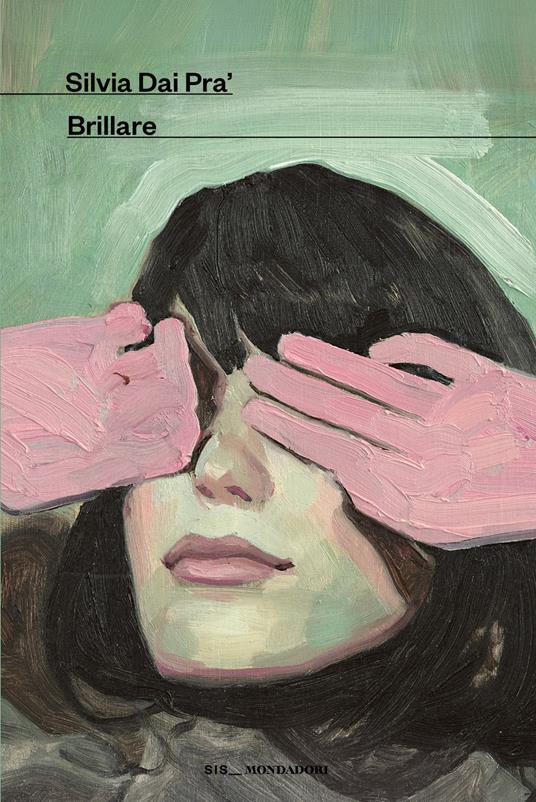
In Shine by Silvia Dai Pra’ (Mondadori – here is our review), among the recommended books of 2026, move two opposing forces: the centripetal and the centrifugal, that is, to depart or to stay? The novel touches many themes, including environmental ones, woven into a drama of a family crisis: Argo, after a quarrel within the family, disappears into thin air. Bianca, nearly 30 and in a precarious position in Florence (where she is pursuing a doctoral program), must stay in Greto, a small town in the Apuan Alps, carrying out an obsessive research in which she does not hesitate to blame everyone, including her sister’s friends, who invade her home daily. Halfway between returning to the city, where a precarious academic life awaits with uncertain prospects, and staying in the village, where she must confront everything she left behind, the protagonist seeks to solve the mystery of her father’s disappearance in a fast-paced narrative that sometimes takes on the cadence of a detective story. The backdrop is the white shimmer of the Apennine Alps and the white shimmer of the sunlit Ligurian Sea; the foreground is Bianca’s desire to at least obtain a glimpse of that shimmer… (Martina Iacomino)
Alaska
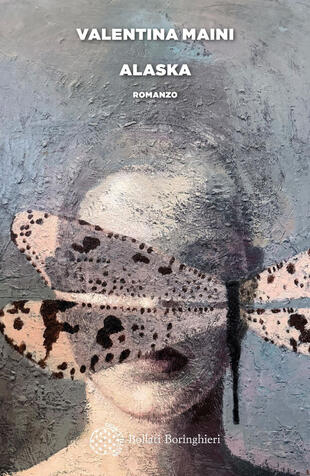
In biology, we observe how an organism placed under adverse conditions learns that the silent rules governing its existence no longer hold; it changes metabolism, physiological structure, respiratory regime. When immersed in water, freezing, or drought, many plants close their stomata, their pores, block the movement of gases and vapors, hold their breath. If oxygen collapses to anoxia, fermentation ensues: they shuttle a bit of energy, paying the toxins of ethanol and acetaldehyde; they degrade from within (autophagy), or induce the death of some cellular structures to carve out spaces inside (aerenchyma); they stretch, pale, blind, toward a light that is absent. Because things slide down an incline and the sense that held them together becomes only a haze, Valentina Maini in Alaska (Bollati Boringhieri – here is our review) chooses to remove every jammed mechanism. She severs history, the old cycle of symptom-reaction-event, the tangle of causes and effects: she achieves a “frozen light.” A self-sufficient story, grown from grafts, contagions, and communicating vessels. At the center is a girl “grown by drought and drownings,” a man who is “still water of a swamp,” their altered physics, leaves and citrus, a city doomed. A story that discovers it is governed by biology, by the state transitions of matter, by bodies, parts, scratches, absences, pages emptied of oxygen where every word sounds like a void. (Gianluca Catalfamo)
Requiem for Fanny Goldmann
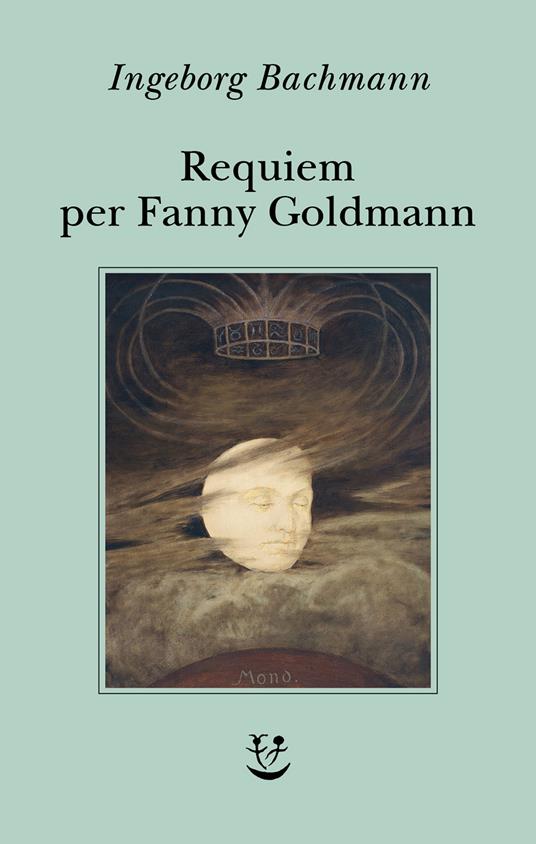
Requiem for Fanny Goldmann, now back in bookstores in the beautiful Magda Olivetti translation for Adelphi’s miniature microgrammi series, is a shard of an unfinished project, but one should not mistake its incompleteness for a lack. On the contrary. It is a tiny book to watch as the bud of a flower that never fully bloomed: the bud is nonetheless beautiful. The novelistic project of Ingeborg Bachmann, part of the Todesarten cycle—Death Styles or Ways of Dying, or even Circumstances of Death: a poetical-police investigation into the subtle, authorized violence that extinguishes women’s lives, the unnamed beloved narrator of Malina, the F. of The Case Franza, and here Fanny, the actress who feels something snapping in her heart—was interrupted by the author’s premature death. Yet, luckily, she left us, among thousands of pages written in life, this touching testament of a novel that exists as a miniature. (Ilaria Gaspari)
The Night at the Heart
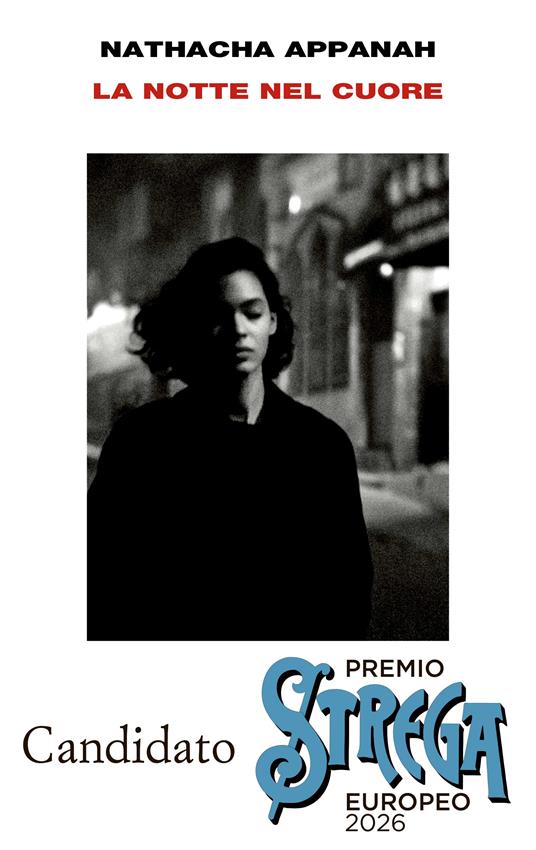
Some darkness needs long gestations before finding a path to come into the world. The Night at the Heart (Einaudi, translated by Cinzia Poli – here is our review) by Nathacha Appanah is one of these. Three women and their destinies, which almost overlap. Chahinez Daoud and Emma, whose surname we do not know, were killed by the men who claimed to love them. The third is the author herself, who escaped just in time from a
strong threat of death. Appanah begins from her own experience to chase, word by word, fear and pain. She brings them to light, dissects them, and reassembles them to the smallest fragment. She entwines her story with Chahinez’s and Emma’s, tracing their traits, redrawing their profiles, and restoring them to the present. Through their memory, she digs into her heart and uses words as the only tool of understanding and testimony. In this way, she manages to touch that deep darkness that forever marks the life of those who have suffered violence. Our task is to be witnesses to this memory, so that those words become the fabric of a necessary change. (Giuseppe Cecere)
The Sleepwalker
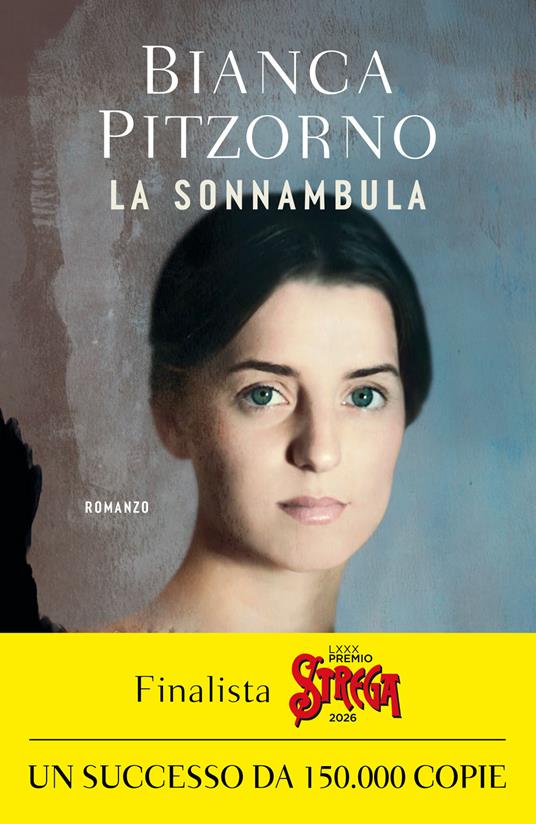
Among the 2026 recommended books there is also The Sleepwalker, the latest novel by Bianca Pitzorno, a prolific writer whose stories have accompanied my reading journey since childhood. The protagonist, whom we know for much of the story as Ophelia, is indeed a sleepwalker, a term once used to describe figures endowed with supposed powers of “magnetism,” such as trance states and clairvoyance. Ophelia often fakes her abilities, yet she can read people’s desires thanks to her keen curiosity and subtle empathy. Through clients who consult her seeking comfort (or advantage) from her visions, Pitzorno presents us with a vivid society of late 19th-century Donora, almost unbelievable in its realism. The novel, in fact, arises from a chance encounter between the author, a genuine newspaper clipping from the time, and other discoveries unearthed thanks to her passion for historical memory, which keeps a local and familial focus. The unmistakable voice of Pitzorno—who with this book was a finalist for the Strega Prize and featured in the best-seller lists—thus gives life to a lively portrait of the small town of Donora, whose stories are held together by the determination of a woman who carves out a space of freedom in a world reluctant to grant it. (Nadia Corvino)
Magnificent Humanity
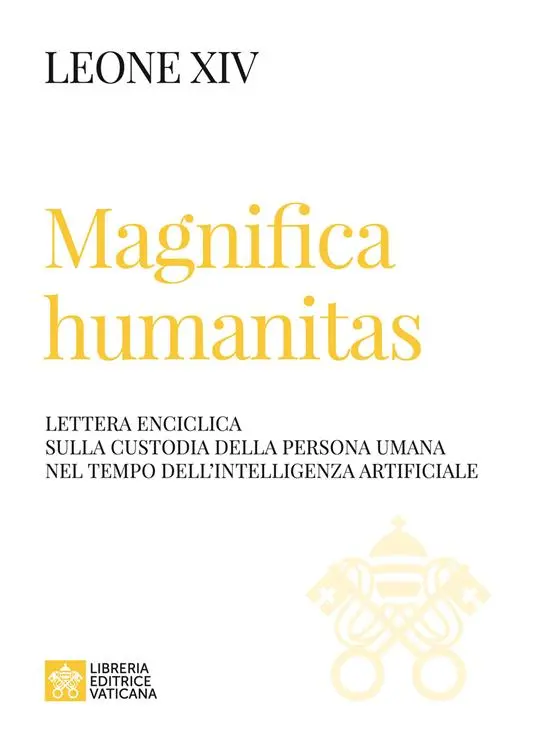
Why Magnificent Humanity, the encyclical by Pope Leo XIV, became one of the year’s bestsellers? The success is not at all accidental, and I’ll try to explain briefly why (here is a deeper look, editor’s note). The Pope has had the merit of shifting the debate about artificial intelligence from a fascination with machines to a question we too often forget: what does it mean to be human? In a time when technology is portrayed mainly as a promise of efficiency, productivity, and wealth (for a very few, not for all), the Pope re-centers the dignity and fragility of the person. Without demonizing innovation or giving in to easy enthusiasms, with keen realism Prevost calls for governance, reminding us that behind every algorithm there are choices, economic interests, and, above all, a conception of human beings that drives everything. His most radical critique concerns a society that risks becoming ever more efficient and intelligent, yet forgetful of those who are fragile, sick, elderly, or poor. For the limit is not merely a flaw to be corrected but also the place where compassion and relationships mature. The book’s strength lies here: don’t ask us only what machines will be able to do, but what we want to preserve of ourselves. A masterful text that speaks to beyond Catholic contexts and the Church for another reason as well: in the face of AI, a portion of the public feels that political leaders and the centers of power are not addressing the consequences of this transformation with sufficient seriousness, while the Pope has posed a crucial question: who defends people when technology becomes more powerful than their ability to understand and control it? The paradox is that, just as a portion of the public sees the Church as distant from modernity, a document of its magisterium has managed to reach young people, atheists, and non-Catholics by addressing a highly relevant issue on which our present and future depend. (Antonio Sanfrancesco).
The End of the End
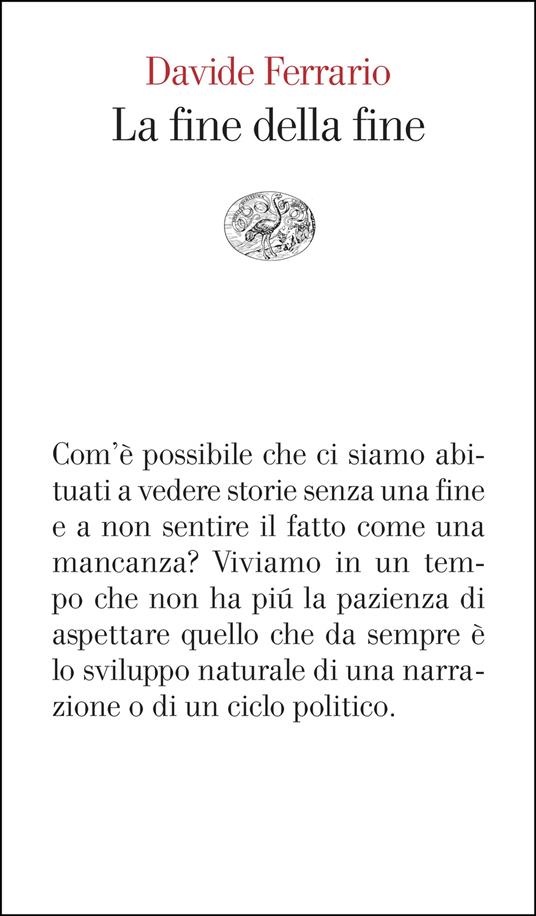
What do we lose when everything is available, and yet nothing seems able to hold us back? In The End of the End (Einaudi), the director and author Davide Ferrario (here is our interview) starts from the crisis of cinema to question a deeper transformation: our relationship with stories, with reality, and with democracy. In an era of platforms and incessant consumption, images multiply while experience grows poorer. Seriality has replaced epic, and the smartphone has reduced the screen, and with it our ability to be seduced by narratives. Ferrario, with the gaze of someone who knows the languages of culture and has witnessed their metamorphoses, shows how the erosion of attention affects our capacity to understand the world and to live in it consciously. Stories, in their deepest essence, help us give shape to existence, restoring meaning to time and its inevitable conclusion. Because “if you exclude the completion, you remain in a present without value.” We must then ask ourselves whether we are still willing to let ourselves be changed by what we watch and read. (Alessia Liparoti)
A Beautiful Ruin
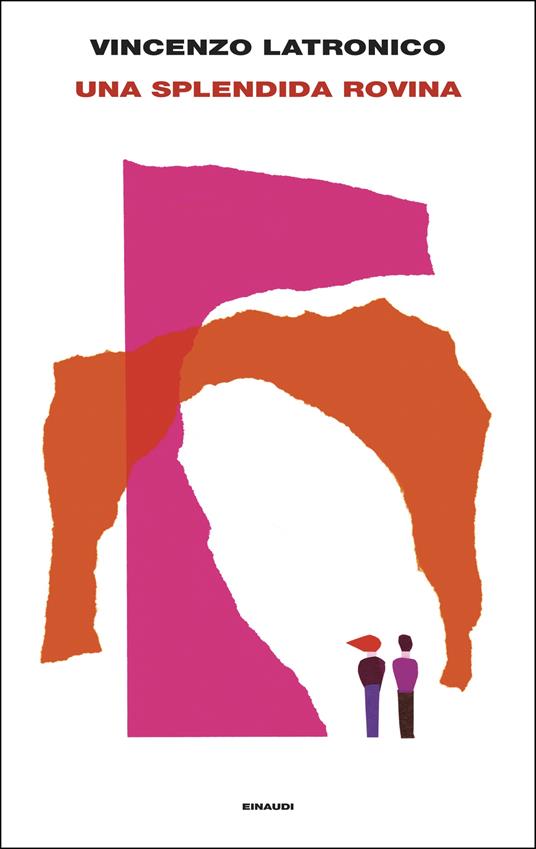
After Perfections, with A Beautiful Ruin (Einaudi, here is our review), Vincenzo Latronico returns to recount a generation nurtured by the betrayed promise of limitless freedom. At the center of the novel is a couple who purchase a derelict house in Pomerania to forge an alternative life. The project soon becomes a emotional and material breakdown, which the narrator reconstructs in retrospect by asking how much was already written in the premises and how much depends on the observer’s retrospective view. The house thus becomes the concrete place where the distance between desire and reality is measured, but also the symbol of a generational rift: economic and housing precarity that compels one to seek elsewhere the certainties once guaranteed. With a lucid writing that is attentive to the characters’ contradictions and capable of turning private stories into social inquiry, Latronico highlights a paradox of the present: the need to believe in one’s dreams just as the conditions for realizing them are fading, and the risk of mistaking desire for a promise of happiness. (Simone Re)
How Bright This Darkness Is
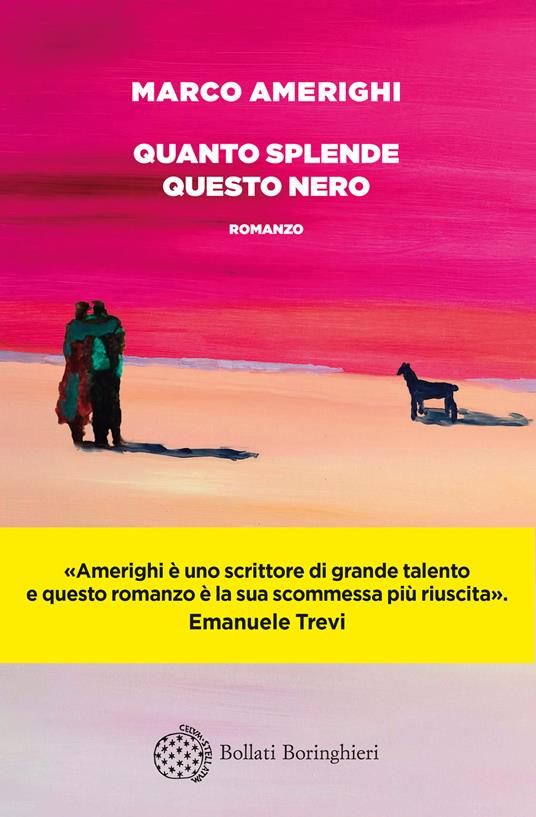
How Bright This Darkness Is (Bollati Boringhieri – here is our review) is the story of two lives, inextricably linked though they never met. It is the story of an obsession with telling the real world, of digging beyond the surface to reveal the rawest, most uncomfortable, darkest aspects. It is exactly what Lorenzo Viani, a bourgeois painter who was openly rebellious, tried to do throughout his life; and it is what Enrico attempts in this novel, desperately seeking Viani’s works by knocking on the doors of possible collectors; and it is what Marco Amerighi does in this book, probing the troubled and unstable personality of the artist from Viareggio to deliver a portrait that is far more human than art history books have taught us. And alongside Viani, it also tells the life and the characters of an old Viareggio, though never fully vanished. All this with a prose that is intense and expressive, capable of sweeping you away like a river. (Giuditta Ciani)
Virgil, No
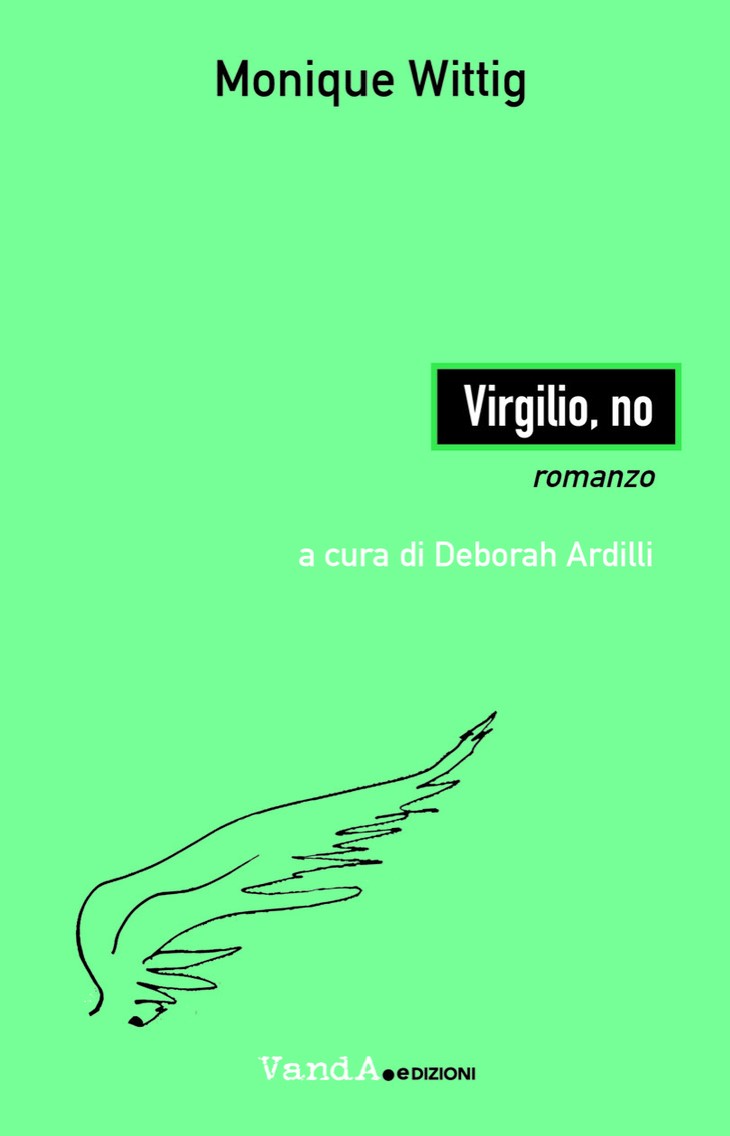
If Dante and Virgil were two lesbians named Wittig and Manastabal, what would remain of the Comedy? A text that destabilizes the descent, crossing, and ascent order, so that the hell, limbo, and paradise alternate in prosaic narrative arcs that rewrite one of the central cultural models of our societies, heading in a fully political and feminist direction: “it is the entire world that must be expropriated,” says at one point Manastabal. This is Virgil, No, a novel (though the term is not quite apt) by Monique Wittig, first published in 1985 and now available in Italian from VandA with translation, introduction, and notes by Deborah Ardilli. (Giuseppe Carrara)
Garden of Eden at Dawn
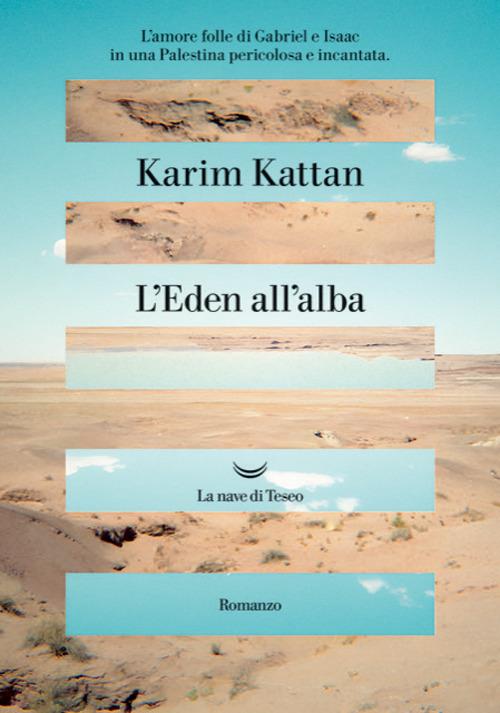
L’Eden at Dawn (La Nave di Teseo, translated by Cettina Caliò) by the prize-winning writer Karim Kattan, born in 1989, is a four-movement novel that begins at the threshold of a door and at the same time at the threshold of a summer seemingly another, yet ready to reveal itself as both bewitching and deadly. With echoes of One Thousand and One Nights, themes dear to Albert Camus, and the atmospheres of Michel Ocelot’s films (though in a more rhapsodic, erotic and colonialist shame-laden key), the unusual narrator of the story, who is the sky above Jerusalem of our times, tells us the impossible love story and coming-of-age between Gabriel and Isaac, one Israeli and the other Palestinian, as they travel between legends and road trips that cannot remain invisible to the eyes of authorities. A lyrical, sensory work that is also harsh, in which dream and politics breathe under the same roof. (Eva Luna Mascolino)
The Invention of Tristan
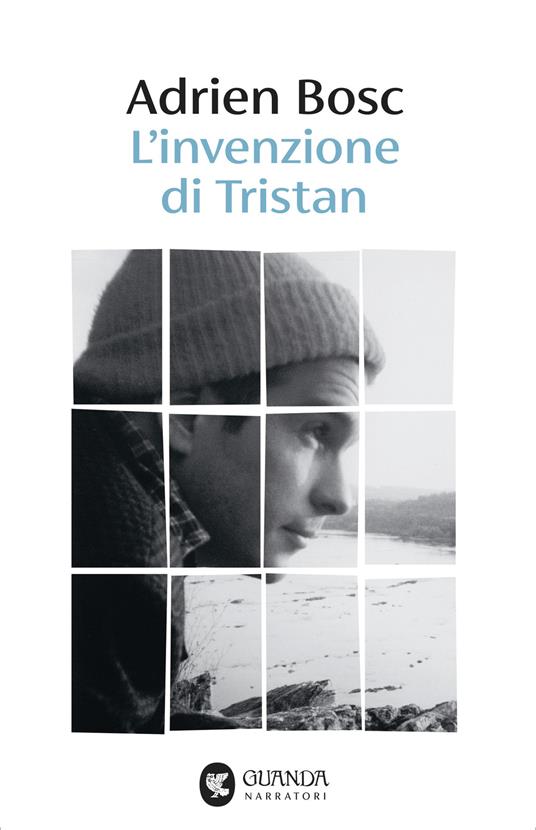
The Invention of Tristan (Guanda, translated by Laura Bosio) is a novel that resembles an inquiry, but constantly plays with fiction, alternating narrative forms and registers. Adrien Bosc, a French writer-editor, chooses to tell the story of Tristan Egolf, an American writer who died at 33 and was forgotten, who with his debut The Farmer’s Master conquered France and then the United States. To do this, he constructs a frame—a journalist from the New Yorker who traces Egolf and interweaves real testimonies and coincidences, returning the complexity of a life irregular and a tragic end… Today, among other things, Egolf’s book is out of print in Italy. (Jonathan Blasig)
Bristol
In Bristol (Adelphi, translated by Giorgio Pinotti) everything plays out in apparent casualness (of life?), but like a perfectly functioning mechanism; and Jean Echenoz proves once again that the now-defunct nouveau roman can be used in an inventive and humorous way. There is a mediocrely successful filmmaker named Bristol who decides to adapt the bestseller of a rather silly writer (just as her book is) and, with a bit more funding, even manages to shoot the most important scenes in Africa. But then, and this is the novel’s opening, a naked man throws himself from the fifth floor of his building, landing a few meters away; and Bristol initially pays it no mind. What follows are many events, including a strange erotic-criminal investigation. The key is an ironic distance, which today, let’s be honest, is scarce among writers. Echenoz remains a fortunate exception; it is the narrator who intervenes, winks, exposes the tricks of the trade, and knows that the plot is a mechanism or a toy—perhaps like life. (Mario Baudino)
Charity & Sylvia
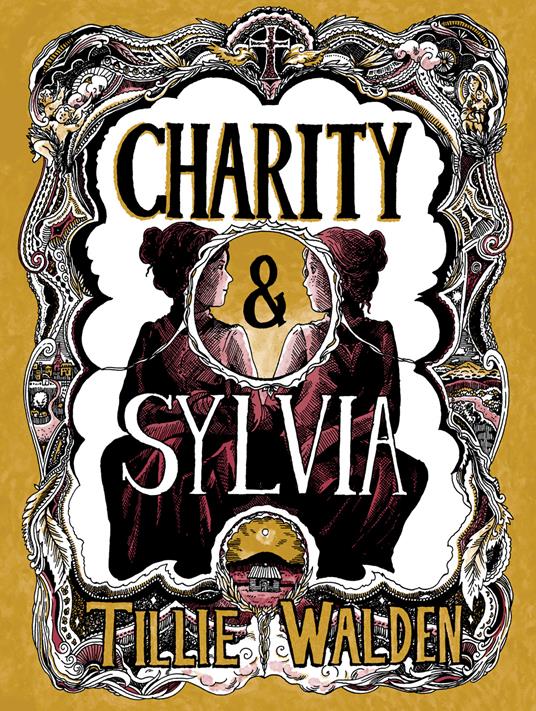
In Vermont at the start of the 19th century, in a deeply conservative and traditionalist community very much like the one where Emily Dickinson’s poetry flourished, two women bravely decide to share a house and their lives. Charity & Sylvia (Bao Publishing, translated by Caterina Marietti) arises from the pen of Tillie Walden (here is our 2021 interview with the author, titled “I don’t wish success that early for anyone,” editor’s note) and from the true story of Charity Bryant and Sylvia Drake, who challenged the era’s prejudices and managed to be a couple in a time when love outside of Christian morality could not exist. It is no coincidence that the most intense pages of this graphic novel are those where their story touches the lives of the women around them, who accept, support, and, in some cases, envy them. And perhaps this profound sense of subtle discontent that pervades life in this small town is what makes that choice—so visible to all—shine beautifully and movingly. (Giusi Marchetta)
The Worst Species
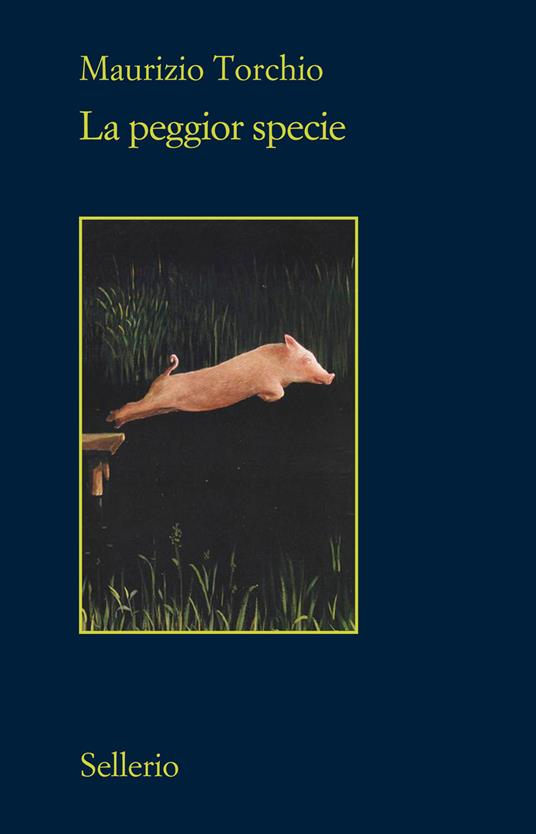
The Worst Species by Maurizio Torchio (Sellerio – here is our review) has the mechanism of a thriller, and at the same time echoes of philosophical and political thought. The story follows a specialist investigator who must infiltrate among the animal-rights activists who released a video showing the cruelty behind RonCarni’s slaughterhouses, one of the largest abattoirs in Piedmont. He must discover who allowed that video to be made and discredit the protest movements. Like in a noir, no one is innocent: over all the figures surrounding this unnerving investigation, the shadow of domination—both human over human and human over animal—looms. It raises a fundamental question about physical suffering, the pain that seems to be the true core, the landscape of life’s economic production. (Niccolò Bosacchi)
Angel Down
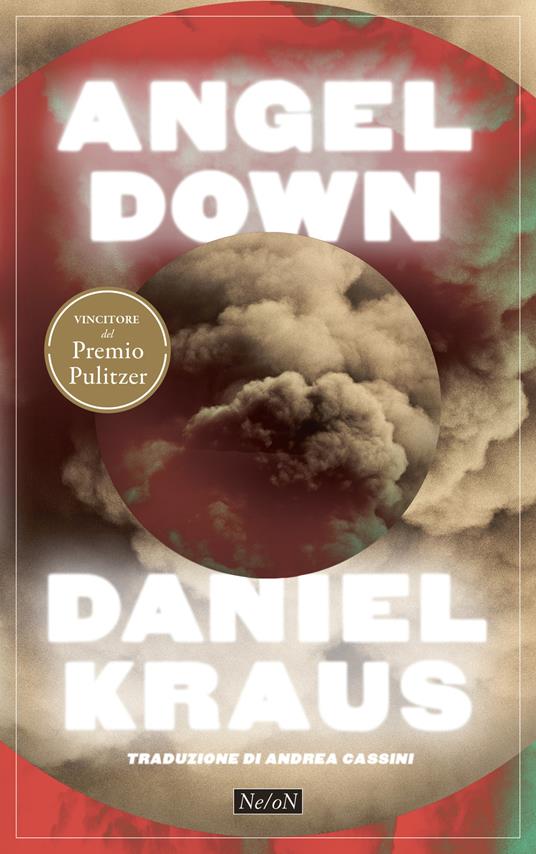
Daniel Kraus, winner of the 2026 Pulitzer Prize for Fiction, with Angel Down (Ne/oN, translated by Andrea Cassini – here is our review) fuses the raw, brutal depiction of the horrors of World War I with the surreal and fantastical atmospheres that characterized some of his best-known works, such as The Shape of Water (TEA, translated by Flavio Iannelli) and Whalefall (Ne/oN, translated by Andrea Cassini), both adapted for the screen, the latter just in recent months. In a single sentence—without periods— the American author reveals the thoughts of the protagonist, the ordinary soldier Cyril Bagger, and his perilous journey through a battlefield destroyed by bombs, corroded by gas, and strewn with mangled corpses, in search of the author of a heart-rending scream that pervades every corner of the front. Thus the journeys of Bagger and a group of wayward soldiers intersect with that which seems to be an angel fallen to No Man’s Land, a luminous, ethereal figure that takes on different meanings for each man: thirst for power, greed, lust, the desire for vengeance, the need for protection, hope for peace—or a weapon capable of destroying everything… (Martina Ostinelli)
Malefica
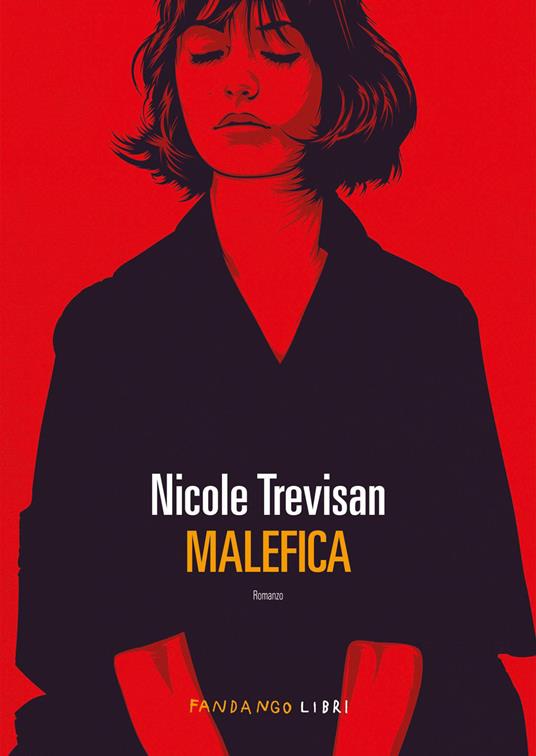
Aurora is a protagonist who tells us about us. A millennial who returns to a house she has rejected in every way, between studies and work far away. Her is a curse, an infection whose seed could lie behind God, family, homeland, or a recently deceased friend. It is for her funeral that she returns, but then stays, because the threads of that curse coil around her: she leaves Rome and returns to the suburbs among the villas and factories in the gray Veneto. There is her past, which slips out of the walls of a house built with sacrifices by her parents, a conversation with a mother who has never understood her, or with old friends. She is stuck, obliged to become what she has always despised. From this abyss rises an ancient anger, inside her since childhood. Malevolent and full of tenderness, Malefica by Nicole Trevisan (Fandango, here a reflection by the author for our site, titled Thus Veneta to Not Feel Veneta, editor’s note), is a novel that tells our dislocated and maladjusted generation, whether you’re from Padua or Palermo, still at home or on the other side of the world. It is one of those books that slides into a crack in your life you didn’t know you had. Or you pretended you didn’t have. (Désirée Favero)
The Consolation of the Stars
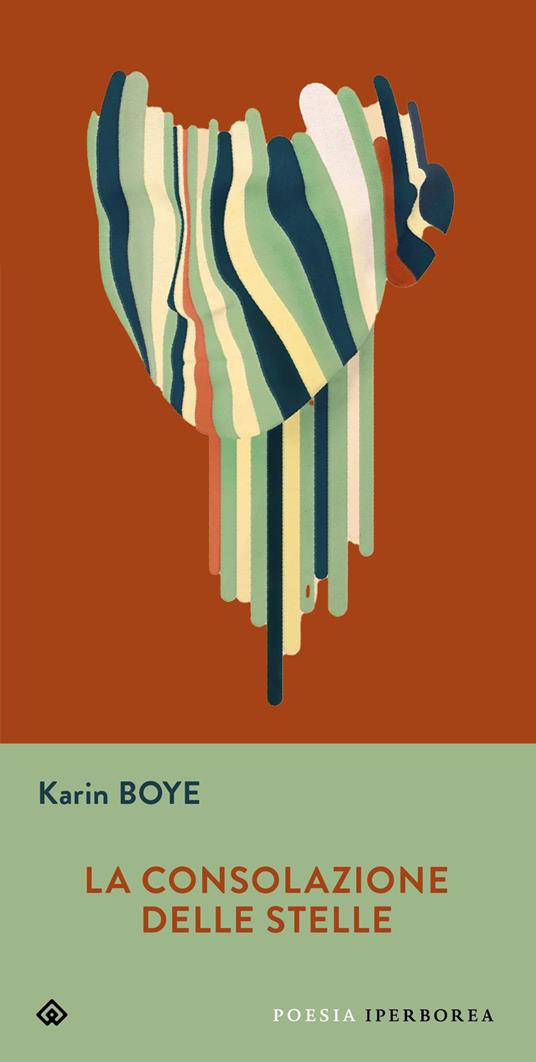
The Consolation of the Stars (Iperborea, translated by Fulvio Ferrari) is undoubtedly one of the most interesting poetry volumes of 2026. Poetry, by its nature, is a “special” genre with a specific audience that rarely seduces newcomers. Yet this small selection of 38 lyric poems, conceived in a time completely different from ours—early 1900s—feels incredibly modern, polyhedral, and intense, offering possible answers to contemporary questions such as the relationship with spirituality, the encounter with God and nature, and political engagement. Karin Boye, known to the general public mainly for her famous dystopian novel Kallocaina (1940), in her poetry embraces themes that unite important social questions with a longing for freedom, both individual and collective, in a universal search for harmony of all things. A search that, by carving deep furrows, invites forgiveness and peaceful coexistence with suffering, an unavoidable aspect of human existence. For this reason, despite her very short life—she died by suicide at age 41—Karin Boye is considered one of the most brilliant poetic voices of 20th-century Scandinavian literature, and The Consolation of the Stars is evidence of that. (Diana Mihaylova)
Kafka – The Mechanisms of Power
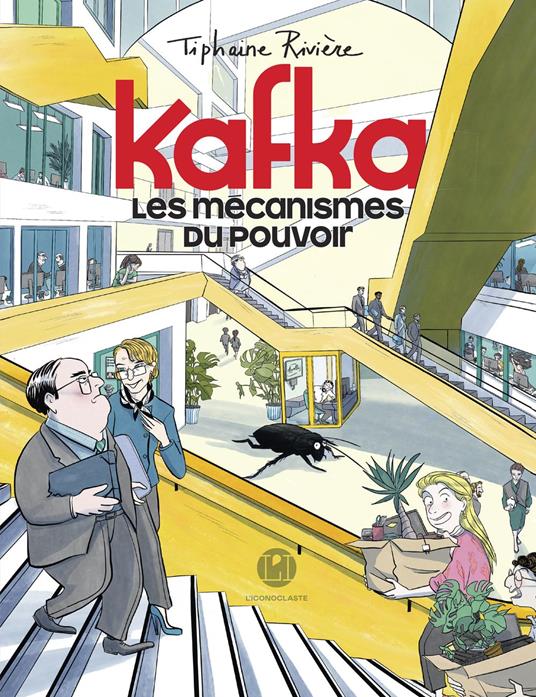
Tiphaine Rivière, a cartoonist-writer in her sixth graphic novel, shows again with gusto and refined layering her ability to address adult and complex questions through bande dessinée, deftly blending genres: rewriting and updating, critical reflection on texts and the present, architecture of current plots that illuminate the “stakes,” more or less hidden, of classics of fiction and non-fiction (her penultimate work reinterpreted Pierre Bourdieu’s Distinction). Translated into many languages, not yet into Italian (and worthy of it!), her latest drawn work, Kafka – The Mechanisms of Power (L’iconoclaste, 2026), is dedicated to the symbolic work of the 20th century writer, using The Metamorphosis (which the teenage protagonist is asked to examine) to illuminate the power mechanisms and social pressures (more or less subtle) at work in family, the workplace, and human relationships in general. The result is a passionate and never-straightforward manual of resistance and exposure, reminding us that freedom is a daily exercise—interpretive, ethical, and existential. Pleasantly essential. (Matteo Columbo)
