

The Swiss writer Joël Dicker is among the most beloved authors of thriller and noir in Italy. Not by chance, his latest mystery, A Wild Animal, is the best‑selling book in our country in 2024; moreover, at the latest Frankfurt Book Fair it was announced that at the end of January the author’s new novel, titled Crash, will be released, which in Italy will come out on January 26 (published, like all the others, by La Nave di Teseo).
Born in Geneva on June 16, 1985, Joël Dicker is known for his pulse‑pounding novels with intricate plots, which have established him as one of the best‑known voices in contemporary fiction.
Among his most successful works stands out The Truth About the Harry Quebert Case (La Nave di Teseo, translated by Vincenzo Vega), bestseller translated into more than forty languages, which has captivated millions of readers worldwide thanks to its gripping plot and its twists. Marcus Goldman, the celebrated protagonist born from the pen of the Genevan author, is (in turn) a young and talented writer: an “alter ego” who embodies many of the elements dear to Dicker, including the struggle with expectations, the allure of truth, and the constant intertwining of reality and fiction.

A character who, thanks to his psychological complexity and intricate affairs, has managed to captivate not only the readers of the novel but also television audiences. The Truth About the Harry Quebert Case has in fact become a successful TV series, directed by Jean‑Jacques Annaud and featuring Patrick Dempsey in the role of Harry Quebert, and Ben Schnetzer as Marcus Goldman. The series recreates the atmosphere of the novel, keeping intact the mystery and tension that characterize the original story, thereby giving a new life to Dicker’s long‑selling work.
The alter ego Marcus faces the intricate literary investigations not only to solve puzzles, but also to come to terms with his fragilities and his inner ghosts. A complex and multifaceted character, who has fascinated readers worldwide: a “love at first sight” moment made possible by Dicker’s fluid writing, the author of stories that explore universal themes such as memory, the relationship with the past, and the constant interplay between reality and fiction.
Regarding this central element, in an interview with Repubblica Dicker explained that “what is to come is a representation that escapes us. When we’re born we are almost devoid of fear, but then they begin telling you: ‘Be careful of the machines, distrust others, don’t touch that,’ and we change. To fear, direct experience isn’t even necessary because fear is a sensation. If a child meets a dog he doesn’t know, he tends to protect himself, and he does not do it because he has been bitten before, but because he is influenced by what he has heard.”
And the brilliant and direct narrative style of the author is ideal to render crystal‑clear the filter exerted by fear, an element that permeates his plots and captivates the reader, transporting them into a dense network of mysteries, investigations and unexpected revelations.
As evidence of this ability, Dicker has received prestigious literary honors, including the Goncourt des Lycéens and the Grand Prix du Roman de l’Académie Française, which establish him as one of the most beloved authors of contemporary fiction.

In the autumn of 2026, Dicker returned to bookstores with La Nave di Teseo’s edition illustrated by himself of The Catastrophic Visit to the Zoo (translated by Milena Zemira Ciccimarra, first released in March 2025). The plot in brief? On Christmas Eve, a school visit to the zoo turns into a catastrophe. What exactly happened? Josephine’s parents, the little girl who took part in the trip and who seems to know a lot, are determined to uncover it. But a catastrophe never comes alone; appearances are deceptive and the story will take a turn no one could have imagined… “For years, in the small town where I grew up, the memory of the events that took place at the local zoo on a December Friday, just before Christmas, has remained in the minds of its inhabitants. And all these years, no one has known what really happened. Until this book.”
In La Lettura the author wrote: “(…) The thing that moves me most in the feedback I receive from readers is the common and shared readings: in families, among friends, in book clubs. With The Catastrophic Visit to the Zoo I have tried, with modesty and humility, to write a book that could be read and shared by all readers, whoever they are and wherever they are, from ten to a hundred years old. With your children, your partner, your parents, your neighbors, your colleagues. It is a book for those who already know my novels and, even if this isn’t exactly a mystery, it will immediately feel like family, as among brothers and sisters, all different from each other, but united by a common genetic heritage. And it’s a book that could be passed on to your twelve‑year‑old children who don’t read much, to the father in retirement who reads a book a day, or to the colleague who hasn’t opened a book since high school. Or to the neighbor with whom you don’t get along because they hold radically opposing opinions, and it will allow them to find (finally!) a topic of discussion…”.
After hinting at the new release, the endless confirmation of the charm exerted by Joël Dicker’s plots on the Italian public (and beyond) continues, here we recount all his books (presented in chronological order).
The Last Days of Our Fathers

The successful career of Joël Dicker begins with The Last Days of Our Fathers (La Nave di Teseo, translated by Vincenzo Vega), a novel originally published in 2010 and set in London in 1940. Within these pages, Churchill has an idea that will change the course of the war: to create a secret services unit, the SOE (Special Operations Executive). This team is tasked with sabotage behind enemy lines. To accomplish this, it involves locals, including the young Paul‑Émile, a boy who arrives in London precisely to join the Resistance. Recruited by the special unit, he is immediately placed among a group of compatriots who will soon become his friends, in an atmosphere of betrayals and double games…
The Truth About the Harry Quebert Case
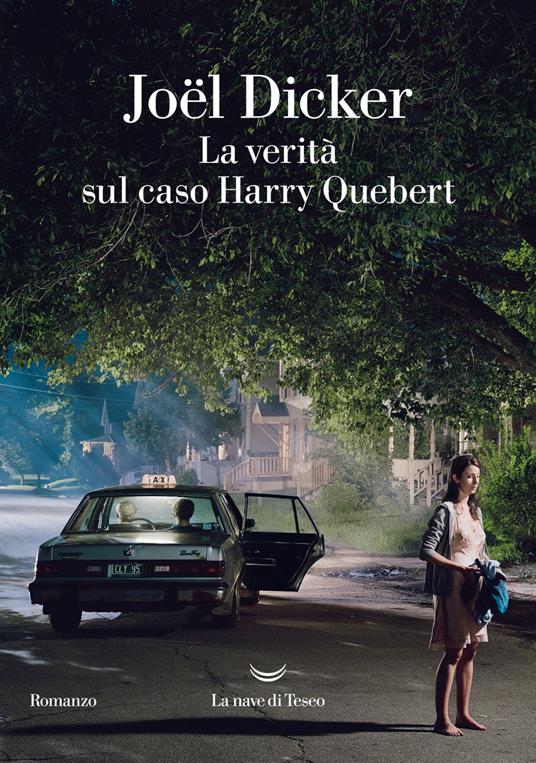
Among Joël Dicker’s books we have already mentioned The Truth About the Harry Quebert Case (La Nave di Teseo, translated by Vincenzo Vega) a novel published in 2012 that sealed the writer’s success. The title, among the most loved books on TikTok, tells the dark story behind the disappearance of Nola Kellergan in 1975. The police investigations into Nola’s disappearance in Aurora yield no results, and the case seems to close in a dead end. Fast forward to 2008, in New York, where the successful young writer Marcus Goldman is living one of the perils of his craft: he has writer’s block. Bad timing, as the publisher waits with impertinence. But something unforeseen happens in his life: his friend and university professor Harry Quebert, one of America’s most respected writers, is accused of killing the young woman. After more than thirty years, Marcus must find an answer to a grim question: did his esteemed professor really kill the young woman? A question that, perhaps, will lead him to write his own successful novel…
The Baltimore Book
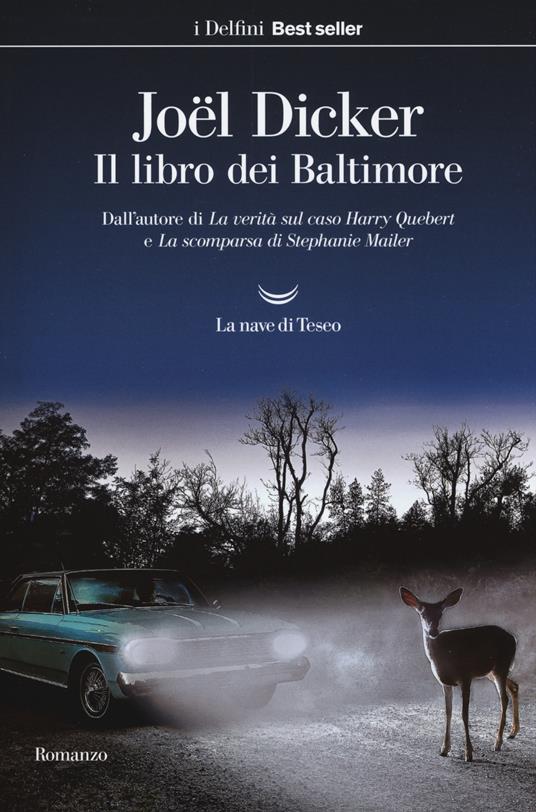
The Goldmans of Baltimore and the Goldmans of Montclair have always stood out, starting from the day of the Tragedy. Of the second branch is Marcus Goldman, the protagonist of The Truth About the Harry Quebert Case. The Goldmans of Montclair, New Jersey, are a middle‑class family; the Goldmans of Baltimore, however, are an aristocratic family. To them Marcus has looked up since he was young, when he and his cousins, Hillel and Woody, loved Alexandra in the same way. Eight years after a mysterious tragedy, Marcus decides to tell the story of his family: he returns with memory to the life and fate of the Baltimore Goldmans, to the Florida and the Hamptons holidays, to the glorious school years. But there is something, in his reconstruction, that eludes him… The secret that lies behind the family is told by Joël Dicker in The Baltimore Book (La Nave di Teseo, translated by Vincenzo Vega), a novel published in 2015.
The Disappearance of Stephanie Mailer
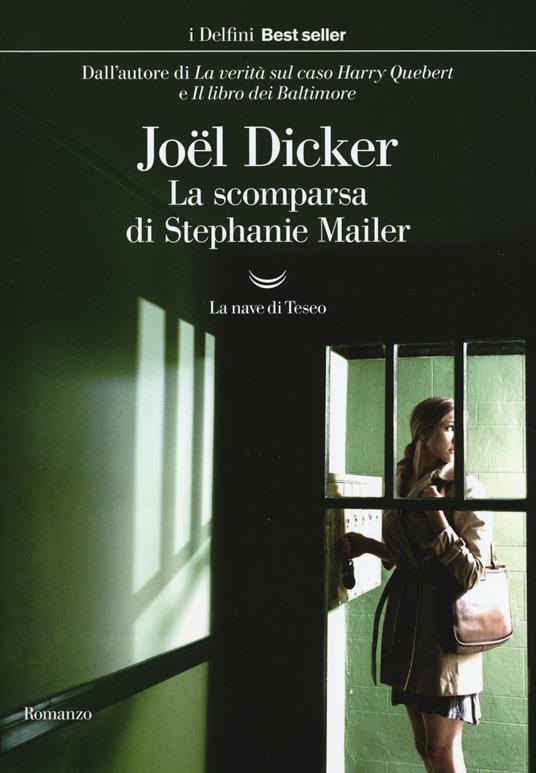
Among Joël Dicker’s books also The Disappearance of Stephanie Mailer (La Nave di Teseo, translated by Vincenzo Vega), a novel published in 2018 and set in the town of Orphea. Here the first edition of the local theater festival is underway when a terrible murder shocks the village: the mayor is found dead along with his wife and son. This is not, however, an isolated case: nearby the corpse of a girl, Meghan, who had gone out for a jog, is found. The investigation is entrusted to and solved by two young agents who arrive first on the scene: Jesse Rosenberg and Derek Scott. Many years later, Jesse, now a police captain, a week before retirement, is approached by a journalist, Stephanie Mailer, who informs him that the 1994 case was not solved: the person who was incriminated at the time is innocent. As soon as this grim secret is revealed, however, Stephanie disappears. What happened to her? What had she discovered?
The Enigma of Room 622
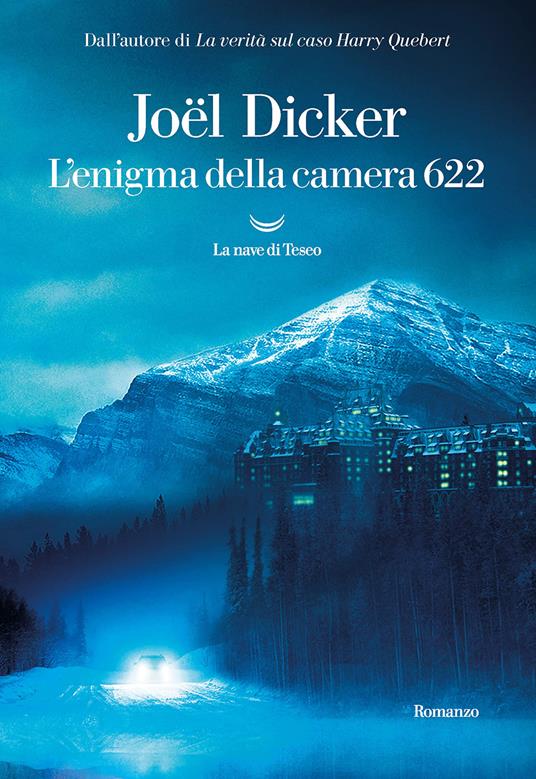
The Palace of Verbier, a hotel in the Swiss Alps, hosts the annual party of a Geneva bank on the occasion of the appointment of its new president. During the night of the election, however, a murder in room 622 shakes the Palace of Verbier: the police investigation fails to identify the culprit, everyone seems to have an unimpeachable alibi. Fifteen years later, an unsuspecting writer chooses the same hotel for a few days of peace, but cannot help being drawn into the unresolved case, and by a handsome and curious woman… The Enigma of Room 622 (La Nave di Teseo, translated by Milena Zemira Ciccimarra), Joël Dicker’s book published in 2020, tells this long investigation, with twists and romantic entanglements.
The Alaska Sanders Case

A true blockbuster in 2022, among Joël Dicker’s most successful works we certainly find The Alaska Sanders Case (La Nave di Teseo, translated by Milena Zemira Ciccimarra). In these pages the now‑famous Marcus Goldman returns, making the work the sequel to the acclaimed The Truth About the Harry Quebert Case. Yet again, however, it begins with a gruesome murder: the body of a young woman, Alaska Sanders, is found by a lake. The investigation, quickly closed, leaves no doubt: the police obtain the culprit’s confession, who kills himself shortly thereafter. But in true Dickerian style, the case reappears. Eleven years later, the sergeant Perry Gahalowood, who at the time had followed the investigations, receives an anonymous letter. What if he had followed a false lead? The help of his friend the writer Marcus Goldman will once again be fundamental to uncovering the truth. But there is a mystery within the mystery: the disappearance of Harry Quebert…
A Wild Animal

And now to the recent A Wild Animal (La Nave di Teseo, translated by Milena Zemira Ciccimarra). In this breathtaking thriller published in 2024, two thieves rob a Geneva jewelry store. A seemingly ordinary case, which evokes a recent event that appears unrelated: twenty days earlier, Sophie Braun is about to celebrate her fortieth birthday. She lives with her husband; they are both rich, handsome and happy. But their idyllic world suddenly frays: the secrets they keep start to spill over. Their neighbor, a policeman with an immaculate reputation, is obsessed with that perfect couple. He watches the woman and spies on every intimate moment, searching for an imperfection, a misstep. On Sophie’s birthday, a mysterious man arrives with a gift that will shock her life: the threads that trap these lives lead far back in time, away from Geneva and the Braun villa…
The Tiger
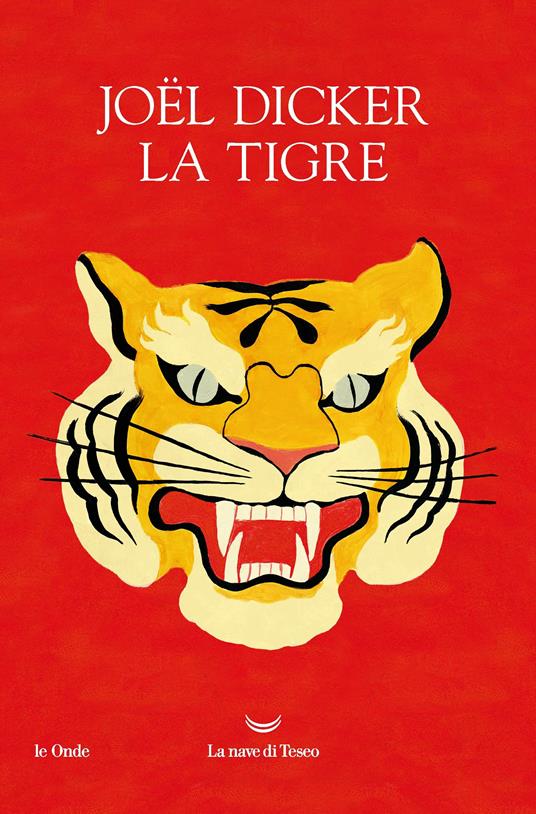
Originally published in 2005 and reissued in its latest Italian edition by La Nave di Teseo with translation by Vincenzo Vega and illustrations by David De Las Heras, The Tiger stands as an exception among Joël Dicker’s works. In this illustrated novel, a dramatic piece of news shocks Saint Petersburg: in distant Siberia a tiger is sowing panic. Few witnesses have managed to escape its attacks, so the Tsar offers an extraordinary reward to anyone who can kill the beast. The best hunters from across Russia want to capture it, but the animal dodges their traps and disappears into the steppe: from prey she becomes a ruthless hunter herself… A gripping story that fascinates readers, complemented by evocative and pulsating illustrations.
